- By :
- Comments: 0
quiet homestay Alappuzha
quiet homestay Alappuzha
Last Updated: July 29, 2026
Quick Answer: quiet homestay Alappuzha
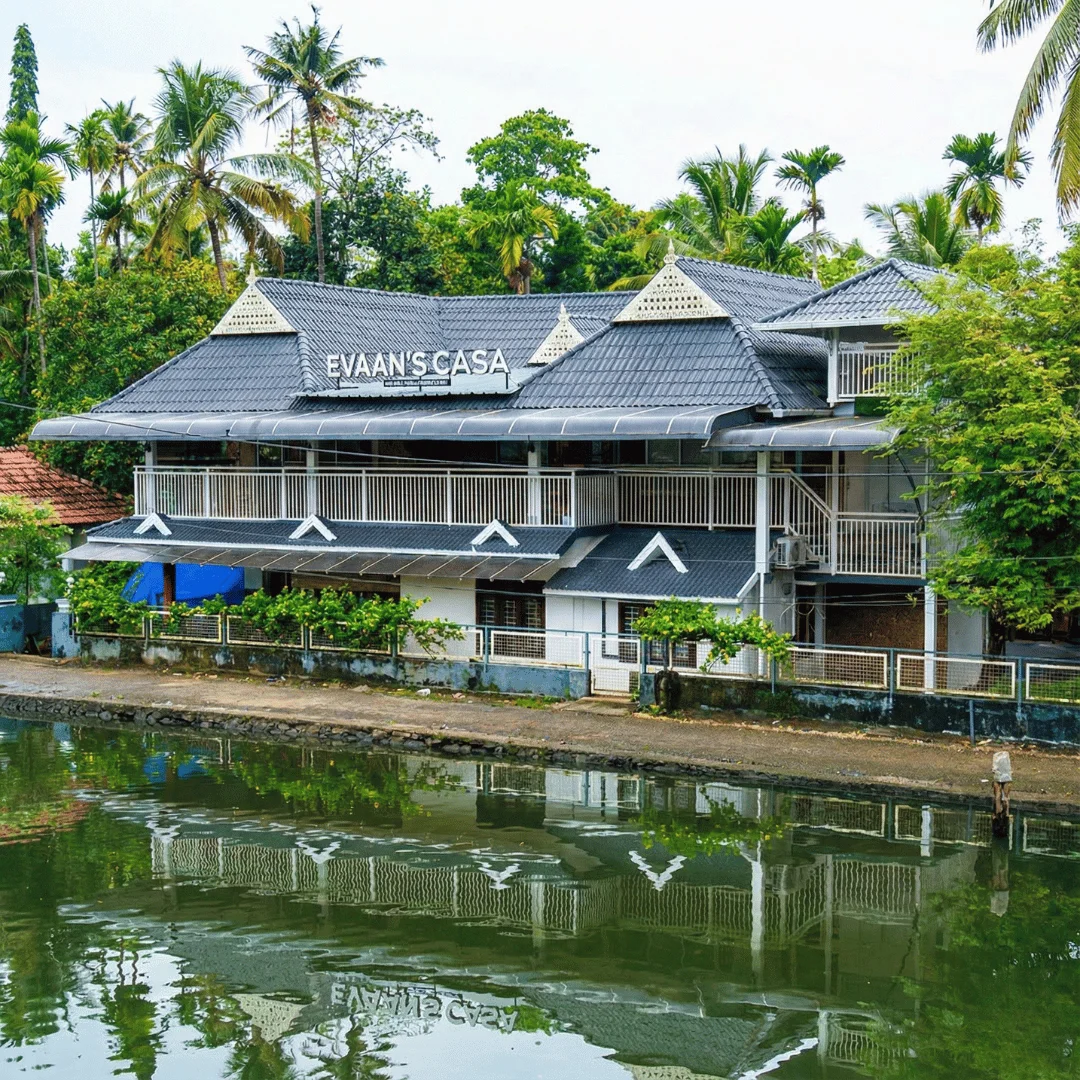
- Evaan’s Casa is a no-road homestay on a tiny island, reached by a six-minute boat ride across Vembanad Lake.
- Most guests arrive by 4 PM to catch the late ferry from the mainland jetty — the 5:15 PM boat is the last one that stops near us.
- It’s quiet because there are no cars, no horns, no streetlights. Just water, paddy, and the sound of a single outboard motor passing once an hour.
The walk to the jetty at dusk is short. Maybe two hundred metres past the toddy shop and the old cashew tree. The light goes flat and yellow over the paddy fields. By the time I reach the water’s edge, the frogs have started. The boatman’s already there, leaning on a wooden pole, waiting.
I smell diesel and wet earth. The lake is still. A single kingfisher sits on a dried palm frond stuck in the mud. I step into the vallam. He pushes off with one foot. The motor coughs, then settles into a low hum. Six minutes across. That’s all it takes to leave the road behind.
Most people come to Alappuzha for the houseboats. The big ones with the bedrooms and the AC and the clattering generators. That’s fine. But they miss this — the quiet homestay Alappuzha offers if you know where to look.
What can you see from quiet homestay Alappuzha?
From the veranda, you see water. Then more water. Then a thin line of coconut palms on the far shore. The paddy fields start right at the edge of the island. During the monsoon, they flood. The water rises until the green tips of the rice plants poke through the surface like grass on a pond.
In the dry months, the fields turn gold. You can watch the harvest from a chair. The workers move in a line, bent at the waist, their sickles flashing. They call to each other in Malayalam. I can’t always make out the words, but the rhythm is familiar.
The lake itself changes every hour. Morning is glass. Midday is a sheet of white light that hurts your eyes. Evening turns copper, then grey, then black. Some guests sit for three hours without speaking. I understand that.
I’m probably biased, but I think the view from this veranda is the best quiet homestay Alappuzha can give you. No music. No announcements. Just the water lapping against the pillars, and sometimes a fish jumping.
What’s around the island once you’re there?
Walk ten minutes from the homestay and you hit the village. Maybe sixty houses, a small temple, a shop that sells soap and biscuits and cold drinks. The road is packed earth. In the rain, it turns to mud so thick you lose your sandals.
The paddy fields are everywhere. They stretch from the water’s edge to the back of the island. In July, when the southwest monsoon is at its peak, the fields become shallow lakes. You can take a small boat right through them. The water is brown and warm, and the dragonflies land on your knees.
There’s a village market on Tuesdays. You need to cross two canals to get there. The traders come in from the mainland in canoes loaded with vegetables, dried fish, and spices. The air smells of coriander and woodsmoke. I go most weeks, even if I don’t need anything.
Honestly, most people skip the market. They don’t know it exists. But if you’re looking for a quiet homestay Alappuzha with real village life around it, this is it. Nothing is staged. The women wash clothes at the canal steps. The kids play cricket on a patch of dried mud. The older men sit under a banyan tree and argue about politics.
Can you walk or explore the area nearby?
You can walk, but not far. The island is small. Maybe two kilometres at its widest. The paths are narrow — just wide enough for a bicycle or a cow. You’ll pass coconut groves, a small church, and a few houses with goats tied to the porch.
Look, here’s the thing: walking is not the point. The point is the water. If you want to explore, you take a boat. A local vallam costs fifty rupees for a short trip. I can arrange a longer one — two hours, three hours — through the canals that connect the villages.
Those canals are where the real quiet homestay Alappuzha experience lives. The channels are narrow. Palm fronds brush your head. The water is dark green, almost black. You pass women collecting lotus stems, men fishing with throw nets, kids swimming off a bamboo platform.
Sometimes we stop at a small island where they make coconut oil. The press is old, powered by a bull walking in circles. The smell is sweet and heavy. You can buy a bottle for a hundred rupees. It’s the best oil I know.
There’s also a bird sanctuary about twenty minutes by boat. Herons, egrets, cormorants. In December, the migratory birds come. The lagoon fills with white. I take guests there early, before the sun gets hot. The air is cool and the birds are loud.
Most people don’t realise how much there is around a quiet homestay Alappuzha. They think you just sit on the veranda. And you can. But the village is alive. The canals are alive. The fields change every week.
Frequently Asked Questions About quiet homestay Alappuzha
How far is the homestay from Alappuzha town?
The boat ride takes six minutes from the mainland jetty. The jetty itself is about four kilometres from the Alappuzha bus stand. A rickshaw will cost you fifty rupees. The whole journey from town to the veranda takes maybe twenty minutes.
Is it safe to stay on an island with no road access?
Yes. The island is small, maybe three hundred people live here. Everyone knows everyone. Crime is almost unheard of. The boatman knows the water at night — he uses a torch and the stars. I’ve lived here forty years and never felt unsafe.
What should I bring for a stay at a quiet homestay Alappuzha?
Torch. Mosquito repellent. A light jacket for the evening boat ride. And a book. There’s no TV, no WiFi in the rooms, no phone signal in some corners. That’s the point. Bring a good book and a willingness to be still.
How much does it cost per night?
Rates start at around two thousand rupees per night, including breakfast and dinner. That’s home-style Kerala food — rice, fish curry, sambar, thoran. The meals are prepared at the homestay kitchen. Lunch is extra but cheap. For a full week, I can offer a discount.
I built Evaan’s Casa for people who want to slow down. Not for the houseboat crowd. Not for the party people. For the ones who want to wake up to rain on a tin roof, drink tea on a veranda, and watch a heron stand still for half an hour.
That’s what quiet homestay Alappuzha means to me. A place where the only schedule is the sunrise and the sunset. Where the food is simple and the water goes on forever.
Come if you want to sit still. Come if you want to hear your own thoughts. The boatman will meet you at the jetty. He knows the way.
Plan your stay at Evaan’s Casa
- Lake view homestay in Alleppey (Alappuzha)
- Where to stay in Alleppey: the complete guide
- Alleppey room booking: rooms and prices from ₹1,900
- Budget homestay in Alleppey under ₹2,000
- Backwater homestay on Vembanad Lake
- Punnamada homestay, Alappuzha
- Family homestay in Alleppey
- Honeymoon package and couple stay
Book direct on WhatsApp +91 88484 96667