- By :
- Comments: 0
local attractions near alleppey homestay
local attractions near alleppey homestay
Last Updated: May 15, 2026
Quick Answer: local attractions near alleppey homestay
- The real local attractions near Alleppey homestay are the backwater village paths, the Punnamada Lake boat races in August, the Marari Beach sunrise (20 min by auto), and the Kumarakom Bird Sanctuary (40 min by ferry). Most of these are within 10-30 km of our island.
- Local insider tip from Jackson: Skip the big houseboat tours. Instead, take a local canoe from the jetty near our homestay at 6 AM — you’ll see kingfishers, water lilies, and the real morning life of the backwaters without the engine noise.
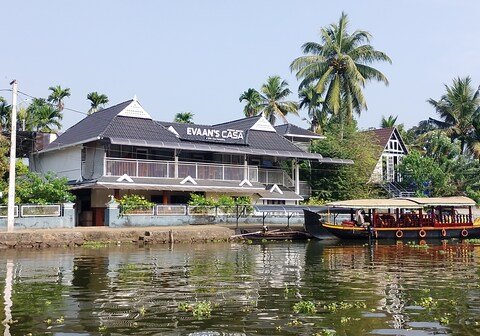
- Evaan’s Casa sits on a small island in the backwaters, so every attraction starts with a 6-minute boat ride from the mainland. This isolation means you actually experience the quiet of the canals before you even start exploring.
I woke this morning to the sound of a single engine boat putting past our island. Must have been 5:30 AM, still dark. The air smelled of woodsmoke from somewhere across the canal — someone lighting a fire for morning tea. I lay there for a minute, listening to the water lap against the wooden pillars of our homestay. That’s the thing about living on an island in the backwaters. The silence isn’t really silent. It’s full of small sounds: fish jumping, coconut fronds rubbing together, a distant rooster that never seems to know what time it is.
I’m Jackson Louis. I grew up in these backwaters. My father used to take me out in a small vallam boat before sunrise, just to check the fish traps. I know every canal bend, every temple that looks abandoned but isn’t, every old banyan tree where the kingfishers perch. When I started Evaan’s Casa a few years back, I wanted guests to feel that same quiet connection to the water. Not the tourist version. The real one.
So when people ask me about local attractions near Alleppey homestay, I don’t hand them a brochure. I tell them what I’d show my own friends if they came to visit me. And honestly, I’d say most of the best things aren’t in any travel guide.
What Are the Local Attractions Near Alleppey Homestay?
Let me clear something up right away. When you search for “local attractions near Alleppey homestay,” most websites will throw the same list at you: Alleppey Beach, the backwater houseboats, the lighthouse, some random temple. Those are fine. They exist. But they’re not what I’d call local. They’re things tourists do.
The real local attractions near Alleppey homestay are the places that don’t need a ticket. A stretch of canal where the water hyacinths haven’t been cleared yet, so the birds gather. A small toddy shop on the edge of a paddy field where you can sit on a plastic chair and watch the sun go down. The old church in a village called Champakulam, which has a wooden ceiling carved by hand in the 1800s. Most people skip this but I think that’s a mistake.
There’s a market in a place called Punnamada. It’s not big. Just a few women selling vegetables from baskets, and a man who grinds fresh coconut chutney in a stone mortar. The smell of crushed curry leaves and green chili hits you from twenty feet away. That’s a local attraction. That’s the kind of thing you remember.
Not gonna lie, the houseboat tours are popular for a reason. You get to see the backwaters. But they’re loud. They burn diesel. They follow the same routes. If you want the real thing, take a small canoe from the jetty near our homestay. I’ll point you to the right boatman. He’s old, doesn’t speak much English, but he knows where the otters live.
Why Does the Island Location Matter?
Our homestay is on a small island. No road access. You have to take a boat to get here. That six-minute ride across the canal is the first thing you experience when you arrive. The engine cuts, you step onto the wooden jetty, and suddenly the noise of the town disappears.
I’m probably biased, but I think that isolation is the whole point. You can’t rush here. You have to slow down. The local attractions near Alleppey homestay are not things you check off a list. They’re things you drift into.
From our island, you can see the Punnamada Lake. That’s where the Nehru Trophy boat race happens every August. During race season, the whole area buzzes with energy. You can hear the drumming from across the water. But most of the year, it’s quiet. Just fishermen in their boats, and the occasional houseboat drifting by.
The thing about being on an island is that you learn the boat timings. The small ferries that connect the islands run on a schedule that nobody wrote down. The boatmen just know. If you want to go to the mainland, you stand at the jetty around 7:30 AM. If you miss it, you wait an hour. That’s not an inconvenience. That’s a reminder that you’re not in charge here. The water is.
What Home-Style Food Can You Expect Here?
Look, here’s the thing about food in our part of Kerala. It’s not complicated. It’s just good ingredients treated with respect. The kitchen at our homestay prepares traditional meals using local produce. We don’t try to be fancy. We try to be right.
The Karimeen Pollichathu is the dish everyone asks about. Pearl spot fish, marinated in a paste of red chili, turmeric, ginger, and coconut, then wrapped in a banana leaf and steamed until the flesh flakes apart. The banana leaf gives it a smoky sweetness that you can’t get any other way. We serve it with steaming hot rice and a drizzle of coconut oil. Simple. Perfect.
Then there’s the Kerala Sadhya. That’s the feast you eat on a banana leaf. Rice in the middle, surrounded by small mounds of different curries: sambar, avial (mixed vegetables in coconut), thoran (shredded cabbage with coconut), a sour and spicy fish curry, and at least three types of pickles. You eat with your right hand, mixing everything together. The banana leaf absorbs the excess oil and adds its own subtle flavor. By the end, your fingers are stained yellow from the turmeric. That’s how you know it was a good meal.
For breakfast, we do Appam with stew. Appam are soft, lacy rice pancakes with a spongy center. The stew is a mild coconut milk gravy with vegetables or chicken, scented with cinnamon and cardamom. The combination is so simple it almost seems boring. But it’s not. It’s comforting in a way that’s hard to explain. You eat it slowly, dipping pieces of appam into the stew, and you don’t want it to end.
Puttu and Kadala curry is another morning staple. Puttu is steamed cylinders of rice flour and coconut, light and fluffy. Kadala curry is a dark, rich black chickpea gravy with lots of coconut and spices. The texture contrast is everything. The puttu is airy. The curry is thick. Together, they just work.
Everything is cooked with coconut oil. That’s the secret. Mustard seeds crackle in hot oil at the start of almost every dish. Curry leaves sizzle and release their fragrance. Fresh coconut is grated, ground, and squeezed for milk throughout the day. The food here tastes of where it comes from. That’s all I can say.
Jackson’s Practical Tips for Visitors
I’ve been hosting guests for years now, and I’ve learned a few things that might help you. Here’s my honest advice:
- Start your day early. The backwaters are at their best between 5:30 AM and 8 AM. The light is soft, the birds are active, and the water is glassy calm. By 9 AM, the tourist boats start and the magic fades. Wake up early. It’s worth the sleepy eyes.
- Take a local ferry, not a houseboat, at least once. The government ferries that connect the islands cost maybe 10 rupees. They’re crowded, they’re slow, and they’re wonderful. You’ll sit next to women going to market, school kids in uniforms, old men carrying sacks of coconut. That’s real life. That’s the local attractions near Alleppey homestay that no tour guide will tell you about.
- Carry cash. The small shops, the toddy shops, the canoe boatmen — none of them take cards. There’s an ATM in the main town, but it’s a 20-minute auto ride and it sometimes runs out of cash on weekends. Keep some notes in your pocket.
- Don’t be afraid of the rain. June to September is monsoon season. It rains hard and often. But the backwaters are most beautiful when the rain hits the water. The smell of wet earth, the sound of rain on a tin roof, the steam rising off the canals after a shower — that’s a different kind of beauty. Bring an umbrella and a light jacket. You’ll be fine.
- Visit a local temple during a festival. There’s a small temple in a village called Nedumudi, about 15 minutes from our homestay by boat. During the annual festival, they carry a huge wooden chariot through the streets, and the air fills with the sound of chenda drumming. The rhythm is hypnotic. You’ll feel it in your chest. Most tourists never know about it.
What Is the Best Time to Visit Alappuzha for Local Attractions Near Alleppey Homestay?
This depends on what you want. Let me break it down month by month, honestly.
Winter (November to February): This is the peak season. The weather is pleasant, with temperatures around 25-30°C. Humidity is lower. The skies are clear. This is when the local attractions near Alleppey homestay are most accessible — dry roads, calm water, easy boat travel. But it’s also the busiest. Expect crowds at popular spots. Book ahead.
Summer (March to May): Hot. Really hot. Temperatures hit 35°C easily. The humidity is brutal. But the backwaters are still beautiful, and the mornings are bearable. The biggest advantage? Fewer tourists. You might have a whole stretch of canal to yourself. The local attractions near Alleppey homestay feel more private during this time. Just carry lots of water and wear a hat.
Monsoon (June to September): This is my favorite season. Most people avoid it because of the rain, but they’re missing something special. The backwaters swell. The canals rise. The paddy fields flood and turn into shallow lakes. The rain creates a constant soundtrack — drumming on roofs, rushing through gutters, dripping from palm fronds. The local attractions near Alleppey homestay take on a different character. The temples steam after a downpour. The water lilies bloom. The air smells like wet earth and jasmine. The downside: some boat services are limited, and you’ll definitely get wet. But if you’re open to it, the monsoon is magical.
Frequently Asked Questions About Local Attractions Near Alleppey Homestay
How far is Marari Beach from a typical homestay in Alleppey?
Marari Beach is about 12 kilometers from the main town. From our island, it takes about 25 minutes by auto rickshaw, including the short boat ride to the mainland. It’s a quiet beach — not crowded, not commercial. Good for an afternoon walk. The sand is dark from the minerals. The water is warm. Go early in the morning before the sun gets too strong.
Is it safe to travel to local attractions near Alleppey homestay during monsoon?
Yes, mostly. The backwaters don’t flood dangerously in this area — the canals are well-maintained and the water levels are managed. Some small roads might get muddy, and boat schedules can be irregular during heavy rain. But the local attractions near Alleppey homestay are still accessible. Just check the weather forecast and carry a raincoat. The locals have been living with monsoon for centuries. They know how to handle it.
What should I bring when visiting Alleppey’s backwater attractions?
Bring a hat, sunscreen, insect repellent (especially for evenings), a reusable water bottle, and a light cotton shawl or scarf — it can get breezy on the water. If you’re visiting during monsoon, add a rain jacket and waterproof bag for your phone. Most importantly, bring a sense of patience. Things move slowly here. That’s the point.
Can I visit the Kumarakom Bird Sanctuary from a homestay in Alleppey?
Yes. The sanctuary is about 15 kilometers away by road, but the more interesting route is by boat. You can take a ferry from the jetty near our homestay to the Kumarakom side. The journey takes about 40 minutes and passes through narrow canals where you’ll see kingfishers, herons, and sometimes even otters. The sanctuary itself is best visited early in the morning or late afternoon. The bird activity is highest then.
How much does it cost to visit the local attractions near Alleppey homestay?
Most of the best things are free. The canals, the village walks, the temple festivals, the early morning canoe rides with a local boatman — these cost little to nothing. The government ferry is a few rupees. A private canoe with a guide might cost 500 to 1000 rupees for an hour. Houseboats are expensive, starting around 5000 rupees for a night. But honestly, the local attractions near Alleppey homestay that I love most don’t involve entrance fees. They involve being present.
Is WiFi available at homestays in Alleppey, and how reliable is it?
At our homestay, we have WiFi. It works reasonably well for browsing and messaging. But it’s not fiber optic. The connection can slow down during peak hours or when it rains heavily. I’d recommend downloading maps and any work documents before you arrive. The point of being here is to disconnect a little. But if you need to stay online for urgent work, let me know in advance and I’ll make sure the connection is stable.
Can I bring kids to a homestay in Alleppey?
Absolutely. Families are welcome here. The island is safe — no cars, no traffic. Kids can run around the garden, watch the fish in the canal, or help the boatman tie the ropes. Just keep an eye on them near the water. The backwaters are shallow near the jetty, but supervision is always a good idea. The local attractions near Alleppey homestay, like the village walks and temple visits, are suitable for children. They’ll enjoy the boat rides more than anything.
What is the best way to get around Alleppey to see the local attractions?
Auto rickshaws are the most practical option for land travel. They’re cheap and available everywhere. For water travel, use the local ferries or hire a small canoe for a few hours. I wouldn’t recommend renting a car or scooter unless you’re very comfortable with narrow roads and unpredictable traffic. The combination of boat and auto is the most flexible way to explore the local attractions near Alleppey homestay.
Look, I’ve been living on this island for most of my life. I’ve seen the backwaters change with the seasons, with the years, with the tourists who come and go. The local attractions near Alleppey homestay are not just places on a map. They’re moments. The way the light falls on the water at 5:45 PM. The sound of temple bells carried across the canal. The taste of fresh coconut chutney on a hot afternoon.
I built Evaan’s Casa because I wanted to share this quiet version of Kerala. Not the glossy brochure version. The real one. The one with rain on the roof and fish jumping in the canal and the smell of woodsmoke at dawn. If that sounds like something you’d like, I’d be happy to have you here. You can find us at Evaan’s Casa. No rush. Just let me know when you’re coming, and I’ll make sure the boat is waiting at the jetty.
Until then, the backwaters will keep flowing. The kingfishers will keep diving. And I’ll keep listening to the small sounds of island life. It’s a good life. I hope you get to taste it sometime.