- By :
- Comments: 0
Alleppey homestay in August
Alleppey homestay in August
Last Updated: July 16, 2026
Quick Answer: Alleppey homestay in August
- August is monsoon season here — the backwaters swell, paddy fields turn into lakes, and the island feels completely cut off.
- Most people skip this month, but I think it’s when the water is alive — you can hear the rain on the tin roof at 4am.
- Evaan’s Casa is a real island homestay with no road access — a 6-minute boat ride through flooded paddies gets you here.
It’s 5:30am. Mist sits on the lake like a blanket you can almost touch. The first diesel boat engine coughs to life somewhere across Vembanad — a deep, slow hum that carries over the water. Woodsmoke drifts from a village on the far shore, mixing with the smell of wet earth. This is August in our backwaters. I’m probably biased, but I think it’s the best time to see what this place really is.
What can you see from Alleppey homestay in August?
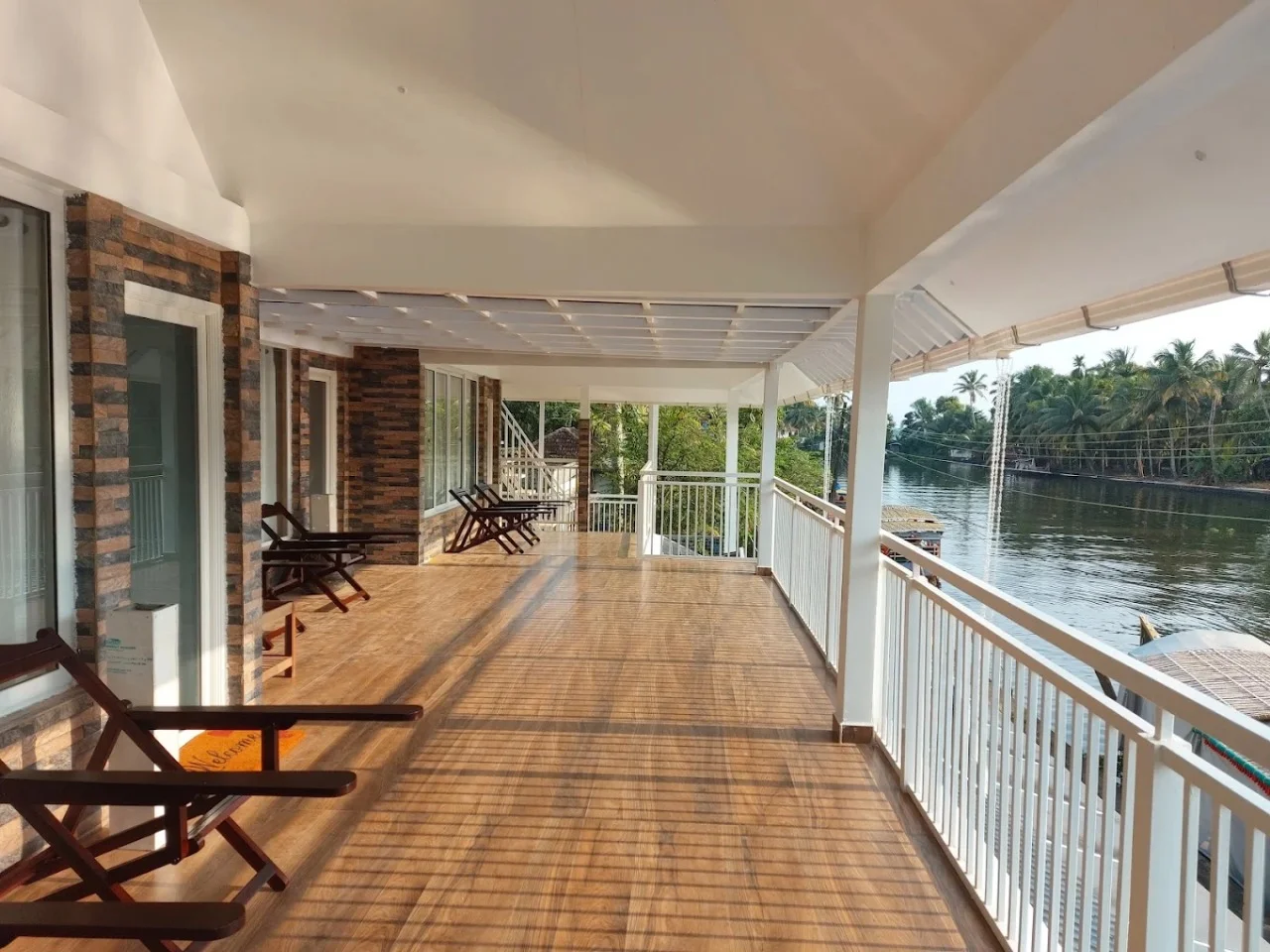
Step onto the veranda at Evaan’s Casa and the first thing you notice is the water. It’s everywhere.
The lake is higher than usual — Vembanad swells in the monsoon, creeping up the roots of the coconut palms. Some mornings the water is so still you can see the clouds reflected in it, like the sky doubled itself. Then the rain comes — not a drizzle, but a solid curtain of sound. It hits the tin roof like a thousand tiny drums. The frogs go quiet, then start up again.
To the east, the paddy fields are flooded. They look like a second lake, green shoots poking through the surface. The farmers here plant in June, just before the rains. By August, the rice stalks are waist-high, swaying in the wind. You can smell the wet mud and the grass — a clean, sharp smell that stays with you.
Honestly, from the homestay, you see the real Kerala — not the tourist version. No houseboats clogging the canals. Just the occasional kettuvallam (the old cargo boats) chugging past, loaded with coconuts or sand. The men on board wave. They always wave.
What’s around the island once you’re there?
Our island is small — maybe a kilometer across. But it’s packed with life.
Walk the raised paths between the paddy fields. In August, the paths are muddy and slippery, but that’s part of it. You pass houses with tin roofs and bright blue doors. Women sit on the steps, cleaning fish or pounding spices. The smell of mustard seeds in coconut oil drifts from open kitchens. Kids run barefoot, chasing a ball made of rags.
There’s a tiny shop near the jetty — just a room with a wooden counter and a few shelves. They sell cold drinks, biscuits, and soap. The owner, an old man named Suresh, has been running it for forty years. He’ll tell you about the time the water rose so high in 2018 that the shop was underwater for three days. He stayed anyway.
Most people skip August, but the villages are alive then. The fishermen repair their nets on the banks. The toddy tappers climb the palms at dawn, barefoot, carrying clay pots. You hear the splash of oars before you see the boat. The diesel hum of a vallam boat — the small ones used for transport — is the soundtrack of the island.
One local quirk: the boat to the mainland runs on a loose schedule. It leaves when it’s full, or when the driver decides. Don’t rush. Just wait — someone will come.
Can you walk or explore the area nearby?
Yes, but not the way you think. There are no paved roads on the island. Just narrow paths through coconut groves and along the canals.
In August, some of these paths flood. You might need to wade through ankle-deep water for a stretch. The locals don’t mind — they just roll up their lungis and walk. I’d suggest you do the same. Bring sandals that can get wet. The mud is soft and cool under your feet.
If you want to go further, take a boat. I can arrange a small canoe — a vallam — for a couple of hours. You paddle through canals so narrow the palm fronds brush your head. The water is dark and still, full of lilies and floating leaves. Kingfishers sit on the branches. Sometimes a water snake slides past, disappearing into the reeds.
Or you can visit the nearby village of Kumarakom — it’s about 30 minutes by boat. There’s a church there from the 1800s, and a small market on Tuesdays. Most people stick to the houseboats, but the real life is in these villages. The smell of fried fish and the sound of temple bells. The way the light falls through the rain clouds.
Look, here’s the thing: August isn’t for everyone. Some guests find the rain claustrophobic. The humidity sticks to your skin. The mosquitoes are persistent — bring repellent, and use the nets we provide. But if you want to see the backwaters as they are, not as a postcard, this is the month.
At Evaan’s Casa, we keep things simple. Clean rooms with lake views. Fans and mosquito nets. Hot water when you need it. Meals prepared at the homestay — home-style Kerala food, with fresh fish from the lake and vegetables from the village. The veranda opens right onto the water. You can sit there for hours, watching the rain come and go.
One more thing: the sunsets in August are muted — all greys and soft blues. But sometimes, just before the rain clears, the sky turns a pale gold. It doesn’t last long. Maybe five minutes. But you’ll remember it.
Frequently Asked Questions About Alleppey homestay in August
How far is Evaan’s Casa from Alleppey town?
It’s about 20 minutes by auto-rickshaw to the jetty, then a 6-minute boat ride. The boat is free — I’ll pick you up myself. No road access, which is the whole point.
Is it safe to travel to Alleppey in August with all the rain?
Yes, generally. The backwaters are used to monsoon. Just check the weather forecast — if a cyclone is brewing, we’ll reschedule. The homestay is on high ground, so flooding isn’t a problem here.
What should I bring for an August stay at a homestay?
Light cotton clothes that dry fast. A rain jacket or an umbrella. Sandals that can get muddy. Insect repellent. A book for the rainy afternoons. And a sense of patience — the boat doesn’t run on a strict schedule.
Is WiFi available at Evaan’s Casa?
We have a basic connection, but it’s slow in August because of the weather. Some guests like that — it forces them to disconnect. If you need solid internet for work, this might not be the best time. But if you want to read, sleep, and watch the rain, it’s perfect.
Some guests disagree, and that’s fair. The monsoon isn’t everyone’s cup of tea. But for those who come, it’s a different Kerala. The water is closer. The air is cleaner. The pace is slower.
Feel free to reach out if you have questions. I’m usually on the veranda, watching the lake. Come visit — the boat’s waiting.
Plan your stay at Evaan’s Casa
- Lake view homestay in Alleppey (Alappuzha)
- Where to stay in Alleppey: the complete guide
- Alleppey room booking: rooms and prices from ₹1,900
- Budget homestay in Alleppey under ₹2,000
- Backwater homestay on Vembanad Lake
- Punnamada homestay, Alappuzha
- Family homestay in Alleppey
- Honeymoon package and couple stay
Book direct on WhatsApp +91 88484 96667