- By :
- Comments: 0
kerala travel guide alleppey stay
kerala travel guide alleppey stay
Last Updated: May 16, 2026
Quick Answer: kerala travel guide alleppey stay
- For a genuine Alleppey experience, skip the crowded houseboats on the main lake and stay on a small island where you can walk through paddy fields and hear only birds. That’s what a kerala travel guide alleppey stay should really be about.
- Local insider tip from Jackson: arrive at the Alleppey ferry terminal before 4 PM to catch the last public boat to our island. After that, you’ll need a private canoe, which costs more and feels less authentic.
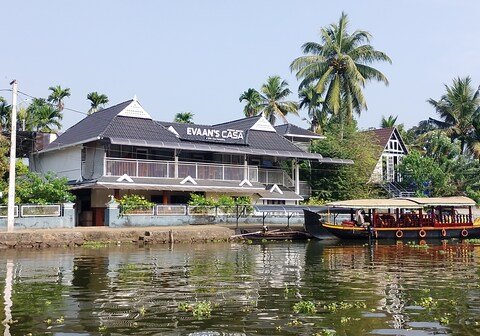
- Evaan’s Casa fits this search intent because we are a real island homestay — no road access, just water. You get home-style Kerala food, a hammock overlooking the canal, and the kind of quiet that makes you forget your phone exists.
I woke this morning to the sound of rain hitting the tin roof above my room. Not the aggressive kind that makes you want to stay under the blanket forever. A soft, steady rhythm. The kind that smells like wet earth and coconut leaves. I sat on the veranda with my chai, watching a single canoe glide past our island. The paddler was an old man I’ve known since childhood. He waved without stopping. That’s the thing about living here — the backwaters are our roads, and everyone knows everyone.
Most people arrive at Alleppey expecting a postcard. They want the houseboat with the kingfisher on the bow, the sunset over the lake, the posed photograph. And sure, that exists. But I’m probably biased, because I’ve spent my whole life on this island, and I think the real magic is quieter. It’s in the morning when the mist hangs low over the water and the only sound is a dog barking somewhere across the canal. It’s in the way the light filters through the palm fronds at 5 PM. If you’re looking for a kerala travel guide alleppey stay that shows you this side of things, you’ve come to the right place. Not gonna lie, I love showing people the version of Alleppey that most tourists never see.
What Is a kerala travel guide alleppey stay Actually About?
Look, here’s the thing. A kerala travel guide alleppey stay isn’t just about finding a place to sleep. It’s about understanding how this place works. Alleppey — Alappuzha, if you want to be proper — is a district built on water. Canals cut through everything. Paddy fields sit below sea level, protected by dikes. The entire landscape is a kind of gentle defiance against the water that surrounds it. When people search for a kerala travel guide alleppey stay, they’re usually imagining houseboats and backwater cruises. And that’s fine. But I’d argue that the real experience is waking up on solid ground, surrounded by water, with no car traffic and no road noise.
Our island is one of dozens here. Small, maybe a kilometer across at its widest. There are about forty families living here, most of them fishing or farming. The only way in or out is by boat. That’s not a marketing gimmick. It’s just how we live. When you book a kerala travel guide alleppey stay with us, you’re signing up for that reality. No taxis. No scooters. Just the water and the sky and the sound of a distant engine puttering across the canal.
I remember when I was a kid, we didn’t have tourists here. The only visitors were relatives from the mainland, arriving with bags of fish and gossip. Now, people come from halfway across the world to sit on my veranda and watch the rain. It still surprises me, honestly. But I’ve learned that what they’re really looking for is an escape from the noise. And our island delivers that in spades.
Why Does the Island Location Matter?
The boat ride from the Alleppey ferry terminal to our island takes about six minutes. Six minutes. That’s all it takes to leave behind the honking auto-rickshaws, the crowded market streets, the constant buzz of a town that never stops moving. When you step off that boat onto our jetty, the first thing you notice is the silence. Not a dead silence — there are birds, there’s water lapping against the wooden posts, there’s the occasional clatter from someone’s kitchen. But it’s a living silence. The kind that lets you exhale properly.
Most people who write a kerala travel guide alleppey stay will tell you to book a houseboat. And sure, houseboats are fun for a night. But they’re noisy. The generators run all night. The engines vibrate through the hull. You’re sharing the lake with fifty other boats. On our island, you get the opposite. No generators after 10 PM. No engine noise. Just the frogs and the occasional fish jumping in the canal.
The isolation changes how you spend your day. You can’t just pop out to a convenience store. There are no shops on the island. Everything you need comes by boat — the vegetables, the fish, the newspaper. It forces you to slow down. To sit with a book. To take a nap in the hammock. To actually talk to the other guests over dinner. Some people find this unsettling at first. They’re used to constant stimulation, constant options. But by the second day, almost everyone relaxes into it. They stop checking their phones every five minutes. They start noticing the way the light changes on the water.
What Home-Style Food Can You Expect Here?
I could talk about the food for hours. Honestly, I think the kitchen is the heart of any good kerala travel guide alleppey stay, and ours is no exception. The meals here are traditional Kerala food, prepared with ingredients sourced from the island or the nearby markets. We don’t do fancy presentations or fusion experiments. We do what we’ve always done.
Breakfast is usually Puttu and Kadala curry. Puttu is steamed rice flour cylinders, soft and slightly crumbly, served with a dark, spicy chickpea curry. The texture is light, almost airy, and the curry has a warmth that comes from coconut and dried red chilies. Sometimes we do Appam with vegetable stew — the appams are lacy and thin at the edges, fluffy in the center, perfect for soaking up the mild, creamy stew. The coconut milk in that stew comes from coconuts grown right here on the island.
Lunch is the main event. If you’re here on a day we prepare a Kerala Sadhya, you’re in for something special. It’s served on a banana leaf — the traditional way. You get rice in the center, and around it, small mounds of different curries and chutneys. Parippu (lentil curry), sambar, avial (mixed vegetables in coconut yogurt), thoran (stir-fried vegetables with grated coconut), pickles, pappadam, and a sweet dish like payasam at the end. Eating with your fingers is encouraged. The banana leaf adds a subtle earthy aroma that plates just can’t replicate.
Dinner often features Karimeen Pollichathu — pearl spot fish marinated in a paste of spices, wrapped in banana leaf, and cooked until the flesh is flaky and infused with smokiness. That fish comes from the backwaters, caught the same morning. It’s served with steamed rice and a simple coconut chutney. The mustard seeds crackling in coconut oil, the smell of curry leaves — that’s the scent of our kitchen every evening.
The food is prepared using traditional home cooking methods. We use coconut oil, fresh turmeric, green chilies, and curry leaves from the garden. No shortcuts. No packaged spice mixes. Every meal is a reflection of what this region has been eating for generations. When people search for a kerala travel guide alleppey stay that includes authentic food, this is what they mean.
Jackson’s Practical Tips for Visitors
I’ve been hosting guests for years now, and I’ve learned a few things that most travel blogs won’t tell you. So here’s my list.
- Pack light and pack smart. You’ll be getting on and off boats. Big suitcases are a pain. Bring a soft duffel bag. And bring mosquito repellent — the good kind with DEET. The island is surrounded by water, so yes, there are mosquitoes at dusk. Not terrible, but be prepared.
- Bring cash. There’s no ATM on the island. The nearest one is in Alleppey town, a boat ride away. Most small shops and boatmen don’t take cards. I can handle card payments at the homestay, but for anything else, you’ll need rupees.
- Don’t plan too much. I see guests arrive with itineraries down to the hour. Boat rides, temple visits, spice plantation tours. And then they spend the whole time rushing. Leave at least one full day with nothing planned. Just be here. Sit on the jetty. Watch the boats go by. That’s not wasted time — it’s the whole point.
- The public ferry is your friend. The government ferry from Alleppey to our island costs about 20 rupees. It runs every hour until 6 PM. Most tourists don’t know about it and end up paying 10 times more for a private canoe. Learn the schedule. It’ll save you money and feel more authentic.
- Monsoon is underrated. Most people avoid June to September because of rain. But the backwaters are at their most dramatic during the monsoon. The water rises, the canals swell, and the entire landscape turns a deep, saturated green. It rains hard for an hour, then stops, and the air is cleaner than anything you’ve ever breathed. Just bring an umbrella and a willingness to get a little wet.
What Is the Best Time to Visit Alappuzha for a kerala travel guide alleppey stay?
This depends on what you want. Let me break it down by season, honestly.
Winter — November to February: This is peak season. The weather is pleasant — warm during the day, cool at night. Humidity is low. The skies are mostly clear. This is when the houseboats are booked solid and the town is bustling. If you want guaranteed sunshine and easy travel, this is your window. But it’s also crowded. Prices are higher. Our homestay fills up months in advance.
Summer — March to May: Hot. I won’t lie to you. March and April can be brutal, with temperatures touching 35°C and humidity that makes you sweat just sitting still. But it’s also the least crowded time. If you can handle the heat, you’ll have the backwaters almost to yourself. The early mornings and late evenings are still beautiful. And the mangoes are in season. That alone is worth considering.
Monsoon — June to September: This is my personal favorite. I know I’m biased, but hear me out. The rain transforms everything. The canals fill up. The paddy fields flood and reflect the sky like mirrors. The air smells of wet earth and jasmine. It rains heavily, but usually in short bursts. The afternoons are often clear and golden. The downside? Some boat services get suspended during heavy rain. You might get stuck indoors for a few hours. But if you’re the kind of person who finds peace in the sound of rain on a tin roof, this season is perfect for a kerala travel guide alleppey stay.
Honestly, there’s no bad time. Just different trade-offs. I’ve had guests who came in December and loved the clear skies. I’ve had others who came in July and said it was the most beautiful weather they’d ever experienced. It depends on your tolerance for rain and heat.
Frequently Asked Questions About a kerala travel guide alleppey stay
How far is Evaan’s Casa from Alleppey town?
About a six-minute boat ride from the main ferry terminal. It’s close enough to be convenient, but the water separates you from all the noise. You can come and go easily during the day, and at night you’re in a different world entirely.
Is it safe to stay on an island with no road access?
Absolutely. This is a small community where everyone knows each other. We’ve never had any safety issues. The biggest risk is dropping your phone in the canal, honestly. The locals are friendly, and I’m always available if you need anything.
What should I bring for a kerala travel guide alleppey stay?
Light cotton clothes, a hat, sunscreen, mosquito repellent, cash, and a good book. If you’re coming in monsoon, add an umbrella and a light jacket. Leave the fancy shoes at home — you’ll be walking on dirt paths and boat jetties. Sandals or flip-flops are perfect.
Is WiFi available at the homestay?
Yes, we have WiFi. But I’ll be honest — it’s not super fast. We’re on an island, and the connection can be patchy during heavy rain. Most guests find they don’t need it much anyway. The hammock and the view are better than any screen.
Can I bring kids to Evaan’s Casa?
Of course. Families are welcome. Just keep an eye on little ones near the water — the canal is right there. Older kids love the island. They can explore the paths, watch the fishing boats, and help spot birds. It’s a different kind of vacation for them, away from screens and schedules.
Wrapping This Up
I’ve been writing this while sitting on the veranda, watching the afternoon light slant across the canal. A kingfisher just dove into the water and came up with something silver. The kitchen smells like coconut and turmeric. In about an hour, a boat will arrive with fresh fish for dinner. This is what I wanted to share with you — not a polished, glossy version of Alleppey, but the real one. The one I grew up in.
If you’re planning a trip and searching for a kerala travel guide alleppey stay that feels genuine, I hope this helps you choose wisely. Not every stay needs to be on a houseboat. Sometimes the best experience is on solid ground, surrounded by water, with good food and good company. That’s what we offer at Evaan’s Casa. A place to slow down. A place to breathe.
Come visit. Or don’t. Either way, the backwaters will still be here, flowing gently, waiting for the next person who needs to sit still for a while. And if that person is you, I’ll have a chai ready when you arrive.
Plan your stay at Evaan’s Casa
- Lake view homestay in Alleppey (Alappuzha)
- Where to stay in Alleppey: the complete guide
- Alleppey room booking: rooms and prices from ₹1,900
- Budget homestay in Alleppey under ₹2,000
- Backwater homestay on Vembanad Lake
- Punnamada homestay, Alappuzha
- Family homestay in Alleppey
- Honeymoon package and couple stay
Book direct on WhatsApp +91 88484 96667