- By :
- Comments: 0
homestay away from city Alappuzha
homestay away from city Alappuzha
Last Updated: August 17, 2026
Quick Answer: homestay away from city Alappuzha
- It’s a 6-minute boat ride to an island with no roads, just paddy fields and palms on Vembanad Lake.
- Insider tip: take the 6:15 am public ferry from the town jetty — you’ll see the lake wake up before any tourists do.
- Evaan’s Casa gives you that quiet, simple backwater life, yet you’re never more than 20 minutes from Alappuzha town.
The path down to the jetty is soft with dried palm fronds. Dusk paints the water grey and gold. I carry a small torch, though I know every root and stone by heart. The boatman’s diesel engine coughs once, then settles into a low hum. This is how every day here begins to end — with the sound of water against wood.
I’m Jackson. I grew up on these backwaters, and I’ve been hosting at Evaan’s Casa for years now. People often ask what a homestay away from city Alappuzha actually feels like, day to day. Not the brochure version. The real one. Let me walk you through it.
What is a typical day at homestay away from city Alappuzha like?
The first boat engine of the day cuts through sleep around 5:45 am. It’s a fisherman heading out, or a farmer crossing to the mainland. You hear it before you see light. Then the birds start — cormorants, kingfishers, the occasional egret complaining about something.
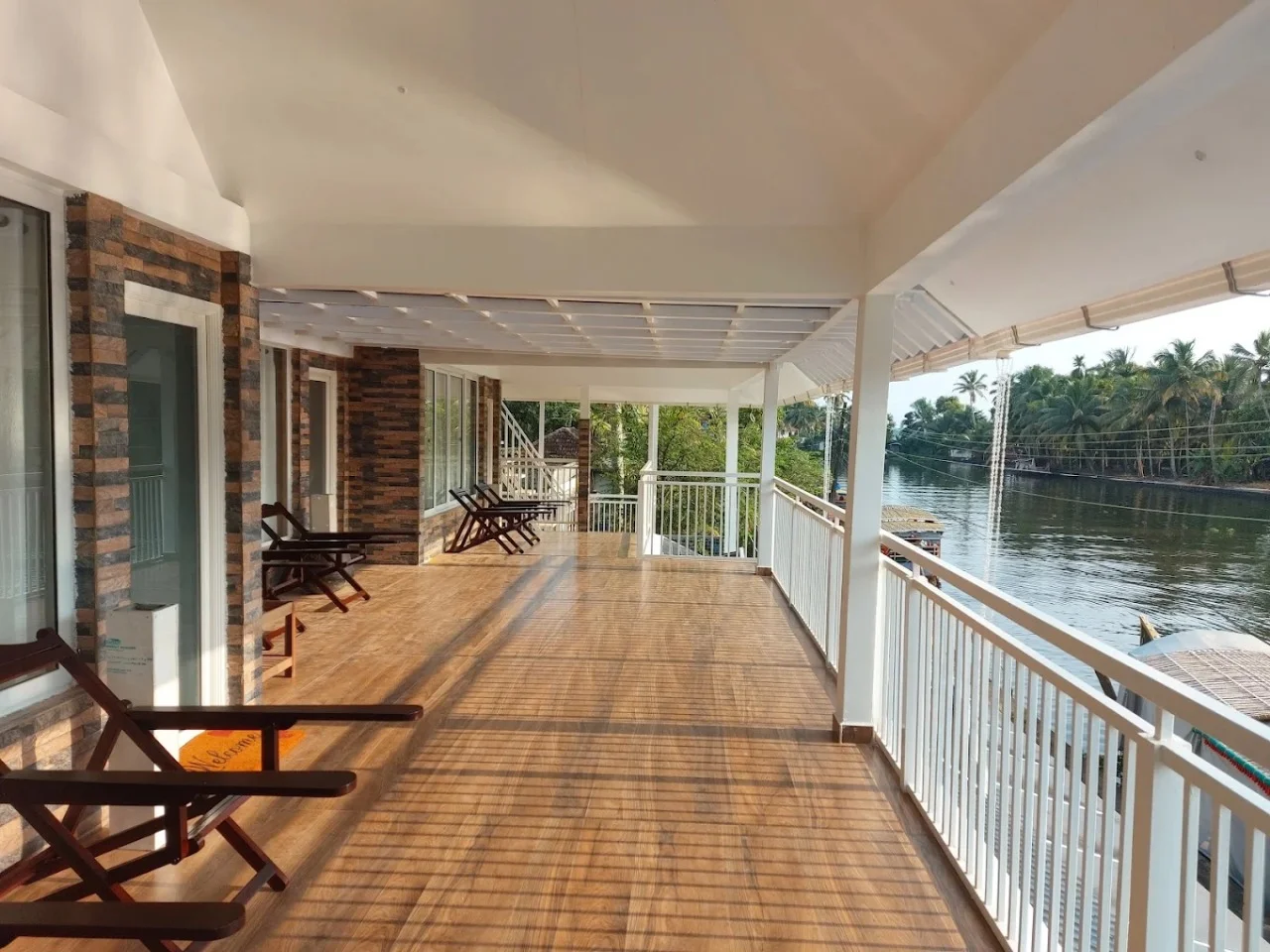
I’m usually up with the kettle. The veranda faces east, so the morning sun hits the water directly. Mist sits low over the paddy fields. You can smell the damp earth, the coconut oil from last night’s cooking, the faint diesel from the boats. It’s not fancy. It’s just alive.
Most guests are surprised by how much they hear — and how little they need to do about it. There’s no traffic, no horns, no city hum. Just the rhythm of the lake. That’s the whole point of a homestay away from city Alappuzha. You trade noise for sound.
Honestly, some guests wake up disoriented the first morning. No road outside. No car doors slamming. Just water and sky. By day two, they stop checking their phones. By day three, they’re asking me about the names of the birds.
What are the mornings like on the island?
Breakfast is served when you’re ready, not before. Home-style Kerala food — puttu and kadala, or appam with vegetable stew. The homestay kitchen uses coconut milk fresh from the morning grind. Mustard seeds crackle in coconut oil somewhere behind the wall. You eat on the veranda, feet on the cool stone floor.
The public ferry passes around 7:15. It’s packed with school kids in pressed uniforms and women with steel lunch boxes. They wave. You wave back. That’s the thing about island life — everyone knows everyone. The ferry stops at our little jetty, so you can hop on and head to town if you want. Most guests don’t. They stay.
Some mornings I take guests out in my vallam, the traditional wooden boat. We glide through narrow channels between the paddy fields. The water is still, mirroring the clouds. Fishermen cast their nets with a practiced flick. I point out the village of Kainakary across the lake, where the church bells ring at 8 sharp.
If it’s monsoon season, the rain comes sudden and loud. Tin roof, heavy drops, the whole world turned to water. We sit inside, drink chai, and watch it pour. The smell of wet earth fills every room. Some guests worry about the rain; I tell them it’s the best time. The lake swells, the greens turn electric, and the quiet gets even quieter.
One tip: bring a good book. There’s no WiFi in the rooms — only in the common area, and it’s slow on purpose. Most people skip this, but a hammock under the palm grove with a novel is the single best way to spend a rainy morning here. I’m probably biased, but I think it beats any sightseeing.
How do the evenings wind down here?
By 4 pm, the heat softens. The light turns honey-coloured. Guests drift back to the veranda after their afternoon naps or slow walks along the bund. I bring out lime soda, salty and cold, with a sprig of curry leaves from the garden.
The evening ferry brings the school kids home. Women wash clothes at the community steps. The smell of woodsmoke starts to drift from neighbouring houses — dinner fires being lit. It’s a quiet, settled hour. The lake turns glassy, reflecting the palms upside down.
Dinner is served around 7:30 or 8, whenever you ask. Kerala fish curry with pearl onions, or a simple thoran with fresh greens from the market in Alappuzha town. Meals are prepared at the homestay, and they come with rice, pickles, and a bowl of something comforting. You eat slowly. There’s nowhere to be.
After dinner, the stars come out properly. No streetlights here, just the moon on the water and the pinprick lights of distant villages. Sometimes a night boat passes, its engine a low thrum that fades into the dark. The frogs start their chorus. The air cools.
I sit on the veranda with a cup of black tea. Guests often join me, or they stay in their rooms with the mosquito nets drawn and the fans turning. The last ferry leaves the island at 8:30 pm. After that, the only way off is by private boat. Most nights, no one leaves at all. That’s the beauty of a homestay away from city Alappuzha — you’re not just visiting a place. You’re stepping into its rhythm.
If you’re thinking about it, come with time to spare. Don’t rush. The island will meet you at your own pace, just like it has for generations of families before. Evaan’s Casa is a small place — six rooms, one veranda, endless lake. That’s the whole of it.
Frequently Asked Questions About homestay away from city Alappuzha
How far is Evaan’s Casa from Alappuzha town?
About 20 minutes door to door. A short auto-rickshaw ride to the jetty, then a 6-minute boat ride across the channel. No roads, no bridges — that’s the charm. You leave the town noise behind at the water’s edge.
Is it safe to stay on an island with no road access?
Yes, very safe. The community here is tight-knit, and the boatmen know every passenger by face. We have life jackets on all our boats, and the jetty is lit at night. I’ve hosted solo travellers, families with kids, and elderly guests — all have been fine. The only real danger is falling asleep in the hammock and missing sunset.
What should I bring for a stay here?
Comfortable clothes, mosquito repellent (though we have nets and coils), a torch for late-night veranda sits, and any books you’ve been meaning to read. Most guests also bring slippers for the muddy paths after rain. Don’t bother with fancy shoes — you’ll leave them in the room.
Is WiFi available at the homestay?
There’s WiFi in the common area, but it’s basic and can be patchy. The rooms have no internet on purpose. Some guests disagree, and that’s fair. But most find that disconnecting for a few days is exactly what they needed. If you must work, the connection works for emails, just not video calls.
How much does a stay cost?
Rates vary by season, but it’s honest and fair for what you get — clean rooms, lake views, two home-style Kerala meals a day, and the boat transfers. No hidden charges, no resort markups. Write to us through Evaan’s Casa and we’ll give you the exact figure for your dates.
—
Come for the quiet. Stay for the rice and the rain. Leave with a slower heartbeat. That’s the real promise of this place — not a checklist, but a pause. The boats will still be running, the palms will still sway, and the lake will still hold your reflection long after you’ve gone home.
Plan your stay at Evaan’s Casa
- Lake view homestay in Alleppey (Alappuzha)
- Where to stay in Alleppey: the complete guide
- Alleppey room booking: rooms and prices from ₹1,900
- Budget homestay in Alleppey under ₹2,000
- Backwater homestay on Vembanad Lake
- Punnamada homestay, Alappuzha
- Family homestay in Alleppey
- Honeymoon package and couple stay
Book direct on WhatsApp +91 88484 96667