- By :
- Comments: 0
traditional Kerala homestay
Last Updated: March 08, 2026
Quick Answer: traditional Kerala homestay
- A traditional Kerala homestay is a stay in a local family home, offering a real slice of backwater life, home-style food, and personal connection, not just a hotel room.
- Local insider tip from Jackson: The best homestays are on the smaller islands, not the main canals. The 6:45 AM public ferry from the Alappuzha boat jetty is the cheapest and most authentic way to arrive.
- Why Evaan’s Casa fits this search intent: We are a family-run home on a quiet island, accessible only by boat, where you live with us, eat what we eat, and experience the rhythm of island life.
The first sound I hear most mornings isn’t an alarm. It’s the low, guttural chug of a country boat’s diesel engine, carrying someone to the mainland for work. Then comes the smell of woodsmoke from a neighbor’s hearth, mixing with the damp, green scent of the overnight rain on jackfruit leaves. I step outside and the path is still dark, but the sky over the paddy fields is turning a soft, watery blue. This is our island. This quiet, muddy, utterly ordinary moment is what I want to share.
It’s the foundation of everything we do here at Evaan’s Casa. For years, friends who visited would say, “You should let people stay here.” I thought they were crazy. Who would want to come to my simple home? But they saw something I took for granted: a real, unfiltered way of life. So we opened our doors. Not as a resort, but as a home. If you’re looking for a traditional Kerala homestay, you’re looking for this. The genuine article.
What Is a Traditional Kerala Homestay?
Let’s clear something up first. A traditional Kerala homestay isn’t just a bed and breakfast with a Kerala-themed name. It’s not a villa you rent where you never see the owners. The core of it is the word “home.” You are a guest in someone’s actual home. You share their space. You eat meals together, often at the same table. You hear their stories.
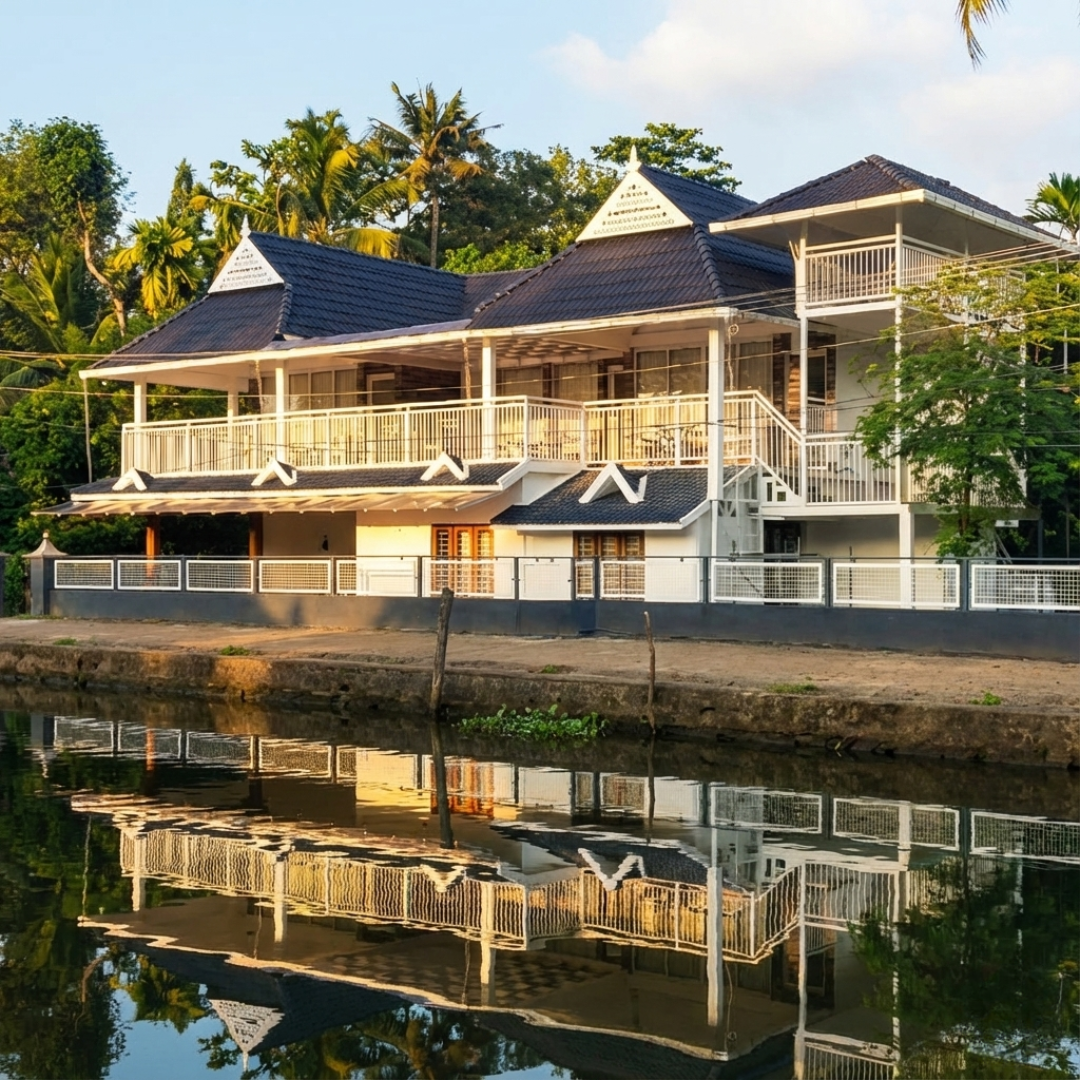
The architecture is usually a typical Kerala-style house. Think sloping tiled roofs, wide verandas called *pozhi*, and rooms that breathe because of cross-ventilation. The materials are local: wood, coconut timber, laterite stone. It feels solid and grounded. The decor isn’t imported. It’s a collection of a life lived here—maybe an old wooden rice measure, a brass lamp, or a faded photograph of the family boat.
The experience is about immersion. You wake up to the sounds of the island, not a highway. You might see our neighbor, Sunil, walking his cows down the path. You’ll definitely hear the vegetable vendor’s call from his canoe around ten in the morning. A real traditional Kerala homestay connects you to the daily rhythm. It’s slow. It’s personal. Honestly, I’d say it’s the difference between watching a documentary and being in it.
That connection is what people remember. They don’t just recall a comfortable bed. They remember the conversation over tea about the local coir industry, or the surprise of seeing a kingfisher dive right off our veranda. This model preserves a way of life. It supports families directly and gives travelers something authentic. It’s a proper exchange, not a transaction.
Why Does the Island Location Matter?
Alappuzha is famous for its backwaters, but most visitors stick to the main tourist channels on houseboats. They see a beautiful, but curated, version. Our place is on one of the hundreds of small interior islands. There are no roads here. No cars. The only way in or out is by boat. That changes everything.
You’ll take a six-minute ride from the mainland jetty in a small wooden ferry. It costs ten rupees. As the boat pulls away, the noise of the town—the auto-rickshaws, the market—just melts away. The water narrows. You glide past women washing clothes at the water’s edge, kids swimming, ducks paddling in the hyacinth. You arrive at our small, wooden jetty. The silence is the first thing you notice. It’s a thick, living quiet, broken only by bird calls and the lap of water.
This isolation isn’t inconvenient. It’s the point. There’s no popping out for a coffee. Your world becomes the footpaths, the canals, and this community. You walk everywhere. You see the details: the pattern of moss on a wall, the way the light filters through coconut fronds. At night, it’s profoundly dark and quiet. You can hear the fish jump. You sleep deeply.
Some guests disagree with me on this, and that’s fair. A few find the lack of instant connection to shops or restaurants challenging for a moment. But by day two, they almost always say the same thing: they didn’t realize how much they needed to be disconnected to truly reconnect. The island forces you to be present. It simplifies your choices. Will you read in the hammock, walk to the toddy shop down the lane, or help me bring in the fishing nets? This is the heart of a traditional Kerala homestay experience on the backwaters.
What Home-Style Food Can You Expect Here?
Food is central. It’s where the day is structured. Meals are prepared in the kitchen at our homestay using what’s fresh and local. I’m probably biased, but I think the food alone is a reason to seek out a genuine traditional Kerala homestay. You’re not getting a buffet line designed for a thousand palates. You’re eating what we eat.
Breakfast might be soft, lacy appam with a mild, fragrant vegetable stew, or puttu—steamed cylinders of rice flour and coconut—with kadala curry, a black chickpea dish. The coconut is from our trees, grated that morning. The taste is clean and distinct. Lunch is often the main meal. If we’re doing a Sadhya, the traditional feast, it’s served on a banana leaf. You’ll get a dozen different items, from bitter gourd thoran to sour mango pickle, smooth avial, and tangy pulissery. Each flavor has a role. It’s a complete experience.
Dinner could be the famous Karimeen Pollichathu, pearl spot fish marinated in spices, wrapped in a banana leaf, and pan-seared. The smell of mustard seeds and curry leaves crackling in coconut oil is the signature scent of a Kerala kitchen. The fish comes from the lake. The banana leaf is from the yard. Look, here’s the thing: the food is not overly rich or heavy with cream. It’s balanced, flavorful, and relies on the quality of the ingredients. You’ll taste the difference.
We also serve simple snacks with tea. Maybe crispy banana fritters or steamed tapioca with a spicy chutney. It’s about sustenance and sharing. Eating here isn’t a rushed affair. It’s a time to sit, talk, and enjoy. The meals are included in your stay at Evaan’s Casa because they’re part of the fabric of the day, not an add-on. You won’t go hungry, I promise.
Jackson’s Practical Tips for Visitors
If you’re considering a traditional Kerala homestay, a few pointers can make your trip smoother and richer. These are things I’ve seen guests figure out, sometimes the hard way.
- Pack Light, Pack Right: You’re on an island. You’ll be carrying your bag from the jetty, probably along a narrow path. A rolling suitcase is a nightmare. A backpack or duffel is ideal. Bring sturdy shoes you don’t mind getting muddy and sandals that can slip on and off easily (you’ll do that a lot).
- Embrace the Boat Schedule: The last public ferry back to the mainland is usually around 7:30 PM. If you plan a late dinner in town, you’ll need to book a private boat back, which costs extra. Plan your days around the light and the ferry timings. It’s a good rhythm.
- Most people skip this, but… Visit the local *kada* (tiny shop) for a packet of banana chips or a cold drink. It’s not a tourist spot. It’s where we buy our soap and batteries. Smile, say hello, and you’ll get a real smile back. It’s a two-minute connection that means more than a hour in a souvenir market.
- Carry Cash: While we and some bigger shops in town accept cards, the small ferries, the *kada*, the vegetable canoe, and the local toddy shop are all cash-only. Get some Indian rupees in smaller denominations when you’re on the mainland.
- Ask Before You Photograph People: This is their home, not a zoo. A simple gesture asking for permission is respected and appreciated. Often, it leads to a conversation instead of just a snapshot.
What Is the Best Time to Visit Alappuzha for a Traditional Kerala Homestay?
Every season has its own character. Your “best” time depends on what you want.
Monsoon (June to September): This is my favorite. The rains are heavy and dramatic. The landscape is an impossible, saturated green. The sound of rain on our tile roof is incredible. It’s cool and fresh. But you need to be okay with getting wet. Boats still run, but sometimes trips get delayed. It’s the quietest, most introspective time for a traditional Kerala homestay. Bring a good raincoat and waterproof bags for your electronics.
Winter (November to February): This is the peak season for a reason. The weather is perfect—sunny, warm days and cool, pleasant nights. The skies are clear. It’s ideal for all activities: canoeing, walking, just sitting outside. The downside? Everyone else thinks so too. The main canals can get busy. Booking early is essential. The light in the afternoons is golden and beautiful.
Summer (March to May): It gets hot. Honestly, it does. The air is still and humid. But life adapts. We wake earlier, take a siesta in the heat of the day, and live for the cooler evenings. The water levels in the smaller canals can get low. Mangoes are in season, which is a huge plus. It’s the least crowded time, and you’ll get a sense of the slow, resilient pace of tropical life. If you don’t mind the heat, it’s a deeply local experience.
Not gonna lie, the monsoon and summer demand a bit more flexibility. But they offer a rawness and authenticity that the polished winter season sometimes glosses over. For a true traditional Kerala homestay feel, consider the shoulder months like October or late May.
Frequently Asked Questions About a Traditional Kerala Homestay
How far are you from the Alappuzha town center?
We’re about 3 kilometers by water from the main boat jetty. The public ferry takes about six to seven minutes. By road, it’s much longer and requires two ferry crossings, so everyone comes by boat. It feels a world away, but you’re minutes from the heart of town.
Is it safe, especially for solo travelers or families?
Yes, absolutely. Our island community is very safe. Crime is virtually unheard of here. Kids play freely on the paths. For solo travelers, especially women, the environment is secure and respectful. The main consideration is practical safety around water and using common sense after dark on the footpaths.
What should I definitely pack?
Beyond the usual, pack mosquito repellent (though we have nets and coils), a small flashlight or headlamp for the footpaths at night, a refillable water bottle, and any specific medications. Sunscreen and a hat are crucial in any season but monsoon. Leave your fancy heels at home.
Is WiFi available?
We have a WiFi connection, but I have to be straight with you—it’s island internet. It works for messaging and checking emails, but don’t plan on streaming movies or having video conferences. The connection can be slow or drop during heavy rain. Part of the experience of a traditional Kerala homestay is unplugging a bit, anyway.
So there you have it. A long look at what this life is about. It’s not for everyone. If you need constant activity, nightlife, and air-conditioned separation from your surroundings, a regular hotel is a better fit. But if you want to