- By :
- Comments: 0
things to see in Alleppey
things to see in Alleppey
Last Updated: April 09, 2026
Quick Answer: things to see in Alleppey
- The essential things to see in Alleppey are the backwater canals, the vast Vembanad Lake, the historic Alappuzha Beach and lighthouse, and the rhythm of village life on the islands.
- My local tip: Skip the crowded main jetty. For a quieter, more authentic backwater experience, hire a small canoe from a village landing point like Finishing Point early in the morning.
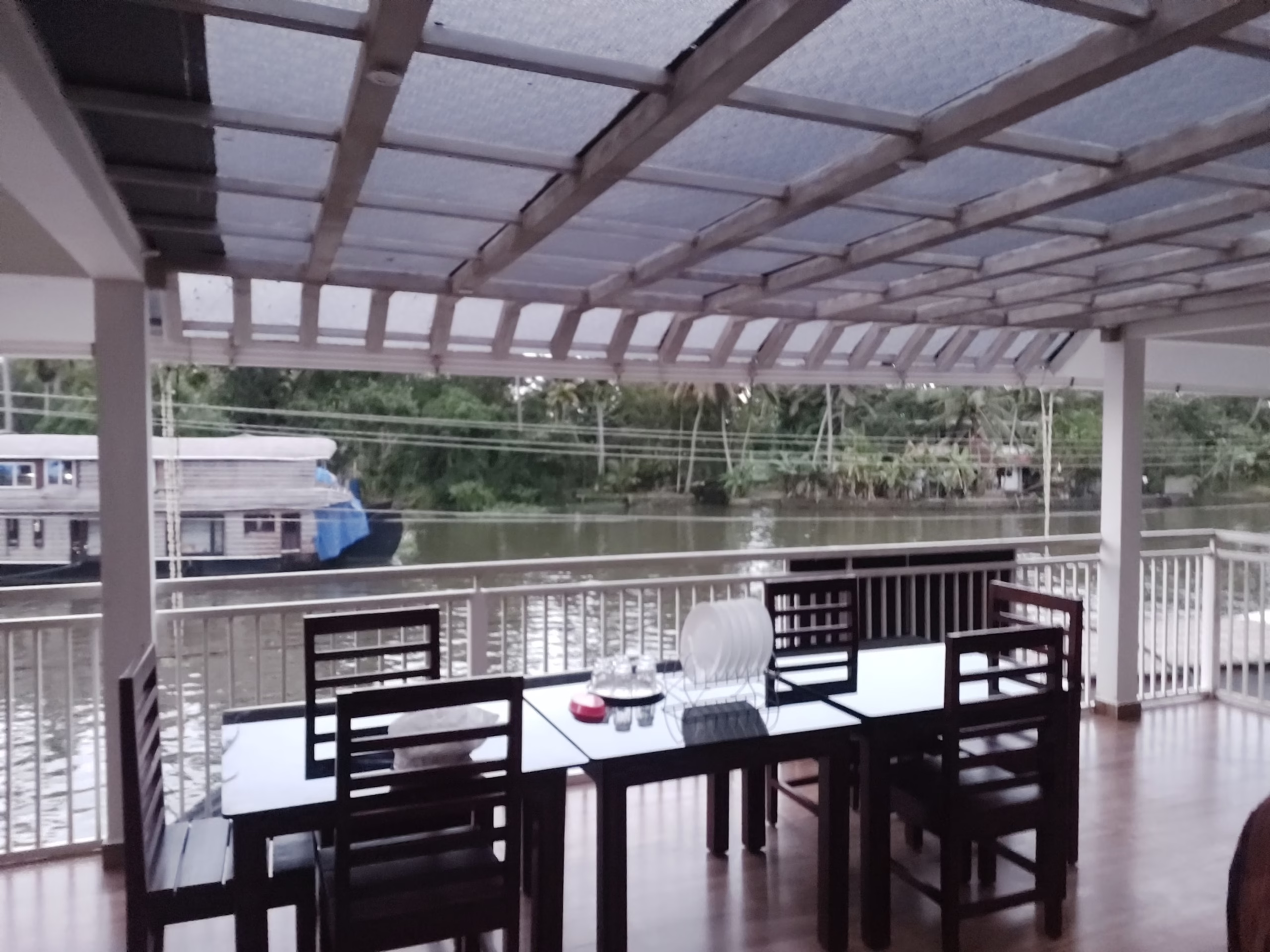
- Staying at Evaan’s Casa puts you right in the middle of it. Our island homestay is your base to experience the real, unhurried things to see in Alleppey from the water itself.
I woke up before the sun this morning, the way I often do. The air was cool and carried the damp, clean smell of the water. From my window, I could hear the first soft splashes of oars as a neighbor pushed off in his small canoe, heading to check his fish traps. That specific, quiet sound—wood on water—is the real alarm clock here. It’s a world away from the tour bus chatter at the main boat jetty, and it’s the Alleppey I want you to know.
Most blogs will give you a list. They’ll tell you to go here, then there. But a list of things to see in Alleppey misses the point if it’s just landmarks. The magic isn’t just in the *what*, but in the *how*. It’s in the pace. It’s in the feeling of moving through green corridors on a boat, the smell of woodsmoke from a kitchen drifting across the water, the sudden, brilliant flash of a kingfisher diving. That’s what stays with you.
What Is “Things to See in Alleppey”?
When people search for things to see in Alleppey, they’re often picturing postcard shots of houseboats. And sure, those are part of it. But I think they’re asking for something deeper. They want to understand the place. So, what does that really mean here?
It means the ever-changing canvas of Vembanad Lake, which can be a sheet of glass at dawn and a choppy grey expanse by afternoon. It’s the intricate network of canals, some wide enough for a ferry, some so narrow the coconut palms brush your shoulders. It’s the architectural curve of the Chinese fishing nets at Alappuzha Beach, silhouetted against the sunset. It’s the quiet, purposeful activity in a village like ours: women washing clothes at the canal side, coir ropes being spun on old wheels, ducks being herded back home.
Honestly, I’d say the most important things to see in Alleppey aren’t always sights in the traditional sense. They’re scenes. They’re moments. It’s watching a skilled boatman pole a *kettuvallam* (that’s a traditional rice barge) through a tight turn without an engine. It’s the sudden, vibrant green of a paddy field after you round a bend. The list is just a starting point. The experience is what you come for.
Why Does the Island Location Matter?
Evaan’s Casa isn’t on the mainland. To get here, you take a six-minute shared ferry from the boat jetty. There’s no bridge. No road. Your auto-rickshaw drops you at the water’s edge, and that’s it. You step onto a boat, and the mainland’s noise begins to fade.
That short ride changes everything. The isolation isn’t scary—it’s freeing. When you arrive on our island, the pace of life immediately slows. The soundtrack becomes birds, water, and the distant hum of a boat engine. You can’t just hop in a taxi to go somewhere. You move at the speed of the ferry schedule or your own two feet. This forces you to be present.
You start to notice details. The way the light filters through the jackfruit tree in our yard. The geckos on the wall. The taste of the well water. Being on an island makes the backwaters your front yard. The primary mode of exploring the best things to see in Alleppey is literally outside your door. You’re not visiting the backwaters; you’re living in them for a little while. That perspective shift is, I think, the whole point.
What Home-Style Food Can You Expect Here?
The food here is a direct reflection of the landscape. It’s fresh, it’s seasonal, and it’s built on what the water and land provide. The kitchen at our homestay prepares traditional home cooking, the kind of meal you’d eat in a local household. It’s not restaurant-style with a huge menu. It’s about doing a few things really, really well.
Take Karimeen Pollichathu. That’s pearl spot fish, a local favorite from these very backwaters. It’s marinated with a paste of spices, wrapped in a banana leaf, and pan-grilled until the leaf blackens and the flavors steam right into the flesh. You unwrap it at the table, and the smell is incredible—earthy, spicy, and smoky all at once. We serve it with rice, a simple dal, and maybe some *thoran*, a dry stir-fry of green beans with grated coconut.
Breakfast might be soft, lacy appam with a mild, coconut-based vegetable stew. Or puttu—steamed cylinders of ground rice and coconut—with kadala curry, a black chickpea gravy. The ingredients are key. The coconut comes from the trees you see. The spices are bought in small batches from the market in Alappuzha town. The fish was likely swimming that morning. It’s simple food, but the quality of each component makes it extraordinary. Eating becomes a way to understand the place.
Jackson’s Practical Tips for Visitors
Alright, let’s get practical. Here are a few things I tell every guest who asks me about navigating the things to see in Alleppey.
- Hire a small canoe, not just a big houseboat. The large tourist boats can’t go into the narrowest, most beautiful canals. A small, non-mechanized canoe with a boatman who poles it along is quieter, cheaper, and lets you get up close to the village life along the banks. You’ll see more birds this way, too.
- The ferry to our island stops at 9 PM. Plan your dinners in town accordingly. If you miss it, you’ll need to call for a private boat, which costs more. I’m probably biased, but having a home-style dinner here and watching the fireflies is a better use of an evening anyway.
- Bring a light rain jacket, no matter the season. The weather can turn quickly, especially on the water. A sudden, warm afternoon shower is common. It usually doesn’t last long, but you don’t want to be stuck in a canoe getting soaked.
- Visit the Mullakkal Temple area in the early evening. Most tourists just see the temple. But the surrounding streets come alive with small stalls. Look for the old man selling *ada*, a steamed rice cake with a sweet coconut-jaggery filling, from a cart near the southern gate. It’s a perfect snack.
- Don’t over-schedule. This is my biggest tip. Leave time to just sit. Read a book in a hammock. Watch the boats go by. The best moments here are often the unplanned ones, the quiet gaps between the official things to see in Alleppey.
What Is the Best Time to Visit Alappuzha for Things to See in Alleppey?
Every season paints the backwaters a different color. Each has its own feel, and its own trade-offs.
Monsoon (June to September): The landscape is explosively green. The rains fill the canals and lakes, and everything feels lush and alive. The sound of rain on a tin roof is pure magic. But, it rains. A lot. Boat trips can be cancelled during heavy downpours, and moving around requires more flexibility. It’s beautiful, but it’s not for someone who wants guaranteed sunshine.
Winter (November to February): This is the classic, postcard season. The skies are clear, the air is cooler and less humid, and the light is perfect for photography. It’s also the busiest time. The main waterways can get crowded with houseboats. If you visit in winter, starting your day early is non-negotiable to beat the crowds to the best things to see in Alleppey.
Summer (March to May): It gets hot. I won’t sugarcoat it. The afternoons can be still and warm. But the mornings and evenings are lovely. This is the time for the annual boat races, like the famous Nehru Trophy Race, which is an incredible spectacle of human power and coordination. It’s also the quietest tourist season, so you’ll have more space to yourself. Just plan your active exploring for the cooler parts of the day.
Frequently Asked Questions About Things to See in Alleppey
Is it safe to travel around Alleppey by myself?
Yes, absolutely. Kerala is a very safe state for travelers, including solo travelers. The people here are generally helpful and friendly. For women traveling alone, standard precautions apply—be aware of your surroundings, especially at night. Using registered ferry services and pre-arranged boat hires is the safest way to get around on the water.
How much does a backwater canoe trip cost?
Prices can vary, but for a two-hour trip in a small, non-mechanized canoe for two people, you can expect to pay between 800 and 1200 Indian Rupees. Always agree on the price, route, and duration before you get in the boat. The official boat jetty has fixed rates posted, but going to a smaller village landing can sometimes get you a better, quieter deal.
What should I pack for a stay on the island?
Comfort is key. Light, breathable cotton clothes, a solid pair of sandals you don’t mind getting wet, a sun hat, and sunscreen. Mosquito repellent is a good idea for the evenings. A power bank for your phone is useful, though we do have electricity and charging points at Evaan’s Casa. Most importantly, bring a sense of curiosity and a willingness to slow down.
Is WiFi available at the homestay?
We have a WiFi connection, but I have to be honest—it’s not super-fast fiber-optic. It’s good enough for checking emails and messaging. Streaming videos can be patchy. Some guests disagree with me on this, and that’s fair, but I actually see the slower connection as a feature. It encourages you to look up, to put the phone down, and to connect with the real world right in front of you. The things to see in Alleppey are best experienced offline.
Look, here’s the thing. A list can tell you where to point your camera. But it can’t tell you how the place will make you feel. The real magic of the backwaters seeps in during the quiet moments. It’s in the cup of black tea you sip as the morning mist burns off the lake. It’s in the friendly nod from a neighbor passing in his boat. It’s the deep, satisfying tiredness after a day spent in the open air.
My hope is that when you leave, you won’t just have a checklist of completed sights. You’ll have a collection of sensations—the cool canal water on your fingertips, the taste of fresh coconut, the specific shade of green of the paddy fields. You’ll have felt the rhythm of this place, even for just a few days. That’s the real souvenir. If you’re looking for that kind of experience, a base on the water where the days stretch out long and quiet, then we’d love to welcome you at Evaan’s Casa. Just remember to check the ferry timings.