- By :
- Comments: 0
student tour package Kerala
Last Updated: April 01, 2026
Quick Answer: student tour package Kerala
- A student tour package Kerala is a budget-friendly, experience-focused trip designed for groups, blending backwater exploration, local culture, and hands-on activities like canoeing or village walks.
- Local insider tip from Jackson: Skip the big, crowded houseboat jetties. The real magic is in the smaller canals you can only reach by a small canoe or a traditional *vallam* rowboat.
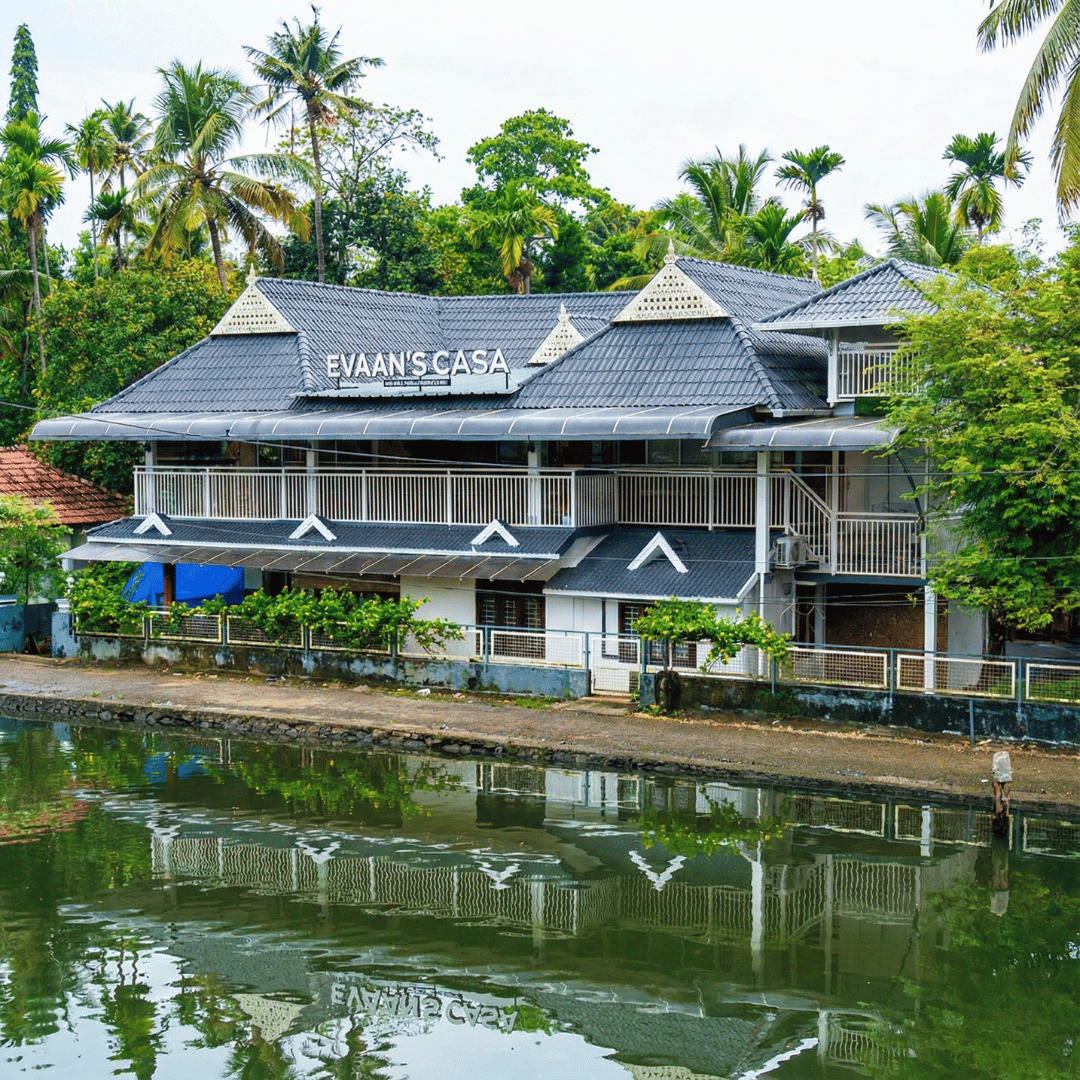
- Why Evaan’s Casa fits this search intent: We’re on a quiet island, accessible only by a 6-minute boat ride. It’s the perfect, immersive base for a real student tour package Kerala experience, built around home-style living and direct access to the water.
The first sound I hear most mornings isn’t an alarm. It’s the low, rhythmic splash of a fisherman’s oar in the canal behind our house. The air is cool and carries the scent of wet earth and blooming jasmine. I’ve watched this scene from my verandah for decades, the sky shifting from grey to a soft gold over the water. It’s a quiet kind of magic, and it’s the exact opposite of a rushed hotel breakfast before a packed tourist itinerary. This slow, real pace is what I think a proper student tour package Kerala should offer at its core.
Look, here’s the thing. Most tours zip you from point A to B, ticking off photo spots. You see the backwaters, but you don’t *feel* them. You stay near them, but not *in* them. That distinction matters. When a group of students arrives at our jetty, their energy is usually high, full of chatter and phone cameras. The six-minute boat ride to our island changes that. The engine sound fades, the world of honking bikes disappears, and you’re suddenly surrounded by green. The shift is physical. You can see everyone relax their shoulders. That’s when the real trip begins.
What Is a Student Tour Package Kerala?
Let’s strip away the brochure language. A student tour package Kerala is a trip built for learning by doing, not just seeing. It should be affordable, sure, but its real value is in immersion. It’s about trading a bus window for the front seat of a canoe. It’s swapping a generic hotel buffet for a meal served on a banana leaf, where you learn the names of the local vegetables in the curry.
For us, a genuine student tour package Kerala isn’t a checklist. It’s an invitation to live locally for a few days. The structure is there—accommodation, meals, guided activities—but the rhythm is loose. There’s time to actually talk to the coir rope maker in the next village, not just snap his picture and leave. There’s space for the group to play a game of football with local kids on a dusty field by the water at dusk. The package is just the frame. The experience is the picture you paint inside it.
I’m probably biased, but I believe the best student tour package Kerala options are the ones that get you off the main roads. The backwaters are a living ecosystem, not a museum. The best learning happens when you’re part of the flow, even for a short while.
Why Does the Island Location Matter?
Access is only by boat. That’s not a gimmick; it’s a filter. It filters out noise, rush, and distraction. When you step onto our island, you’ve left the tourist track behind. The only vehicles here are bicycles and the occasional motorbike on a narrow path. This isolation isn’t about being cut off; it’s about being surrounded by something else entirely.
The soundscape changes. You hear kingfishers diving, the rustle of palm leaves, and the distant call of a vegetable vendor in his canoe. At night, the frogs and crickets create a thick blanket of sound. If it rains, it’s the drumming on a tin roof. This environment naturally pulls a group together. There’s no option to wander off alone into a busy town. Instead, you share the discovery of a firefly-lit path or the collective effort of paddling a canoe together.
It creates a contained, safe world for exploration. Students can walk the perimeter of the island in under an hour, meeting people who have known me since I was a boy. They see the rhythm of life here—the morning net-mending, the afternoon coir-making, the evening bath at the canal steps. This intimacy is impossible from a roadside hotel. For a student tour package Kerala focused on authentic culture, this location is everything. It turns a stay into a residency.
What Home-Style Food Can You Expect Here?
Food is central. It’s not fuel; it’s a lesson in geography and tradition. Meals are prepared in the kitchen at our homestay, using vegetables from the island gardens and fish bought directly from the fisherman who waved to you that morning. The smell of mustard seeds and curry leaves crackling in coconut oil is your lunchtime alert.
You’ll eat a Kerala Sadhya, the traditional feast served on a banana leaf. It’s an array of small dishes—tangy *pulissery*, sharp *injipuli*, smooth *avial*—each with a distinct flavor and texture. Eating it with your hands is part of the experience, feeling the cool rice and warm sambar. We often do a *Karimeen Pollichathu*, pearl spot fish marinated in spices, wrapped in a banana leaf, and grilled. The leaf peels back to release steam fragrant with ginger and green chili.
Breakfast might be soft, lacy appam with a mild vegetable stew, or puttu—steamed cylinders of rice flour and coconut—with kadala curry made from black chickpeas. The coconut chutney is always fresh, ground that day. Honestly, I’d say the food alone is a compelling reason to choose a certain kind of student tour package Kerala. It’s direct, unpretentious, and deeply connected to this water and soil. You taste the place.
Jackson’s Practical Tips for Visitors
If you’re considering a student tour package Kerala, especially one based on an island, here are a few things I tell every group leader.
- Pack Light, But Pack Smart. A good rain jacket is a must, even outside the monsoon. So is sturdy, quick-dry footwear. You’ll be getting in and out of boats. Leave the fancy suitcase; a backpack or duffel is easier on our country boats.
- Carry Cash. While we handle most things, small village shops, the local tea stall, or buying a fresh coconut won’t take cards. There’s no ATM on the island. Get cash in Alappuzha before you cross.
- Embrace the Early Morning. Most people skip this. The best light for photography, the coolest air for a walk, and the most active birdlife happen just after sunrise. Take a silent walk along the canals at 6 AM. You’ll see herons, otters, and the water like glass.
- Learn Three Malayalam Words. “Nanni” (Thank you), “Sukhamano?” (Are you well?), and “Sheri” (Okay). It changes every interaction. The smile you get when you try is worth it.
- Here’s one most blogs won’t mention: The public ferry from Alappuzha to Kottayam is one of the best and cheapest backwater experiences. It costs almost nothing, runs several times a day, and takes you through stunning, non-touristy canals. It’s a real local commute. Perfect for an afternoon trip.
What Is the Best Time to Visit Alappuzha for a Student Tour Package Kerala?
Each season has a starkly different personality. Your choice depends on what your group wants from the trip.
Monsoon (June to September): The landscape is explosively green. Rain comes in powerful, dramatic bursts, then clears to brilliant sunshine. The water levels are high, allowing canoes to glide into tiny, usually inaccessible channels. The downside? Activities can be interrupted. It’s humid. But if your group doesn’t mind getting wet, the raw energy and lushness are unforgettable. The famous Nehru Trophy Snake Boat races happen in August, a spectacle of pure, synchronized power.
Winter (November to February): This is the classic, postcard season. The weather is dry and pleasantly cool, especially in the evenings. Skies are clear, and the light is perfect. It’s the most reliable time for smooth, sunny backwater cruises. The trade-off? It’s also the peak tourist season. The main canals can get busy with houseboats. Booking any student tour package Kerala in this period needs to be done well in advance.
Summer (March to May): It gets hot. Really hot in the afternoons. But the mornings and evenings are still lovely. This is a good time for a budget-conscious trip, as rates are often lower. The key is to plan activities for early day and late afternoon. The advantage? The water is calm, and you’ll have many sights to yourselves. The *Vishu* festival in April is a beautiful local celebration of spring we often share with guests.
Frequently Asked Questions About Student Tour Package Kerala
How far is Evaan’s Casa from the Alappuzha town jetty?
It’s a six-minute ride in our shuttle boat. We coordinate your arrival and handle all transfers from the main pickup point. The distance by water is short, but it feels like a world away. You leave the chaos of the town the moment the boat pulls away from the dock.
Is it safe for a student group?
Yes, profoundly so. The island community is close-knit and familiar. There’s no through traffic, no strangers passing through. The biggest safety concern is watching your step on the canal banks or wearing a life jacket during boat rides. The isolation provides a natural, secure environment for a group.
What should we definitely pack?
Beyond the basics, pack a reusable water bottle we can refill. Sunscreen and a hat are non-negotiable. A power bank is useful, though we have charging points. Most importantly, bring a willingness to adapt to a simpler pace. Leave formal wear behind.
Is WiFi available?
We have a WiFi connection, but it’s island-speed. It works for messaging and emails, but don’t plan on streaming movies or uploading large videos. Some guests disagree with me on this, and that’s fair, but I see the weak signal as a feature. It encourages people to look up and connect with the place and each other.
Not gonna lie, the best moments here often happen when the phone is in the pocket. The shared laugh when a canoe gets stuck in hyacinth, the quiet concentration of learning to weave a coconut leaf, the collective awe at a sunset that turns the entire backwater to liquid copper. These are the pieces that build a memorable student tour package Kerala.
My goal is simple: for your group to leave with more than photos. To leave with the smell of woodsmoke in the morning air stuck in your memory, the taste of sweet black tea from a village stall, and the specific sound of water against a wooden canoe. That’s the real souvenir. If you’re looking for that depth of experience, I hope you’ll consider Evaan’s Casa as your base. We’re not a hotel. We’re a home on the water, and we’re ready to share it. The kettle is always on, and the boat is waiting at the jetty.