- By :
- Comments: 0
seafood homestay Kerala
Last Updated: March 19, 2026
Quick Answer: seafood homestay Kerala
- A seafood homestay in Kerala is a local, home-style stay, usually on the backwaters, where your days are shaped by the water and your meals are built around the day’s fresh catch, prepared in traditional Keralite ways.
- Local insider tip from Jackson: The absolute best time to see the fish auctions is just after dawn, around 6:30 AM, at the Champakulam market. It’s loud, wet, and completely real.
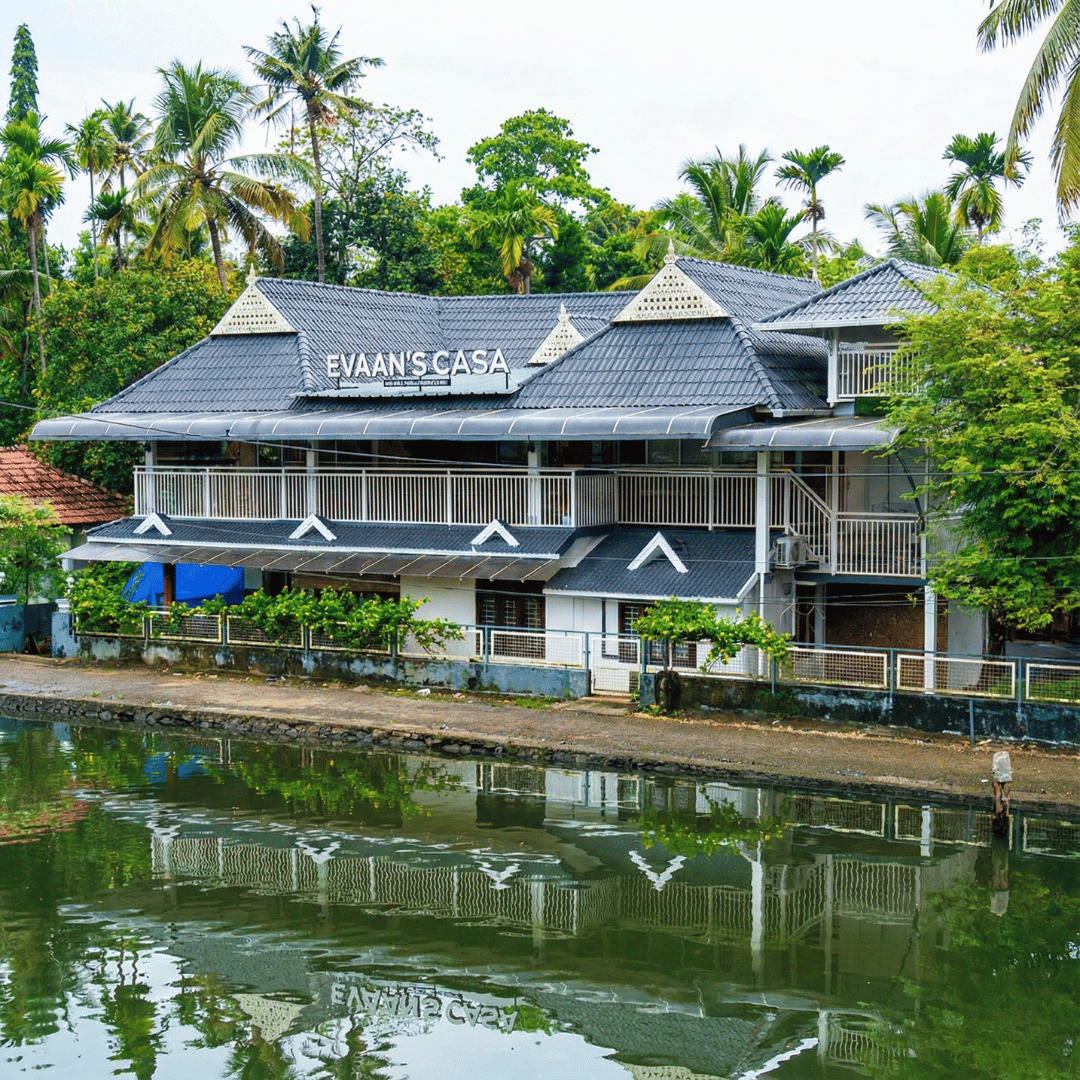
- Why Evaan’s Casa fits this search intent: We are an island homestay, only reachable by a six-minute boat ride. The fish for your lunch is often bought from the passing canoes, and the meals cooked here are the same ones we eat every day.
I woke up before the sun this morning, something I still do most days. The first sound wasn’t birds, but the soft, wet slap of a wooden oar against the water. One of the local fishermen was already out, his narrow canoe a dark silhouette against the grey pre-dawn light. I could smell woodsmoke from a kitchen fire on the opposite bank, mixed with the damp, green smell of the water hyacinths. This is the quiet pulse of the backwaters, a rhythm that hasn’t changed much in decades. It’s the rhythm we live by at our place, and it’s the heart of what we offer.
People often ask me what we do here. The answer is simple, but it takes a full stay to really feel it. We live on an island. We eat from the water. We share that with you. If you’re searching for a genuine, unpolished connection to this place, you’ve come to the right spot. This isn’t a resort experience. It’s a window into a life paced by tides and fishing nets.
What Is a Seafood Homestay Kerala?
Let’s break that phrase down, because it’s more specific than it seems. A homestay is just that—you stay in a home. Our home, in this case. The ‘seafood’ part isn’t about a fancy restaurant menu. It’s about geography and daily life. We are surrounded by water, and the local economy has always been tied to it. Your dinner is intrinsically linked to what the nets pulled up that afternoon.
A true seafood homestay in Kerala means the kitchen plans the day around the catch. It means you might see the fish being cleaned on the back steps. You’ll definitely smell the mustard seeds and curry leaves crackling in coconut oil for the morning’s fish curry. The experience is woven into the fabric of your stay, not presented as a separate dining option. It’s the default, not the special.
Honestly, I’d say the difference is in the sourcing. At a hotel, fish comes in a refrigerated truck. Here, it comes in a wet jute sack, handed up from a canoe. That immediacy changes everything—the flavor, the story, the connection you have to your meal. When you choose a seafood homestay in Kerala, you’re choosing to let the local environment dictate your daily rhythms.
Why Does the Island Location Matter?
Access is everything. To reach Evaan’s Casa, you park your car in a small village called Palamuttam. Then, you get into our country boat. The ride is six minutes. Six minutes is all it takes to leave the world of honking scooters and concrete behind. The sound changes. The air changes. The pressure in your chest changes, or so many guests tell me.
That short boat ride is a physical and mental threshold. There’s no road here. No vehicles. Everything arrives by boat—the food, the drinking water, the laundry, the guests. This isolation creates a particular kind of quiet. At night, the dominant sounds are frogs and the occasional distant hum of a houseboat generator. You can see a sky packed with stars, unobscured by any streetlight.
This isolation directly enables the seafood homestay Kerala experience. The water isn’t a view. It’s our highway and our pantry. Fishermen paddle past our jetty all day. We can flag them down, inspect their pomfret or karimeen, and buy it directly. The fish goes from water to kitchen in under an hour sometimes. You can’t get that level of freshness with road access. The island isn’t just a location; it’s the entire reason the food tastes the way it does.
What Home-Style Food Can You Expect Here?
Forget buffets and à la carte menus. Meals here are served at the table, family-style. They are the same traditional home cooking you’d find in any Malayali household, built from local ingredients and generations of culinary sense. The focus is on balance, spice, and the inherent flavors of incredibly fresh components.
Breakfast might be soft, lacy appam with a subtly sweet coconut milk-based vegetable stew. Or it could be puttu—steamed cylinders of ground rice and coconut—with a rich, black kadala curry made from chickpeas. The aroma of roasting coconut for the chutney is a morning alarm clock I never get tired of.
Lunch and dinner are where the water truly speaks. The star is often Karimeen Pollichathu, a pearl spot fish marinated in a masala of spices, wrapped in a banana leaf, and pan-grilled until the leaf blackens and infuses the fish with a smoky, tangy flavor. There’s also meen curry, a fiery, sour fish curry with a base of kokum and turmeric, perfect with a mound of red rice.
On request, we can serve a traditional Kerala Sadhya. This is a feast served on a banana leaf, with dozens of small dishes—sambars, avials, thorans, pickles, and multiple vegetable preparations—all leading up to a place of honor for the fish curry. Eating it with your hands is part of the experience; you taste the food in a different, more tactile way. Every meal ends with a simple, soothing payasam, a sweet milk pudding. The food is robust, flavorful, and honest. It’s meant to nourish and satisfy, not just impress.
Jackson’s Practical Tips for Visitors
Coming to an island homestay requires a slight shift in mindset. Here are a few things I tell every guest to make their stay smoother and richer.
- Pack Light, But Pack Smart. You’ll be carrying your bags onto a small boat. A soft-sided duffel is easier than a hard rolling suitcase. Bring a pair of sandals you don’t mind getting wet for the jetty, and a solid mosquito repellent. The mosquitoes aren’t terrible, but they exist.
- Carry Some Cash. While we can handle card payments for your stay, the local fishermen and the small village shops only deal in rupees. If you want to buy something directly from a canoe or grab a packet of banana chips from the thattu kada (street stall) near the boat landing, cash is king.
- Be Curious About the Canoes. When you hear a shout from the water, take a look. It’s likely a vendor. We get a coconut seller, a vegetable seller, and even a guy selling fresh toddy (the local palm wine) straight from his boat. It’s a floating supermarket.
- Most people skip this, but ask us to arrange a pre-dawn visit to the fish auction. It happens daily at the Champakulam market, about a 20-minute boat ride away. You need to leave by 5:45 AM. It’s chaotic, loud, and smelly, and it will show you exactly where your dinner comes from. It’s the real, unfiltered backwater economy in action.
- Embrace the Pace. There is no room service number to call. If you need something, you’ll find me or one of our staff. Things might take a little longer. That’s the point. Sit on the veranda, watch the water, and let the slower clock of the island reset your own.
What Is the Best Time to Visit Alappuzha for a Seafood Homestay Kerala?
Every season has its own character, and your preference depends on what you want from the trip.
Monsoon (June to September): This is my personal favorite, but I’m probably biased. The rains are heavy and dramatic. The backwaters swell, turning our island even greener. The sound of rain on our tin roof is incredible. The downside? Boat trips can be cancelled if the weather is too rough, and you’ll need good rain gear. The seafood, however, is fantastic—the fish are plentiful. It’s the most atmospheric, moody time for a seafood homestay in Kerala.
Winter (November to February): This is the classic tourist season for a reason. The weather is perfect—sunny, warm, with low humidity and cool evenings. The water is calm, ideal for sunset cruises in our canoe. It’s also the peak time for houseboats, so the main canals can get busy. Out here on our island, though, we’re removed from that bustle. It’s the most reliable time for smooth travel and outdoor activities.
Summer (March to May): It gets hot. Really hot, especially in May. The air can be still and heavy. The advantage? You’ll have the place almost to yourself. The light is intense and beautiful for photography. Mornings and evenings are still pleasant. It’s a good time for deep relaxation, reading in the shade, and taking very slow boat rides. Just be prepared for the heat in the middle of the day.
Frequently Asked Questions About Seafood Homestay Kerala
How far in advance should I book?
We’re a small place, with just a few rooms. For the winter months (Dec-Jan), try to book at least two to three months ahead. For monsoon or summer, a few weeks is usually fine. Last-minute slots do pop up sometimes, so it’s always worth checking Evaan’s Casa directly.
Is the seafood homestay safe for young children?
Yes, many families visit. The island is safe and contained. However, there is water everywhere, and the jetty is open. Children need constant, direct supervision. We don’t have special railings or pools, just the natural environment.
What if I don’t like fish or am vegetarian?
That’s absolutely fine. Kerala has a stunning variety of vegetarian cuisine. The Sadhya is entirely vegetarian. We can prepare delicious meals with local vegetables, lentils, and coconut-based dishes. You won’t go hungry. Some guests disagree with me on skipping the fish, and that’s fair, but the vegetarian food here stands powerfully on its own.
Is WiFi available on the island?
We have a WiFi connection, but I have to be straight with you—it’s satellite-based and can be slow, especially during heavy rains. It’s enough for messaging and emails, but don’t plan on streaming movies. Part of the experience is disconnecting a little. Most mobile networks get a decent signal, though.
So, that’s a look at life here. It’s not for everyone. If you need constant entertainment, air conditioning in every corner, and a minibar, you might find it too simple. But if the idea of a six-minute boat ride into a quieter world appeals to you, if you want to taste fish that was swimming at breakfast, and if you want to fall asleep to the sound of water, then you’ve understood what a seafood homestay in Kerala is all about. This life, on this island, is what we know. We’re happy to share it with you for a few days. We hope you’ll come and see it, feel it, and taste it for yourself. You can always find more about our little island home at Evaan’s Casa. Just listen for the sound of the oar in the water. We’ll be here.