- By :
- Comments: 0
registered homestay Alleppey
Last Updated: March 31, 2026
Quick Answer: registered homestay Alleppey
- A registered homestay in Alleppey is a government-approved accommodation in a local home, offering a legal, safe, and authentic Kerala backwater experience.
- Jackson’s tip: Look for the official green-and-white registration certificate displayed in the homestay lobby. It’s your guarantee of proper safety checks and local tax compliance.
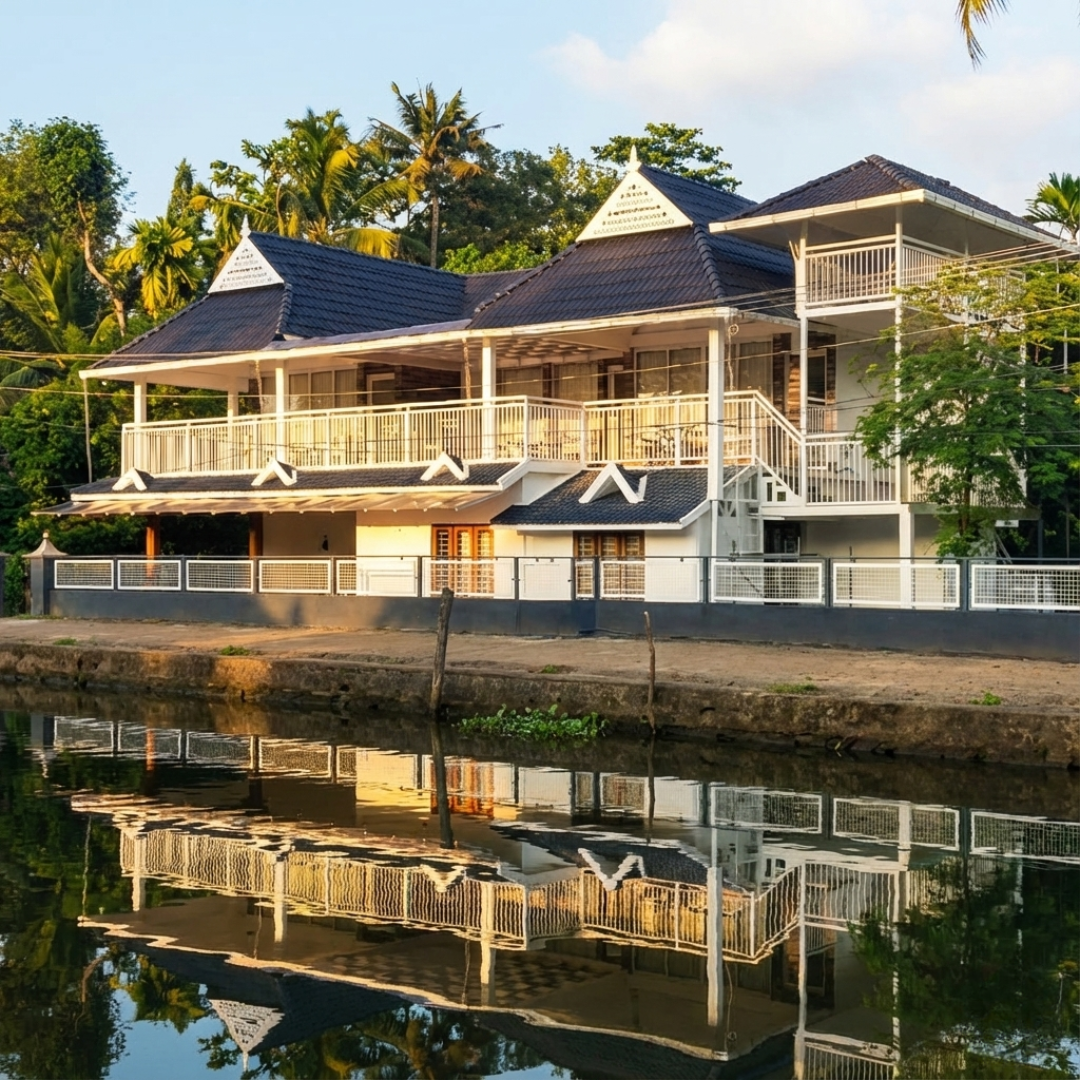
- Evaan’s Casa is a registered homestay Alleppey on a quiet island, blending the comfort of a proper guesthouse with the genuine feel of island life.
I woke up before the sun this morning, the way you do when you live on water. The first sound wasn’t a bird, but the soft, hollow knock of a wooden canoe against our little jetty. Someone was heading out early to check their nets. The air smelled of wet earth and last night’s woodsmoke, a cool blanket before the day’s heat. I stood there with my tea, watching the mist cling to the tops of the coconut palms. This is the quiet pulse of the place, the real rhythm you can’t find from the main road. It’s the rhythm we get to share.
What Is a Registered Homestay Alleppey?
Let’s clear this up first. When you search for a registered homestay Alleppey, you’re looking for something specific. It’s not just a spare room in someone’s house. A registered homestay is a licensed business. It has passed inspections from the Kerala Tourism Department for safety, hygiene, and facilities. You’ll see a certificate on the wall, usually green and white. That piece of paper matters.
It means the property pays its taxes, follows building codes, and has trained staff. For you, it means security. You’re staying in a place that’s accountable. The government knows it exists. Honestly, I’d say it’s the difference between crashing on a friend’s couch and having your own proper guest room. Both can be friendly, but one has standards to meet. Choosing a registered homestay Alleppey ensures you get an authentic experience without compromising on the basics of a good stay.
Some guests think all homestays are the same. They’re not. The registration is your assurance. It tells you the water is clean, the wiring is safe, and there’s a plan if something goes wrong. Our place, Evaan’s Casa, went through that process. We wanted to build something real here on the island, not just a temporary setup. Being a proper registered homestay Alleppey lets us do that right.
Why Does the Island Location Matter?
Alleppey is famous for its backwaters, but most people experience them from the edges. They stay in town or in houseboats that move through the canals. Living on an island is a different thing entirely. You have to take a boat to get here. The ride is about six minutes from the pickup point at Finishing Point. That short trip changes everything.
You leave the scooter noise and the shop awnings behind. The sound shifts to water lapping and distant calls across the paddy fields. The island has no cars. No rickshaws. Your path is a narrow walkway of packed earth or brick, shaded by jackfruit trees. The isolation isn’t about being cut off. It’s about being surrounded by a different world. You hear the diesel putter of a Vallam boat long before you see it round the bend.
At night, the darkness is profound. The stars are shockingly clear. You might hear the occasional generator, but mostly it’s frogs and the wind. This is the core of what a registered homestay Alleppey can offer when it’s in the right spot. It’s not just a place to sleep. It’s a place to be inside the landscape. The six-minute boat ride is a daily ritual that resets your sense of place. Look, here’s the thing: you don’t just visit the backwaters. For a few days, you live in them.
What Home-Style Food Can You Expect Here?
The food is where the “home” in homestay truly comes alive. We serve home-style Kerala food, prepared in our kitchen. This means meals are built around what’s fresh, local, and traditional. It’s not a restaurant menu with fifty options. It’s what we eat.
Breakfast might be soft, lacy appam with a mild, coconut-based vegetable stew. Or puttu – steamed cylinders of ground rice and coconut – with kadala curry, a spiced black chickpea dish. The aroma of mustard seeds crackling in coconut oil is a morning signal here. Lunch is often the main meal. You could have a whole Karimeen (Pearl Spot fish), marinated in spices, wrapped in a banana leaf, and grilled over coals – that’s Pollichathu. The banana leaf infuses the fish with a subtle, smoky sweetness.
On special days, or if you request it, we serve a Kerala Sadhya. This is a feast served on a fresh banana leaf. Dozens of small dishes arrive: sambar, avial, thoran, pachadi, each with a distinct balance of flavor. You eat with your right hand, mixing the rice with the different curries. It’s a sensory experience – the cool leaf, the warm rice, the tang of mango pickle, the crunch of the pappadam. It’s traditional home cooking at its most celebratory. Evenings are simpler. Maybe a dosa with chutney, or leftover rice with some fish curry. The meals are included in your stay at our registered homestay Alleppey, which makes it easy. You just show up hungry.
Jackson’s Practical Tips for Visitors
After years of hosting, you pick up a few things. Here’s what I tell guests when they ask for the real advice.
- Pack Light, But Pack Smart. You’re crossing water to an island. A rolling suitcase is a pain on our walkways. A backpack or duffel is better. Bring mosquito repellent (we have nets, but it’s wise), a torch for the paths at night, and sturdy sandals you don’t mind getting muddy.
- Time Your Boat Trips. The public ferry from Alleppey town to Kainakary, which passes near us, stops running by 7:30 PM. If you’re out for dinner in town, you’ll need to book a private shuttle boat back. Plan for it. Most people skip this and then get stuck.
- Visit the Moolampilly Junction Market. It’s not in the guidebooks. It’s a local morning market about a 15-minute boat ride away. Go around 8 AM. It’s all vegetables, fish, and household goods. The colors and sounds are incredible. You’ll see ten kinds of banana you never knew existed.
- Learn Five Words of Malayalam. “Nanni” (thank you), “Vannakkam” (greetings), “Sukhamano?” (are you comfortable?). It changes how people smile at you. It’s a sign of respect for where you are.
- Embrace the Slow Pace. I’m probably biased, but don’t try to cram in five activities a day. The magic here is in the stillness. Read in a hammock. Watch a coir rope being made. Sit on the jetty and see nothing but water and sky. That’s the point of a registered homestay Alleppey on an island.
What Is the Best Time to Visit Alappuzha for a Registered Homestay?
Seasons define life here. Each one has a different character, and your choice depends on what you want.
Monsoon (June to September): The rains transform everything. The backwaters fill up, the green becomes almost blindingly vivid. The sound of rain on a tin roof is a constant, soothing percussion. It’s cooler, and there are fewer visitors. The downside? Boat trips can be cancelled if the weather is rough. Some walking paths get slippery. It’s a deeply beautiful, introspective time, but you need to be okay with wet feet and changing plans.
Winter (November to February): This is the classic “best” time. The weather is mild, sunny, and dry. The skies are clear. It’s perfect for all activities – houseboats, kayaking, cycling on the mainland. It’s also the busiest period. The water levels are lower, which some purists note changes the scenery a bit. But for reliability and comfort, it’s unbeatable. A registered homestay Alleppey will often be full, so book early.
Summer (March to May): It gets hot. Really hot. The air is still and heavy by afternoon. The advantage? You’ll have the place mostly to yourself. Mornings and evenings are still lovely. The light is harsh and bright, perfect for photographers who like strong contrasts. It’s the season of mangoes and summer fruits. If you handle heat well and seek solitude, it has a raw, quiet appeal. Just drink a lot of water.
Frequently Asked Questions About a Registered Homestay Alleppey
How far is the homestay from Alleppey town?
We’re about 6 kilometers by water from the main boat jetty in Alleppey town. The journey by our private shuttle boat takes 20-25 minutes. By road and then boat, it’s a similar time from the bus stand or railway station. The feeling of distance is greater than the actual travel time.
Is it safe to stay on an island?
Yes, absolutely. Our island community is close-knit and very safe. As a registered homestay Alleppey, we have safety protocols, including night watch and clear emergency procedures. The paths are lit at night. I’ve had solo travelers of all ages stay, and they’ve all commented on how secure they felt.
What should I definitely bring?
Beyond the basics, bring a power bank. We have electricity, but power cuts can happen briefly during heavy monsoon rains. A good book. Binoculars for bird watching – you’ll see kingfishers, herons, and maybe an eagle. And an open mind for the pace of things.
Is WiFi available?
We have WiFi, but I have to be honest – it’s island WiFi. It works fine for messaging and emails in the common area. Streaming videos can be a struggle. Some guests disagree with me on this, and that’s fair, but I see it as a gentle nudge to disconnect a little. The connection to the water and the sky is more reliable here.
The light is shifting to late afternoon gold as I finish writing this. A heron just landed on the post opposite, perfectly still. This is the daily show. It doesn’t cost extra. When you choose a place like Evaan’s Casa, you’re choosing to step into this rhythm. You’re not just booking a room. You’re booking mornings with woodsmoke and evenings with a million frogs. You’re signing up for the six-minute boat ride that feels like a deep breath. A registered homestay Alleppey, when it’s done right, is a doorway. We’ve tried to keep that doorway open here, to share this particular patch of water and sky. We hope to see you on the jetty soon.