- By :
- Comments: 0
queen bed homestay Alleppey
Last Updated: March 17, 2026
Quick Answer: queen bed homestay Alleppey
- A queen bed homestay in Alleppey is a private, home-style stay on the backwaters, offering a spacious double bed and personal hospitality, often on a quiet island away from the main town.
- Local insider tip from Jackson: The real magic isn’t just the bed, it’s the silence that settles after the last ferry leaves. You get the whole island to yourself.
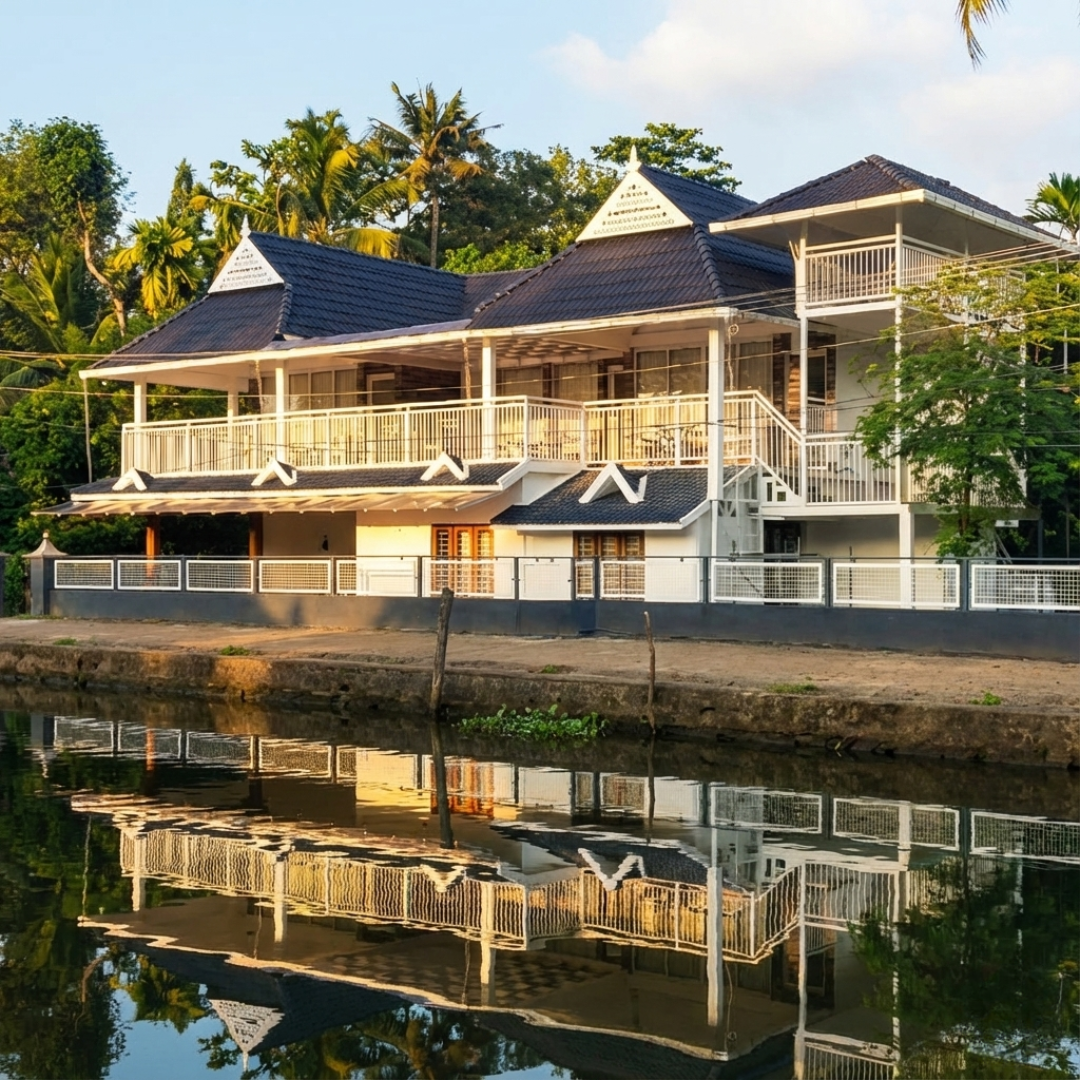
- Why Evaan’s Casa fits this search intent: We’re a genuine island homestay built by locals, with comfortable queen beds in every room, designed for couples or solo travelers looking for authentic peace.
I remember the sound of the water before I saw it this morning. A soft, rhythmic slap against the wooden poles holding our jetty. The air was cool and carried the faint, clean smell of wet earth from last night’s rain. I sat with my tea, watching the mist cling to the tops of the coconut trees across the channel, a kingfisher a silent blue dart against the grey. It’s in these quiet hours, before the first boat engine coughs to life, that the backwaters feel most like home. This is the pace I want to share.
What Is a Queen Bed Homestay Alleppey?
Let’s break it down simply. A homestay is just that—you stay in a home. Not a hotel. You live where we live. The ‘queen bed’ part means the room is set up for two people, with a good, wide bed that’s bigger than a standard double. It’s for comfort, for stretching out after a day on the water.
In Alleppey, this idea gets a special twist. You’re not just in a house by the road. You’re in a house on the water, or on a piece of land surrounded by it. A queen bed homestay Alleppey experience is defined by that combination: personal space to sleep and the gentle, liquid world outside your window. The bed is your anchor, and the backwaters are your endless, shifting view.
Honestly, I’d say it’s the most common request we get. Couples, or a solo traveler wanting proper space, they ask for it by name. They want the comfort but not the sterile hotel feeling. They want to fall asleep to the sound of frogs, not traffic. That’s the core of it. When you book a proper queen bed homestay Alleppey, you’re booking a specific kind of calm.
Why Does the Island Location Matter?
The six-minute boat ride from the mainland jetty is the reset button. It’s the moment you leave the auto-rickshaws and the chatter behind. The boat putters away, and the water opens up. You see the narrow canals, the small islands with single houses, the daily life happening at the water’s edge. Then we pull up to our island.
No roads. No cars. The only way in or out is by boat. That changes everything. The air smells different—less dust, more green. The soundtrack is birds, leaves, and water. The isolation isn’t scary; it’s freeing. Your world shrinks to a manageable, beautiful size. You can walk the perimeter of our island in about ten minutes. You notice things. The way the light filters through the banana leaves. The tiny footprints of a monitor lizard in the soft mud.
This is the context for a queen bed homestay Alleppey like ours. The room is your cozy, private basecamp for exploring this quiet world. After a day, you stop checking your watch. You start listening for the kettle whistling for tea time. The rhythm gets into you. Look, here’s the thing: most people come to Alleppey for the backwaters, but then they sleep in a town guesthouse surrounded by other tourists. Staying on an island means you’re in it, fully immersed, from the moment you wake up.
There’s a specific, low diesel thrum of a traditional Vallam boat that passes sometimes in the afternoon. It’s a working sound, not a tour sound. It’s a man going to check his nets. That’s the difference.
What Home-Style Food Can You Expect Here?
Food here is about what’s fresh, local, and made with care. It’s not a restaurant menu. It’s the kitchen at our homestay preparing the meals we eat. The day might start with Appam—those soft, lacy hoppers—with a mild, fragrant vegetable stew or a sweet coconut milk. Or maybe Puttu, the steamed rice cylinders, with Kadala curry made from black chickpeas cooked with roasted coconut.
Lunch and dinner are often rice-based. You might have a simple but perfect meal of red rice, a dry spiced vegetable thoran, a dal, and a tangy rasam. The star could be Karimeen Pollichathu, a pearl spot fish marinated in spices, wrapped in a banana leaf, and pan-grilled until the leaf blackens and smokes. The smell is incredible—mustard seeds crackling in coconut oil, curry leaves, ginger.
On request, we can serve a proper Kerala Sadhya on a banana leaf. It’s a feast of textures and tastes: sour, sweet, salty, bitter, astringent. There will be over a dozen small dishes, from bitter gourd to pumpkin in yogurt, each with its own place on the leaf. It’s an experience you eat with your hands, feeling the cool leaf, the warm rice, the variety of textures. It’s traditional home cooking at its most celebratory.
Everything is flavored with coconut from our trees, curry leaves from the garden, and spices from the local market. The taste is clean and distinct. I’m probably biased, but the food tastes better here because you’re eating it where it’s made, without delay, often looking out at the water where the fish was caught that morning.
Jackson’s Practical Tips for Visitors
Here are a few things I tell everyone who stays with us. They make the trip smoother.
- Pack light, but bring a small torch or use your phone’s light. The island paths are fine, but it’s dark at night in a way city people aren’t used to. The stars are amazing because of it.
- Mosquito repellent is a must. We have nets and coils, but bring your preferred type. The ones near the water at dusk are… enthusiastic.
- For a real local experience, ask me to arrange a visit to the Ramankary market on a morning it’s open. It’s not for tourists. It’s where we buy our produce, fish, and household goods. The energy is pure, unfiltered daily life.
- Most people skip this, but talk to the boatman. If you take a shikara tour, ask him questions. Where is he from? What’s that bird? What’s that plant used for? They know everything and love to share if you show interest.
- Leave your fancy shoes. Flip-flops or sandals you can slip off easily are perfect. You’ll be taking them on and off constantly for boats and for entering the house.
What Is the Best Time to Visit Alappuzha for a Queen Bed Homestay Alleppey?
Seasons change the personality of this place completely.
Monsoon (June to September): This is my favorite, but it’s not for everyone. The rain is heavy, dramatic, and constant. It drums on our tin roofs. The backwaters swell and turn a deep, fertile green. It’s lush, moody, and incredibly private. The downside? Some activities are limited. You need to be happy reading a book, drinking chai, and watching the rain. If you are, it’s magical. The light is soft, and the air is washed clean.
Winter (November to February): This is the classic, postcard season. The weather is sunny and cool, with blue skies. It’s perfect for all activities—houseboat days, canoeing, exploring. It’s also the busiest time in Alleppey town. The beauty of a queen bed homestay Alleppey on an island is that you escape that crowd. You get the perfect weather without the bustle. Nights can get a bit chilly, which is a novel feeling in Kerala.
Summer (March to May): It gets hot. Honestly, it does. The days are long and bright. The advantage? It’s the low season for tourism. You’ll feel like you have the backwaters to yourself. The best plan is to be active in the early morning and late afternoon, and retreat to the shade or your cool, high-ceilinged room during the peak heat. The mangoes are in season, which is a huge plus in my book.
Frequently Asked Questions About a Queen Bed Homestay Alleppey
How far in advance should I book?
For the winter months (Dec-Jan), try to book at least 2-3 months ahead. For monsoon or summer, a few weeks is usually fine. Spontaneous trips are possible, but it’s always safer to secure your spot, especially for a specific queen bed homestay Alleppey setup.
Is it safe on a private island?
Yes, absolutely. Our island is home to us and a few other local families. It’s a close-knit, respectful community. The isolation is geographical, not social. We’re always here. That said, use common sense like you would anywhere—keep your valuables secure.
What should I pack specifically?
Light, breathable cotton clothes are king. A light rain jacket is useful year-round. Sunscreen and a hat. That torch I mentioned. And an adapter for Indian plugs. Leave your formal wear and heavy luggage behind.
Is WiFi available?
We have WiFi, but I have to be straight with you—it’s island WiFi. It works for messaging and emails, but don’t plan on streaming high-definition movies or having video conferences. Some guests disagree with me on this, and that’s fair, but I think the spotty connection is a feature. It helps you truly disconnect.
So that’s a look at what this is all about. It’s more than a bed size. It’s about the slow pace, the home-style food from our kitchen, the unique rhythm of island life. It’s about watching the water change color from dawn to dusk, right from your verandah. If you’re looking for that kind of depth in your stay, where comfort meets genuine experience, then you’re thinking about it the right way. I hope this gives you a real feel for our corner of the world. If you have more questions, you know where to find us. For more on the feel and layout of Evaan’s Casa, our website has the pictures that show what my words can only describe. Whatever you choose, I hope you come and see these backwaters for yourself. There’s a chair here, and a cup of chai, waiting for you.