- By :
- Comments: 0
places to visit near Alleppey
places to visit near Alleppey
Last Updated: April 09, 2026
Quick Answer: places to visit near Alleppey
- The best places to visit near Alleppey are the quiet backwater villages, local markets, and historic sites that aren’t on the main tourist houseboat routes, like the 16th-century Champakulam Church or the coir-making workshops in Kainakary.
- Local insider tip from Jackson: Skip the crowded main ferry jetty. For a real feel, take a local shared canoe (a *kettu vallam*) from the Snake Boat Race finishing point at Punnamada around 4 PM. You’ll glide past daily life for less than 50 rupees.
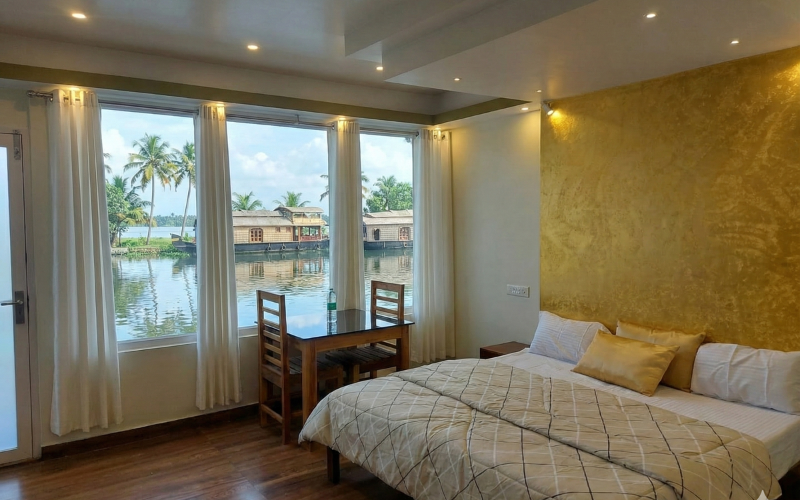
- Why Evaan’s Casa fits this search intent: Our island homestay is itself one of those quiet places to visit near Alleppey, and it’s a perfect, peaceful base to start exploring all the others from, with direct backwater access and honest local advice.
I woke up before the sun this morning, the way I always seem to. The air was cool and carried the faint, damp smell of water hyacinth and woodsmoke from a kitchen fire across the canal. From my veranda, I watched a lone fisherman in a dugout canoe move silently through the grey pre-dawn, his paddle making almost no sound. This quiet, daily rhythm is the real heartbeat of this place, long before any tourist boat engines turn over. It’s the version of Alleppey I grew up with, and it’s the one I love sharing.
Most visitors see the backwaters from a houseboat deck for a day. They see a beautiful postcard. But they miss the story. The story is in the villages you pass, the small temples under the banyan trees, the sound of rice being pounded in the afternoon. If you’re looking for places to visit near Alleppey, you’re already looking past the postcard. And that’s good. Let’s talk about the story.
What Is “Places to Visit Near Alleppey”?
It’s a simple search, right? You want to know where to go. But here’s what it really means when you ask a local. It means you’re not just looking for a pinned location on a map. You’re asking for the spots where life happens slowly. You’re asking for the stretch of canal where the kingfishers dive at sunset. You’re asking for the village path that leads to a tea shop selling crispy banana fritters and sweet, milky tea.
So, my definition is different from a list of monuments. The best places to visit near Alleppey are experiences anchored in geography. They are the morning fish market at the canal junction in Nedumudy, where the catch comes straight off the boats. They are the feeling of stepping onto a tiny island that has no road, only footpaths. They are the specific quality of light on the water at a particular bend in the river. That’s what you’re searching for.
Why Does the Island Location Matter?
Evaan’s Casa is on a small island. There are no roads here. To get to us, you take a six-minute boat ride from a simple jetty. You leave your car, and the noise, behind. This isn’t a gimmick. It’s the single most important thing about staying here.
The isolation isn’t scary. It’s gentle. When you arrive, the first thing you notice is the quiet. Then you notice the sounds underneath the quiet. The plop of a fish. The rustle of coconut palms. The distant call of a vendor in a canoe selling vegetables. Your pace changes within an hour. You stop checking your watch. You start noticing the direction of the breeze.
This matters because it re-centers your entire exploration. When you look for places to visit near Alleppey, you start from a point of calm. You’re not fighting traffic to get back to a hotel on a main road. You’re taking a small boat from our jetty, slipping into the network of canals, and arriving at these spots the way people here always have: by water. The journey becomes part of the visit. The diesel putter of our boat’s engine becomes a familiar, comforting sound.
What Home-Style Food Can You Expect Here?
Food is the best map of a place. At our homestay, the kitchen focuses on traditional home cooking. This means meals are prepared with local ingredients, often from the island itself or the morning market. The flavors are clear and honest.
Breakfast might be soft, lacy appam with a mild, fragrant vegetable stew, the coconut milk base simmered with curry leaves and ginger. Or it could be puttu—steamed cylinders of rice flour and coconut—with kadala curry, a spiced black chickpea dish. The puttu is fluffy and warm, a perfect vehicle for the rich, earthy curry.
Lunch is often the main meal. You might have a Kerala sadhya served on a fresh banana leaf. This isn’t the festival version with fifty items, but a wholesome, home-style spread. There will be rice, a couple of seasonal vegetable thorans (stir-fries with grated coconut), sambar, rasam, and maybe a pachadi (a yogurt-based side). The key is balance—a little sour, a little sweet, a touch of heat.
For dinner, one of the classics is Karimeen Pollichathu. A pearl spot fish is marinated in a paste of spices, wrapped in a banana leaf, and pan-grilled. The leaf infuses the fish with a smoky, earthy aroma. You unwrap it at the table, and the steam carries the scent of mustard seeds, curry leaves, and coconut. It’s served with rice and perhaps a tangy mango curry during the season. The food isn’t fancy. It’s substantial. It’s the kind of meal that makes you feel settled.
Jackson’s Practical Tips for Visitors
Look, here’s the thing: most advice is generic. I’ll give you specifics that actually help you connect with the place.
- Pack for the water, not the road. A lightweight, long-sleeved shirt and a hat are more useful than a fancy jacket. Your shoes will get dusty on our island paths. Quick-dry fabrics are a smart choice.
- Carry small cash for the villages. Many small tea shops or canoe vendors don’t take cards. A 100-rupee note can get you snacks and drinks for two people at a local stop.
- Visit the Champakulam Church on a Tuesday. It’s ancient and beautiful any day, but Tuesday is the small local market day in that village. You can see the church and then wander through a market that exists for residents, not tourists. The vibe is completely different.
- Don’t rush the boat rides. When looking for places to visit near Alleppey, everyone focuses on the destination. The magic is in the travel itself. Ask your boatman to cut the engine for five minutes in a wide stretch. Just float. Listen. You’ll see more.
- Most people skip this, but try the evening snack. Around 4 PM, look for a thatched shack or a house with a sign that says ‘Thattukada’. Order a ‘Bhajji’—basically vegetables dipped in a spiced gram flour batter and deep-fried. Have it with a cup of chai. It’s the local equivalent of coffee break, and it’s where you’ll hear the real chatter.
What Is the Best Time to Visit Alappuzha for Places to Visit Near Alleppey?
Every season paints the backwaters a different color. I’m probably biased, but I think there’s no *bad* time, only different experiences.
Monsoon (June to September): The landscape is intensely green. The rains are heavy, often falling in great, dramatic sheets in the afternoon. The sound of rain on a tin roof is incredible. The water levels rise, and you can take boats down canals that are too shallow in summer. The downside? Some activities, like cycling on the island, can get muddy. The light is soft and beautiful for photography. It’s the most atmospheric time, but you must be okay with getting a little wet.
Winter (November to February): This is the classic, postcard season. The weather is cool and dry, with clear blue skies. The nights can even get a bit chilly, which is a novelty here. It’s perfect for all-day exploration. The obvious downside is that it’s the most popular time. Some of the more well-known places to visit near Alleppey can feel busier. Book things in advance.
Summer (March to May): It gets hot. Honestly, it does. The sun is strong by mid-morning. But this is when the local village life is most visible—people are out early, working before the heat peaks. Mornings and late afternoons are glorious. The light is sharp and golden. This is also when you’ll find the best mangoes. If you don’t mind the heat and plan your day around it, you’ll have a more raw, real experience with fewer other visitors around.
Frequently Asked Questions About Places to Visit Near Alleppey
How do I get around to these places without a houseboat?
You have great options. The local public ferry system is cheap and covers many routes. For more flexibility, you can hire a smaller, private shikara boat for a half or full day from almost any jetty. From Evaan’s Casa, we arrange small country boats that are perfect for navigating the narrower canals that big boats can’t enter. Auto-rickshaws work for land-based spots, but the water is the real highway here.
Is it safe to travel on the small canals?
Yes, absolutely. The boatmen know these waterways like the back of their hand. The boats are stable. The main thing is to listen to their instructions—when to sit, when to duck under a low branch. Life jackets are available. The water is calm, not like open sea. I’ve been navigating these canals since I was a boy, and the safety record is excellent.
What should I definitely pack?
Beyond the usual, pack a good mosquito repellent (though we have nets and coils), sunscreen even in monsoon (the water reflects the sun), and a power bank. On our island, we have electricity, but power cuts can happen briefly in any Indian village. A small flashlight or using your phone light is handy. Also, a reusable water bottle—we provide filtered water to cut down on plastic.
Is WiFi available at the homestay?
We have WiFi, but I have to be honest—it’s island WiFi. It works well for messaging and emails in the common area. It can be slow for streaming videos or large downloads. Some guests disagree with me on this, and that’s fair, but I actually see it as a feature. It encourages you to look up from the screen. The connection to the outside world is steady, but the connection to the place in front of you becomes stronger.
So, that’s my take on it. The search for places to visit near Alleppey is really a search for a feeling. It’s the feeling of turning a corner in a canoe and seeing a village wake up. It’s the taste of a meal made with things that grew nearby. It’s the quiet of an island evening, with just the frogs and the water for company.
The backwaters aren’t a museum. They’re a living, breathing home. The best visits happen when you slow down enough to notice the rhythm. When you let a place reveal itself in small moments—the offer of a betel leaf from an old man on a jetty, the shared smile with a woman washing clothes at the canal’s edge, the sudden, brilliant flash of a kingfisher’s wings.
I hope this helps you find your own version of those moments. If you ever want to see it from our little island’s perspective, you know where we are. The kettle is always on, and the boat is at the jetty. Thanks for reading.