- By :
- Comments: 0
Nehru Trophy race accommodation
Nehru Trophy race accommodation
Last Updated: March 24, 2026
Quick Answer: Nehru Trophy race accommodation
- It’s a place to stay during the Nehru Trophy Boat Race, ideally close to Punnamada Lake. You want a spot that gets you to the action easily but away from the post-race chaos.
- Local insider tip from Jackson: Book your Nehru Trophy race accommodation at least six months ahead. Seriously. And look for places on the smaller islands, not just the mainland. The vibe is completely different.
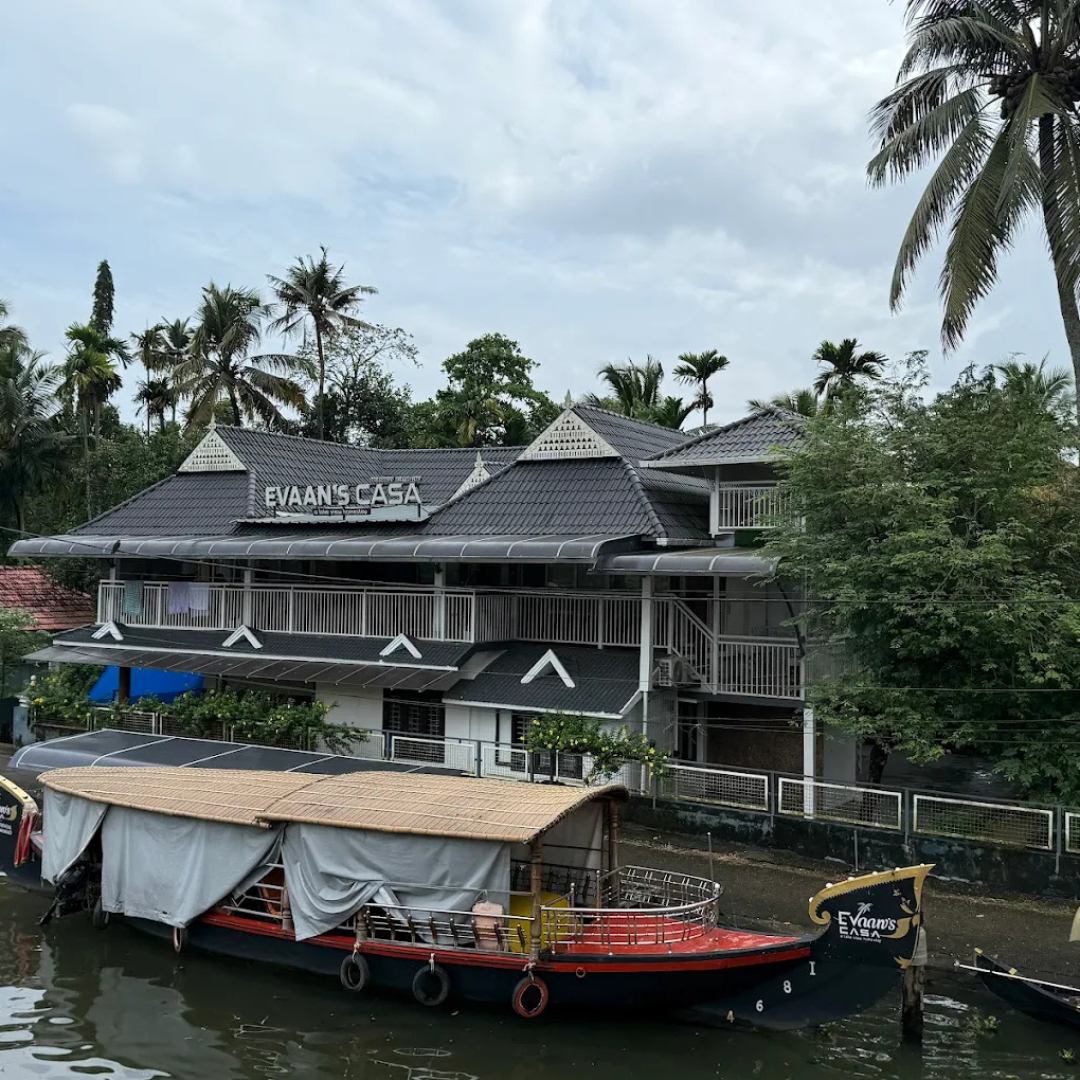
- Why Evaan’s Casa fits this search intent: We’re on a quiet island a short boat ride from the racecourse. You get the festival energy, then you retreat to a peaceful, home-style space with traditional food and the real rhythm of backwater life.
I woke up before the sun this morning, the way you do when you’ve lived somewhere long enough that your body just knows. The air was cool and carried that specific, clean scent of water hyacinth and wet earth. From the kitchen, I could already hear the soft, rhythmic scraping of a coconut against a grater, the first sound of the day here. It’s in these quiet hours, long before the first tourist boat putters past, that our island feels most itself. And it’s this version of Alappuzha I want you to know, especially if you’re coming for the roar and rush of the Nehru Trophy.
What Is Nehru Trophy Race Accommodation?
Let’s strip it down to the basics. Nehru Trophy race accommodation is simply a place to sleep during the biggest event on our backwaters. The race happens on the second Saturday of August every year, on Punnamada Lake. A hundred thousand people descend on our district.
Hotels in town fill up a year in advance. Prices triple. The streets are pure, wonderful madness. So, finding the right Nehru Trophy race accommodation isn’t just about a bed. It’s about finding a base camp. You need a spot that lets you dive into the festival frenzy but also gives you a real chance to breathe after. Most people just search for a hotel near the finish line. That’s one way to do it. But staying on one of the surrounding islands, like ours, is a different game entirely. You trade a five-minute walk for a six-minute boat ride and get a whole different world in return.
The search for good Nehru Trophy race accommodation starts early. I get emails in February for August. It’s that kind of event. People aren’t just looking for a room; they’re looking for an experience that wraps the race into a proper Kerala visit. They want to hear the chundan vallams (those giant snake boats) being practiced at dawn weeks before the event. They want to feel the community buzz, not just the tourist crowd. That’s what defines the best Nehru Trophy race accommodation for me—it connects you to the place, not just the event.
Why Does the Island Location Matter?
No roads lead here. Your auto-rickshaw or taxi will drop you at a small, unmarked jetty. You’ll see our boatman, Rajan, waiting with his broad smile. The ride to our island takes six minutes. Seven if the current is strong.
That short trip across the water is a reset button. The honking fades. The dust settles. You start to hear kingfishers and the lap of water against the canoe hulls. The isolation isn’t about being cut off; it’s about being held in a different way. When you arrive for your Nehru Trophy race accommodation stay, you’re arriving in a village. Kids wave from their front steps. An old man mends a fishing net under a mango tree. The pace is dictated by the sun and the tide, not a festival schedule.
On race day itself, this matters even more. You’ll take our boat to the edge of the action, close enough to feel the drums in your chest. You’ll spend hours in that incredible, shouting, cheering mass of humanity. Then, when your ears are ringing and you’re covered in a fine layer of spray and excitement, you’ll come back. The six-minute ride home feels like decompressing from a deep dive. You can still feel the adrenaline buzzing in your hands, but the air is quiet. You can sit on the veranda with a sweet, black tea and listen to the water. Honestly, I’d say the island location doesn’t just matter; it saves you. It turns a hectic day-trip into a balanced, deep experience. Finding Nehru Trophy race accommodation that offers this contrast is the real trick.
What Home-Style Food Can You Expect Here?
Food here is about what’s fresh, what’s local, and what makes sense for the day. It’s not a restaurant menu. It’s the kitchen at our homestay responding to the market, the weather, and your energy. After a long day at the races, you don’t want fussy plating. You want flavor and comfort.
Breakfast might be soft, lacy appam with a subtly sweet coconut milk stew, maybe with potatoes or chicken. Or it could be puttu—those steamed cylinders of rice flour and coconut—with a rich, dark kadala curry made from black chickpeas. The smell of roasting coconut for the chutney is my favorite morning smell, tied with woodsmoke from the neighboring hearths.
Lunch is often the big meal. A traditional Kerala sadhya served on a banana leaf is an event. It’s a sequence of tastes: tart mango pickle, crunchy pappadam, smooth avial (mixed vegetables in a coconut-yogurt gravy), sour pulissery, and a dozen other things. Each one is meant to balance the others. The karimeen (pearl spot fish), if we get a good catch, might be marinated in spices, wrapped in a banana leaf, and pan-roasted—that’s pollichathu. The banana leaf seals in the steam and the scent of curry leaves and ginger. You eat with your hands. It’s a different kind of knowing your food.
Dinner is lighter. Maybe a simple rice kanji (porridge) with leftovers and a pickle, especially if the day was hot. The ingredients travel maybe a hundred meters from the garden or the local fisherman’s catch. The cooking is traditional home cooking, the kind that fuels farmers and boatmen. It’s meant to satisfy and sustain, not just impress. Look, here’s the thing: after the sensory overload of the race, sitting down to a meal that tastes of the earth and water right outside is its own kind of medicine.
Jackson’s Practical Tips for Visitors
Beyond booking early, here are a few things I tell everyone who books Nehru Trophy race accommodation with us.
- Pack for two climates. Race day on the water is blazing sun. You will need a hat, sunglasses, and serious sunscreen. But the backwaters in the evening, especially on a boat, can get cool. A light cotton layer is a lifesaver.
- Carry cash in small notes. The vendors near the racecourse move fast. Trying to get change for a 500-rupee note while a heat is starting is a battle you will lose. Also, try the “kayya pori” (hand chips) from the stalls—they’re crispy, salty banana chips fried in coconut oil right in front of you.
- Don’t just watch the finals. The smaller heats earlier in the day are where you see the raw, gritty competition. The tension is different. The crowds are thinner. You can actually hear the steersman shouting commands over the drummers.
- Visit the snake boat sheds beforehand. Most people skip this but go to the village boat sheds a day or two before the race. You can see the crews doing final touches, feel the community pride, and smell the unique mix of wood, oil, and dedication. It gives the race so much more meaning.
- Learn three Malayalam words. “Nanni” (thank you), “Sukhamano?” (are you comfortable/well?), and “Adipoli!” (awesome!). It changes how people smile at you.
What Is the Best Time to Visit Alappuzha for Nehru Trophy Race Accommodation?
This depends entirely on what you want. The race is in August, smack in the middle of the monsoon. I’m probably biased, but I think that’s the most dramatic time.
Monsoon (June to September): This is race time. The backwaters are full, lush, and a powerful green. The rain cools everything down. The downside? It will rain, often in heavy, sudden bursts. Boat rides require a raincoat. The humidity is high. But the light is incredible—a soft, diffused grey that makes the colors of the boats and saris pop. Booking your Nehru Trophy race accommodation for this period is about committing to the full, wet, vibrant spectacle.
Winter (November to February): The classic “best” time. The weather is perfect—sunny, dry, and cool in the evenings. It’s ideal for houseboat cruises and cycling on the island paths. The downside? Everyone knows it. It’s peak season everywhere. The backwaters are busy with tourist traffic. If you’re looking for peace and perfect weather, this is it. But you’ll miss the race energy completely.
Summer (March to May): It gets hot. Really hot by afternoon. The water levels are lower. But the mornings are beautiful and still. This is when the local life is most visible—fishing, coir-making, the slow prep for the monsoon. It’s the most authentic season for just living here, but it’s not for everyone. Some guests disagree with me on this, and that’s fair. They find the heat too much. I love the intense, quiet simmer of it all.
Frequently Asked Questions About Nehru Trophy Race Accommodation
How far is Evaan’s Casa from the actual racecourse?
By our private country boat, it’s about a 20-minute ride to the main spectator areas at Punnamada Lake. We coordinate all transfers for guests on race day. You’re close enough to get there without a hassle, but you’re sleeping in a different universe of sound and pace.
Is it safe to stay on an island with no road access?
Yes, absolutely. We’ve had families with young kids and solo travelers for years. The boatmen are experienced, life jackets are always available, and the village community is tight-knit and watchful. It feels safer than any city street I’ve walked down.
What should I definitely pack?
Good sunscreen, a reusable water bottle, mosquito repellent (though we have nets and coils), and shoes you can easily slip on and off. You’ll be leaving your shoes at the door a lot. A power bank for your phone is smart for race day, and a small backpack for carrying your layers and water.
Is WiFi available? What about mobile networks?
We have WiFi, but it’s island-speed. It works for messaging and emails, but don’t plan on streaming movies. Mobile data works fine for most carriers—you’ll get a signal. Not gonna lie, the connection can dip during a heavy monsoon downpour. It’s a good excuse to put the phone away and just listen to the rain on the tin roof.
Finding the right Evaan’s Casa is about more than a date in August. It’s about choosing the texture of your memory. Will it be just the crowd’s roar, or will it also be the quiet gulp of a canoe paddle hours later? Will it be the taste of festival snacks, or also the deep, coconut-rich taste of a home-cooked meal after? This place, our island, offers the latter. It wraps the incredible noise of the race in the wide, soft quiet of the backwaters. The search for Nehru Trophy race accommodation ends here for a reason. You get the festival, and then you get to come home—to a place that feels like it’s been waiting for you, with a veranda facing the water and a cup of something warm already on the table. We’ll be here.
Plan your stay at Evaan’s Casa
- Lake view homestay in Alleppey (Alappuzha)
- Where to stay in Alleppey: the complete guide
- Alleppey room booking: rooms and prices from ₹1,900
- Budget homestay in Alleppey under ₹2,000
- Backwater homestay on Vembanad Lake
- Punnamada homestay, Alappuzha
- Family homestay in Alleppey
- Honeymoon package and couple stay
Book direct on WhatsApp +91 88484 96667