- By :
- Comments: 0
nature stay Alleppey
Last Updated: April 17, 2026
Quick Answer: nature stay Alleppey
- A nature stay in Alleppey means living on a small island in the backwaters, away from town, with only boat access and the rhythms of the water and local life as your schedule.
- Local insider tip from Jackson: The best backwater views aren’t from the big houseboats. They’re from the small, shaded canals you can only reach by a local canoe. Ask a neighbor to paddle you around after 4 PM when the light turns gold.
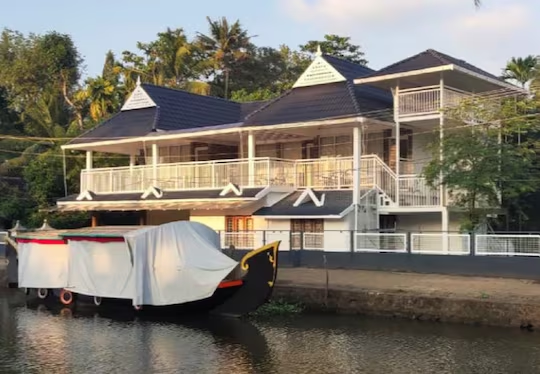
- Why Evaan’s Casa fits this search intent: Our place is a real home on one of these quiet islands. You’ll get a simple room, home-style Kerala food, and the genuine quiet that defines a true nature stay Alleppey experience.
I woke up before the sun this morning. It wasn’t an alarm. It was the sound of a single oar dipping into the canal, the wooden creak of a neighbor’s small canoe pushing off. The air was cool and carried the damp, green smell of water hyacinth and wet earth. I stood on the veranda with my tea, watching the mist cling to the tops of the coconut palms like cotton. This is the island’s real soundtrack. It’s quiet, but never silent. You hear the plop of a fish, the distant call of a kingfisher, the soft chatter of women washing clothes at the water’s edge a few houses down. This is what I grew up with. And honestly, it’s the core of what we offer at Evaan’s Casa. It’s not a resort. It’s just our home, open to you.
What Is a Nature Stay Alleppey?
Let’s clear something up first. A nature stay Alleppey isn’t just a hotel with a garden. It’s not a houseboat parked for the night. It’s fundamentally different. You are staying on a small, residential island in the Vembanad Lake system. There are no roads to it. No cars. No shops selling souvenirs.
Your address is a cluster of coconut trees, a narrow footpath, and a canal. Your neighbors are fishermen, toddy tappers, and families who have lived here for generations. The “nature” part isn’t a curated landscape. It’s the actual, working environment of the Kerala backwaters. You see the morning catch being sorted. You smell woodsmoke from a hearth as someone prepares lunch. You feel the afternoon lull when even the ducks are quiet. A real nature stay Alleppey removes the buffer between you and this place. You’re in it, not just looking at it. Some guests find this shift jarring for the first few hours. Then, something clicks. The constant noise in your head gets replaced by the sound of water.
Why Does the Island Location Matter?
The six-minute boat ride from the mainland jetty is the most important part of your arrival. It’s a threshold. You watch the busy town of Alleppey, with its auto-rickshaws and guesthouses, shrink behind you. The water opens up. You pass a few big houseboats, their generators humming. Then you turn into a narrower canal, shaded by overhanging branches.
The world gets greener, closer. The engine cuts, and we glide up to our simple wooden dock. That’s it. You’ve arrived. The isolation isn’t scary. It’s a relief. There’s a physical feeling of shedding weight. You can’t just hop in a taxi to go find a restaurant. You’re here. This forces a different pace. Your day is shaped by the light on the water, by meal times, by whether it’s high tide or low tide. The island itself becomes your world to explore on foot along its single, looping path. You’ll pass kids playing cricket, someone mending a fishing net, yards full of drying coconut husks. You are a temporary part of a real place. That’s the magic no mainland hotel can replicate. It’s the essence of a proper nature stay Alleppey.
What Home-Style Food Can You Expect Here?
Food here is tied to the land and the water. It’s simple, seasonal, and full of flavor. The kitchen at our homestay prepares traditional home cooking, the same kind you’d find in any household on this island. We don’t have a restaurant menu. We cook what’s fresh and good.
Breakfast might be soft, lacy appam with a mild, fragrant vegetable stew, or puttu—steamed cylinders of rice flour and coconut—with kadala curry made from black chickpeas. The coconut is grated that morning. Lunch is often rice served with an array of dishes. There could be a meen curry (fish), a thoran (stir-fried vegetables with coconut), sambar, and a tangy pulissery. Karimeen Pollichathu, pearl spot fish marinated in spices, wrapped in a banana leaf, and pan-grilled, is a classic from these waters. We prepare it perfectly.
Dinner is a quieter affair. Maybe some leftover rice, a simple dal, and a pickle. The experience is in the details. The smell of mustard seeds crackling in coconut oil that tells you lunch is nearly ready. Eating a full Kerala Sadhya on a banana leaf during a festival, each little mound of flavor in its place. The taste of a small, sour mango pickle that makes the plain rice come alive. It’s nourishing. It’s real. Not gonna lie, the food is a highlight for most people who understand what a nature stay Alleppey is about. It completes the immersion.
Jackson’s Practical Tips for Visitors
If you’re thinking of coming, here are a few things I tell everyone. They make a big difference.
- Pack a good torch or headlamp. The island path isn’t lit at night. It’s safe, but you’ll want light to walk back from dinner or for a late-night look at the stars.
- Bring cash. There are no ATMs on the island. Get what you need in Alleppey town before the boat ride. Small notes are useful if you buy something from a local vendor.
- Footwear is key. Sturdy sandals you can slip on and off are perfect. You’ll take them off at the door constantly. And you’ll want something that can handle a muddy path if it rained.
- Most people skip this, but visit the local toddy shop. Not for the toddy necessarily, but for the atmosphere. It’s a simple, thatched shack by the water where local men gather. You can get a fresh, grilled karimeen or some spicy beef fry there in the evening. It’s a genuine slice of life.
- Be ready for all life. This is a working ecosystem. You’ll see insects, hear frogs at night, spot water snakes (harmless) sunning on roots. It’s part of the deal. If that makes you nervous, this might not be your kind of place. I’m probably biased, but I think it’s wonderful.
What Is the Best Time to Visit Alappuzha for a Nature Stay?
Every season has its own character. Your choice depends on what you want to feel.
Monsoon (June to September): This is my favorite. The rains are heavy and dramatic. The backwaters fill up, turning the islands into a deeper, richer green. The sound of rain on our tin roof is incredible. The air is cool. The downside? You will get wet. Boating can be tricky during heavy downpours, and some days are just gray and damp. But if you love moody, powerful weather, it’s unmatched. Bring a serious raincoat and quick-dry clothes.
Winter (November to February): This is the classic tourist season for a reason. The weather is perfect. Sunny, warm days and cool, pleasant nights. The skies are clear. It’s ideal for canoeing, walking, and just sitting outside. The trade-off is that it’s the busiest time on the backwaters. The main canals have more boat traffic. It’s still quiet on our island, but you’ll feel the buzz in the wider area.
Summer (March to May): It gets hot. Honestly, it does. The afternoons can be still and warm. But the mornings and evenings are beautiful. This is when the local jackfruit and mango trees are heavy with fruit. Life slows down even more. It’s the quietest time for a nature stay Alleppey. If you don’t mind the heat and want absolute peace, it’s a good pick. A tip: the water in the shower is warm without even needing the heater.
Frequently Asked Questions About a Nature Stay Alleppey
How do I get to your island?
You’ll take a public ferry or a private auto-rickshaw to the Kuppapuram jetty from Alleppey town. From there, we arrange a short six-minute boat transfer to bring you directly to our dock. I’ll send you detailed instructions and a pin location when you book. It’s easier than it sounds.
Is it safe, especially for solo travelers or kids?
Yes, very. The island community is tight-knit and looks out for everyone. Crime is virtually nonexistent here. For kids, it’s a giant, natural playground. They need supervision near the water, of course, but they have the freedom to run and explore in a way that’s rare nowadays.
What should I definitely pack?
Beyond the torch and cash I mentioned, pack light, breathable cotton clothes. A hat. Sunscreen. Mosquito repellent (we have nets, but it’s wise). A refillable water bottle. And most importantly, a mindset ready to disconnect. Our WiFi works, but it’s not super fast. That’s sort of the point.
How much does a nature stay Alleppey typically cost?
It varies. At our place and other genuine homestays, you’re paying for the room, all meals, and the boat transfer. It’s usually a single per-person price. It’s not a budget hostel, but it’s far less than a luxury houseboat. You’re paying for an authentic experience, not frills. Think of it as the cost of a nice hotel, but with all your food included and a whole island outside your door.
The light is fading as I finish writing this. The evening boat from the mainland just puttered past, bringing a neighbor home. The sky is turning a soft orange over the water. This daily rhythm is what stays with people. It’s not an adventure in the adrenaline sense. It’s a deep, quiet settling. A chance to remember what a day feels like without a hundred distractions. That’s what we’ve built at Evaan’s Casa. It’s not for everyone. But if you read this and felt a pull, a curiosity about that morning mist and the sound of a single oar, then you might be exactly who it’s for. We’ll keep the light on for you.