- By :
- Comments: 0
nature homestay Kerala
Last Updated: April 18, 2026
Quick Answer: nature homestay Kerala
- A nature homestay Kerala experience is about staying in a local home, not a resort, on a quiet island in the backwaters where your day is paced by the sun, the water, and the sounds of the village.
- Local insider tip from Jackson: The best birdwatching happens from 5:30 to 6:30 AM, before the first country boats start their runs. You’ll see kingfishers and cormorants that vanish once the diesel engines sputter to life.
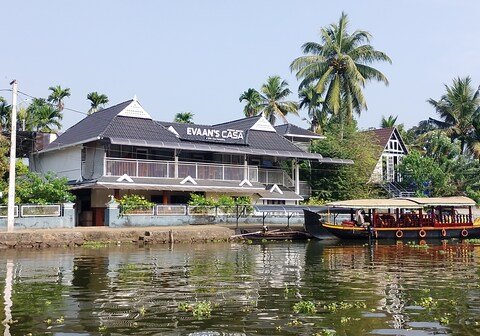
- Why Evaan’s Casa fits this search intent: We are exactly that—a simple home on a small island you reach by a six-minute boat ride, surrounded by coconut palms and paddy fields, where the food is home-style and the only agenda is the one you make.
I woke up this morning before the sun did. The air was cool and carried the damp, clean smell of the water hyacinths. From my window, I could see the first sliver of light turning the sky a soft grey-blue over the paddy field. The only sound was the distant, rhythmic knocking of a wooden canoe pole against its hull—someone heading out to check their fishing nets. This quiet, this specific kind of morning quiet, is what I grew up with. It’s also the first thing I want every guest to feel when they step off the boat onto our island. It’s the real starting point for any genuine nature homestay Kerala experience.
So many people arrive from the airport or the train station with a kind of buzzing energy. The honking, the heat, the constant motion of travel. I see it on their faces when they get to our little jetty in Alleppey. Then they get into our small boat. The six-minute ride across the canal works like a reset button. The road sounds fade. The water opens up. By the time we pull up to our landing, that buzzing has usually been replaced by a kind of wide-eyed calm. They’re here. This is the shift I love witnessing.
What Is a Nature Homestay Kerala?
Let’s clear something up first. A nature homestay Kerala isn’t just a hotel with a garden. It’s not a luxury treehouse with air conditioning and a minibar. Those places have their purpose, but they’re a different thing. Honestly, I’d say a real nature homestay is the opposite of that. It’s about integration, not insulation.
It means you’re staying in a family home, or a home-like place, that exists as part of the landscape. The walls might be laterite brick. The roof is probably clay tile or maybe even thatched. Your view isn’t of a swimming pool, but of a canal where villagers paddle by on their way to work. You eat what grows locally, prepared in a way that’s been standard here for generations. The rhythm of your day is set by natural light and the gentle chaos of village life—the call to prayer from the mosque across the water, the clatter of a toddy tapper’s bamboo ladder, the sudden afternoon rain on a tin roof.
It’s a slower, simpler way to be a guest in Kerala. You’re choosing to step into the everyday life of a place, not be served on a platter beside it. That’s the core of it. When you search for a nature homestay Kerala, you’re looking for that authenticity. You want the sound of water, not traffic. You want to see stars at night, not neon signs. You want to feel the texture of a place, not just see its postcard views.
Why Does the Island Location Matter?
Access matters. How you get somewhere changes how you feel about being there. Our place is on a small island with no road connection to the mainland. Zero. You cannot drive here. You cannot take an auto-rickshaw here. The only way in or out is by boat. That fact alone creates a particular kind of atmosphere.
That six-minute boat ride I mentioned is a physical and mental threshold. It creates a natural pause. It forces a shift in pace. Once you’re on the island, you’re on island time. Need something from the market? It involves a boat ride. Want to explore? Your options are walking the narrow paths between the houses and fields, or going by water. This limitation is actually the greatest freedom. It cuts out the noise, literally and figuratively.
The isolation is gentle, not harsh. You’re not marooned. You can see the mainland from our veranda. You can hear the occasional bus horn. But it’s all softened by the distance across the water. This buffer zone of canals and lagoons is what protects the quiet. It’s what allows the kingfishers to sit undisturbed on the fence posts. It’s why you can hear the fish jump in the evening. This specific island geography is, in my probably biased opinion, the perfect setting for a nature homestay Kerala. Some guests disagree with me on this, preferring to be right on a main road for convenience, and that’s fair. But for the experience of truly disconnecting, the island is everything.
Look, here’s the thing: being on an island means you commit to being present. You can’t just hop in a cab and go somewhere else for dinner. You settle in. You watch the light change on the water. You notice the small things—the pattern of ripples from a passing canoe, the way the moss grows on the north side of the coconut trees. That deep noticing is what a lot of people come here to find.
What Home-Style Food Can You Expect Here?
The food is a central part of the stay. It has to be. When you’re on an island, meals become an event, a point of connection and discovery. The kitchen at our homestay prepares traditional home cooking, the kind of food I’ve eaten my whole life. It’s not fancy or plated for a photo. It’s honest, flavorful, and tied completely to what’s available.
Breakfast might be soft, lacy appam with a subtly sweet coconut milk stew, or puttu—steamed cylinders of ground rice and coconut—with a rich, spicy kadala curry made from black chickpeas. The aroma of roasted coconut and cumin seeds from the kitchen in the morning is a better alarm clock than any phone. Lunch is often the classic Kerala sadhya served on a fresh banana leaf. This isn’t just a meal; it’s a procession of tastes and textures. You’ll get a mound of red rice, maybe a dry curry of pumpkin or beans, a tart mango pickle, a smooth yogurt pachadi, a crunchy banana chip, and a spoonful of ghee that melts into everything.
For dinner, we might prepare Karimeen Pollichathu if the catch from the local fishermen is good. That’s pearl spot fish marinated in a paste of spices, wrapped in a banana leaf, and pan-roasted. The banana leaf infuses the fish with a smoky, earthy flavor you simply cannot replicate with foil or parchment. The smell when you unwrap it is incredible—steam carrying the scents of ginger, curry leaves, and the sea.
Every meal comes with a sense of place. The coconut is from the trees behind the house. The tapioca might be from a neighbor’s garden. The fish was swimming that morning. This direct line from source to plate is a luxury, but it’s a quiet, everyday one here. It’s the definition of home-style Kerala food. You eat with the seasons, and you taste the island in every bite.
Jackson’s Practical Tips for Visitors
If you’re considering a nature homestay Kerala trip, especially to our part of the backwaters, here are a few things I tell everyone. They’re simple, but they make a big difference.
- Pack Light, But Pack Smart. You’ll be getting in and out of a small boat. A large, wheeled suitcase is a hassle. A backpack or soft duffel is ideal. Also, leave your fancy shoes. You’ll want something that can get muddy and wet—sturdy sandals or water-friendly shoes are perfect for the paths and the boat landings.
- Bring a Torch (Flashlight). This is the tip most travel blogs skip. Our island paths are not lit with streetlights. The darkness at night is profound and beautiful, full of fireflies and the glow of bioluminescence in the water. But walking back from a neighbor’s house or just enjoying the night sky is infinitely easier and safer with a small flashlight on your phone or a handheld one.
- Learn Three Words of Malayalam. It changes everything. “Nanni” (Thank you). “Sukhamano?” (Are you well?). “Sheri” (Okay). Smile and try. The warmth you get back from our neighbors will be tenfold. It shows respect for their home.
- Don’t Over-Schedule. The magic here is in the unplanned moments. The invitation to join a local for a cup of chai. The hour spent watching a coir rope being made. The sudden downpour that forces you to sit on the veranda and just listen. Leave space for those things. Book a backwater cruise, sure, but maybe just for a half-day. Let the other half-day find you.
- Visit the Champakulam Market on a Saturday Morning. It’s a 20-minute boat ride from us, and it’s a real, working local market. You won’t see tourist souvenirs. You’ll see piles of fresh turmeric, live crabs tied with rope, vendors selling betel leaves and areca nut, and the incredible energy of a thousand people buying and selling. Go early, around 7 AM, for the best atmosphere and to avoid the later heat.
What Is the Best Time to Visit Alappuzha for a Nature Homestay Kerala?
Seasons here are strong. They each paint the island in a different color and bring a different feeling. There’s no single “best” time, only the best time for what you’re looking for.
Monsoon (June to September): This is my personal favorite, but I know it’s not for everyone. The rain is intense. It can pour for hours, a deafening drumroll on the roof. The canals swell and turn a chocolate brown. The air is cool and smells of wet earth and blooming jackfruit. It’s incredibly lush and dramatic. The downside is obvious: outdoor activities are at the mercy of the weather. Boat rides can be wet. But if you love the sound of rain and want to see the backwaters at their most powerful and green, it’s unforgettable. Just pack a good raincoat and a mindset for cozy indoor days.
Winter (November to February): This is the classic tourist season for a reason. The weather is glorious. Sunny, dry days with clear blue skies and cool, comfortable nights. It’s perfect for everything—long walks, all-day boat trips, sitting outside in the evening. The water levels are lower, which can make some smaller canals less navigable, but the main routes are fine. The downside? Everyone else knows it’s nice too. The backwaters and towns are busier. It feels more like a holiday destination and a little less like a quiet island escape.
Summer (March to May): It gets hot. Really hot, especially in May. The air can be still and heavy by midday. But the mornings and evenings are often beautiful. This is when the local mangoes are in season, which is a major plus. The pace of life slows even further. It’s a quiet time on the island, with fewer visitors. If you don’t mind the heat and seek a truly solitary experience, this can be a profound time to visit. Just plan to be active in the early morning and late afternoon, and enjoy a long, lazy rest during the peak heat of the day.
Frequently Asked Questions About a Nature Homestay Kerala
How far is Evaan’s Casa from the Alleppey jetty?
It’s a six-minute boat ride from our pickup point at a small, private landing near the main boat jetty. We coordinate the timing with you when you book. The total travel time from the Alleppey town center is about 15 minutes, including loading your bags into the boat.
Is it safe for solo travelers or families with kids?
Yes, absolutely. Our island is a close-knit village community. Crime is virtually nonexistent. The main considerations are the natural environment—supervising children near the water’s edge is a must, as there are no fences or barriers. The paths are safe for walking day or night, though a torch is helpful after dark.
What should I definitely bring?
Beyond the basics, I insist on mosquito repellent (eco-friendly options are best), a refillable water bottle, that flashlight I mentioned, and sunscreen. A hat is also a good idea. The sun on the water can be strong, even on cloudy days.
Is WiFi available?
We have a WiFi connection, but I have to be honest about it. The signal can be slow and intermittent. It’s fine for sending messages or checking emails, but don’t plan on streaming movies or having video calls. Not gonna lie, the spotty connection is part of the charm of a true nature homestay Kerala—it gently encourages you to look up from your screen.
I hope this gives you a real sense of what a stay here is like. It’s not for everyone. It’s for people who are okay with a gecko on the wall, who find beauty in a simple meal, who don’t need constant entertainment. It’s for those who want to feel the rhythm of a different life for a few days. If you’re looking for that kind of quiet connection, then you might find what you need here on our island. If this sounds like your kind of place, you can learn more about our simple rooms and how to plan your visit at Evaan’s Casa. Whatever you decide, I hope you find your own perfect corner of Kerala. Thanks for reading, and maybe I’ll see you on the boat one morning.