- By :
- Comments: 0
local experience homestay
Last Updated: March 08, 2026
Quick Answer: local experience homestay
- A local experience homestay is about staying in a real home, not a hotel, and living the daily rhythms of a place alongside someone who knows it inside out.
- Jackson’s tip: The best way to understand our island life is to wake up early and watch the water hyacinths drift past with the morning current—it sets the pace for the whole day.
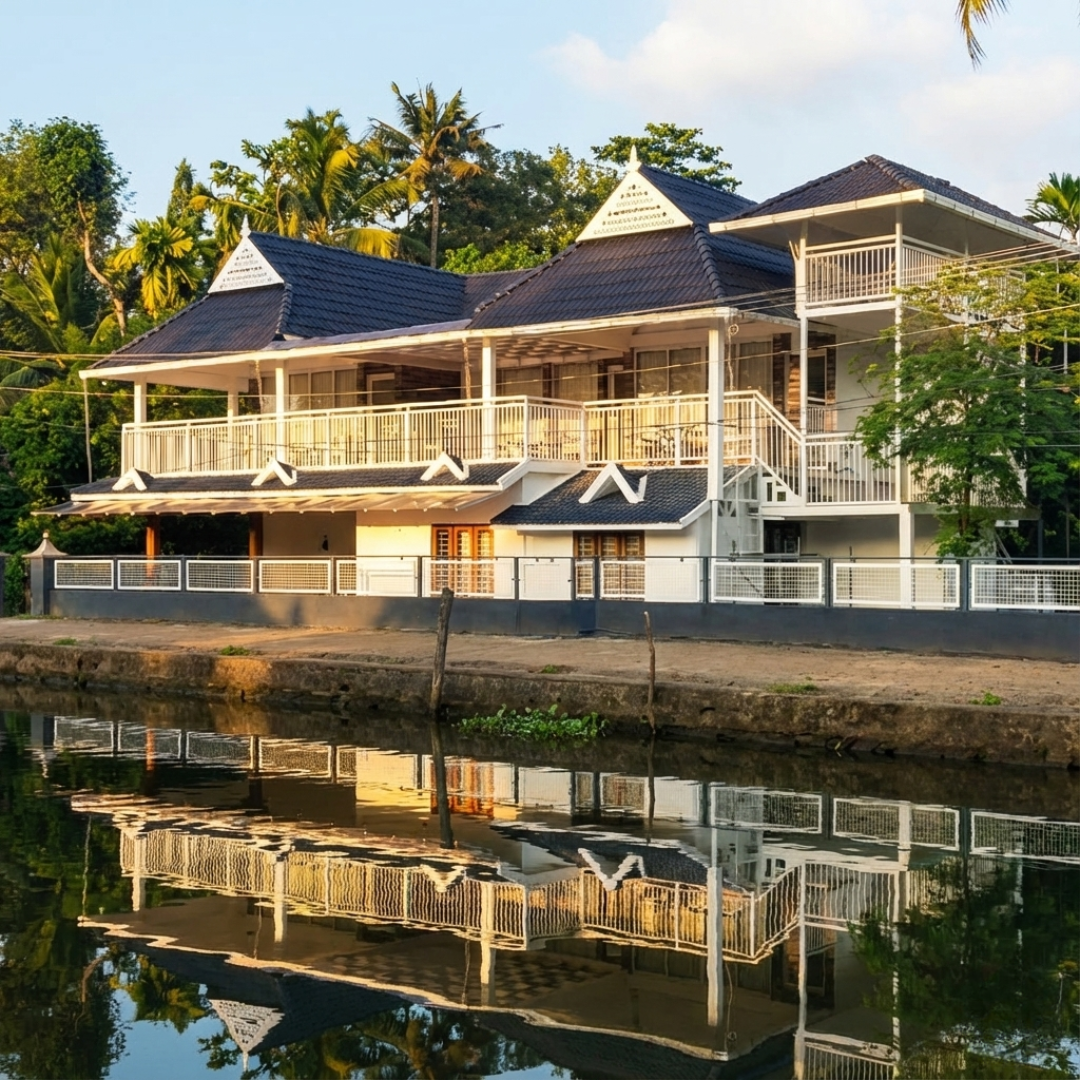
- At Evaan’s Casa, you’re not just in Alappuzha; you’re on a small island in the backwaters, accessible only by a six-minute boat ride, which makes the immersion total and the experience genuinely local.
I remember the sound of the first boat engine of the day, a low diesel chug that carries across the still water. It’s just past five, and the sky is that soft, bruised colour between night and morning. From my veranda, I can see the silhouette of a fisherman in his wooden canoe, a tiny black cutout against the grey. The air smells of wet earth and the faint, clean scent of the river. This is the quiet heartbeat of our island, a rhythm that hasn’t changed in decades. It’s this specific, uncurated moment I hope guests find when they come looking for a real local experience homestay.
Most people arrive in Alappuzha with a picture of houseboats. That’s fine. But the life here is on the narrow canals and the small islands, in the villages where the main street is a waterway. That’s where I grew up. The idea for Evaan’s Casa wasn’t to build a resort. It was to open our home, to share this particular slice of the backwaters that most visitors speed right past. It’s about the pause between the boat rides.
What Is a Local Experience Homestay?
Let’s strip away the fancy terms. A local experience homestay is simple. It means you sleep in a family’s home, you eat the food they eat, and your day moves to the local clock, not a tour itinerary. You’re a temporary part of the neighbourhood.
It’s the opposite of a packaged tour. There’s no buffet line with global cuisine. Instead, you might hear the sizzle of mustard seeds hitting coconut oil from the kitchen at our homestay. You’ll learn that the loud, cheerful call from the canal is the vegetable vendor on his boat, and you can buy fresh okra and snake gourd right from your veranda. The experience is woven into these ordinary things.
It’s participatory, if you want it to be. You can help rake the coconut husks in the garden or try your hand at weaving a palm frond. Or you can just sit and watch the water change colour all day. The point is connection. You leave with a feel for the place, not just photos of it. That’s the core of a worthwhile local experience homestay.
Why Does the Island Location Matter?
Access is everything. Evaan’s Casa is on a small island. To get here, you park your car in Nedumudy and take our boat. The ride is six minutes. That short trip across the Punnamada Lake is a literal and mental threshold.
You leave the car horns and the main road behind. The soundscape changes to water lapping and kingfishers diving. There are no vehicles here. None. The roads are footpaths, and the highways are canals. This isolation isn’t harsh; it’s gentle. But it forces a shift in pace. You can’t just hop in a taxi to go get a coffee. Your world becomes the paths on this island and the waterways around it.
This isolation defines the daily rhythm. Boats aren’t just for sightseeing; they’re how the postman delivers mail, how kids get to school, how we bring in supplies. When you stay with us, you live within that system. Your arrival by boat isn’t a gimmick. It’s how everyone here arrives. That’s the fundamental difference. A true local experience homestay needs this kind of context, a place that operates by its own rules. The island provides that.
Not gonna lie, the first night is quiet. Really quiet. After the generator switches off and the last boat putters home, you hear the frogs and the water. Some city folks find it startling. By the second night, they’re sleeping deeper than they have in years.
What Home-Style Food Can You Expect Here?
Food is the centre of any Kerala home. The meals we share are traditional home cooking, the kind you’d find in any household across these backwaters. It’s built from what’s local and fresh. You’ll taste the difference.
Breakfast might be soft, lacy appam with a mild, fragrant vegetable stew, the coconut milk sourced from the trees right here. Or it could be puttu, those steamed cylinders of rice flour and coconut, with kadala curry made from black chickpeas. The coconut chutney is ground fresh each morning, and I’m probably biased, but the flavour of a just-cracked coconut is miles away from anything in a packet.
Lunch and dinner are often rice-based. We serve the red Kerala matta rice, grown in the fields you see across the water. It comes with an array of dishes: maybe a tangy fish curry with kodampuli (Malabar tamarind), a dry stir-fry of beans and coconut, a pachadi (yogurt blend) with local cucumber, and always a crunchy pappadam. The karimeen (pearl spot fish), if we can get it fresh from the fisherman, is cooked in banana leaf with spices—a classic Pollichathu. The banana leaf itself adds a faint, earthy aroma to the meal.
On request, we can serve a full Kerala Sadhya on a banana leaf. It’s a festival of tastes, with maybe twelve different items, each in its own little mound. You eat with your hand, and the mix of warm rice, cool yogurt, spicy pickle, and crisp banana is an experience. It’s a meal that demands you slow down and pay attention. This is home-style Kerala food, not restaurant food. The spices are balanced, not overwhelming. It’s meant to nourish.
Jackson’s Practical Tips for Visitors
If you’re considering a local experience homestay, here are a few things I tell everyone. They make the stay smoother and richer.
- Pack Light, But Pack Smart. You’re crossing water to get here. A soft duffel is better than a hard suitcase. Essentials include a torch (the paths are dark at night), mosquito repellent (we have nets, but it’s wise), and sturdy shoes you don’t mind getting muddy.
- Bring Cash. This is a big one most blogs miss. The nearest ATM is a boat ride and an auto-rickshaw trip away. Small vendors on the canals and in the village markets don’t take cards. Get your cash in Alleppey town before you come to the island.
- Learn Five Words of Malayalam. “Namaskaram” (hello), “Nanni” (thank you), “Shari” (okay). It changes how people interact with you. A smile and a simple “nanni” to the boatman or the tea-shop owner goes a very long way.
- Don’t Over-plan Your Days. The beauty of this kind of stay is in the gaps. Leave an afternoon free just to sit and read, or to watch the coir-making process in the yard next door. The best moments are often the unscripted ones.
- Visit the Nedumudy Market Early. It’s on the mainland where you park. Go before 8 AM. It’s not a tourist market. It’s where we buy our fish, vegetables, and spices. The energy, the colours, the smells of fresh ginger and stacked fish on banana leaves—it’s a sensory blast. Ask for “kaya varuthathu” (banana chips) from the stall near the north entrance. They’re the best.
What Is the Best Time to Visit Alappuzha for a Local Experience Homestay?
Each season paints the backwaters a different colour, and each has its own character for a local experience homestay.
Monsoon (June to September): The landscape is intensely, overwhelmingly green. The rain is heavy and dramatic, drumming on our tin roofs. The water levels rise, and everything feels lush and alive. The downside? Boat trips can be cancelled during sudden downpours, and some activities are limited. But if you love rain, the solitude is profound. It’s the most local experience of all, because you’re living through the season that defines our agriculture and water supply. Just pack a good raincoat.
Winter (November to February): This is the classic, postcard season. The weather is cool and sunny, with clear blue skies. It’s perfect for long canoe rides, bird watching (migrants are here), and exploring. It’s also the busiest time in Alleppey. The island remains quiet, but you’ll see more activity on the main waterways. Nights can get surprisingly cool, so a light sweater is useful.
Summer (March to May): It gets hot. Honestly, I’d say this is for the heat-tolerant traveler. The advantage is that you’ll have the place largely to yourself. The light is harsh but beautiful for photography in the early morning and late afternoon. The water levels are lower. It’s a quiet, slow time. Life moves early in the morning and late in the evening, with long, lazy breaks in the shade during the peak heat. Some guests prefer this raw, unfiltered feel.
My personal favourite is the very end of the monsoon, around late September. The rains are softer, the air is fresh, and the tourist crowds haven’t arrived yet. The water is full, and the light has a special, liquid quality.
Frequently Asked Questions About Local Experience Homestays
How far is Evaan’s Casa from the Alleppey town centre?
It’s about an 8-kilometer road distance to the boat point, which takes 20-25 minutes by auto or taxi. Then it’s the six-minute boat ride to the island. So, you’re close to town for supplies or sightseeing, but you feel a world away. The separation is the whole point.
Is it safe, especially for solo travelers or families?
Yes, absolutely. Our island community is close-knit and very safe. Crime is virtually unheard of here. Kids play freely on the paths. For solo travelers, especially women, the environment is secure and respectful. The main practical safety note is about the water itself—being mindful near the canal edges, especially after dark.
What should I definitely pack?
Beyond the basics, bring a power bank. We have electricity, but power cuts can happen briefly, especially in monsoon. A reusable water bottle is great—we provide filtered water. And if you’re particular about coffee, bring your own instant. Our South Indian filter coffee is strong, but some guests miss their latte. I get it.
Is WiFi available?
We have a WiFi connection, but look, here’s the thing: it’s satellite-based and can be slow, especially in heavy rain. It’s enough for messaging and checking emails, but don’t plan on streaming movies. Part of the local experience homestay idea is to disconnect a little. Embrace the spotty connection. It’s a feature, not a bug.
Some guests disagree with me on the WiFi, and that’s fair. Everyone needs to stay connected for different reasons. We do our best to provide it, but I always encourage people to use it as little as they can manage.
The light is fading now, turning the canal into a ribbon of gold. Another fisherman is heading home, his oar dipping quietly. This daily cycle is what stays with you. It’s not about seeing everything; it’s about feeling a part of something, even briefly. A real local experience homestay leaves a trace on you, like the smell of woodsmoke on your clothes.
If this rhythm calls to you, if you want a stay defined by water and sky and the simplicity of island time, then you might find your place here. We’d be glad to share it with you. You can learn more about our home and how to reach us at Evaan’s Casa. Whatever you decide, I hope you find a corner of Kerala that feels real to you. That’s the goal, after all.