- By :
- Comments: 0
houseboat vs homestay Kerala
houseboat vs homestay Kerala
Last Updated: March 25, 2026
Quick Answer: houseboat vs homestay Kerala
- Choosing between a houseboat vs homestay Kerala comes down to motion versus immersion. A houseboat is a moving hotel room on the water. A homestay, especially on an island like ours, is a rooted, cultural experience where you live within a community.
- Local insider tip from Jackson: Most people don’t realize you can combine both. Book a homestay for most of your trip, then do a 3-hour daytime canal cruise on a small, traditional *vallam* boat. You see the backwaters without sleeping on a noisy, stationary houseboat in a crowded channel.
- Why Evaan’s Casa fits this search intent: We are the island homestay alternative. You get the authentic stillness of the backwaters, home-style food, and a real sense of place. It’s the quiet side of the houseboat vs homestay Kerala debate.
The first sound I hear most mornings isn’t an alarm. It’s the soft, wet slap of a fisherman’s oar against the canal, maybe fifty meters from my window. Then comes the low, rhythmic creak of the wooden rowlock. By the time I smell woodsmoke from a neighbor’s hearth mixing with the damp, green air, the kingfishers are already at work. This is the pace of things here. It’s what you miss entirely when your entire focus is the houseboat vs homestay Kerala decision as just a checklist item. It’s the difference between observing a painting and stepping into it.
What Is Houseboat vs Homestay Kerala?
Let’s strip away the brochure language. When you’re weighing a houseboat vs homestay Kerala, you’re choosing between two very different rhythms of travel. A Kerala houseboat is a converted *kettuvallam*, a rice barge. It has bedrooms, a deck, and a crew that steers you through the wider canals and lakes. You eat on board. You sleep anchored in a designated spot, often lined up with other houseboats. Your view changes with the engine’s rumble.
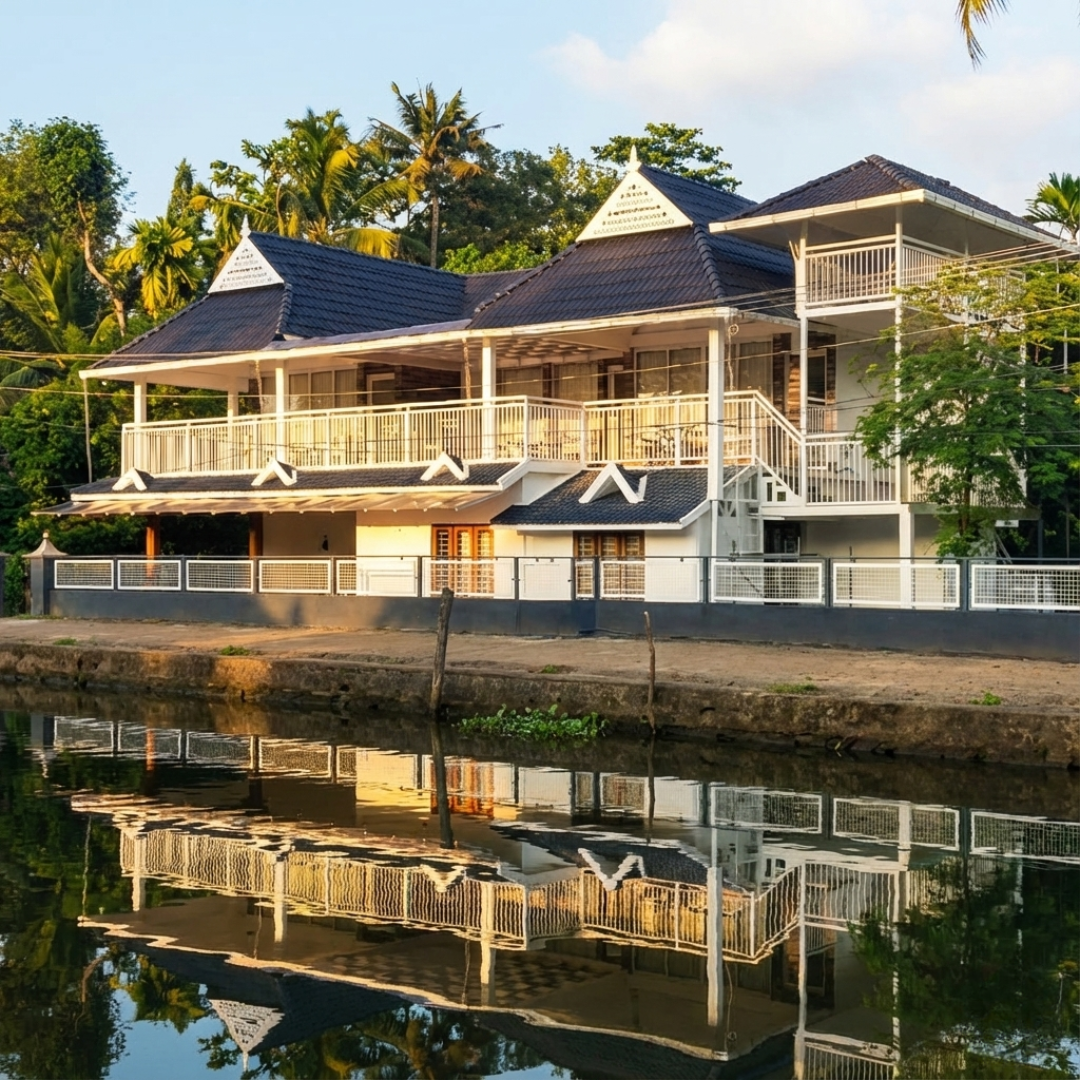
A homestay is a room in someone’s home. You live where they live. At Evaan’s Casa, that means a traditional Syrian Christian home on a small island in the Alappuzha backwaters. There’s no road here. Your world becomes the footpaths between coconut groves, the local tea shop, the sound of our kitchen in the morning. The debate of houseboat vs homestay Kerala isn’t about which is better. It’s about what kind of experience you’re stitching together for your trip. Do you want a floating tour, or a grounded stay?
Honestly, I’d say the houseboat gives you photos. A homestay gives you stories. The smell of rain on a tin roof, the taste of a mango picked an hour ago, the awkward, wonderful attempt at a Malayalam greeting with a neighbor. These things stick.
Why Does the Island Location Matter?
Access defines everything. To get to us, you park your car in a village called Punnamada. Our boatman, Saji, meets you with a simple wooden *vallam*. The ride is six minutes. That short trip across the water is a reset button. The scooter horns fade. The concrete disappears. You step onto a laterite stone jetty, and the only transport left is your own two feet or a bicycle.
This isolation isn’t lonely. It’s immersive. You become part of the island’s daily soundtrack. The diesel putter of a goods boat delivering gas cylinders. The chatter of schoolchildren in uniforms walking home. The evening call to prayer from the small mosque drifting over the water. When you’re stuck on the houseboat vs homestay Kerala question, consider the night. On a houseboat, you’re looking at the shore lights. On our island, you’re in the darkness, looking up at a sky thick with stars, the water lapping at the banks just there.
Most people skip this, but the real magic is in the late afternoon. That’s when the light turns golden and the village comes alive. People are returning from work, women are chatting at the well, and the air fills with the sizzle and pop of mustard seeds in coconut oil for the evening meal. You’re not a spectator. You’re a temporary resident.
What Home-Style Food Can You Expect Here?
Food here is not a service. It’s a part of the day. Meals are prepared in the kitchen at our homestay, following the patterns of traditional home cooking. We use what’s around. Coconut from our trees. Fish from the morning’s catch at the local kadavu, the landing spot. Bananas and tapioca from the garden.
Breakfast might be soft, lacy appam with a mild, fragrant vegetable stew, or puttu—steamed cylinders of rice flour and coconut—with kadala curry, a black chickpea dish. The flavors are clean and direct. Lunch and dinner are often rice-based. A typical plate includes steamed red rice, a fish curry like karimeen pollichathu (pearl spot fish marinated and grilled in a banana leaf), a thoran of finely chopped beans or cabbage with grated coconut, and sambar or rasam. There’s always a fresh coconut chutney and some pappadam.
On request, we can serve a full Kerala Sadhya on a banana leaf. It’s a festival of tastes and textures—sweet, sour, salty, spicy, crunchy—all arranged in a specific order. You eat with your right hand. Feeling the temperature and consistency of the food is part of the experience. It’s messy and wonderful. This daily, intimate connection to local ingredients and rhythms is a core part of the homestay side of the houseboat vs homestay Kerala choice.
Jackson’s Practical Tips for Visitors
Some of this is common sense. Some of it you only learn after years of watching guests figure things out. Here’s what I tell people.
- Pack light, but pack smart. You’re crossing water to an island. A small, sturdy suitcase or backpack is better than a giant roller bag. Bring mosquito repellent (we have nets, but it’s wise), a torch or headlamp for the footpaths at night, and sturdy shoes you don’t mind getting dusty.
- Forget the fancy clothes. Cotton is king here. Loose, comfortable, breathable fabrics. A light rain jacket is useful for most of the year. The vibe is deeply, deeply casual.
- Get a local SIM card at the airport. Jio or Airtel. Data is cheap and reliable here. Our homestay has WiFi, but it’s island-speed—good for messages, not for streaming movies. Embrace the slower connection.
- Do the village walk. I’m probably biased, but I think it’s essential. I or one of our team will take you around the island. You’ll see the coir-making sheds, the toddy shop (just for a look!), the tiny St. Mary’s Orthodox church that no tourist map shows, and maybe buy a sweet from the thatched-roof stall run by Leela amma.
- Time your boat trips. If you do a small-boat cruise from here, go early. Be on the water by 7:30 AM. You’ll have the narrowest, most beautiful canals to yourself, see the most birdlife, and avoid the heat. The big tourist houseboats don’t really get into those threads of water until later.
What Is the Best Time to Visit Alappuzha for Houseboat vs Homestay Kerala?
Seasons change the very character of the backwaters. Your experience of a houseboat vs homestay Kerala shifts dramatically with the weather.
Monsoon (June to September): The backwaters swell. The green is almost violent in its intensity. Rain comes in powerful, warm bursts, then gives way to clear, washed skies. It’s my favorite time. The air is cool, the light is dramatic. For a homestay, it’s perfect—reading on the veranda, watching the rain dance on the water. For houseboats, it can be tricky. Some operators halt services during heavy rains, and cruising can be less comfortable. The water levels are high, though, which is beautiful.
Winter (November to February): This is the peak season. The weather is mild, sunny, and dry. Skies are clear. It’s the most reliable time for houseboat cruises and for exploring. It’s also the busiest. The main canals can feel crowded with boats. At our island homestay, you feel the buzz in the air, but the island itself remains a quiet buffer. Nights can get pleasantly cool.
Summer (March to May): It gets hot and humid. The sun is strong. The advantage? Fewer crowds and lower prices. Mornings and evenings on the island are still lovely. The best plan is to be active early, retreat to the shade or the cool of the house during the midday heat, and emerge again later. It’s a slow, lazy time of year. Some guests disagree with me on this, and that’s fair, but if you don’t mind the heat, you get a very raw, quiet version of Kerala.
Frequently Asked Questions About Houseboat vs Homestay Kerala
How far are you from the Alappuzha boat jetty?
We’re about a 20-minute drive from the main Alappuzha jetty, then the 6-minute boat ride. We arrange the transfer from the jetty or from where you park. The distance is part of the point—we’re in the living backwaters, not the main tourist launch area.
Is it safe for solo travelers and families?
Yes, absolutely. The island community is safe and welcoming. For solo travelers, it’s peaceful and secure. For families, kids love the freedom to run around, see chickens and ducks, and go on boat rides. There are no cars to worry about, just the water’s edge, which we’re very mindful of.
What should I definitely bring?
Beyond the basics, bring a sense of curiosity. A refillable water bottle (we provide filtered water). Sunscreen. And an appetite. I’d also suggest a small notebook. You’ll want to jot things down—a bird’s name, a Malayalam word, a recipe you tasted. The details here are worth remembering.
Is WiFi available? Can I work remotely?
We have WiFi. It works. But if you’re planning intensive video calls or large uploads, you might find it frustrating. The connection is part of the island’s pace. For checking emails, messages, and light browsing, it’s fine. Think of it as a chance to partially disconnect. The best work desk is often our veranda with a cup of chai.
Look, here’s the thing. The whole houseboat vs homestay Kerala discussion often misses the heart of it. It’s not just about where you sleep. It’s about how you want to feel the pulse of this place. The backwaters aren’t just a sight. They’re a place where people live, work, and share meals. That’s what we try to offer at Evaan’s Casa—a chance to step into that rhythm, even for a few days.
Your decision shapes your memory. The gentle rock of a boat is one kind of memory. The solid feel of a laterite stone step, still warm from the afternoon sun, is another. The taste of a fresh coconut, chopped open with a parang knife right in front of you. The sound of absolute quiet, broken only by a jumping fish. However you choose, I hope you come away with more than photos. I hope you take a little of the island’s quiet with you. If you’re looking for that grounded, deeply local alternative in the houseboat vs homestay Kerala conversation, we’re here. The kettle is always on, and Saji is ready with the boat.
Plan your stay at Evaan’s Casa
- Lake view homestay in Alleppey (Alappuzha)
- Where to stay in Alleppey: the complete guide
- Alleppey room booking: rooms and prices from ₹1,900
- Budget homestay in Alleppey under ₹2,000
- Backwater homestay on Vembanad Lake
- Punnamada homestay, Alappuzha
- Family homestay in Alleppey
- Honeymoon package and couple stay
Book direct on WhatsApp +91 88484 96667