- By :
- Comments: 0
homestay vs resort Alleppey
homestay vs resort Alleppey
Last Updated: March 25, 2026
Quick Answer: homestay vs resort Alleppey
- Choosing a homestay vs resort in Alleppey is about choosing between a personal, rooted experience and a standardized, amenity-focused one. Homestays connect you to the rhythm of the backwaters.
- Local insider tip from Jackson: The best sunset spot isn’t on a houseboat. It’s from the small, public jetty near the Champakulam market, where the light hits the water just right.
- Why Evaan’s Casa fits this search intent: We offer the quiet immersion of a true island homestay, a six-minute boat ride from the mainland, with home-style food and direct access to the village life that defines this place.
I woke up before the sun this morning, the way I always do. The air was cool and carried the damp, green smell of the night’s rain. From my window, I could hear the first few country boats puttering to life, their diesel engines a low, familiar grumble across the water. That sound, more than anything, tells me I’m home. It’s a world away from the tour buses and the front desk bells of the mainland. It’s the quiet, persistent heartbeat of the backwaters. And it’s this specific feeling that sits at the very heart of the whole homestay vs resort Alleppey conversation.
What Is Homestay vs Resort Alleppey?
Look, here’s the thing. When people search for homestay vs resort Alleppey, they’re usually trying to picture two very different holidays. They’re not just comparing bed sizes or pool views. They’re trying to choose between two different ways of being here.
A resort here is a destination in itself. It’s designed to be a comfortable, often luxurious, bubble. You’ll have a swimming pool, a spa, maybe several restaurants. The service is professional, the paths are paved, and the experience is largely contained within the property’s walls. It’s a beautiful, controlled version of Kerala.
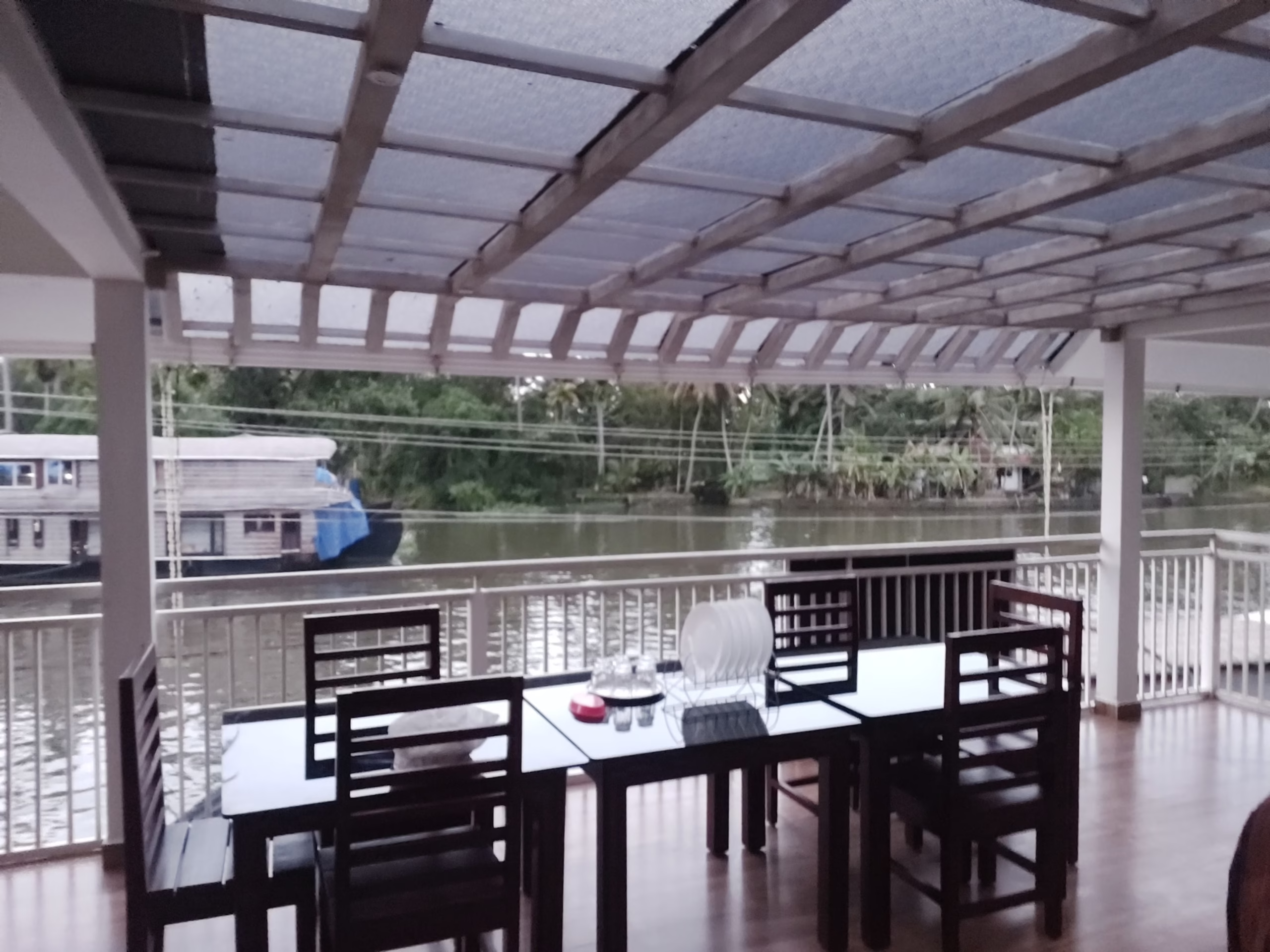
A homestay, especially an island one like ours, is an invitation into the existing life of a place. The walls are thinner, in every sense. You hear the neighbors laughing. You see the fisherman casting his net from his canoe at dawn. Your morning walk is along a village path, not a landscaped garden. The debate of homestay vs resort Alleppey really boils down to a simple question: do you want to observe the backwaters, or live inside them for a few days? I’m probably biased, but I know which one leaves a deeper mark.
Why Does the Island Location Matter?
Access defines everything. Most resorts are on the mainland, reachable by car. You drive up, you check in. Evaan’s Casa is on a small island. You park your car in Champakulam, and one of us meets you at the public jetty with our boat. The ride is six minutes.
Those six minutes are a filter. They separate the frantic energy of the road from the slow pulse of the water. The moment the boat pushes off, the soundtrack changes. The car horns fade. You hear water slapping against the hull, the call of a kingfisher, the distant sound of a toddy tapper climbing a palm. You arrive differently. You can’t just hop in a taxi to go get a soda. You have to plan, or you have to be content with what’s here.
That isolation isn’t lonely. It’s freeing. Your world shrinks to the width of a canal, the shade of a mango tree, the curve of the footpath. You notice more. The way the light turns golden an hour before sunset, painting the lily pads. The smell of woodsmike from a kitchen fire in the late afternoon. The complete, velvety darkness of a moonless night, broken only by the lanterns of a passing kettuvallam. This feeling of being gently set apart is a huge, tangible difference in the homestay vs resort Alleppey decision. A resort manages nature. On an island, nature manages you.
What Home-Style Food Can You Expect Here?
Food is where the philosophy of a place becomes something you can taste. In a resort, meals are often a grand buffet with global options. It’s impressive. At a homestay, you eat what the land and the day provide. It’s intimate.
Breakfast might be soft, lacy appam with a subtly sweet coconut milk stew, or puttu—steamed cylinders of rice flour and coconut—with a rich, spicy kadala curry made from local black chickpeas. The coconut is from the trees you see outside. The rice is likely from Kuttanad, the fields you see from the boat.
Lunch is often the main event. It’s served on a fresh banana leaf, which isn’t just decoration; it adds a faint, earthy fragrance to the meal. You’ll get a scoop of red rice, a few different vegetable thorans stir-fried with grated coconut, maybe some okra in a tangy yogurt sauce, and a piece of fish if you like. The karimeen (pearl spot fish), if we can get it fresh from the morning’s catch, is a must. It’s marinated in a paste of spices, wrapped in a banana leaf, and pan-fried or grilled. The smell when you open that leaf is pure Alleppey.
Dinner is simpler, quieter. Maybe some leftover rice transformed into a quick kanji, a comforting rice porridge, with a fiery mango pickle and some fried sardines. The kitchen at our homestay uses mustard seeds, curry leaves, and tamarind pulled from the backyard. Every meal is a direct conversation with this soil, this water. You won’t find a pizza oven or a pasta station. And honestly, after a day on the water, you won’t miss it.
Jackson’s Practical Tips for Visitors
Some guests disagree with me on this, and that’s fair, but I think skipping the big commercial houseboat overnight stay is wise. Instead, consider a small country boat day cruise. You’ll see more, feel more. Here are a few other things I tell everyone who asks.
- Pack light, but pack a good torch or headlamp. The island paths are not brightly lit, and it’s essential for walking back after dusk. It also helps spot the shy night herons.
- Bring mosquito repellent. We have nets and coils, but having your own is best. The mosquitoes are worst just after sunset, especially near still water.
- Learn three Malayalam words: “Nanni” (Thank you), “Sukhamano?” (Are you well?), and “Shari” (Okay). Using them changes every interaction in the village.
- Most people skip this, but visit the Champakulam market early on a Saturday. It’s not for tourists. It’s where our neighbors buy fish, vegetables, and spices. The energy is raw and real. Be respectful, don’t block the pathways, and just observe.
- Your phone signal will be patchy. Reliance Jio works best out here. Think of weak WiFi as a feature, not a bug. It forces you to look up.
- If you visit between June and August, embrace the rain. Don’t fight it. A slow boat ride in a steady monsoon drizzle, with the rain pattering on the palm-thatch roof, is magical. Just have a dry bag for your camera.
What Is the Best Time to Visit Alappuzha for Homestay vs Resort Alleppey?
The “best” time depends entirely on what you want. The experience of a homestay vs resort Alleppey shifts dramatically with the seasons.
Monsoon (June to September): This is my secret favorite. The backwaters swell and turn a deep, fertile green. The air is cool. The rain is a constant, gentle presence. The downside? Boat trips can be cancelled if the weather turns fierce, and some village paths flood. It’s lush, quiet, and deeply atmospheric. Not for sunbathers.
Winter (November to February): This is the peak. The weather is perfect—sunny days, cool nights. It’s the best time for birdwatching, as migratory visitors fill the skies. It’s also the busiest. The waterways are crowded with houseboats, and the village has more visitor energy. Book everything far in advance.
Summer (March to May): It gets hot. Honestly, it gets very hot and humid by afternoon. The advantage? It’s the season for traditional snake boat race practice. If you’re here in April or May, you can hear the rhythmic chanting and synchronized splashing of the oarsmen training in the wider canals at dawn—a powerful, ancient sound. Mornings and evenings are still lovely.
So, for solitude and green intensity, choose monsoon. For reliable, picture-postcard weather, choose winter. For a glimpse of intense local culture, consider the shoulder of summer. Every season answers the homestay vs resort Alleppey question in its own way.
Frequently Asked Questions About Homestay vs Resort Alleppey
Is a homestay on an island safe?
Yes, absolutely. Our island community is close-knit and looks out for each other. The paths are safe to walk day or night. The main consideration is practical safety: watching your step on uneven paths, using your torch after dark, and being mindful near the water’s edge, especially with young children.
How much does it cost compared to a resort?
Generally, a homestay is more affordable than a luxury resort. But you’re not just paying for a room. You’re paying for a curated, local experience that includes meals, often boat transfers, and direct access to our knowledge. It’s a different value proposition. Think of it as investing in depth rather than breadth of amenities.
What should I pack specifically for an island homestay?
Beyond the usual, pack sturdy shoes that can get muddy, a reusable water bottle (we provide filtered water), quick-dry clothing, and a power bank. Leave your fancy heels and city outfits behind. Comfort and practicality rule here. A small backpack is better than a rolling suitcase for the boat ride.
Is WiFi available?
We have WiFi, but I have to be upfront—it’s not high-speed streaming quality. It works for messaging and emails most of the time. The connection can dip when it rains. If being constantly online is crucial, this is a key point in your homestay vs resort Alleppey decision. A mainland resort will have stronger, more reliable internet.
I hope this gives you a clearer, more human picture of what that search term really means. It’s not just about accommodation. It’s a choice between two different rhythms, two different ways of listening to the same place. The resort offers a magnificent postcard. A homestay offers a page from our diary. If the idea of slow mornings, shared meals, and the sound of oars in water speaks to you, then you might just be a homestay person. We’d be glad to share our corner of the world with you at Evaan’s Casa. The kettle is always on, and the boat is at the jetty. Just let us know when you’re coming.
Plan your stay at Evaan’s Casa
- Lake view homestay in Alleppey (Alappuzha)
- Where to stay in Alleppey: the complete guide
- Alleppey room booking: rooms and prices from ₹1,900
- Budget homestay in Alleppey under ₹2,000
- Backwater homestay on Vembanad Lake
- Punnamada homestay, Alappuzha
- Family homestay in Alleppey
- Honeymoon package and couple stay
Book direct on WhatsApp +91 88484 96667