- By :
- Comments: 0
homestay price Alleppey
Last Updated: March 28, 2026
Quick Answer: homestay price Alleppey
- A genuine homestay price in Alleppey typically ranges from ₹1,500 to ₹4,500 per night for a double room, with island locations often at the higher, more experiential end of that scale.
- Local insider tip from Jackson: The price difference often comes down to access. If a homestay is on the mainland, you’re paying for a room. If it’s on an island, you’re paying for an entire world.
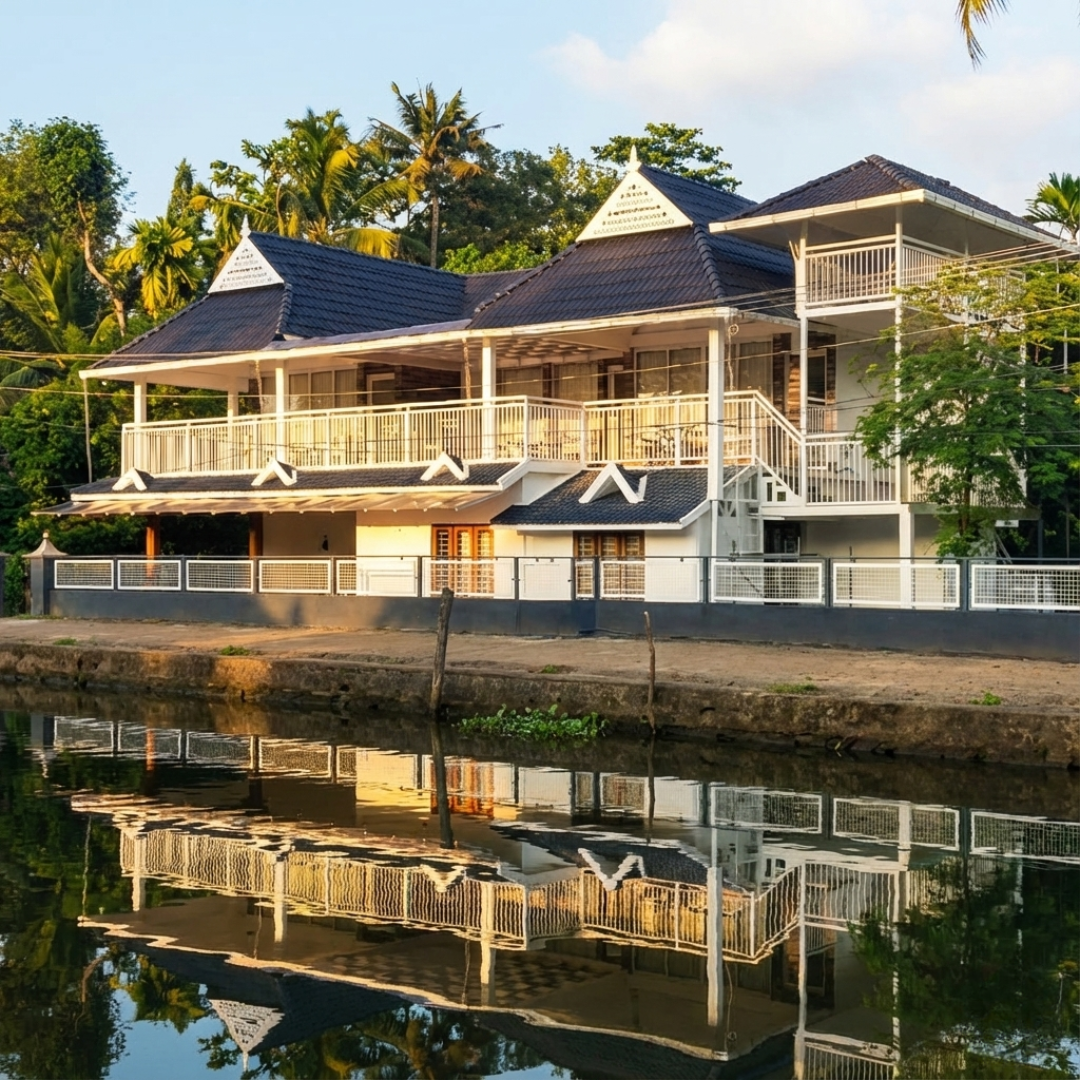
- Why Evaan’s Casa fits this search intent: Our homestay price in Alleppey reflects the quiet reality of island life—a complete immersion that includes a private boat transfer, home-style meals, and the deep silence of the backwaters after sunset.
I woke up before the sun this morning, a habit from a lifetime here. The air was cool and carried the damp, green smell of the water hyacinths. Somewhere across the narrow canal, a kingfisher dove with a tiny splash, the first sound of the day. I sat on the verandah with my tea, listening to the island wake up—the soft putter of a fisherman’s canoe, the distant call for the 5:30 AM public ferry from the next village. This is the texture of our days. It’s what you’re really buying when you look at a homestay price in Alleppey. You’re not just booking a bed. You’re renting a slice of this specific, quiet rhythm.
What Is Homestay Price Alleppey?
When you type “homestay price Alleppey” into a search bar, you’re asking for a number. I get that. You want a budget. But here on the ground, that phrase means something more. It’s the cost of stepping out of a hotel corridor and into a living room where someone might offer you a cup of chai. It’s the rate for swapping a minibar key for the sound of rain on a tin roof.
In plain terms, a homestay price in Alleppey is what a local family charges for a room in their home. It usually includes a clean bed, an attached bathroom, and often, the real prize: home-style Kerala food. The range is wide. You can find basic rooms for around ₹1,500 a night. For a place like ours, on a private island with a boat ride involved, you’re looking at the higher end, maybe ₹3,500 to ₹4,500 for two people with meals. The variation isn’t just about fancy towels. It’s about location, access, and what’s wrapped into your stay.
Look, here’s the thing. That homestay price Alleppey search results show you an average. But the average doesn’t tell you about the six-minute boat ride. It doesn’t mention the taste of a mango picked from the tree beside your room. When you’re comparing, you have to ask what’s inside the number. Is it just a room? Or is it an experience?
Why Does the Island Location Matter?
Access changes everything. Most homestays in Alleppey are along the canals, but they’re on the mainland. You step out onto a road. You hear scooters. Our place is different. You meet us at a small boat jetty in Punnamada. From there, it’s a six-minute ride in our wooden boat. The city sounds fade away with every turn through the narrow waterways.
When you arrive, there are no cars. No honking. The only path is a laterite stone walkway under coconut trees. This isolation isn’t about being cut off. It’s about being held within something. The evening brings a profound quiet, broken only by the water lapping and the occasional call of a night bird. You can see every star. This feeling—of being in a place, not just near it—fundamentally shapes a homestay price in Alleppey for an island spot.
The rhythm is dictated by the water. Need something from town? We coordinate with the boat. Hear a deep diesel chug? That’s a Kettu Vallam, a traditional cargo boat, carrying bricks or sand to a construction site somewhere hidden in the maze. This logistical reality adds a layer of quiet adventure. It also adds value. You’re not just in Kerala. You’re in the engine room of its backwater life.
What Home-Style Food Can You Expect Here?
Food is the heartbeat of a stay here. It’s not restaurant service. It’s the kitchen at our homestay preparing what we eat, when we eat it. The day might start with soft, lacy appam—bowl-shaped rice hoppers—and a fragrant vegetable stew simmered with coconut milk and curry leaves. Or maybe puttu, steamed cylinders of ground rice, with kadala curry made from black chickpeas.
Lunch is often the main event. You might have a whole Karimeen (Pearl Spot fish), marinated in a paste of spices, wrapped in a banana leaf, and pan-seared to smoky perfection—that’s Pollichathu. It comes with rice, a tart mango curry, and a thoran of finely chopped beans stir-fried with grated coconut. The smell of mustard seeds crackling in coconut oil is the signature scent of our afternoons.
On request, we can serve a proper Kerala Sadhya. This is the traditional feast served on a banana leaf. It’s a symphony of flavors and textures: tangy pulissery, bitter gourd thoran, sweet sambar, crisp pappadam, and creamy payasam for dessert. Every element has its place. Eating it with your fingers isn’t just allowed; it’s how you connect with the meal. Honestly, I’d say skipping the home-style meals means missing half the reason you looked up a homestay price in Alleppey to begin with.
Jackson’s Practical Tips for Visitors
After hosting folks for years, I’ve seen what makes a trip smoother and deeper. Here are a few things I always share.
- Pack Light, But Pack Smart. A small, soft bag is easier on our boat than a giant hard-shell suitcase. Bring a reusable water bottle we can refill. Mosquito repellent is a must after dusk, though we provide coils.
- Forget Strict Timelines. The backwaters run on “island time.” The public ferry might be ten minutes late because the conductor helped someone load a sack of rice. Embrace it. This fluidity is part of the charm.
- Visit the Muttom Fish Market Early. Most blogs send you to the big markets. For a real slice of life, go to the small Muttom market by 7 AM. It’s where the local fishermen bring their night’s catch. It’s loud, wet, and spectacular. You’ll see snapper, prawns, and crabs you won’t find elsewhere.
- Carry Cash. While we and bigger shops accept cards, the small tea stalls, canoe paddlers, and local artisans you’ll meet on village walks often operate on cash. It’s just simpler.
- Ask for a Village Walk, Not Just a Boat Ride. Everyone does a houseboat or shikara ride. I’m probably biased, but the real magic is on land. Let me show you the narrow paths between houses, the local coir-making unit, the tiny toddy shop that’s been there for fifty years. You see the fabric of daily life.
What Is the Best Time to Visit Alappuzha for Homestay Price Alleppey?
Seasons dramatically change the feel of the backwaters, and they can affect the homestay price in Alleppey you’ll see online. Each has its own character.
Monsoon (June to September): The landscape is explosively green. The rains are heavy, often in intense afternoon bursts. The water levels rise, and everything feels lush and washed clean. It’s the most dramatic time for photography. The downside? Some activities, like long bicycle rides, can get soggy. A homestay price in Alleppey might be lower during this period, but you’re trading sunshine for a powerful, elemental experience. The sound of rain on broad leaves is unforgettable.
Winter (November to February): This is the classic, postcard season. The weather is mild, with cool mornings and warm, sunny days. The skies are clear. It’s perfect for all activities—boating, walking, just sitting outside. Naturally, this is the peak season. You’ll find the highest homestay price in Alleppey during these months, especially around Christmas and New Year. Book well in advance.
Summer (March to May): It gets hot and humid. The air is still. But this is when the local mango and jackfruit trees in our garden are heavy with fruit. Life moves slower, seeking shade. It’s a quiet, introspective time to visit. Prices are often more flexible. If you don’t mind the heat, you can have the backwaters almost to yourself. Just plan your explorations for early morning or late afternoon.
Frequently Asked Questions About Homestay Price Alleppey
Is it safe to stay on an island homestay?
Absolutely. Our island community is small and close-knit. Everyone knows everyone. The biggest “danger” is probably a rooster waking you up too early. We have safety protocols for the boats and the property. It feels remote, but you’re in a cared-for, secure environment.
What should I pack for an island homestay?
Comfort is key. Light, cotton clothing, a hat, and sunglasses. Sturdy sandals are better than shoes for getting in and out of boats. A light sweater for cooler winter evenings. Most importantly, pack a sense of curiosity and a willingness to disconnect. While we have WiFi, the connection is best enjoyed on the verandah, not for streaming movies.
How much does a typical homestay in Alleppey cost per night?
It’s a wide range. A basic room might start around ₹1,500. A more comfortable, well-located homestay with meals is often between ₹2,500 and ₹3,500. For a unique island experience like Evaan’s Casa, including private boat transfer and all meals, expect to be in the ₹3,500 to ₹4,500 range for two people. Always check what’s included—meals and transport can change the value completely.
Can I visit with young children?
Yes, many do. Kids love the boat rides and seeing the water life. We have safety grills and can provide simple, kid-friendly food. Just know it’s a natural environment—there’s water everywhere, so constant supervision is a must. Some guests disagree with me on this, and that’s fair, but I think kids over five get the most out of the experience.
The search for the right homestay price in Alleppey is really a search for the right feeling. You’re weighing a number against an image in your mind—of peace, of green water, of a quiet verandah. I hope this gives you more than just digits to compare. It gives you the soundscape, the smell of the kitchen, the feel of the laterite stone underfoot. When you’re ready to trade the noise of the mainland for the whisper of coconut fronds in the wind, you know where to look. We’ll be here, waiting at the jetty.