- By :
- Comments: 0
homestay near Mullakkal temple
homestay near Mullakkal temple
Last Updated: March 04, 2026
Quick Answer: homestay near Mullakkal temple
- A homestay near Mullakkal Temple is a family-run guesthouse in the temple’s neighborhood, offering a quiet, local experience away from the main tourist bustle of Alappuzha.
- Local insider tip from Jackson: Visit the temple in the early evening. The air fills with the scent of jasmine and camphor, and the rhythmic bells create a peaceful soundscape you won’t find during the day.
- Why Evaan’s Casa is the right place for this: We are a 15-minute auto-rickshaw ride from the temple, on our own quiet island. You get the spiritual calm of Mullakkal and the deep, restorative quiet of the backwaters all in one stay.
I remember the sound of the water lapping against our old wooden canoe. It was just before sunrise, the sky a soft grey-blue. My father was rowing us back from the mainland, the only sounds being the dip of the oar and the distant call of a rooster from a village far across the water. That deep, morning quiet of the backwaters is what I grew up with. It’s the same quiet that greets our guests at Evaan’s Casa.
Mullakkal Temple was always part of the weekly rhythm. The temple sits in the heart of Alappuzha town, a place of constant gentle activity. People come for prayers, for the vibrant festivals, or just for a moment of peace. Finding a homestay near it means you step into that local rhythm.
What Is a Homestay Near Mullakkal Temple?
It’s not just a room for rent. It’s an invitation into a neighborhood. Mullakkal is a busy, lived-in part of town, full of small shops selling flowers for puja and steaming hot chai from roadside stalls. A homestay here places you right in that flow.
You wake up to the same sounds as the families who have lived here for generations. You might hear a vendor calling out, selling fresh vegetables. The air carries hints of incense and frying snacks from nearby homes. It’s authentic and unpretentious.
You are close to the temple’s spiritual energy, but you are also a short walk from the main canal and the broader life of Alleppey. It’s a perfect base for someone who wants to feel the town’s pulse, not just observe it from a distance.
Why Does the Island Location Matter?
Evaan’s Casa is not in the temple neighborhood itself. We are a six-minute boat ride away, on our family’s island. This matters because it gives you two contrasting experiences. You get the cultural buzz of Mullakkal, and then you escape to absolute tranquility.
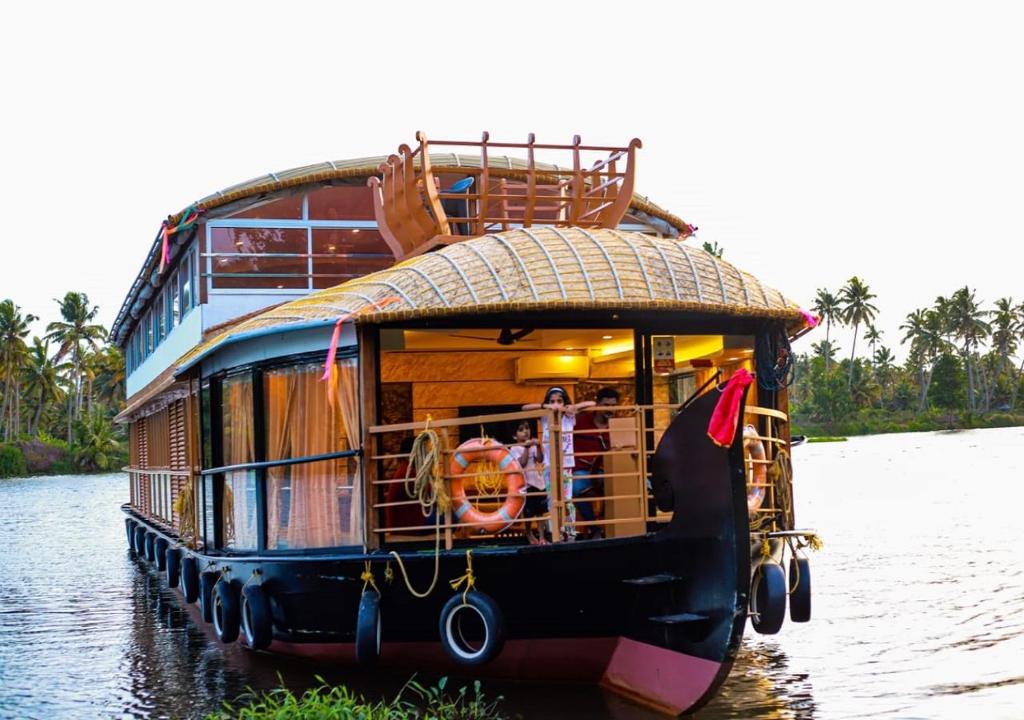
There is no road to our home. No cars, no auto-rickshaw horns. The only way in or out is by our boat. That journey across the water, the moment the mainland noise fades, acts as a reset button. The isolation feels like a gentle embrace.
You feel the space open up around you. The sky seems wider. The dominant sounds become the wind in the coconut palms and the splash of a fish jumping. It’s a different kind of quiet, one that settles deep into your bones after a day of temple visits and town exploration.
What Food Can You Expect Here?
My mother is in charge of the kitchen. Her day starts with the crackle of mustard seeds in coconut oil for the morning’s sambar. The smell of fresh grated coconut and curry leaves is our daily perfume. Every meal is cooked in our home, with ingredients from our garden or the local market.
You might have Karimeen Pollichathu, a pearl spot fish marinated in spices, wrapped in a banana leaf, and grilled over coals. The banana leaf steams and smokes, infusing the fish with a smoky, tangy flavor. We serve it with red rice that has a nutty taste.
If you are here on a festival day or we have a reason to celebrate, we might prepare a Kerala Sadhya. This is a feast served on a banana leaf, with over a dozen different dishes. There will be sour mango pickle, smooth avial with yogurt, crunchy pappadum, and sweet payasam for dessert. It is a riot of flavors and textures.
Breakfast is simple and strong. Maybe fluffy appams with a creamy coconut milk stew, or puttu with kadala curry. The coffee is dark, local, and brewed fresh. We eat what the season gives us, and we are always happy to share the stories behind each dish.
Jackson’s Practical Tips for Visitors
- Wear easy-to-remove footwear to the temple. You will need to leave your shoes outside the main entrance. Slippers or sandals are best.
- Carry a small shawl or scarf. It’s respectful for everyone to cover their shoulders inside the temple complex, and it can also protect you from the sun.
- Try the “pal payasam” (milk kheer) from the temple prasadam counter. It’s famous in Alleppey for its rich, cardamom-scented taste.
- After temple visits, walk down to the main canal. Hire a local shikara boat for a short, inexpensive ride to see the town from the water. It offers a completely different perspective.
- Talk to the flower sellers. They often have the best, most current information about smaller pujas or musical performances happening at the temple that aren’t widely advertised.
What Is the Best Time to Visit Alappuzha for a Temple and Homestay Trip?
The winter months, from November to February, are what most people imagine. The air is cooler and dry, perfect for exploring. The light is golden, ideal for photographs of the temple gopuram against a clear blue sky. This is the peak season, so life is vibrant.
But let me speak for the monsoon. From June to September, the backwaters turn a deep, lush green. The rains come in powerful, warm showers that smell of wet earth. The temple stones glisten. It is a deeply spiritual and private time to visit, with far fewer people.
Summer, from March to May, is hot and humid. The days are long and bright. This is when the local festivals often happen, full of color and loud, beautiful processions. It’s intense, in the best way. You will need to drink a lot of tender coconut water to stay cool.
Each season changes the character of your visit. Winter is for comfort, monsoon for introspection, and summer for vibrant cultural spectacle. There is no wrong time, only different experiences.
Frequently Asked Questions About a Homestay Near Mullakkal Temple
How far is Evaan’s Casa from Mullakkal Temple, and how do I get there?
We are about 4 kilometers away. The first part is a 15-minute auto-rickshaw ride from the temple to our boat landing. The second, and best part, is a six-minute ride in our family boat across the backwaters to the island. We coordinate the entire transfer for you.
Is it safe to stay on an island with no road access?
Absolutely. Our family has lived here for decades. We have a reliable boat and a system for any need, day or night. The island community looks out for each other. It feels safer than any city street, to be honest.
What should I pack for this kind of trip?
Pack light, comfortable cotton clothing. A rain jacket is wise even outside monsoon. Don’t forget sunscreen, mosquito repellent, and a power bank for your phone. Most importantly, bring a sense of curiosity and a readiness to slow down.
What is the typical cost for a homestay like yours?
Costs vary by season and room. It includes your room, all home-cooked meals, and boat transfers to and from the mainland. Think of it as a full, immersive experience rather than just a room. For the most accurate and current rates, please check our website directly.
Running Evaan’s Casa has taught me that people come here for more than a bed. They come for the feeling of wooden planks underfoot on our jetty. They come for the taste of a meal cooked with care. They come for the profound quiet that follows the evening temple bells.
It’s the combination that matters—the spiritual heartbeat of Mullakkal and the whispering backwaters of our island. This is the Kerala I know, and it’s the one I’m proud to share with anyone who finds their way to our doorstep.
Plan your stay at Evaan’s Casa
- Lake view homestay in Alleppey (Alappuzha)
- Where to stay in Alleppey: the complete guide
- Alleppey room booking: rooms and prices from ₹1,900
- Budget homestay in Alleppey under ₹2,000
- Backwater homestay on Vembanad Lake
- Punnamada homestay, Alappuzha
- Family homestay in Alleppey
- Honeymoon package and couple stay
Book direct on WhatsApp +91 88484 96667