- By :
- Comments: 0
heritage homestay Kerala
Last Updated: March 09, 2026
Quick Answer: heritage homestay Kerala
- A heritage homestay Kerala experience is a stay in a traditional, often ancestral, home that offers a deep, personal connection to local life, not just a room in a hotel.
- Local insider tip from Jackson: The real magic happens between 5:30 and 7 AM. That’s when the water is still like glass, the kingfishers are hunting, and the village wakes up. Most guests sleep through it.
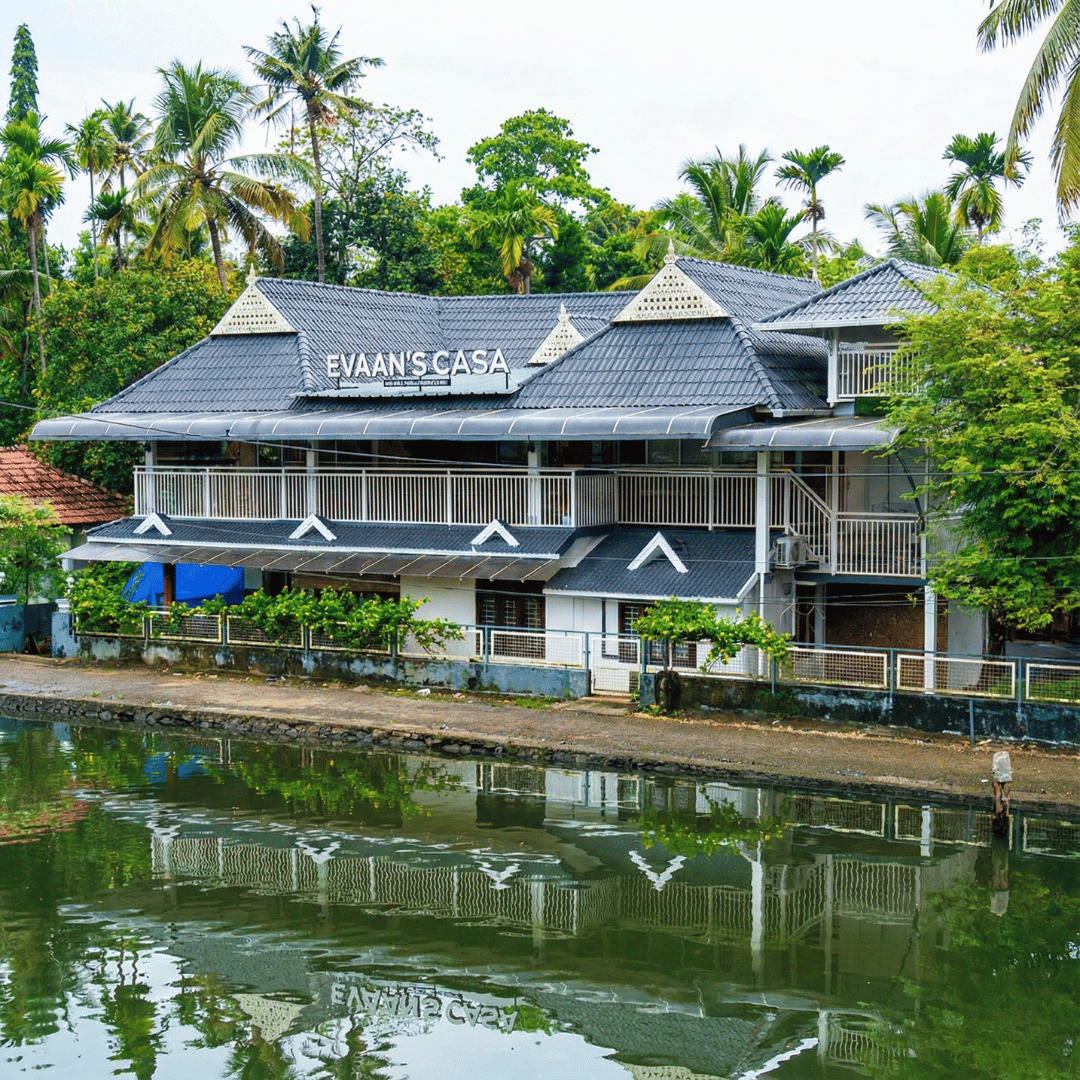
- Why Evaan’s Casa fits this search intent: Our place is my family’s old home, rebuilt with care on our private island. You live the slow rhythm of the backwaters, eat home-style Kerala food, and travel by boat. It’s the authentic heritage homestay Kerala concept, through and through.
I woke up before the sun this morning, something that happens more often than not. The first sound wasn’t an alarm but the soft, persistent knock of a wooden paddle against the side of a canoe. Our neighbor was heading out to check his nets. The air had that cool, clean dampness it only gets when the night mist is just lifting off the water. I stood there with my tea, watching the sky turn from grey to a soft peach, and I thought about how many thousands of mornings have started exactly like this on our island. This quiet constancy is what I hope people find when they come here.
It’s also the heart of what we offer. For years, I watched visitors rush through Alappuzha on packaged houseboat tours, seeing the backwaters from a moving balcony but never touching its life. They’d leave with photos, but not the feeling of the place. That’s why I decided to rebuild my grandfather’s house and open our doors. I wanted to create a real heritage homestay Kerala experience, a place where you don’t just visit, you briefly belong.
What Is a Heritage Homestay Kerala?
Let’s clear something up first. A heritage homestay Kerala is not a themed hotel. It’s not a resort with a few antique decorations. Look, here’s the thing: the word ‘heritage’ gets used a lot. Here, it means the building has a story rooted in this soil. Our home, Evaan’s Casa, is built from the timber and laterite stones of the old family house that stood here for generations. The design follows the traditional *nalukettu* style, with a central courtyard for light and air.
But the ‘heritage’ is also in the way of life. It’s in the absence of a television in the common area, encouraging conversation instead. It’s in the simple act of eating a meal off a banana leaf, feeling its cool, waxy surface under your fingers. A true heritage homestay Kerala experience wraps you in that context. You live in a home that breathes with the history of the land, and you participate, however briefly, in its daily rhythms. The walls have memories in them. You can feel it.
It’s a slower, more connected way to travel. You trade room service for the sound of someone in the kitchen at our homestay preparing puttu in the morning, the gentle *shush-shush* of the steamer. You exchange a minibar for fresh tender coconut water, drunk straight from the shell under a tree. This is the core of it. Some guests disagree with me on this, and that’s fair, but I believe the building itself is just the vessel. The real heritage is the life that fills it.
Why Does the Island Location Matter?
The six-minute boat ride from the mainland jetty is the most important part of your arrival. It’s the decompression chamber. As the boatman pushes off, the noise of scooters and autorickshaws fades into a hum, then into silence. The only sounds become the putter of the outboard motor and the water slicing past the hull. You pass women washing clothes at stone steps, children waving from canoes, ducks paddling in formation.
Then you see our island. It’s not a resort compound. It’s a proper village island, with about thirty families, coconut groves, and narrow pathways. Our place is at the quiet western end. The moment you step onto our little wooden dock, you understand. There are no roads here. No cars. Your world shrinks to the paths you can walk and the waterways you can navigate by boat. This isolation isn’t lonely. It’s freeing.
Your schedule suddenly syncs with the sun and the tide. You notice things. The way the afternoon light slants through the jackfruit tree. The smell of woodsmoke mixing with the evening air as lamps are lit. The diesel engine sound of a *Vallam* snake boat practicing in the distance, a deep, rhythmic thrum that carries for miles over water. This island life is the essential, non-negotiable backdrop for a heritage homestay Kerala stay. You can’t fake this sense of removal. You have to cross water to get it.
What Home-Style Food Can You Expect Here?
Food is the daily anchor. Meals are locally prepared, following the patterns of a traditional Kerala home. This means ingredients dictate the menu. If the fisherman brought a good catch of *Karimeen* (pearl spot fish), that’s what you’ll likely have. The fish is marinated in a paste of roasted spices, wrapped in a banana leaf with slivers of raw mango, and pan-seared until the leaf blackens. That’s *Karimeen Pollichathu*. Unwrapping it is an event—the burst of fragrant steam is incredible.
Breakfast might be soft, lacy appam with a subtly sweet coconut milk stew, or puttu—steamed cylinders of rice flour and coconut—with kadala curry, a black chickpea dish simmered with roasted coconut and spices. The kitchen at our homestay always has a pot of fresh coconut chutney going, ground with green chilies and a touch of tamarind. The smell of mustard seeds crackling in coconut oil is basically the scent of home here.
If your stay coincides with a Friday, you might experience a simple Kerala Sadhya served on a banana leaf. It’s not the huge festival version, but the home-style one. A few vegetable dishes like *olan* (white pumpkin in coconut milk), *avanial* (mixed vegetables with yogurt), some pachadi, pickle, and papadum. You eat with your hand, mixing the rice and flavors. It’s a tactile, direct way of eating that connects you to the food in a quiet, profound way. Honestly, I’d say the meals alone can define your heritage homestay Kerala memory.
Jackson’s Practical Tips for Visitors
Coming to a place like this requires a small shift in thinking. Here’s what I tell everyone who books a stay.
- Pack Light, But Pack Smart: You’re taking a boat. A hard-shell suitcase is a nightmare on a narrow country boat. A soft duffel or backpack is best. Essentials include mosquito repellent (though we have nets and coils), a sun hat, and a reusable water bottle.
- Footwear is Key: You’ll be taking your shoes on and off constantly before entering the house. Flip-flops or sandals you can slide off easily are perfect. Also, bring a pair of socks if your feet get cold on polished floors.
- Forget Strict Timetables: The boat to the mainland runs on a loose schedule, tied to the comings and goings of our boatman, Rajan. Need to go? We’ll call him. He’s usually here in 15 minutes. This fluidity is part of the charm. Embrace it.
- Visit the Local *Chayakada* (Tea Shop): Most people skip this but it’s a window into island life. I can take you to Sivan’s tea stall near the temple. For ten rupees, you get a small glass of sweet, milky tea and the day’s gossip. It’s the best social hub on the island.
- Carry Some Cash: While we can handle cards at Evaan’s Casa, the small local shops, the coconut vendor, and the tea stall operate on cash. It’s just easier.
What Is the Best Time to Visit Alappuzha for a Heritage Homestay Kerala Experience?
Every season paints the backwaters a different color. Each has its own pull.
Monsoon (June to September): I’m probably biased, but this is my favorite. The rains are heavy, warm, and dramatic. The sound of rain on a tin roof is a constant, soothing percussion. Everything is a shocking, saturated green. The water levels rise, and you can take a canoe through flooded pathways between coconut trees you can’t navigate in drier months. The downside? You will get wet. Outdoor activities are weather-dependent, and the humidity is high. But if you love moody, lush landscapes and having a cup of tea while watching a downpour, it’s unparalleled.
Winter (November to February): This is the classic, postcard season. The air is cool and dry, the skies are a clear blue, and the sun is gentle. It’s perfect for long, leisurely canoe rides, cycling on the mainland, and sitting out in the courtyard in the evenings. It’s also the busiest time for tourism in general. The backwaters can feel a bit more crowded with houseboats. The water levels are lower, revealing more of the banks.
Summer (March to May): It gets hot. The sun is intense by midday. The trick is to adopt the local schedule: up early, a long, lazy break in the shade during the peak heat, and then activity again in the late afternoon. The advantage? You’ll have the place mostly to yourself. The light is fierce and beautiful, and the mangoes are in season. The taste of a ripe, sweet *Malgova* mango picked that morning is a summer highlight you won’t forget.
Frequently Asked Questions About Heritage Homestay Kerala
How far is Evaan’s Casa from the Alleppey town center?
We’re about 6 kilometers from the main bus stand and railway station, but distance here is measured in time, not kilometers. It’s a 15-minute auto-rickshaw ride to the pickup jetty, then the 6-minute boat ride to our island. The total transfer from town to our doorstep is about 30 minutes, but it feels like crossing into another world.
Is it safe to stay on a private island?
Absolutely. Our island is a close-knit village community where everyone knows everyone. It’s incredibly safe. The homestay itself is secure, and we live on-site. I often joke that the biggest safety concern is a coconut falling, but we keep the area under the trees clear.
What should I definitely pack?
Beyond the basics, pack a sense of curiosity and patience. A good book. A power bank is useful if you’re out all day. Most people forget to pack a light shawl or sweater for the boat rides in the evening, even in summer—the breeze on the water can be cool.
Is WiFi available?
Yes, we have WiFi at the homestay. It’s reliable for emails and messaging. Not gonna lie, the bandwidth isn’t meant for streaming high-definition movies. We encourage guests to disconnect a little, but we understand the need to stay connected. The signal is strongest in the common living area.
Writing all this down, I can hear the evening birds starting up in the mango tree. The light is getting that long, golden quality. Soon, Rajan will bring the last boat of the day over with a couple of guests, their faces relaxed in a way they weren’t when they arrived this morning. That shift is the whole point.
Choosing a heritage homestay Kerala experience is choosing to be still for a moment. It’s choosing to listen to the water instead of the traffic. To taste food that comes from the land and water around you. To sleep in a room cooled by the breeze off the paddy fields. It’s not a luxury escape in the conventional sense. It’s a real one. If that sounds like what you’re looking for, we’d be happy to welcome you to our island. You can learn more about our rhythms and how to plan your stay at Evaan’s Casa. Just remember to pack that sense of curiosity. We’ll handle the rest.