- By :
- Comments: 0
group accommodation homestay alleppey
Last Updated: May 25, 2026
Quick Answer: group accommodation homestay alleppey
- Look for a homestay on an island with dedicated group spaces, not just a house with extra beds. That’s what makes a real group accommodation homestay Alleppey experience — privacy and togetherness at the same time.
- Most people skip this but: book for at least 3 nights if you’re a group. The first day you’re just settling into the rhythm of the backwaters. By day two, the real magic starts.
- Evaan’s Casa gives you the entire island experience — a 6-minute boat ride from the mainland, a big common verandah, and home-style meals that make everyone in your group sit down together.
I woke up at 5:17 this morning. That’s not a boast — it’s just the island. The roosters start early here, and the first ferry to the mainland chugs past at 5:30. I heard the diesel engine before I saw the lights. Then the rain started, soft on the tin roof, and I lay there listening. Not gonna lie, some mornings I just lie there and listen for ten minutes before I move.
That’s the thing about running a homestay on an island in Alappuzha. The mornings are yours. The evenings too, if you let them be. And when a group of travelers stays with us, I watch them slow down in the same way. By day two, they stop checking their phones every five minutes. By day three, they’re sitting on the verandah at 6 PM, just watching the water change color.
I’m Jackson. I run Evaan’s Casa, a small homestay on a backwater island in Alleppey. I grew up here. I know every canal, every boat schedule, and every old man who still fishes with a bamboo pole off his front porch. When people ask me about group accommodation homestay Alleppey, I don’t pull out a brochure. I tell them about the island.
What Is a Group Accommodation Homestay Alleppey, Really?
Let me be straight with you. A group accommodation homestay Alleppey isn’t just a big house with lots of beds. It’s not a hostel with private rooms. It’s a place where your group — friends, family, colleagues, whoever — can share space without being on top of each other.
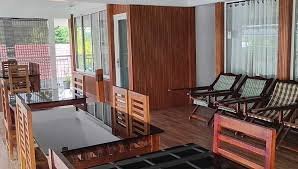
At our place, that means multiple bedrooms arranged around a common area. A big verandah where you can sit and talk or just stare at the water. A dining table big enough for everyone to eat together. A kitchen that prepares traditional Kerala meals, not some buffet that’s been sitting out for hours.
I’ve had groups of ten people here. I’ve had groups of four. The dynamic changes, but the core stays the same: you come as a group, you eat together, you explore together, and you sleep in rooms that let you breathe. That’s what I mean when I say group accommodation homestay Alleppey. It’s the balance of together and apart.
Some guests tell me they were nervous about bringing a big group to a homestay. They thought it might feel crowded or awkward. Honestly, I’d say the opposite happens. The island itself spreads you out. You don’t feel packed in because you’re surrounded by water and coconut trees. The space isn’t just in the rooms — it’s everywhere.
Why Does the Island Location Matter?
Our homestay sits on a small island in the Vembanad Lake. To get here, you take a 6-minute boat ride from the mainland. There’s no road access. No cars. No honking. No delivery vans. Just the water and the sky and the sound of the boat engine.
When your group arrives, you step off the boat and onto the island. The first thing people do is stop talking. Not because they’re told to. It just happens. The quiet hits you. Then you smell the woodsmoke from the kitchen, and someone says, “This is different.”
I watch groups change here. The first evening, everyone’s still in city mode — checking messages, planning the next day, asking about WiFi. By the second morning, people are sitting on the verandah with their tea, not saying much. Just watching. The island does that.
For a group, this isolation is gold. You’re not fighting for attention with restaurants and shops and tourist crowds. You’re just with each other. The island forces you to slow down and actually talk. I’ve seen friends reconnect here. I’ve seen families find each other again. That sounds dramatic, but it’s true.
The boat runs on a schedule, so you learn to plan your day around it. That adds a rhythm to your stay. You go out together, you come back together, you eat together. It’s not for everyone, but for groups looking for real connection, it’s perfect.
What Home-Style Food Can You Expect Here?
Alright, let’s talk food. Because honestly, this is what people remember most.
Our homestay serves traditional home-style Kerala meals. I’m not going to pretend it’s five-star restaurant dining. It’s better than that. It’s real food, cooked with local ingredients, prepared in the kitchen right here.
The morning starts with Puttu and Kadala curry. Puttu is steamed rice flour cylinders, light and fluffy. The Kadala curry is black chickpeas cooked with coconut, curry leaves, and a spice mix that warms you from the inside. You eat it with your hands, breaking off pieces of puttu and dipping it in the curry. The first time most groups try this, there’s a moment of silence. Then someone says, “This is incredible.”
For lunch, you might get a Kerala Sadhya on a banana leaf. That’s rice served with a dozen small dishes — sambar, avial (mixed vegetables in coconut), thoran (stir-fried vegetables with grated coconut), pachadi (yogurt-based curry), pickles, pappadam, and more. The banana leaf changes the taste of everything. It’s not just a plate. It’s part of the experience.
Dinner is often Appam with stew. Appams are lacy, bowl-shaped rice pancakes with a soft center and crispy edges. The stew is mild — potatoes, carrots, beans, and sometimes chicken, cooked in coconut milk with whole spices. You tear the appam and scoop up the stew. It’s comfort food in the truest sense.
And then there’s Karimeen Pollichathu. That’s pearl spot fish, marinated in a paste of spices, wrapped in a banana leaf, and slow-cooked until it’s tender and fragrant. The banana leaf keeps the fish moist and adds a subtle earthiness. When you open it at the table, the steam carries the smell of turmeric, ginger, and coconut. I’ve seen people close their eyes while eating it.
The meals are prepared with fresh ingredients from the local market. The coconut is grated by hand. The spices are ground fresh. The fish comes from the lake. Nothing comes from a can or a packet. That’s what home-style means here.
Jackson’s Practical Tips for Visitors
I’ve been doing this long enough to know what works and what doesn’t. Here are a few things I tell every group that books with me:
- Pack light but smart. You’re taking a boat to the island. Big suitcases with wheels are a pain. Bring soft bags. And bring a flashlight — the island is dark at night, and the stars are worth seeing without streetlights ruining it.
- Bring mosquito repellent. I know, every travel tip says this. But I mean it. The backwaters are beautiful and they have mosquitoes. The homestay has nets and coils, but you’ll want your own repellent for evening walks.
- Forget the itinerary for the first day. Most groups land and want to rush out to see everything. Don’t. Stay on the island for the first day. Walk around. Sit on the verandah. Eat a slow lunch. The backwaters aren’t going anywhere. The relaxation starts when you stop chasing it.
- Learn to eat with your hands. I’m not being cultural about this. It genuinely makes the food taste better. The rice mixes with the curry differently. Your fingers feel the texture. It’s messier, but it’s better. We’ll give you a bowl of water to wash. Just try it.
- Book a shikara boat for your group. Don’t do the big houseboat for a day trip. Do a small shikara — it’s cheaper, more intimate, and you can go into narrow canals where the big boats can’t fit. Your group will have more fun on a shikara than on any houseboat. Trust me on this.
What Is the Best Time to Visit Alappuzha for Group Accommodation Homestay Alleppey?
Months matter here. Each season changes the experience completely.
Winter (November to February) is the most popular time. The weather is cool and dry. The skies are clear. The backwaters are calm. This is when you get those perfect postcard shots of houseboats against a blue sky. Groups love this season because you can do everything — boat rides, walks, temple visits — without sweating. The downside? It’s crowded. Prices are higher. You need to book early.
Summer (March to May) is hot. I’m not going to sugarcoat it. March and April can be brutal — temperatures hit 35°C easily. But here’s the thing most people don’t know: the mornings and evenings are still beautiful. And the crowds are gone. You’ll have the backwaters to yourself. If your group doesn’t mind the heat and wants privacy, summer is surprisingly good.
Monsoon (June to September) is my personal favorite. I’m probably biased, but I think the backwaters are most beautiful in the rain. The water rises. The canals fill up. The coconut trees look greener. The sound of rain on the roof is like nothing else. Groups who come in monsoon get the real Kerala — not the tourist version. The downside: some boat services might stop during heavy rain. You’ll get wet walking anywhere. But if your group is flexible and doesn’t mind a little adventure, monsoon is magic.
Some guests disagree with me on this, and that’s fair. They prefer the dry winter. To each their own. But I’ll say this: the people who come in monsoon always come back.
Frequently Asked Questions About Group Accommodation Homestay Alleppey
How far is the homestay from the Alleppey town center?
The homestay is on an island about 6 minutes by boat from the mainland. The boat dock is a 10-minute auto ride from the Alleppey town center. So total travel time from town to the homestay is about 20-25 minutes, including the boat ride. That’s close enough for convenience but far enough for privacy.
Is it safe for a group of friends or families with kids?
Yes, absolutely. The island is very safe. There are no cars, so kids can run around. The water is right there, so keep an eye on little ones near the edge, but we have safety measures in place. Groups of friends find it comfortable too — the rooms are private, the common spaces are open, and the island gives you freedom.
What should we bring for a stay here?
Bring soft luggage (no hard suitcases), mosquito repellent, a flashlight or headlamp, comfortable clothes for warm weather, a light jacket for monsoon evenings, and a swimsuit if you want to try the lake. Don’t bring high heels or fancy shoes. You’ll be walking on sand and boat decks.
Is WiFi available at the homestay?
Yes, we have WiFi. But I’ll be honest with you — the connection can be slow sometimes. We’re on an island. The signal comes through the air. If your group needs to stream movies or have video calls, it might not be perfect. Most guests find they don’t care after the first day. They’re too busy watching the water.
How much does it cost for a group?
Pricing depends on the season, the size of your group, and how many nights you stay. Generally, it’s very reasonable compared to hotel stays. You get more space, better food, and a real experience. Check Evaan’s Casa for current group rates — I update them regularly.
Wrapping This Up
Look, I’m not going to tell you that our homestay is perfect for everyone. It’s not. If you want room service and a swimming pool and a bar that stays open till midnight, this isn’t your place. But if your group wants something real — something that makes you slow down and actually talk to each other — then this island might be exactly what you need.
I’ve seen groups arrive stressed and leave relaxed. I’ve seen friends who hadn’t had a real conversation in years spend hours on the verandah just talking. I’ve seen families rediscover each other over a banana leaf meal.
That’s what a group accommodation homestay Alleppey can be. It’s not just a place to sleep. It’s a place to be together.
If you’re curious, come see the island for yourself. I’ll be here, probably on the verandah, watching the water. The roosters will wake you up early, and the rain might fall on the roof, and you’ll eat food that tastes like this place.
And maybe, like so many before you, you’ll leave a little quieter than when you arrived.