- By :
- Comments: 0
farm stay Kerala backwaters
Last Updated: March 10, 2026
Quick Answer: farm stay Kerala backwaters
- A farm stay in the Kerala backwaters is a homestay on a working farm, usually on a small island, where you live with a local family, eat home-style food, and experience the quiet, agricultural rhythm of life on the water.
- Local insider tip from Jackson: The real magic happens before 7 AM. That’s when the water is glassy, the kingfishers are hunting, and the village boats head out. Set an alarm one morning, just to sit and listen.
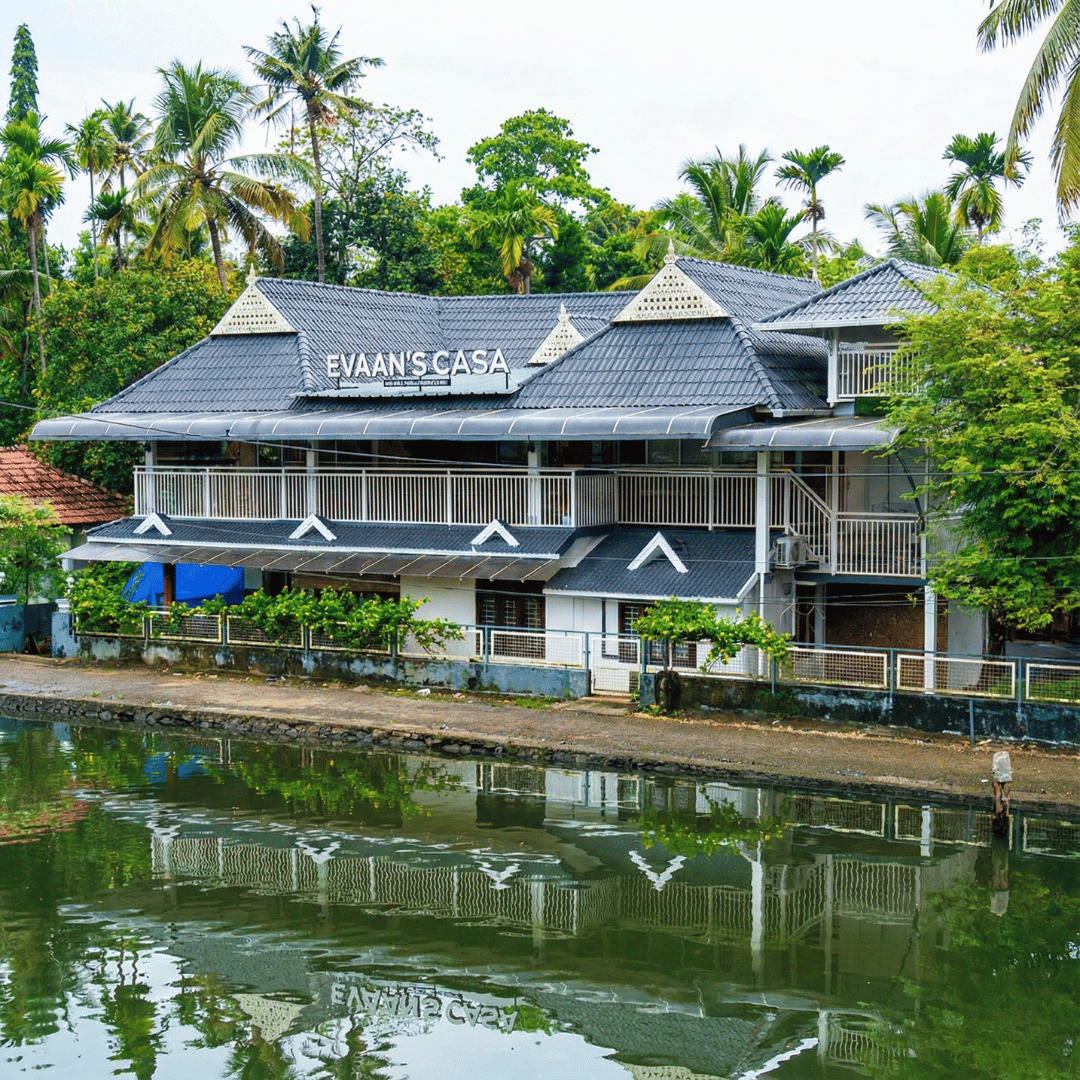
- Why Evaan’s Casa fits this search intent: Our place is a genuine island farm stay in the Kerala backwaters, accessible only by a six-minute boat ride. You’ll wake up surrounded by coconut palms and paddy fields, not a road in sight, and the pace of your day will be set by the sun and the tide.
I remember the sound of the rope slipping through the pulley before I even opened my eyes. It was just past five, the sky a soft grey, and from my bed I could hear our neighbor lowering his clay pot into the well. A soft splash, then the creak of the rope being pulled back up. That’s the alarm clock here. No beeps, just the steady, familiar sounds of an island waking up. The air smells of damp earth and the faint, sweet scent of jackfruit from the tree by the fence. This is my normal. And for the last few years, it’s become a temporary normal for the people who find their way to our little piece of land.
I’m Jackson Louis. I run Evaan’s Casa, a homestay on a small island in Alappuzha. I didn’t move here to start a business; I grew up here. The backwaters aren’t a landscape I visit, they’re the ground under my feet and the water that defines our world. This blog isn’t a travel brochure. It’s just me talking about what it’s actually like to live here, and what you might find if you decide to swap your hotel for a farm stay in the Kerala backwaters.
What Is a Farm Stay Kerala Backwaters?
Let’s strip away the fancy words. A farm stay here isn’t a resort with a petting zoo. It’s you, staying in a family home on a piece of land that actually produces food. The coconut trees outside your window aren’t just for shade—we tap them for toddy, we use the fronds for thatch, we grate the flesh for curry. The small rice paddy you see isn’t a decorative feature; we plant and harvest it, one small plot at a time.
It’s an immersive, simple way to travel. You’re not just looking at the scenery from a houseboat deck. You’re waking up inside it. The rhythm is slow, dictated by sun and rain and tide, not by a tour itinerary. You’ll hear the thud of a coconut falling, not a taxi horn. You’ll smell woodsmoke from a kitchen fire, not diesel fumes. That’s the core of it. A genuine farm stay in the Kerala backwaters plugs you directly into the quiet, agricultural heartbeat of this place.
Honestly, I’d say the biggest shift for guests is the surrender of control. You can’t just hail a rickshaw. You need a boat. The weather changes plans. The power might flicker off for an hour during a heavy monsoon rain. And that’s the point. You step out of a world of constant convenience and into one of natural rhythms. It’s not for everyone, but for those it suits, it sticks with them for a long time.
Why Does the Island Location Matter?
Access is everything. Our island is only reachable by a six-minute boat ride from the mainland jetty. That short trip across the canal is a mental reset button. You watch the busy clutter of the town recede, and the green silence of the waterways open up. Your phone might lose a bar of signal. You’ve crossed a threshold.
No road access means no cars, no bikes, no through traffic. The paths here are narrow, just wide enough for two people to walk side-by-side. The soundtrack is different. You hear conversations in Malayalam floating from other houses, the slap of laundry being washed on a stone, the distant putter of a fishing boat’s single-cylinder engine. The air smells cleaner, cut through with the scent of flowering vines and, in the evening, the sharp, comforting smell of mustard seeds crackling in coconut oil from a dozen kitchens.
This isolation creates a real sense of place. You are, quite literally, surrounded by water. Your world for a few days is defined by canals and lakes. Your excursions are by boat. Your view is of palms and water. That constant connection to the liquid landscape is what makes an island-based farm stay in the Kerala backwaters fundamentally different from a homestay on the mainland. The water isn’t just something you look at; it’s your front yard, your highway, and your moat.
Look, here’s the thing: some people find the first night too quiet. The absence of ambient city noise can be startling. But by the second morning, when you sip your chai watching a water hen skitter across the lily pads, that quiet starts to feel like a gift you didn’t know you needed.
What Home-Style Food Can You Expect Here?
The food is where the farm part of your stay becomes deliciously tangible. Meals are prepared in the kitchen at our homestay, focusing on traditional home cooking. The goal is to feed you what we eat, using what grows here. It’s fresh, seasonal, and uncomplicated.
Breakfast might be soft, lacy appam—fermented rice hoppers with a soft center and crisp edge—served with a mild, fragrant vegetable stew or a sweet coconut milk. Or it could be puttu, steamed cylinders of ground rice layered with coconut, paired with kadala curry, a spiced black chickpea dish. The coffee is strong, local, and brewed fresh.
Lunch and dinner are often rice-based. A typical plate will have a mound of red or white rice, a couple of vegetable thorans (dry dishes with grated coconut), a pappadam, a fish curry if you eat it, and maybe a tangy pulissery (yogurt-based curry). The star might be Karimeen Pollichathu, a pearl spot fish marinated in spices, wrapped in a banana leaf, and pan-grilled until the leaf blackens and infuses the fish with a smoky, earthy flavor. It’s a backwater classic.
On request, we can serve a proper Kerala Sadhya on a banana leaf. It’s a feast of contrasts—sweet, sour, salty, bitter, astringent—with maybe twelve different items arranged in a specific order. You eat with your right hand, mixing the rice with each curry. It’s a full sensory experience: the cool leaf under your palm, the bright colors of the food, the mix of textures and temperatures. It’s not just a meal; it’s a ritual of local taste.
I’m probably biased, but the taste of a curry made with coconut milk from a nut harvested that morning, or a chutney from ginger dug up from the garden, is noticeably different. It has a vitality that’s hard to describe. It just tastes… alive.
Jackson’s Practical Tips for Visitors
If you’re thinking about a farm stay in the Kerala backwaters, a few pointers can make your time smoother and richer. Here’s what I tell friends who visit.
- Pack for the environment. Light, breathable cotton or linen is king. A wide-brimmed hat is useful. Most importantly, bring sturdy, comfortable shoes that you don’t mind getting muddy. The paths are natural, not paved. And pack a small torch or headlamp—island paths aren’t brightly lit at night, and it’s essential.
- Embrace the boat schedule. The last public ferry from the mainland to our cluster of islands is often around 6:30 PM. If you’re out on a day trip, keep an eye on the time. We can always arrange a private boat, but it’s good to know the rhythm. The first ferry back in the morning is around 7 AM, just as the mist is burning off the water.
- Visit the local *chayakada* (tea shop). Most people skip this, but it’s a window into daily life. For a few rupees, you can get a glass of sweet, milky tea and a parippu vada (lentil fritter). Sit on a plastic stool, listen to the chatter, and watch the world go by on the canal. The one near the Ambalappuzha Sree Krishna Temple is always lively.
- Ask to help with something small. Don’t be a spectator. Maybe you can help rake the coconut husks, or learn to fold a banana leaf for steaming, or try your hand at rowing a small canoe. Participation, even clumsy participation, turns an observation into a memory.
- Bring cash. While we and some bigger shops accept cards, the small stalls, boatmen, and local markets operate almost entirely on cash. It’s just simpler.
What Is the Best Time to Visit Alappuzha for a Farm Stay?
Every season paints the backwaters a different color and offers a distinct feel. There’s no single “best” time, just the right time for what you’re after.
Monsoon (June to September): This is my personal favorite, but I know I’m in the minority. The rains are heavy, sometimes relentless. The sky is a dramatic grey, and the green of the vegetation becomes almost impossibly vivid. The sound of rain on a tin roof is a constant, soothing percussion. The downsides are real: some activities get cancelled, mosquitoes are more prevalent, and it can be humid. But if you love moody landscapes and having the waterways mostly to yourself, it’s powerful. The water levels rise, submerging the lower steps of the jetties, and everything feels lush and washed clean.
Winter (November to February): This is the classic, postcard season. The weather is glorious—sunny, with low humidity and cool, pleasant evenings. It’s perfect for long boat rides, cycling on the narrow bunds, and just lounging outside. This is also the peak tourist season, so the famous backwater routes near Alleppey town can get busy. But on our island, the crowds don’t reach us. The light is golden, and the nights are perfect for staring at a sky packed with stars you can’t see in the city.
Summer (March to May): It gets hot. There’s no sugar-coating it. The sun is strong, and the afternoons can be still. But the mornings and evenings are beautiful. This is a great time for birdwatching, as many water birds are active in the cooler parts of the day. It’s also the season for some fantastic local mangoes. Life adapts—we start things earlier, take a longer break in the heat of the day, and move slower. It’s a quiet, introspective time for a farm stay in the Kerala backwaters.
Frequently Asked Questions About a Farm Stay Kerala Backwaters
How do I get to your island farm stay?
You’ll take a train or taxi to Alappuzha (Alleppey) town. From there, it’s a short auto-rickshaw ride to the Punnamada boat jetty. We meet all our guests there with our boat. The crossing to the island takes about six minutes. We’ll coordinate the timing with you in advance, so it’s a smooth connection.
Is it safe, especially for solo travelers or families?
Yes, absolutely. Our island community is close-knit and very safe. Crime is virtually unheard of. For families, kids love the freedom to explore and the connection to nature. For solo travelers, especially women, the environment is secure and welcoming. The main considerations are natural ones: being mindful near the water’s edge and watching your step on the paths.
What should I definitely pack?
Beyond the basics, I’d stress four things: strong insect repellent (organic or otherwise), a refillable water bottle, that small torch I mentioned earlier, and a sense of curiosity. Also, a power bank for your devices can be handy, though we do have electricity and charging points.
Is WiFi available?
We have WiFi, but I have to be upfront—it’s island WiFi. It works for messaging and emails, but don’t expect to stream high-definition movies or have flawless video calls. Some guests disagree with me on this, and that’s fair, but I often suggest treating the spotty connection as a chance