- By :
- Comments: 0
bird watching trip Alleppey
Last Updated: March 11, 2026
Quick Answer: bird watching trip Alleppey
- A bird watching trip Alleppey is a slow, boat-based exploration of the freshwater canals and paddy fields to spot resident and migratory waterbirds, best done from a quiet island base.
- Local insider tip from Jackson: Skip the big houseboat jetties. The best sightings happen in the narrow, village-side canals west of Pathiramanal Island before 8 AM, when the tourist boats haven’t stirred the water yet.
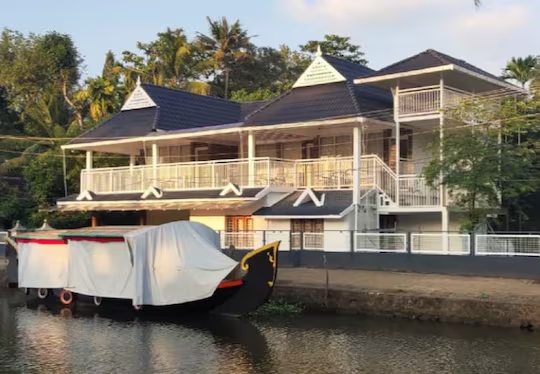
- Why Evaan’s Casa fits this search intent: Our homestay is on a private island, a six-minute boat ride from the mainland. You wake up surrounded by the sounds of kingfishers and can start your bird watching trip Alleppey right from our verandah with a cup of black tea.
I remember the exact sound that got me hooked. It was a morning so still the water looked like polished glass. I was maybe ten, sitting on our old wooden jetty, and this sharp, rattling call cut through the mist. A White-throated Kingfisher, a flash of electric blue and burnt orange, landed on a coconut husk bobbing near the bank. It didn’t just fly away. It watched the water, totally focused, and then dove straight in. Came up with a tiny silver fish. That moment, the quiet intensity of it, never left me. It’s the same quiet I try to share with anyone who comes looking for it now.
Most people hear “Alleppey” and think of houseboats. And sure, those are part of the scene. But the real life, the constant, subtle drama, happens above the waterline and just inside the tree line. It’s in the reeds and the flooded fields. Planning a proper bird watching trip Alleppey means tuning into that older, slower rhythm. It means listening for the splash, not the motor.
What Is a Bird Watching Trip Alleppey?
Let’s be plain about it. A bird watching trip Alleppey is about using the waterways as your path. You’re not trekking through a forest. You’re gliding, or paddling, through a landscape that is half water, half land. Your binoculars scan the banks, the paddy field edges, the low-hanging branches of mangroves, and the sky above the vast Vembanad Lake.
The cast of characters changes with the seasons. You have the year-round locals: the various kingfishers, the stately Brahminy Kites, the comically serious Pond Herons. Then come the winter guests, the migrants. I’m talking about the elegant Garganey ducks, the Northern Pintails, and sometimes, if you’re very lucky and very quiet, the far-traveling Osprey. The goal isn’t to tick off a hundred species in a mad rush. It’s to sit in a canoe and watch a single Purple Swamphen meticulously pull apart a stem, its huge feet stepping delicately through the lilies.
It’s a passive, observant kind of travel. The noise of your engine, or the lack of it, dictates what you’ll see. A loud putter sends everything into the cover. A silent paddle or a pole lets you become part of the scenery. That’s the core of any good bird watching trip Alleppey. You have to be willing to be slow. You have to be okay with just sitting there, listening to the water lap.
Why Does the Island Location Matter?
Access matters. We are only reachable by boat. That six-minute ride from the little jetty at Punnamada isn’t just a transfer. It’s a buffer. It leaves the car horns and the scooter noise on the other side. When you step onto our island, the soundscape changes immediately. The dominant sounds are wind in the coconut palms, water, and birdsong. That isolation isn’t an inconvenience; it’s the entire point.
You feel it most at dawn and dusk. These are the golden hours for any bird watching trip Alleppey. From your room here, you can wake up, step outside, and you’re already in the middle of it. No need for a long drive or an early boat booking. You’ll hear the chorus of tailor birds and sunbirds arguing in the hibiscus bushes while you’re still rubbing sleep from your eyes. You can sip your tea and watch a Black-capped Kingfisher scout the same channel it used yesterday.
The island itself is a habitat. We’ve kept most of it wild. The tall trees are roosts for night herons. The thick undergrowth along the water’s edge is where you’ll spot the shy White-breasted Waterhen darting for cover. This means your exploration can start the second you’re ready. You can take one of our kayaks and just disappear into a side canal for an hour, on your own schedule. That spontaneity is rare. Most birding tours are rigid. Here, the rhythm is yours. If you want to spend three hours watching a single heronry, you can. Nobody is blowing a whistle to move you to the next spot.
What Home-Style Food Can You Expect Here?
Food is fuel for a day of watching and waiting. It should be hearty, fresh, and grounded in this place. The kitchen at our homestay prepares traditional Kerala meals using what’s local and in season. Think of flavors that are bright, coconut-rich, and often have a gentle heat from fresh green chilies.
Breakfast might be soft, lacy appam with a mild, fragrant vegetable stew, or puttu—steamed cylinders of rice flour and coconut—with kadala curry, a black chickpea dish simmered with spices. It’s the kind of meal that sits well if you’re heading out on the water. Lunch is often the classic Kerala sadhya served on a banana leaf when we have a full house. It’s an array of different dishes: sour and creamy avial, crunchy thoran made with whatever greens are good, sambar, and always a fish curry if you like. The karimeen (pearl spot fish), caught right in these backwaters, is a specialty. Prepared as pollichathu, marinated in spices, wrapped in a banana leaf, and pan-fried, it tastes of the lake itself.
Honestly, I’d say the simple things stay with you. A bowl of rice with meen curry (fish curry) that has that perfect tang from kodampuli (Malabar tamarind). The smell of mustard seeds and curry leaves crackling in coconut oil that drifts from the kitchen in the evening. A plate of sweet, ripe mango from a tree just down the path. It’s not fancy. It’s real. It’s the food that has been eaten in these parts for generations, meant to be shared and eaten with your hands, feeling the textures and temperatures directly.
Jackson’s Practical Tips for Visitors
Some of this is common sense, but some bits come from years of seeing what works and what leaves people frustrated. Here’s my list.
- Binoculars are non-negotiable. A decent pair makes all the difference. You don’t need the most expensive, but a good 8×42 will bring the far bank right to you.
- Clothing is camouflage. Wear muted colors—khakis, browns, dark greens. Leave the bright red shirts and white hats at home. You want to blend into the boat, not stand out like a signal flag.
- Silence is your superpower. This is the tip most blogs don’t stress enough. The chatter has to stop when you’re approaching a birding spot. Voices carry wildly over water. Use hand signals. Point. Whisper. The more quiet you are, the more you’ll be rewarded.
- Hire a local guide with a small boat. Not a giant covered shikara. Look for the smaller, open canoes or traditional vallams that a single person can pole. The guides who operate these know every nook. They can pole you into channels a motorboat can’t touch. I can recommend a couple of fellows from the village who have eyes like hawks.
- Visit the local fish market at dawn. It’s not just for fish. The edges of the market, where the waste is tossed, are a magnet for birds of prey. It’s a raw, real spectacle of nature and commerce colliding. You’ll see kites and eagles swooping in ways you never will in the quiet canals.
What Is the Best Time to Visit Alappuzha for a Bird Watching Trip Alleppey?
It completely depends on what you want to see. Each season paints the backwaters a different color and brings a different crowd, both human and avian.
Winter (November to February): This is the peak season for weather and for migratory birds. The air is cool and dry, the skies are clear. This is when the northern ducks and waders are here. The downside? It’s also the peak season for tourism. The main canals can get busy with houseboats after 10 AM. You need to start early to beat the traffic. The light for photography is consistently excellent.
Monsoon (June to September): I’m probably biased, but this is my favorite time for a truly immersive bird watching trip Alleppey. The rains are heavy, the landscape is a shocking, saturated green, and the tourist numbers plummet. The birds are active, and the insects they feed on are plentiful. The sound of rain on a tin roof is the best lullaby. The catch? Boating can be weather-dependent during intense downpours, and some paths get muddy. You need good rain gear and a flexible attitude.
Summer (March to May): It gets hot. Really hot by midday. The advantage is that as the smaller water bodies dry up, birds concentrate around the permanent canals and lakes. Your chances of seeing large numbers in specific spots can be high. You must start at first light and be finished by 10:30 AM, then retreat to the shade. The afternoon is for napping, reading, and waiting for the cooler evening session.
Some guests disagree with me on the monsoon, and that’s fair. If you hate humidity, it’s a challenge. But for raw, lush, solitary beauty, with the frogs croaking and the air smelling of wet earth, it can’t be beat.
Frequently Asked Questions About a Bird Watching Trip Alleppey
How far in advance should I book?
For the winter season (Dec-Jan), try to book at least two to three months ahead, especially if you want specific dates. For monsoon and summer, a few weeks is usually fine. This goes for both accommodation and a dedicated bird guide with a boat.
What should I pack besides binoculars?
A good hat, high-SPF sunscreen, and insect repellent are essentials. Pack a light, long-sleeved shirt for sun and mosquito protection. A waterproof bag or dry sack for your camera and phone is a smart move, especially if you’re in a canoe. Sturdy shoes that can get wet and muddy are useful.
Is it safe for children?
Yes, with clear supervision. The boats are stable, but life jackets are a must for everyone, kids and adults. For younger children, shorter trips close to the island are better than full-day expeditions. The key is managing their expectations—it’s about patience and quiet, not constant action.
Is WiFi available on the island?
We have WiFi at the main homestay area. Look, here’s the thing: it’s reliable for messages and emails, but don’t expect to stream high-definition movies. The connection is a reminder you’re on an island. I see it as a feature. It encourages you to put the phone down and watch the real world instead.
Planning your bird watching trip Alleppey from a base that understands this slow pace makes all the difference. At Evaan’s Casa, the environment isn’t just a view from a window; it’s the walls, the floor, and the ceiling of your entire experience. You live inside it.
So that’s it from me. The real guide, of course, is the water itself and the birds that live on it. They don’t follow any blog’s schedule. They have their own clocks, tuned to the sun and the tides. The best advice I can give is to surrender to that. Let the kingfisher’s dive be your itinerary. Let the heron’s frozen stance teach you how to stand still. The backwaters reveal themselves on their own time, to those who are willing to wait and watch. I hope you’ll come and try it. There’s always a spare chair on the jetty and a pot of black