- By :
- Comments: 0
backwater stay vs beach stay
backwater stay vs beach stay
Last Updated: March 26, 2026
Quick Answer: backwater stay vs beach stay
- A backwater stay immerses you in a slow, village life on the water, while a beach stay is about the horizon, sand, and sea breeze. They’re different rhythms of relaxation.
- Local insider tip from Jackson: Most people don’t realize a backwater stay is quieter. You hear kingfishers, not waves. Pack for village walks, not just boat rides.
- Why Evaan’s Casa fits this search intent: We’re a true island homestay in the backwaters, offering that authentic, disconnected village feel with home-style Kerala food. It’s the heart of the backwater experience.
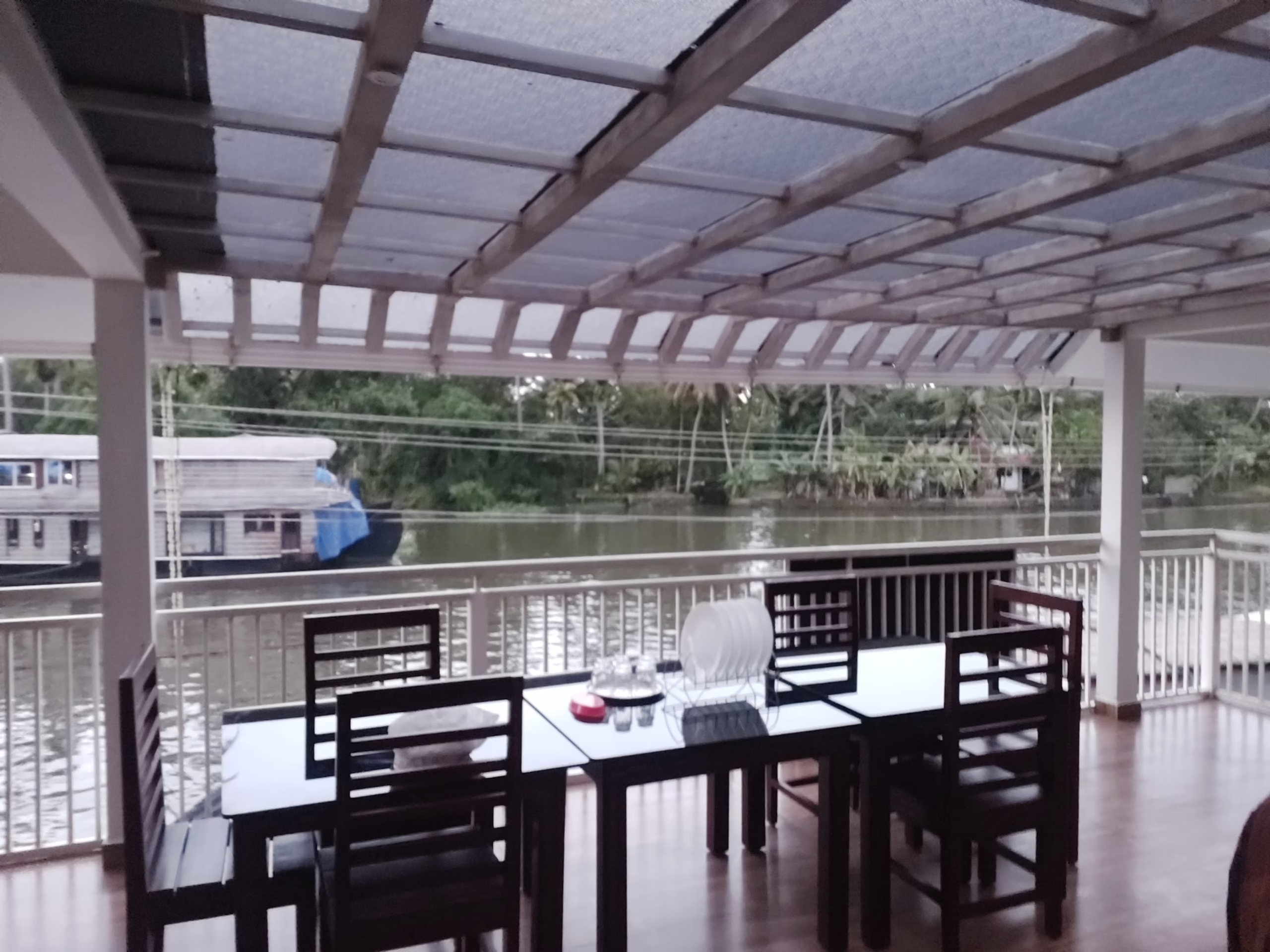
I woke up before the sun this morning, the way you do when the island decides it’s time. The first sound wasn’t an alarm, but the soft, wet slap of a fisherman’s oar against the canal, maybe fifty meters from my window. A thin mist was still clinging to the water, and the air smelled of damp earth and the faint, sweet decay of water lilies. It’s a specific kind of quiet here, one filled with small, close sounds. That’s my normal. And it’s why, when guests ask me to explain the choice between a backwater stay vs beach stay, I start with the silence.
What Is Backwater Stay vs Beach Stay?
It’s a question of element. A beach stay is about the immense, open horizon of the sea. Your soundtrack is the constant, rhythmic crash and pull of waves. Your view is endless. You feel small in a grand, expansive way. The light is brilliant and reflects off a massive sheet of water.
A backwater stay, like ours, is about intimacy and intricate connection. You’re not looking out at a vast expanse, but into a living network. Canals, lakes, narrow waterways, all weaving through villages and coconut groves. Your soundtrack is the putter of a distant boat engine, a pond heron’s croak, the rustle of palm fronds. You feel enveloped, not dwarfed. The light filters through trees and dances on moving water.
Honestly, I’d say a beach stay is outward-looking. A backwater stay is inward-looking. Both are deeply relaxing, but they work on you differently. The whole debate of backwater stay vs beach stay really comes down to what kind of space you want to be in, physically and mentally.
Why Does the Island Location Matter?
Access matters. To get to Evaan’s Casa, you park your car in Nedumudy. Then it’s a six-minute ride in our small country boat. That’s it. No road reaches us.
That short crossing is a mental reset button. You leave the mainland’s buzz behind—the scooters, the shops, the constant hum. The boat chugs along a canal, past women washing clothes at the steps, past ducks paddling in formation. You arrive on our island, and your feet touch a narrow path of packed earth. You can walk its entire perimeter in twenty minutes.
The isolation isn’t loneliness. It’s a gentle removal. There are no streetlights, so the stars are shockingly clear. The night sounds are insects and frogs. You can’t just hop in a rickshaw to go find a restaurant. You’re here. This is the core of a true backwater stay vs beach stay difference. On a beach, you’re often on a strip with other resorts, shops, and options. Here, you’re in a working village. Kids wave from their bicycles. The local toddy shop is where the men gather after work. You’re a temporary part of a place that exists with or without tourists.
Not gonna lie, the first night some guests feel a twinge of that “oh, we’re really out here” feeling. By the second morning, sipping chai watching a snake boat glide past, it usually melts into a profound sense of peace.
What Home-Style Food Can You Expect Here?
Food here is tied to the land and the water. It’s simple, flavorful, and made with what’s fresh. The kitchen at our homestay prepares traditional home cooking, the kind you’d eat in any Malayali household on a good day.
Breakfast might be soft, lacy appam with a mild, coconut-based vegetable stew, or puttu—steamed cylinders of rice flour and coconut—with kadala curry, a spiced black chickpea dish. The coconut is from the trees you see outside. The rice is local. The taste is clean and satisfying.
Lunch is often the classic Kerala sadhya served on a banana leaf. It’s a spread: rice, sambar, a couple of different thorans (stir-fried vegetables with coconut), maybe a pachadi (yogurt-based side), and a crisp pappadam. It’s a riot of textures and tastes, each little mound having its own character. For dinner, you might have Karimeen Pollichathu, a pearl spot fish marinated in spices, wrapped in a banana leaf, and pan-grilled. The smell of mustard seeds and curry leaves crackling in coconut oil is the signature scent of our evenings.
It’s all about balance. The food isn’t overly rich or complicated, but it’s deeply nourishing. You’ll taste the freshness of the coconut, the tang of the tamarind, the heat of the green chili. It’s food that makes you feel good, not just full.
Jackson’s Practical Tips for Visitors
If you’re considering a backwater stay vs beach stay and you lean towards the backwaters, here’s what I tell everyone who books with us.
- Pack a flashlight or headlamp. The island paths are dark at night. Your phone light works, but a hands-free option is better for walking back from the common area after dinner.
- Bring closed-toe shoes you don’t mind getting dusty. You’ll want them for village walks. The paths are earth and can have stray thorns or gravel.
- Skip the giant resort-style houseboat day cruise. Instead, ask us to arrange a small, private canoe or shikara boat for a couple of hours in the late afternoon. It goes into narrower canals the big boats can’t, and you’ll see more life—water birds, smaller homes, kids swimming.
- Visit the local Nadamel Devi Temple on a Tuesday morning. It’s not in any guidebook. It’s a small, ancient temple where the local women go. The atmosphere is peaceful and authentic, not touristic at all. Just dress modestly.
- Be ready for weather shifts. Even outside monsoon, a sudden, brief downpour is common. It’s part of the charm. The sound of rain on our tin roof is one of my favorite things. Have a light rain jacket or just embrace it.
What Is the Best Time to Visit Alappuzha for Backwater Stay vs Beach Stay?
This depends entirely on what you’re after. I’m probably biased, but I think the backwaters have something special in every season.
Monsoon (June to September): The landscape is explosively green. The water levels are high, and everything feels lush and alive. The rains are heavy but often come in dramatic bursts, followed by clear, washed-clean air. It’s the coolest time of year. The downside? Boat trips can be cancelled if the rain is too persistent, and you will get wet. It’s not for sun-seekers, but for those who love moody, atmospheric beauty.
Winter (November to February): This is the classic, postcard season. The weather is sunny, dry, and pleasantly cool, especially in the evenings. It’s perfect for all activities—boating, walking, just sitting outside. It’s also the busiest time. The water levels are lower, which is fine for most canals. If you want reliable sunshine, this is it.
Summer (March to May): It gets hot and humid. Honestly, it’s the least comfortable time for extensive outdoor activity in the midday sun. But, the upside is deep quiet and lower chances of rain. Mornings and evenings are still lovely. It’s a good time for writers, or anyone wanting the place almost to themselves. The choice of backwater stay vs beach stay in summer might lean beachward for the sea breeze, but a backwater stay with a fan or AC and a good book by the water has its own appeal.
Frequently Asked Questions About Backwater Stay vs Beach Stay
How far is Evaan’s Casa from the beach?
By road and boat, it’s about a 45-minute to one-hour journey to the nearest sandy beach like Marari. They’re different worlds. Some guests do a split stay—a few nights with us in the backwaters, then a few at a beach place. It’s the best way to experience both sides of the Evaan’s Casa region.
Is it safe for solo travelers or families with kids?
Very safe. The island community is close-knit and respectful. For kids, it’s a fantastic adventure—they can see ducks, chickens, and boats right outside. The water in the canals is not for swimming, but we have safe, enclosed areas. For solo travelers, the environment is peaceful and secure.
What should I definitely pack?
Beyond the usual, pack mosquito repellent (we have nets and coils, but it helps), a reusable water bottle, comfortable cotton clothing, and a power bank. Oh, and an open mind. The pace is slow. Some guests disagree with me on this, and that’s fair, but I recommend leaving the jam-packed itinerary behind.
Is WiFi available?
We have a WiFi connection in the main common area. It works reasonably well for messages and emails. It is not high-speed, reliable streaming-quality internet. Part of the point of a backwater stay vs beach stay is to disconnect a little. The connection is good enough to check in, but we hope you’ll spend more time looking at the water than at a screen.
So that’s my take on it. The backwaters aren’t for everyone. If you need constant stimulation, a busy promenade, and a cocktail bar every night, you might find it too quiet. But if you want to wake up to that soft slap of an oar, to taste food that tastes of the place, and to feel the gentle, village rhythm of life on the water for a few days, then you’ll understand. It’s a specific kind of medicine for the soul. We’re here, on our little island, whenever you’re ready to make the six-minute boat ride and see for yourself.
Plan your stay at Evaan’s Casa
- Lake view homestay in Alleppey (Alappuzha)
- Where to stay in Alleppey: the complete guide
- Alleppey room booking: rooms and prices from ₹1,900
- Budget homestay in Alleppey under ₹2,000
- Backwater homestay on Vembanad Lake
- Punnamada homestay, Alappuzha
- Family homestay in Alleppey
- Honeymoon package and couple stay
Book direct on WhatsApp +91 88484 96667