- By :
- Comments: 0
Alleppey village side stay
Last Updated: March 05, 2026
Quick Answer: Alleppey village side stay
- A village side stay in Alleppey means living in a real island home, away from the main canal tourist traffic, where daily life moves with the rhythm of the backwaters.
- Local insider tip from Jackson: The real magic happens after sunset, when the tourist boats vanish and the water turns to black glass, reflecting only the sky and the kerosene lamps from distant homes.
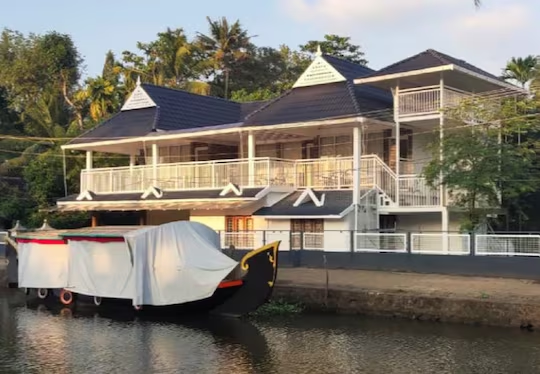
- Why Evaan’s Casa is the right place for this: Our family has lived on this small island for generations. We offer a true homestay, not a resort, where you share our space, our meals, and the quiet of our home.
I remember waking before dawn to the sound of my father pushing our wooden canoe into the water. The air was cool and thick, carrying the damp smell of water hyacinth and the faint, sweet smoke from a neighbor’s kitchen fire. That quiet, before the first kingfisher dives, is the heartbeat of this place. It’s the feeling I want every guest at Evaan’s Casa to know.
It’s not just a view. It’s a layer of sounds—the plop of a fish, the rhythmic knock of a rice boat’s engine, my mother calling from the kitchen. This is the village side. It’s where we live.
What Is an Alleppey Village Side Stay?
Forget the houseboats lined up on the main Vembanad Lake channel. A village side stay is something else entirely. It means your front yard is a narrow, winding canal where children swim and women wash clothes. Your neighbors are the families in the concrete and thatch houses across the water.
You stay in a home, not a hotel. You wake to the crow of a rooster, not a tour guide’s microphone. The boats you see are fishing canoes, vegetable sellers, and school ferries. This is daily life in the Kerala backwaters, unchanged for decades.
It’s slow. It’s simple. It’s real. You’re not just passing through; you’re pausing in the middle of a living, breathing community. You become part of the scenery for a little while.
Why Does the Island Location Matter?
Evaan’s Casa is on a small island. There is no road, no bridge. To reach us, you take a six-minute shared country boat from the jetty. Your bags go in the canoe I row across. That short journey is the first decompression.
The isolation is gentle but complete. No cars, no scooters, no street noise. The only access is by water. This changes everything. It forces a different pace. You plan your day around the boat timings, or you simply decide to stay put.
At night, the silence is profound. It’s broken only by the frogs and the occasional distant murmur of a television. You look out and see pinpricks of light from other island homes, miles from the nearest streetlamp. The world feels both vast and intimately small.
What Food Can You Expect Here?
You will eat what we eat. My mother, Molly, cooks every meal in our kitchen. The smell of mustard seeds crackling in coconut oil is the signature scent of our home. She buys fish from the morning catch that comes by canoe.
Breakfast might be soft, steamed puttu with kadala curry, or crispy dosas with her fresh coconut chutney. Lunch is often the star—a whole Karimeen (pearl spot fish) marinated in spices, wrapped in a banana leaf, and pan-fried. That’s Pollichathu. The taste is smoky, tangy, and of the water itself.
If you’re lucky to visit on a festival day or if we have a reason to celebrate, you might get a Sadhya. That’s a feast served on a banana leaf with over a dozen different vegetarian dishes, each a burst of flavor—sambar, avial, thoran. You eat with your hands. It’s the only proper way.
Jackson’s Practical Tips for Visitors
- Pack light, soft bags. You’ll be stepping in and out of small boats. A large hard-shell suitcase is your enemy here.
- Bring a good mosquito repellent for the evenings. The natural kind with citronella works, but sometimes you need the strong stuff. We have nets over all beds.
- Carry cash. The nearest ATM is a boat ride away. For small things—a coconut from a passing seller, a tip for the boatman—cash is king.
- Learn three Malayalam words: “Nanni” (Thank you), “Sukhamano?” (Are you well?), and “Sheri” (Okay). It will make everyone smile.
- Leave your formal shoes. Barefoot, sandals, or flip-flops are the island uniform. The ground is packed earth and tile.
What Is the Best Time to Visit Alappuzha for a Village Stay?
The monsoon, from June to August, is my secret favorite. The rain is not a drizzle; it’s a roaring curtain of water. The backwaters swell, turning our island even greener. You sit on the veranda, drink chai, and watch the world get washed clean. It’s powerfully peaceful.
Winter, from September to February, is the classic time. The weather is cool and dry, the skies are clear blue. This is perfect for long canoe rides and watching the sunset. The water is calm, like a mirror. It’s the most comfortable season for most people.
Summer, March to May, is hot and still. The air hums. But this is when the village life is most vivid—early mornings are for chores, afternoons are for napping in the shade. The light is harsh and beautiful. It’s the real, unfiltered Kerala heat, and you learn to move slowly with it.
Frequently Asked Questions About Alleppey Village Stays
How do we get to your island? Is it safe?
You take a public ferry from the Alappuzha boat jetty. It’s a common route used by locals. I meet you at our island stop. The boats are safe, stable, and the main transport for hundreds of families here. Life jackets are available. Children ride these boats to school every day.
What should we pack for a village homestay?
Light, cotton clothing is best. A hat, sunscreen, and sunglasses for the day. A light sweater for cooler evenings on the water. Most importantly, pack a spirit for adaptation. You are coming into a family home, not a standardized hotel.
Is there WiFi or mobile network on the island?
Mobile network is available, but it can be weak in spots. We have WiFi, but I must be honest—it is not high-speed city WiFi. It works for messages and emails. This is part of the experience. It encourages you to look up, to talk, to just watch the water.
What is the typical cost for a stay like this?
It is less than a private houseboat and offers a deeper experience. The cost includes your room, all home-cooked meals, and simple activities like canoeing. For exact rates, please check our website directly, as we are a small family and keep things simple and transparent.
So, that’s the true village side stay. It’s the taste of my mother’s fish curry, the sound of water against the laterite stone steps, the feeling of the afternoon breeze through the coconut grove. It’s quiet, it’s real, and it’s waiting. If this sounds like the peace you’re looking for, our home is here. You can learn more about our family and our island at Evaan’s Casa. We hope to welcome you.