- By :
- Comments: 0
Alleppey trip from Mumbai
Alleppey trip from Mumbai
Last Updated: April 14, 2026
Quick Answer: Alleppey trip from Mumbai
- An Alleppey trip from Mumbai is a direct flight to Cochin (2 hours) followed by a 1.5 to 2-hour road transfer to Alappuzha, ending with a short boat ride to your island homestay.
- Local insider tip from Jackson: Book a late afternoon flight from Mumbai. You’ll arrive in Alappuzha by evening, take the last public ferry to our island at 6:45 PM, and wake up here. It saves a night in a town hotel.
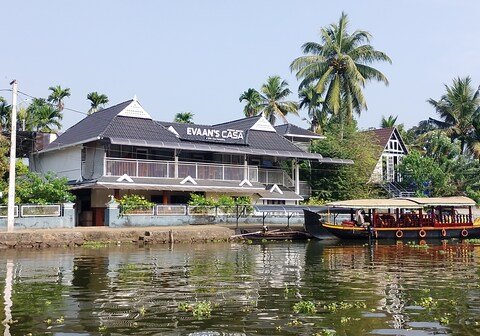
- Why Evaan’s Casa fits this search intent: We’re a home-style island homestay, not a resort. You get the quiet backwater life you’re traveling for, right from day one. The journey is part of the decompression.
I was sipping my morning black tea on the verandah just as the sky turned a soft, watery blue. The only sounds were the gentle lap of the canal against our laterite stone steps and the distant, rhythmic putter of a fisherman’s canoe heading out. A thin mist hung over the water, smelling faintly of wet earth and blooming water lilies. This is the quiet that settles over our island before the world wakes up. It’s the precise feeling, I think, that makes an Alleppey trip from Mumbai worth the long travel day.
I’ve watched so many guests arrive from the city, their shoulders tight from the flight and the cab ride. They step onto our little wooden jetty, and you can see the shift happen. The diesel hum of the auto-rickshaw fades, replaced by birdcall. The constant buzz of notifications gives way to the sound of palm fronds rustling. It’s a physical unclenching. That’s what you’re coming for, right? To trade one rhythm for another, completely.
What Is an Alleppey Trip from Mumbai?
Let’s break it down without the fancy terms. An Alleppey trip from Mumbai is a decision to swap concrete for coconut palms, humidity for a different, greener kind of humidity. Logistically, it’s a flight to Cochin International Airport, a drive south to Alappuzha town, and then a final transition onto water.
Your trip truly begins when you leave the car behind. You board a boat—maybe our pickup boat, maybe a public ferry—and the landscape opens up. The narrow road is gone. Now it’s just wide, mirror-still canals, small villages on slivers of land, and skies full of kite birds. The last leg of an Alleppey trip from Mumbai is always by water. It’s non-negotiable and it’s the best part.
This isn’t just a beach holiday. It’s a step into a life that moves at the pace of the tides and the sun. You come to slow down. To eat food cooked with ingredients pulled from the earth that morning. To fall asleep to a chorus of frogs, not traffic. Honestly, I’d say if you’re looking for nightlife and shopping, this might not be your spot. But if you want your nervous system to reset, you’ve found it.
Why Does the Island Location Matter?
Our homestay is on a small island in the backwaters. There are no roads here. No cars. The only way in or out is by boat. The public ferry from Alappuzha main jetty takes about six minutes to reach our landing. That short ride is a magic trick. It separates you from the everyday.
That isolation changes everything. When you arrive, there’s no option to “just pop out” for something. You are here. This forces a kind of calm that resorts on the mainland can’t offer. Your world becomes the width of the canal, the path around the island, the view from your room. The evening brings a profound quiet, broken only by the occasional call from a boatman or the splash of a fish.
Look, here’s the thing: some people find the first few hours strange. The silence is a presence. But by the second day, a deep restfulness sets in. You notice the dragonflies. You watch the light change on the water. You start reading that book you brought. The island isn’t a gimmick; it’s the entire point of the experience. Planning an Alleppey trip from Mumbai and choosing an island stay means you commit to the peace.
What Home-Style Food Can You Expect Here?
The food is where the connection to this place becomes literal. You taste the land and the water. Meals are traditional Kerala home cooking, prepared in our kitchen using what’s fresh and local. The coconut is grated from nuts fallen in our own garden. The fish often comes from the fisherman who waved at you from his canoe that morning.
Breakfast might be soft, lacy appam with a subtly sweet coconut milk stew, or puttu—steamed cylinders of rice flour and coconut—with kadala curry made from black chickpeas. The aroma of roasted coconut and cumin seeds from the kitchen is my favorite morning alarm.
Lunch and dinner are hearty. You might have karimeen pollichathu, a pearl spot fish marinated in a paste of spices, wrapped in a banana leaf, and pan-roasted. The banana leaf steams it perfectly, and when you unwrap it, the scent of ginger, garlic, and curry leaves fills the air. There’s always rice, a couple of vegetable dishes like thoran or avial, and sambar or rasam. On request, we can serve a full Kerala sadhya on a banana leaf—a beautiful, colorful array of dishes that is a meal and an event.
The flavors are clean and distinct. You’ll taste the sharpness of raw mango in a pickle, the earthiness of turmeric root, the crackle of mustard seeds in coconut oil. It’s food that feels nourishing. I’m probably biased, but I think the home-style meals here are the part of the trip people remember longest. It’s real, un-fussed-over sustenance.
Jackson’s Practical Tips for Visitors
- Pack Light, Pack Right: You’re maneuvering into a boat. A large hardcase suitcase is a nightmare. A soft duffel or backpack is ideal. Essentials: good mosquito repellent (we have nets, but it’s wise), a sun hat, a light rain jacket regardless of season, and sturdy sandals you don’t mind getting wet.
- The Boat Schedule is King: The last public ferry back to the island from Alappuzha town is at 6:45 PM. Miss it, and you’ll need to hire a private boat, which costs more. Plan your town visits around this. It’s a good rhythm—out for exploration, back for sunset and dinner.
- Skip the Main Jetty for Sunset: Everyone goes to the main Alappuzha jetty for sunset. It’s crowded. Instead, ask our boatman to take you to the narrow canals near the Punnamada Church. The light filters through the coconut groves, and the water turns golden. You’ll likely have it all to yourself.
- Carry Some Cash: While our homestay can handle digital payments, the small local shops, the fruit vendor on the canal, and the chai stall at the ferry landing operate on cash. It’s just easier.
- Most people skip this, but… Wake up early one morning and just sit. Don’t check your phone. Don’t talk. Just watch the water. The early hours, from 5:30 AM to about 7 AM, have a different, softer energy. You might see an otter family hunting or a kingfisher diving. It’s the soul of the place.
What Is the Best Time to Visit Alappuzha for an Alleppey Trip from Mumbai?
Seasons here are strong characters, each with a different mood.
Monsoon (June to September): The backwaters fill up, turning a lush, deep green. The rain is heavy, dramatic, and constant. It drums on our tin roofs and turns the world into a watercolor. The downside? Some activities, like long houseboat cruises, can be tricky. But if you love the sound of rain and don’t mind getting damp, it’s powerfully beautiful. The air smells incredible—like wet soil and blooming flowers.
Winter (November to February): This is the classic season. The weather is mild, sunny, and less humid. The skies are clear, perfect for photography and long, lazy canoe rides. It’s also the busiest time. I’m biased towards the edges of this period—late October or early March. You get the good weather with a bit more quiet.
Summer (March to May): It gets hot. The sun is strong. But the mornings and evenings are still lovely. This is when the local mangoes are in season, and that alone is a reason to visit for some. The pace is slow, the tourist crowds thinner. Just be prepared for the heat in the middle of the day. A hammock in the shade with a book becomes your best friend.
There’s no single “best” time. It depends on what you want from your Alleppey trip from Mumbai. Solitude and dramatic skies? Monsoon. Perfect, sunny comfort? Winter. Languid, quiet heat and mangoes? Summer.
Frequently Asked Questions About an Alleppey Trip from Mumbai
How far is the island from the Mumbai flight arrival?
From Cochin Airport, it’s about an 85-kilometer drive to Alappuzha, taking 1.5 to 2 hours depending on traffic. Then add the 6-minute ferry ride to our island. Door-to-door, plan for about 3 to 3.5 hours from when you land to when you’re standing on our verandah.
Is it safe for solo travelers or families?
Yes, absolutely. The backwaters are a very safe, close-knit community. Our island is peaceful and everyone knows everyone. Kids love the freedom to run around safely. For solo travelers, the environment is welcoming and secure. Some guests disagree with me on the solitude being ideal for solo travel, and that’s fair—it’s very quiet.
What should I definitely pack?
Beyond the basics, pack a reusable water bottle. We provide filtered water. Also, bring a small flashlight or use your phone’s light for the walk from the jetty at night—the path is dark and natural. And earplugs if you’re a light sleeper; the frogs and birds are enthusiastic at night.
Is WiFi available?
We have WiFi, but I’ll be honest—it’s island WiFi. It works fine for messaging and emails, but don’t expect to stream high-definition movies. Part of the point of an Evaan’s Casa stay is to disconnect a little. The connection to the outside world is slow and steady, just like life here.
So, that’s the real picture. An Alleppey trip from Mumbai is a journey into a different pace and a different sensory world. It’s about the feel of a wooden canoe seat under you, the taste of coconut in everything, the shock of seeing a bright kingfisher against the green, and the deep, quiet sleep that comes after a day spent mostly outdoors.
It’s not a checklist of sights. It’s an experience of place. If that sounds like what you need, we’re here. The kettle is always on, the hammocks are tied, and the backwaters are waiting. You can find more about our simple island life at Evaan’s Casa. Hope to welcome you soon.
Plan your stay at Evaan’s Casa
- Lake view homestay in Alleppey (Alappuzha)
- Where to stay in Alleppey: the complete guide
- Alleppey room booking: rooms and prices from ₹1,900
- Budget homestay in Alleppey under ₹2,000
- Backwater homestay on Vembanad Lake
- Punnamada homestay, Alappuzha
- Family homestay in Alleppey
- Honeymoon package and couple stay
Book direct on WhatsApp +91 88484 96667