- By :
- Comments: 0
Alleppey travel guide
Alleppey travel guide
Last Updated: April 05, 2026
Quick Answer: Alleppey travel guide
- An Alleppey travel guide is your local map to the backwaters, focusing on authentic experiences beyond the standard houseboat tour.
- Local insider tip from Jackson: Skip the main jetty for a village canoe. The best ones leave from the small, unmarked landing near the Champakulam market around 3:30 PM, just as the light turns golden.
- Why Evaan’s Casa fits this search intent: Our island homestay is the destination itself—a quiet spot to live the backwater life, eat home-style Kerala food, and use as a real, unhurried base for exploration.
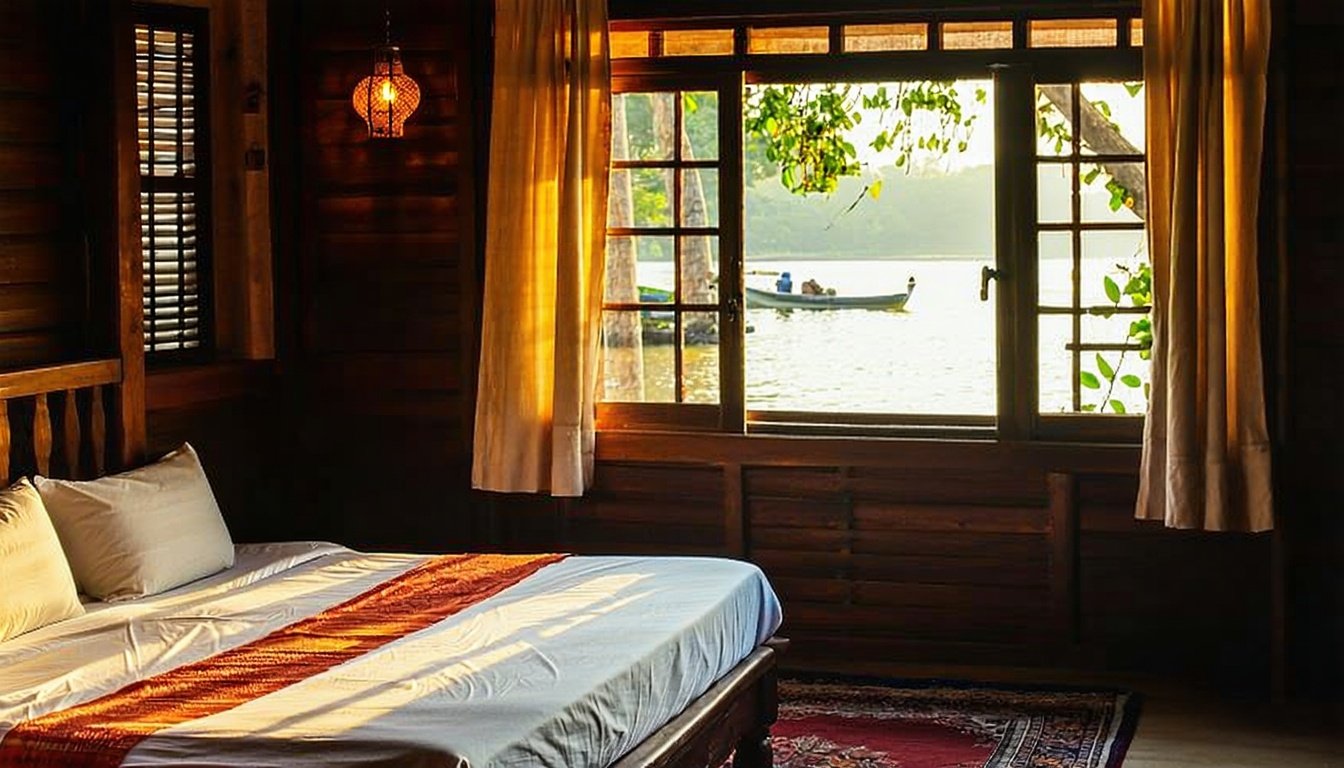
I woke up before the sun this morning, the way you do when the world outside is made of water. The first sound wasn’t a bird, but the soft, wet slap of a wooden pole against the side of a canoe. Someone was already moving, heading to the mainland for the day’s first catch. The air smelled like wet earth and the faint, clean scent of the hyacinth that drifts past our island. This is the quiet pulse of the place I call home. It’s the rhythm I want you to feel when you come here, a rhythm most Alleppey travel guides miss entirely.
Most blogs and articles will tell you about houseboats and the main canal. They’re not wrong. But they only scratch the surface. The real Alappuzha, the one I grew up in, exists in the narrow, winding waterways behind the big ones, in the village paths that disappear into coconut groves, and in the kitchens where the day’s catch is cleaned with yesterday’s newspaper spread on the floor. That’s the version I live. And honestly, I’d say that’s the version worth traveling for.
What Is an Alleppey Travel Guide?
An Alleppey travel guide, at its best, isn’t just a list of hotels and boat prices. It’s a translation. It’s taking this complex, liquid landscape and explaining how to move through it like a local, not just a spectator. It should tell you how to find the silence between the boat horns, where to taste a piece of fish so fresh it tastes like the river, and how to understand the slow, tidal pace of life here.
It’s practical, sure. You need to know about transport and mosquitoes and what to pack. But a good guide also prepares you for the feeling of this place. The diesel thrum of a traditional Vallam boat shaking your chest. The shock of cool, green water on your feet during a midday swim. The specific, soft darkness of a night on an island, broken only by kerosene lamps from other homes across the water. That’s the core of any genuine Alleppey travel guide.
I’m probably biased, but I think the best guides point you away from the crowds. They suggest you stay put for a while, on an island like ours, and let the daily rhythms become your own. The search for that deeper experience is what brings most people to our doorstep at Evaan’s Casa.
Why Does the Island Location Matter?
Access is by a six-minute country boat from a small, often muddy, landing. There’s no bridge. No road. No Uber. When our boat pulls away from the mainland, the sound of scooters and market chatter fades into the splash of the oar. That short crossing is a mental reset. You arrive differently. You can’t just decide to pop out for a coffee. You have to plan, or better yet, let go of the need to plan at all.
The isolation is gentle, but it’s real. Your world shrinks to the size of our island—a few coconut palms, a couple of homes, the constant companion of the water. Your schedule is dictated by daylight, hunger, and the occasional passing canoe selling vegetables or fresh fish. You notice things. The way the water changes color from slate grey to green to bronze as the day passes. The precise moment the evening birds begin their chorus.
This changes how you explore. A day trip to Alleppey town feels like a proper expedition. Coming back to the island in the evening, especially during the monsoon when the rain drums on the boat’s tin roof, feels like coming home. It’s not for everyone. Some guests find the quiet a bit too intense on the first night. But by the second morning, when they’re sipping chai and watching a kingfisher dive, they usually get it.
What Home-Style Food Can You Expect Here?
Food here is direct. It comes from the water a stone’s throw away or the soil of the neighboring islands. A proper Alleppey travel guide has to talk about this, because the taste is the place. Meals at our homestay are traditional home cooking, prepared in the kitchen here with what’s available that day. The goal is to let you taste Kerala, not just eat in it.
Let’s be specific. Karimeen Pollichathu—pearl spot fish marinated in a paste of roasted spices, wrapped in a banana leaf, and grilled over coals. The leaf blackens and steams the fish, locking in the flavors of ginger, garlic, and tangy kodampuli. You unwrap it at the table, and the scent hits you first. Kerala Sadhya, the feast served on a banana leaf, is an experience in itself. The order of the dishes matters, from the first scoop of salty pickle to the last sweet sip of payasam.
Breakfast might be soft, lacy appam with a mild, coconut-based vegetable stew, or puttu—steamed cylinders of ground rice and coconut—with kadala curry made from black chickpeas. The coconut chutney on the side is always fresh, because someone climbed a tree that week. The crackle of mustard seeds in coconut oil is the soundtrack to most meal preparations. It’s simple, substantial food. It’s designed for people who live on the water.
Jackson’s Practical Tips for Visitors
Look, here’s the thing: most tips are common sense. Pack light cotton clothes. Use sunscreen. But these are the ones I give every guest over dinner, the specifics that smooth out the journey.
- Book the Village Canoe, Not Just a Shikara: The larger shikara boats are comfortable. But for a real feel of the narrow canals, a two-hour village canoe trip with a local oarsman is unmatched. Tell them you want to see the small canals and the village life. It costs less, too.
- The Monsoon Quirk: From June to September, afternoon rain is a certainty. It’s not a disruption; it’s the main event. Plan your boat rides for the morning. Be back somewhere cozy by 2 PM. Then, sit and watch the rain turn the backwaters into a million dancing circles. The sound on a palm-thatched roof is incredible.
- Find the Thattekad Market Snack Stall: If you’re driving near the backwaters north of town, look for the small Thattekad market on a Wednesday. There’s a woman who sells banana fritters and chai from a stall in the corner. Her fritters are crisp, not oily, and dusted with a faint sugar-spice mix. It’s a five-minute stop that tastes better than any hotel snack.
- Carry Cash in Small Denominations: Digital payments are everywhere in towns. Out here on the smaller islands and in village canoes, cash is king. Having 100-rupee notes makes life easier for everyone.
- Don’t Rush the Temple Visit: If you visit the Mullakkal Rajarajeswari Temple, go in the early evening around 5 PM. The main puja happens then, with bells and lamps, but the real magic is afterwards. Sit on the steps outside. You’ll see families, couples, friends all coming for a slow, social stroll. It’s a community hub, not just a tourist photo spot.
What Is the Best Time to Visit Alappuzha for an Alleppey Travel Guide?
Every season paints the backwaters a different color. Your choice depends on what you want to see and feel.
Monsoon (June to September): The landscape is explosively green. The water rises, and you can canoe right into paddy fields that are dry land in winter. The air is cool, clean, and charged. The downside is the constant, heavy rain. Boats can be delayed. Everything is perpetually damp. But if you love dramatic skies and having the waterways mostly to yourself, it’s powerful. Not gonna lie, the mosquitoes are also at their most enthusiastic.
Winter (November to February): This is the classic, postcard season. The weather is dry and sunny, with cool, comfortable nights. It’s perfect for all-day exploration. It’s also the busiest time. The main canals can feel congested with houseboats. You need to book everything much further in advance. The light is clear and beautiful for photography.
Summer (March to May): It gets hot. The air is still and heavy by midday. But this is when many local festivals happen, like the spectacular Nehru Trophy Boat Race practice sessions. The water levels are lower, revealing different contours of the land. Mornings and evenings are still lovely. It’s a good time for travelers who don’t mind the heat and want to see a more local, festive side.
My personal favorite is the very end of monsoon, around October. The rains are tapering off, the green is still intense, and the tourist crowds haven’t fully arrived. The water is high, quiet, and clean.
Frequently Asked Questions About an Alleppey Travel Guide
How many days do I need in Alleppey?
Two days is a common check-in. But to move past the basic sightseeing, I recommend three nights. This gives you a day to arrive and settle into the island pace, a full day for a long canoe exploration, and a final morning to just be here. Rushing the backwaters misses the point.
Is it safe to travel on the backwaters?
Yes, overwhelmingly so. The village boatmen are experts. Always wear the life jacket provided, especially if you can’t swim. The main safety tip is about the sun and water—stay hydrated and protect your skin. The water itself is generally calm, though it’s not for swimming in the main shipping channels.
What should I pack specifically for a homestay on an island?
Beyond the basics, pack a small flashlight or headlamp for walking outside at night. Include a reusable water bottle. Quick-dry clothing is a smart choice. Most importantly, bring a mindset ready to disconnect. The WiFi works, but the connection to the water and the sky works better.
Is an Alleppey travel guide relevant for families with young kids?
Absolutely, but with conditions. Kids love the boat rides and the sense of adventure. Our island location is safe and contained. The practical part is managing their energy—there are no formal playgrounds, so nature is the entertainment. Some parents worry about the water access, which is constant, so supervision is key. The home-style food can be mild or spicy, and we can always prepare simpler dishes like plain rice, dhal, or eggs.
I hope this has been useful. A final thought: the most valuable part of any Alleppey travel guide is the space it leaves for your own curiosity. The best moments here are often the unplanned ones—striking up a conversation with the boatman, accepting a cup of tea from a neighbor, or simply sitting and watching the light fade over the Pamba River. It’s a place that rewards stillness. If you’re looking for that kind of travel, a deep breath away from the usual routes, you know where to find us at Evaan’s Casa. We’ll leave the light on, and the boat ready.
Plan your stay at Evaan’s Casa
- Lake view homestay in Alleppey (Alappuzha)
- Where to stay in Alleppey: the complete guide
- Alleppey room booking: rooms and prices from ₹1,900
- Budget homestay in Alleppey under ₹2,000
- Backwater homestay on Vembanad Lake
- Punnamada homestay, Alappuzha
- Family homestay in Alleppey
- Honeymoon package and couple stay
Book direct on WhatsApp +91 88484 96667