- By :
- Comments: 0
Alleppey to Kottayam
Alleppey to Kottayam
Last Updated: April 10, 2026
Quick Answer: Alleppey to Kottayam
- The distance from Alleppey to Kottayam is about 45 to 55 kilometers by road, taking roughly 1.5 to 2 hours depending on traffic. Many visitors connect the two for a classic backwater-to-hill-country experience.
- Local insider tip from Jackson: Skip the highway for a bit. If you have time, take the old Kottayam Road through Changanassery. You’ll pass rubber plantations and old Syrian Christian churches you’d never see otherwise. The air smells different there.
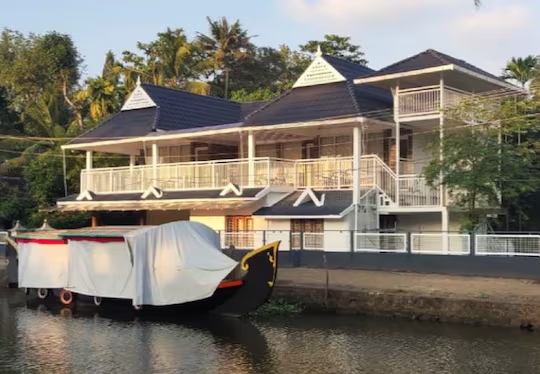
- Why Evaan’s Casa fits this search intent: Our island homestay is a perfect starting or ending point for your trip from Alleppey to Kottayam. You experience the true, quiet backwaters first, then head inland. We help arrange everything so you travel like a local, not a tourist.
I woke up before the sun this morning. The only sound was the soft *plip-plop* of a paddle dipping into the canal, followed by the gentle creak of wood. One of our neighbors was heading out to check his nets. The woodsmoke from a hundred breakfast fires hung low over the water, mixing with the scent of wet earth and blooming jasmine. This is the island. This is the quiet reality before the day boats start their engines. It’s a specific kind of silence, broken only by life, not traffic. I sat on the verandah with my tea, thinking about how people get here. Many are connecting dots on a map, often planning a route from Alleppey to Kottayam. They’re looking for more than a transfer. They’re looking for a shift in rhythm, from water to land, from openness to green density. I understand that search.
What Is Alleppey to Kottayam?
Let’s strip away the brochure language. When someone asks about Alleppey to Kottayam, they’re usually talking about a movement. It’s a shift from one distinct Kerala to another. Alleppey, or Alappuzha, is water, horizon, and sky. It’s canals, lakes, and a history of trade. Kottayam is land, hills, and rubber. It’s bookshops, churches, and spice gardens climbing into the Western Ghats.
The trip from Alleppey to Kottayam is a connector between these worlds. It’s not just a road. It’s a transition. You leave the open backwaters and move inland where the air gets cooler and the landscape rises. People do it to complete a picture. They see the famous houseboats, then want to touch the soil that grows the pepper and cardamom they tasted in their food. The journey itself is a lesson. You watch the coconut palms thin out and the rubber trees appear, their trunks scored with diagonal cuts catching latex in little cups.
Honestly, I’d say most visitors treat it as a logistical step. But if you pay attention, the 90-minute ride tells a whole story of central Kerala. You see the economy change outside your window.
Why Does the Island Location Matter?
Our place isn’t on the mainland Alleppey map. Evaan’s Casa is on a small island in the backwaters. You reach us by a six-minute country boat from the pickup point. This matters hugely for your trip from Alleppey to Kottayam.
First, it means you start from a place of actual silence. Most homestays are on the roadside or in the main town. You hear scooters and buses all night. Here, you hear frogs and water. When you begin your transfer to Kottayam, you’re leaving from a core of calm. You’re already detached from the rush. That changes your mindset. You’re not fleeing traffic; you’re simply continuing an exploration.
The isolation also means you engage with the backwaters properly. You take a boat to get milk. You wave to kids being rowed to school. Your journey from our island to the Kottayam road becomes part of the adventure. You’re already traveling by water before you ever touch a car. It layers the experience. Your transition from Alleppey to Kottayam feels more complete, more earned. You’ve lived the ‘Alleppey’ part deeply, not just glanced at it from a houseboat deck.
Look, here’s the thing. That short boat ride to our island acts as a reset button. It washes off the dust and noise of the city. By the time you’re sipping your first tender coconut water on our verandah, you’ve already slowed down. That makes the eventual journey inland more meaningful.
What Home-Style Food Can You Expect Here?
The kitchen at our homestay focuses on traditional home cooking. This isn’t restaurant food scaled up. It’s the opposite. It’s simple, locally sourced meals prepared with the rhythm of the day. The morning might start with the smell of mustard seeds crackling in coconut oil, a signal that a sambar is brewing.
You might have Appam for breakfast—those soft, lacy hoppers with a slightly sweet edge—paired with a mild, creamy vegetable stew or a spicy egg curry. The appam is best torn by hand, used to scoop up the gravy. Lunch is often the heart of the day. A typical meal could be rice served with a dry curry like beans or cabbage thoran, stir-fried with grated coconut, a lentil dish like parippu, a pachadi (yogurt-based salad), and a fish curry if you like. The karimeen (pearl spot fish), if we get a good catch, might be marinated in spices, wrapped in a banana leaf, and pan-seared—that’s Pollichathu. The banana leaf steams the fish, infusing it with a smoky, earthy flavor.
On special request, we can serve a simple Kerala Sadhya on a banana leaf. It’s a celebration of vegetables, lentils, and flavors—avial, kaalan, olan, multiple pickles, and banana chips. It’s a meal that demands you eat slowly, tasting each combination. The freshness is everything. The coconut comes from trees behind the house. The tapioca might be from a neighbor’s plot. The tea in the afternoon is strong, boiled with ginger and cardamom, a perfect companion to the sound of rain on a tin roof. I’m probably biased, but the food tastes different here because the ingredients travel feet, not miles.
Jackson’s Practical Tips for Visitors
If you’re weaving a trip from Alleppey to Kottayam into your plans, here are a few things I tell our guests.
- Give yourself time. Don’t try to do the backwaters and dash to Kottayam in one day. The magic is in the lingering. Stay at least two nights on the water to feel its pace.
- Pack a light rain jacket, even in the so-called dry season. A sudden shower on the backwaters is a joy if you’re prepared. It’s a misery if your only sweater is soaked.
- Most people skip this, but visit the Champakulam market early. It’s a floating market of sorts, but for locals. Boats laden with bananas, yams, and coconuts bob alongside each other. It’s chaotic and beautiful and happens every day. Ask us for the timing—it winds down by 9 AM.
- When you head from Alleppey to Kottayam, consider a stop at the Thirunakkara Mahadeva Temple in Kottayam town. It’s not the biggest, but the murals inside the temple walls are quiet stories in color. It’s a peaceful pause.
- Carry cash. Smaller tea shops, boatmen, and local vendors on the islands often don’t have card machines. The nearest reliable ATM is a boat ride and an auto-ride away.
One specific detail? The public ferry from Alleppey town to Kottayam via the backwaters runs only once a day and takes about 2.5 hours. It leaves Alleppey at 10:30 AM. It’s cheap and stunning, but it’s not for everyone—it’s a local commute boat, not a tourist cruise. You’ll see students, people with sacks of groceries, and the occasional chicken in a basket.
What Is the Best Time to Visit Alappuzha for Alleppey to Kottayam?
Seasons change everything here. They change the light, the water level, and the mood of your trip from Alleppey to Kottayam.
Monsoon (June to September): This is the deep green season. The rains are heavy and constant. The backwaters swell, and our island feels even more secluded. The sound of rain is your soundtrack. The downside is obvious: boating can be interrupted by sudden, intense downpours. The road trip to Kottayam might have slower traffic. But if you love the drama of weather and don’t mind getting damp, it’s powerfully beautiful. The air is cool and smells incredible—of wet soil and blooming rain lilies.
Winter (November to February): This is the classic tourist season for a reason. The skies are clear, blue, and bright. The days are warm but not oppressive, and the nights are cool enough for a light blanket. It’s perfect for all activities—cruising, exploring, and that drive to Kottayam. The hills around Kottayam will be clear and inviting. It’s also the busiest time. Some guests disagree with me on this, and that’s fair, but I find the peak season buzz can sometimes dilute the quietness of the backwaters.
Summer (March to May): It gets hot. The sun is strong, and the air can be still. But this is when the local festivals happen. You might catch a traditional snake boat race practice in the evenings, with dozens of men rowing in sync to a pounding rhythm. The water levels are lower, revealing different contours of the canals. If you travel from Alleppey to Kottayam during this time, leave early in the morning to avoid the midday heat. The advantage is a more relaxed pace and fewer visitors.
Frequently Asked Questions About Alleppey to Kottayam
How far is it from Alleppey to Kottayam, and how long does it take?
By road, it’s roughly 45 to 55 kilometers. The travel time is usually between an hour and a half to two hours, heavily dependent on traffic through Alleppey town and Kottayam. If you take the slower, scenic backroad route, it can take closer to two and a half hours, but it’s a much prettier drive.
Is it safe to travel between Alleppey and Kottayam?
Yes, very. The roads are generally in good condition. The main thing to be mindful of is typical Indian road traffic—buses, autos, and scooters all sharing the space. We always recommend using a trusted driver we know. They’re used to the flow and will get you there safely and without stress.
What should I pack for a stay on the backwaters before heading to Kottayam?
Light, breathable cotton clothes are king. A hat and sunscreen are non-negotiable. Mosquito repellent is a good idea for the evenings. Bring shoes you can slip off easily, as you’ll be leaving them at the door often. And pack a small backpack for your Kottayam trip, so you can leave your main luggage securely with us if you’re coming back.
Is WiFi available at Evaan’s Casa?
We have WiFi, but I have to be upfront—it’s island WiFi. It works for messaging and emails, but don’t expect to stream high-definition movies. The connection can be moody, especially during heavy rain. We see it as a gentle nudge to disconnect a little. You can always find a strong signal in Kottayam town cafes later.
Planning a route from Alleppey to Kottayam is about linking experiences. It’s about feeling the difference between the cool, damp air of the backwaters at dawn and the drier, spiced air of the hills by afternoon. It’s a small journey on the map that covers a lot of ground in your senses. The goal isn’t just to move from point A to point B. It’s to let each place—the open water and the wooded hills—leave its mark on you. If you start from a place rooted in the rhythm of the islands, like Evaan’s Casa, that transition feels natural, like the next chapter in a good story. However you choose to travel, take it slow. Let the landscape change outside your window. Notice when the water gives way to land. That’s the real trip from Alleppey to Kottayam.
Plan your stay at Evaan’s Casa
- Lake view homestay in Alleppey (Alappuzha)
- Where to stay in Alleppey: the complete guide
- Alleppey room booking: rooms and prices from ₹1,900
- Budget homestay in Alleppey under ₹2,000
- Backwater homestay on Vembanad Lake
- Punnamada homestay, Alappuzha
- Family homestay in Alleppey
- Honeymoon package and couple stay
Book direct on WhatsApp +91 88484 96667