- By :
- Comments: 0
Alleppey on a budget
Last Updated: April 15, 2026
Quick Answer: Alleppey on a budget
- Alleppey on a budget means experiencing the backwaters’ soul without luxury resort prices, focusing on local transport, homestays, and simple, incredible food.
- Local insider tip from Jackson: Skip the expensive private houseboat day cruise. Take the 11:05 AM public ferry from Alleppey to Kottayam for less than 100 rupees. You’ll see the same canals, just with more life.
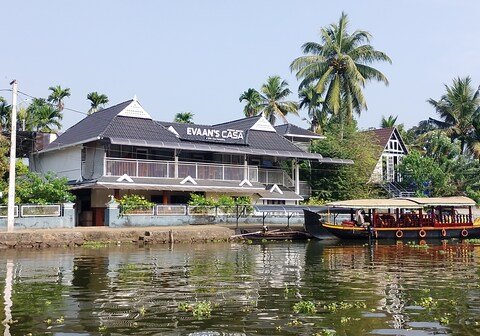
- Why Evaan’s Casa fits this search intent: We’re an island homestay built for this. You get the real, quiet backwater life, home-style meals, and a six-minute local boat ride is your only cost to get here.
I woke up before the sun this morning, the way you do when the air changes. The first thing I heard wasn’t a bird, but the soft, hollow knock of a wooden canoe pole against the side of a boat. Someone was already moving on the water, heading to check their nets. The smell of last night’s rain was still on the jackfruit leaves, mixed with woodsmoke from a kitchen a few islands over. This is the ordinary magic of our place. It doesn’t cost a thing to witness it.
I’ve watched Alleppey change over the years. The main canal buzzes with tourist boats now, and the price tags on some experiences can make you blink. But the heart of this place, the slow pulse of life on these thousand little canals, remains stubbornly simple and affordable. You just have to know where to look. And maybe, to step off the main road entirely.
What Is Alleppey on a Budget?
Let’s clear something up first. Alleppey on a budget isn’t about missing out or scraping by. It’s a choice. It’s choosing the rhythm of the place over the rhythm of a tour itinerary. It’s about value, not cheapness.
It means your transport might be a shared auto-rickshaw or a bicycle you rent for the day. Your accommodation is a homestay where the windows have wooden shutters and the fan has a gentle click to it. Your big splurge might be a fresh karimeen fish from the morning market, cooked for you at your stay. The core experience—floating on green water, watching kingfishers dive, eating with your hands from a banana leaf—is the same. You’re just trading marble bathrooms for more authentic stories.
Honestly, I’d say planning for Alleppey on a budget often leads to a better trip. You interact more. You move slower. You notice the small stuff, like the way the afternoon light turns the canal into liquid copper.
Why Does the Island Location Matter?
Evaan’s Casa is on an island. There’s no bridge. No road. To get here, you take a six-minute local ferry from the mainland jetty. That boat ride costs 15 rupees. It’s the best investment you’ll make.
That short crossing does something important. It creates a natural pause. The mainland’s noise—the scooters, the shouts, the constant hum—just falls away. You arrive by water, which is how you should arrive in Alleppey. The first thing you see is our landing, a few coconut trees, and the quiet. The isolation isn’t about being cut off. It’s about being surrounded by the right things: water, sky, and a profound sense of calm.
This location is central to the idea of Alleppey on a budget. You’re immediately in the backwaters. You don’t need to pay for a taxi to take you to a starting point for a boat ride. Step out our gate, and you can hire a small canoe from my neighbor, Thomas, for a few hundred rupees to paddle the narrow canals for an hour. The luxury here is the silence, and it’s included.
What Home-Style Food Can You Expect Here?
Food is where a budget trip here becomes rich. I’m not talking about fancy restaurants. I’m talking about the kitchen at our homestay. The meals are prepared locally, following the patterns of traditional home cooking. The goal is to feed you well, with what’s good and fresh.
Breakfast might be soft, lacy appam with a mild vegetable stew, the coconut milk base fragrant with curry leaves. Or puttu—steamed cylinders of ground rice and coconut—with kadala curry, a spiced black chickpea dish that has real depth. The taste of roasted coconut and cumin is unmistakable.
Lunch is often the star. A Kerala sadhya served on a banana leaf is a festival of flavors, but it’s also just a very good, balanced meal. There will be a couple of vegetable thorans, maybe a pachadi, sambar, rasam, and pickle. The rice is local red rice. You eat with your hands, and everything mixes together in the best way. For dinner, if the catch was good, you might have Karimeen Pollichathu. Pearl spot fish marinated in a masala of ginger, garlic, and chili, wrapped in a banana leaf, and pan-fried. The leaf infuses the fish with a smoky, earthy flavor.
The smells from the kitchen tell the story: mustard seeds crackling in coconut oil, the earthy steam of rice, the sharp note of fresh turmeric. It’s hearty, flavorful, and fundamentally satisfying. You won’t leave the table wondering where to eat next.
Jackson’s Practical Tips for Visitors
These are the things I tell friends when they visit. They’re simple, but they make a difference.
- Rethink the Houseboat. A full overnight on a private houseboat is a major expense. For a taste, book a shared sunset cruise for two hours. Or, do what I mentioned in the snippet: take the public ferry. It’s a proper adventure.
- Embrace the Monsoon (with a plan). July and August are the cheapest times to visit. The rain is dramatic and beautiful. Pack a good raincoat, sandals that dry fast, and a sense of humor. The sound of rain on a tin roof is better than any white noise app. Some guests disagree with me on this, and that’s fair—it’s not for everyone.
- Visit the Mullackal Market early. Go around 7 AM. It’s not a tourist market. It’s where we buy our food. The colors of the vegetables, the piles of dried fish, the women sorting green coffee beans—it’s a sensory blast. You can buy a bunch of small bananas for 20 rupees.
- Find the Tea Shack by the North Police Station. Look, here’s the thing. For the best strong chai and a plate of crispy parippu vada (lentil fritters), this unmarked spot is it. It’s where boatmen and rickshaw drivers go. Two chais and vada will cost you about 50 rupees.
- Walk or Cycle. Alleppey town is flat and walkable. Rent a bicycle. Get lost down small lanes. You’ll find quiet canals, old Syrian Christian churches, and maybe a toddy shop if you’re curious.
What Is the Best Time to Visit Alappuzha for Alleppey on a Budget?
Each season has its own price tag and personality. Your budget will stretch furthest in the green season.
Monsoon (June to September): This is the true budget window. Rates are lowest. The landscape is an unbelievable, saturated green. The rains come in powerful bursts, then clear to a washed-clean sky. The downside? Some activities, like long canoe trips, can get cancelled if the weather is rough. The humidity is high. But if you don’t mind a daily soak, it’s a powerful, beautiful time.
Winter (November to February): This is peak season. The weather is perfect—cool, sunny, with low humidity. Consequently, prices are at their highest. Planning for Alleppey on a budget in winter means booking your homestay well in advance to get a good rate, and focusing on free or low-cost activities. The light is golden, the nights are cool.
Summer (March to May): It gets hot. Really hot, especially in May. The afternoons are still. This is a shoulder season, so prices are between monsoon and winter. The advantage? Mangoes. The trees are heavy with them. If you can handle the heat, you’ll find good value and the sweetest fruit of the year.
My personal favorite? Late September or early October. The rains are tapering off, everything is lush, the crowds haven’t arrived yet, and you can still find very good rates. It’s a sweet spot.
Frequently Asked Questions About Alleppey on a Budget
Is it safe to stay on a backwater island?
Yes, absolutely. Our island community is small and close-knit. Crime is virtually nonexistent. The main things to be mindful of are practical: watch your step on the paths at night, as they can be uneven, and be respectful of the local homes and privacy.
How much should I budget per day for a budget trip?
Excluding your accommodation, a comfortable daily budget for food, local transport, and a small activity is between 1500 to 2500 rupees. This gets you three solid home-style meals, chai stops, bicycle rental, and a short canoe trip. A stay at a place like Evaan’s Casa covers your base, leaving this for everything else.
What should I pack that I might not think of?
A small flashlight or headlamp for island paths at night. A reusable water bottle (we have filtered water). Quick-dry clothing is a lifesaver in any season. And an old plastic bag for your wet clothes or shoes—things don’t dry fast in the humidity.
Is WiFi available on the islands?
It is at our homestay, but I’m probably biased when I say you should try to use it sparingly. The connection can be slower than in the city. See it as a chance to disconnect a little. You can get a strong signal for calls and messages, but streaming can be patchy. It’s a good excuse to put the phone down and watch the water instead.
So that’s it. A real look at Alleppey on a budget from someone who lives in it. It’s not a lesser version of a trip here. In many ways, it’s the more authentic one. It’s about trading some polish for a lot more texture. It’s about hearing that canoe pole in the morning and knowing exactly what it means.
If this sounds like the pace you’re looking for, we’d be happy to be your base. You can find more about Evaan’s Casa and how we work on our site. No pressure at all. Just know there’s a quiet island here, a six-minute boat ride away, where the coconut husks crackle in the evening fire and the water waits. Thanks for reading.