- By :
- Comments: 0
Alleppey monsoon travel
Alleppey monsoon travel
Last Updated: April 06, 2026
Quick Answer: Alleppey monsoon travel
- Alleppey monsoon travel is about experiencing the backwaters at their most lush and powerful, with fewer crowds and a raw, green energy that defines the season.
- Local insider tip from Jackson: The morning after a heavy night rain is the absolute best time for a canoe ride. The water is high, the air is crystal clear, and the whole place smells like wet earth and blooming jasmine.
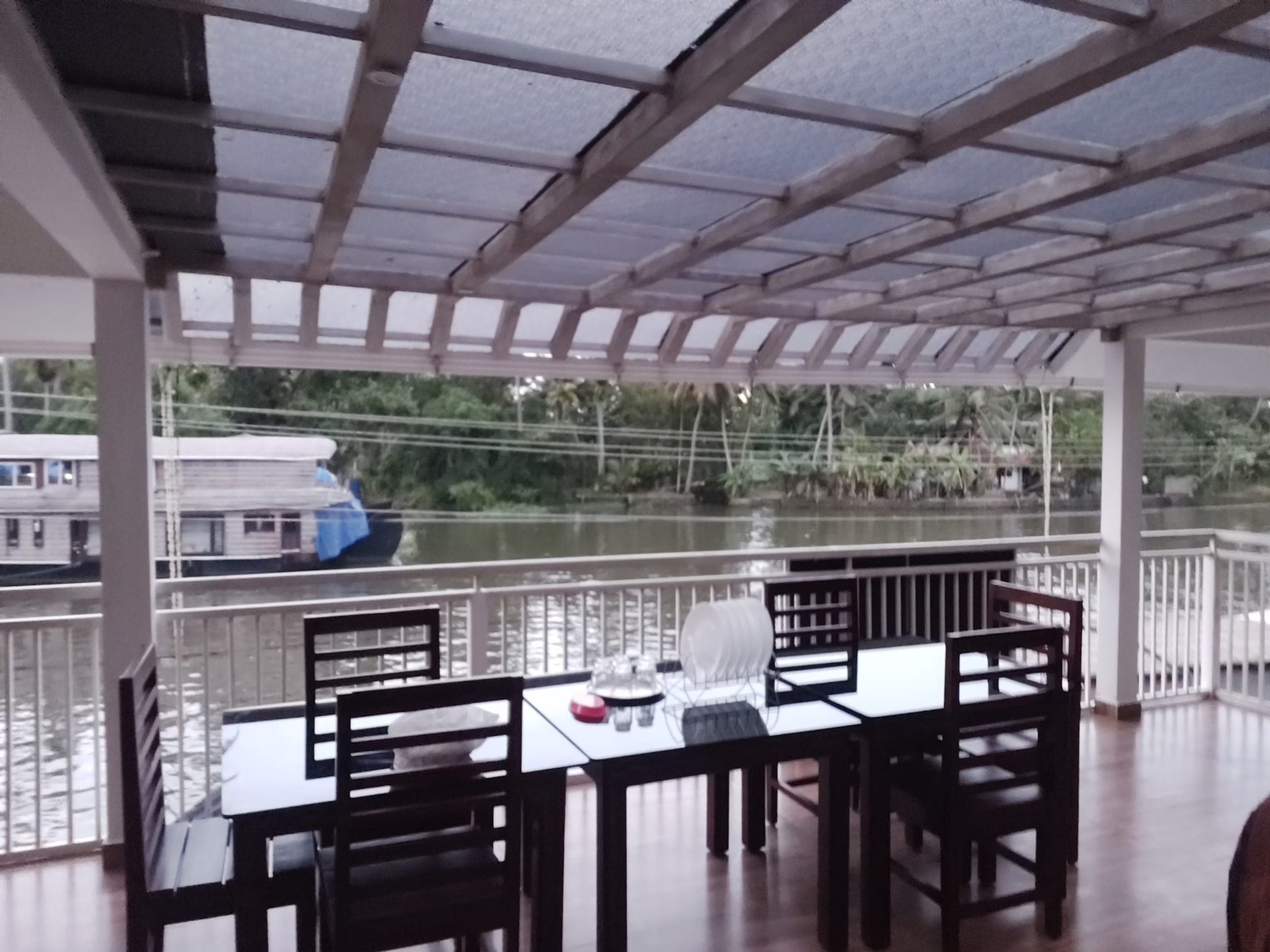
- Why Evaan’s Casa fits this search intent: Our island homestay is built for the monsoon, with a covered sit-out facing the canals, perfect for watching the rain, and we plan activities around the weather so you never feel stuck.
I woke up before dawn to the sound of it. Not a downpour, but a steady, gentle drumming on the broad teak leaves outside my window. The air in the room had that cool, damp weight to it, the kind that makes you pull a light sheet closer. I stepped outside onto the wet laterite path. The world was different shades of grey and deep, deep green. Across the narrow canal, I could hear the soft plop of water hyacinth leaves shedding their overnight load of rain. This quiet, saturated moment is the heart of the season for me. It’s the feeling I want anyone considering Alleppey monsoon travel to understand before they see a single photo.
Most people imagine Kerala’s backwaters as a sunny, placid postcard. And it can be. But the monsoon unlocks a different character entirely. The water isn’t just a backdrop; it becomes the main event, rising to meet the land, changing the rhythm of everything. Life slows to the pace of the rain. Boats move a little slower. Conversations last a little longer over cups of black tea. This isn’t a time for rushing through a checklist. It’s for settling in. For watching the water change from steel grey to moss green as the sun fights through the clouds. If you come with that expectation, you’ll find a magic here that the dry season simply can’t offer.
What Is Alleppey Monsoon Travel?
Let’s strip away the fancy terms. Alleppey monsoon travel is simply choosing to be here when the rain is part of the itinerary. It runs from roughly June to September, with peaks in June and July. The skies open up, the canals fill, and the entire landscape drinks deeply. The paddy fields turn an impossible, luminous green. The coconut palms look freshly washed every hour.
It’s not about dodging showers between sightseeing. It’s about letting the weather dictate the day. A planned village walk might become a leisurely hour on the covered veranda, watching local canoes glide by with their plastic sheet roofs erected. A houseboat might choose a quieter, narrower canal to drift in, its engine off, so you can hear the rain patter on its roof. This kind of travel requires a slight shift in mindset. You trade guaranteed sunshine for atmosphere, for a sense of place that is intense and alive.
Honestly, I’d say the core of Alleppey monsoon travel is connection. You’re connected to the elemental force of water. You’re connected to the slower, indoor rhythms of local life. The sound of rain on a tin or tile roof becomes your background score. You notice the small things: the steam rising off a hot plate of food, the way frogs start their chorus just before dusk, the clean, mineral smell that follows a heavy burst of rain. It’s a deeply sensory experience, far removed from the crowded boat jetty photos you usually see.
Why Does the Island Location Matter?
Access to our place is by a six-minute shared country boat from the mainland. There’s no bridge. No road. Your arrival starts with unloading your bags onto a narrow wooden jetty and stepping into a low-slung boat. The boatman starts the puttering engine, and you pull away from the busy world. That short crossing is a decompression chamber. By the time you step onto our island jetty, you’ve already left the hectic pace behind.
This isolation defines the monsoon experience here. When the rain gets heavy, the mainland feels a world away. The only vehicles are a few scooters and the island ambulance. The paths are for walking. At night, the only lights are from the homes and the occasional boat lantern moving on the water. The darkness is profound, the silence broken only by rain and insects. This isn’t for everyone, and that’s okay. But for those who seek it, the island creates a container. It holds you in the experience, without the easy escape to a town restaurant or a shop. You are here, fully.
It also means we see the water’s mood up close. I can tell you that the canal behind the homestay rises about two feet in a serious monsoon week. I know which paths get shallow puddles and where the kingfishers like to perch during a drizzle. This intimacy with a small, specific patch of the backwaters is what an island homestay offers. You’re not just passing through a landscape; you’re living in its daily, wet reality.
What Home-Style Food Can You Expect Here?
The kitchen at our homestay comes alive during the rains. The cool, damp air makes the warmth and spice of traditional home cooking even more welcome. Meals are served on banana leaves when we can, the green against the dark wood a small piece of art. The food is about what’s local, what’s fresh, and what makes sense for the weather.
Breakfast might be soft, lacy appam with a mild, coconut-based vegetable stew, perfect for a grey morning. Or it could be puttu – those steamed cylinders of rice flour and coconut – with kadala curry, a black chickpea dish that’s hearty and spiced with cloves and cinnamon. The aroma of roasted coconut and cumin seeds from the kitchen is a morning anchor.
Lunch and dinner are often rice-based. You’ll have a fish curry, maybe a local karimeen (pearl spot) if the catch is good, simmered in a clay pot with kodampuli (fish tamarind) for a tangy depth. There will be a thoran – finely chopped vegetables like beans or cabbage stir-fried with grated coconut and mustard seeds. A pachadi, which is a yogurt-based side, cool and balancing. The sambar will have a dozen different local vegetables in it, each spoonful different.
Look, here’s the thing about monsoon food here: it’s built for comfort. The spices aren’t just for heat; they’re for warming you from the inside. A fried fish like Karimeen Pollichathu, marinated in spices, wrapped in a banana leaf, and pan-fried, feels like a celebration. The crackle of the leaf as you open it, the release of steam carrying the scent of ginger and curry leaves – it’s a full experience. And a Kerala Sadhya, that grand feast of many dishes, feels even more special during the rains, a burst of color and flavor against the muted outside world. Every meal ends with a small banana and a cup of payasam, a sweet, milky pudding. You sit back, full, listening to the rain, and everything feels right.
Jackson’s Practical Tips for Visitors
If you’re planning your Alleppey monsoon travel, a few bits of local knowledge go a long way. Forget the generic lists. Here’s what you actually need to know.
- Pack for wet, not for cold. A lightweight, hooded rain jacket is your best friend. So are quick-dry trousers and several pairs of socks. Bring sandals that can get wet and have grip – you’ll live in them. A small, packable umbrella is useful for lighter drizzles when you’re walking.
- Your bag needs a bag. Seriously. Pack a foldable dry bag or even a heavy-duty plastic sack inside your main luggage. When you take that six-minute boat ride to the island, your bags will be exposed to the rain on the jetty and in the boat. Having an inner layer of protection is a game-changer.
- Time your outings. The rain often follows patterns. Mornings can be relatively dry, and late afternoons frequently see a heavier shower. Plan any longer canoe trips or walks for the earlier part of the day. Most people skip this, but if you hear the diesel engine of a Vallam (the big snake boats) practicing, ask us about it. They sometimes practice in the rain, and watching from a bridge is spectacular.
- Embrace the indoor moments. Bring a book. A journal. Download a few movies. When the rain is sheeting down horizontally, that’s your cue to relax on the sit-out with a chai. This isn’t lost time; it’s the point. The sound is incredible.
- Visit the local *chayakada* (tea shop). Not a fancy café, but the basic, tin-roofed shop near the boat jetty. Have a glass of strong, sweet black tea and a parippu vada (lentil fritter) for a few rupees. It’s where the boatmen and farmers take a break, and you’ll feel the local pulse.
What Is the Best Time to Visit Alappuzha for Alleppey Monsoon Travel?
This depends entirely on what you want from the monsoon. I’m probably biased, but I think the early phase has a special energy.
June to Mid-July (Early Monsoon): This is my personal favorite window for Alleppey monsoon travel. The rains are fresh. The landscape, tired from the summer heat, explodes into green almost overnight. The showers are intense but often broken by bright, clear periods. The light after a rainstorm is dramatic, sharp, and beautiful. It’s the most photogenic time, if that matters to you.
Mid-July to August (Peak Monsoon): The rain settles in. It can be persistent for days, a constant, soothing presence. The water levels are at their highest, making canoe exploration through narrower channels really fun. It feels the most immersive. The downside is that you might have fewer completely dry windows for longer excursions. You need to be content with the coziness of the homestay.
September (Withdrawing Monsoon): The rains become more unpredictable, with glorious sunny days mixed with sudden, heavy showers. It’s a great mix. The land is still supremely lush, but you get more reliable sunshine. It’s a fantastic compromise season.
Outside the monsoon, the character shifts. Winter (Nov-Feb) is cool, dry, and busy – the classic postcard season. Summer (Mar-May) is hot and humid, the water levels lower, but the mangoes are in season. Each has its merit, but for the transformative, green-saturated, quiet experience that defines true Alleppey monsoon travel, you need the rain.
Frequently Asked Questions About Alleppey Monsoon Travel
Is it safe to travel to Alleppey during the monsoon?
Yes, it’s generally safe. The backwaters are a stable environment for rain. Flooding that affects travel is rare in the main tourist zones. Boats operate normally, and life goes on. The main concerns are slippery paths and jetty steps, so good footwear and a careful step are your best safety measures.
What should I absolutely pack?
Beyond clothes, pack mosquito repellent (the kind with DEET works best here), a power bank for your devices (power flickers can happen), and a good book. A small flashlight or using your phone’s light is helpful for walking the island paths at night. And leave your fancy leather shoes at home.
How do we get around if it’s raining heavily?
Boats are the taxis here, rain or shine. The shared country boats and private canoes have covers or umbrellas. For getting to and from the homestay, we coordinate with the boatmen. On the island itself, short walks in the rain are part of the fun with a good jacket. We also have rain umbrellas you can borrow.
Is WiFi available at Evaan’s Casa during the monsoon?
We have WiFi, but I have to be straight with you. Monsoon weather can affect the reliability of the connection. It works most of the time, but during very heavy storms, it might drop. Some guests disagree with me on this, and that’s fair, but I see it as a gentle nudge to disconnect a little more and look at the water instead of a screen.
The light is fading now, a slow dimming behind the rain clouds. A neighbor’s boat putters past, heading home for the day. This is the rhythm that Alleppey monsoon travel invites you into. It’s not glamorous. It’s earthy, real, and quietly profound. It’s about the smell of woodsmoke mixing with the rain in the evening, and the taste of ginger in your tea. If you’re looking for a deep, quiet reset, for a place where the weather is part of the story, then this season has your name on it. We’ve built Evaan’s Casa to be a warm, dry perch from which to experience all of it. The veranda light is on, and the kettle is always ready. Maybe we’ll see you when the next rain begins.
Plan your stay at Evaan’s Casa
- Lake view homestay in Alleppey (Alappuzha)
- Where to stay in Alleppey: the complete guide
- Alleppey room booking: rooms and prices from ₹1,900
- Budget homestay in Alleppey under ₹2,000
- Backwater homestay on Vembanad Lake
- Punnamada homestay, Alappuzha
- Family homestay in Alleppey
- Honeymoon package and couple stay
Book direct on WhatsApp +91 88484 96667