- By :
- Comments: 0
alleppey homestay with garden view
Last Updated: April 29, 2026
Quick Answer: alleppey homestay with garden view
- An alleppey homestay with garden view means staying on a small island in the backwaters, where your room opens directly to a lush garden with coconut palms, flowering shrubs, and the canal just beyond. You hear water lapping instead of traffic.
- Local insider tip from Jackson: Most guests miss the early morning garden walk at 6:15 AM when the mist hangs over the kanjiramaram trees and the kingfishers start diving. That’s the real show. Skip the tourist boats at that hour.
- Why Evaan’s Casa fits this search intent: Our island location means every room faces a private garden that blends into the backwater canal. No roads, no noise — just the garden, the water, and the sky. That’s the exact experience you’re looking for.
I woke up this morning at 5:47 AM. Not planned. Something about this island just pulls you awake before the sun.
I stepped outside barefoot. The garden was wet with dew. A kingfisher sat on the same branch it always uses — third one from the left, near the hibiscus bush. The air smelled like wet earth and crushed curry leaves. I stood there for maybe ten minutes, just listening.
No cars. No horns. Just the slap of water against the canoe tied to our little jetty. And somewhere in the distance, a Vallam boat’s diesel engine coughing to life.
That’s the thing about our place. You don’t just see the garden. You live in it.
I’m Jackson Louis. I grew up on these backwaters, on this very island in Alappuzha. Our homestay, Evaan’s Casa, sits on a sliver of land that takes six minutes by boat to reach from the mainland. Six minutes. That’s all it takes to leave the world behind.
The garden here isn’t some manicured botanical thing. It’s messy. It’s alive. We have coconut palms that are older than me — and I’m not young. There’s a mango tree that drops fruit so sweet it makes your teeth ache. My father planted that tree when I was a boy, and I still eat from it every season.
When guests ask me what an alleppey homestay with garden view actually looks like, I tell them it looks like a hammock strung between two areca nut trees, a cup of chaya slowly going cold because you forgot to drink it, and the sound of a heron landing on the canal bank ten feet away. That’s the picture.
Not gonna lie, I’m probably biased. But I’ve seen dozens of homestays in this district. I know what’s out there. And I still think our garden is something special.
What Is an Alleppey Homestay with Garden View?
Let me explain this simply.
An alleppey homestay with garden view is exactly what it sounds like — but only if you understand what “garden” means here in Kerala. It’s not a lawn. It’s not flower beds in straight lines.
Our garden is a tropical tangle of jackfruit trees, banana plants, pepper vines climbing up the trunks, and a small vegetable patch where we grow the curry leaves and green chilies that end up in your lunch. There’s a pond in one corner, covered in water lilies. The path to the water’s edge is lined with ixora and frangipani.
When you sit on the veranda of your room, you’re looking straight into this. The canal is maybe fifteen meters beyond the garden’s edge. You can hear the water moving. You can smell the lotus flowers that grow along the bank in summer.
Most people who search for an alleppey homestay with garden view want that feeling of privacy. Of being surrounded by green, with nothing artificial between you and the landscape. That’s what we give you.
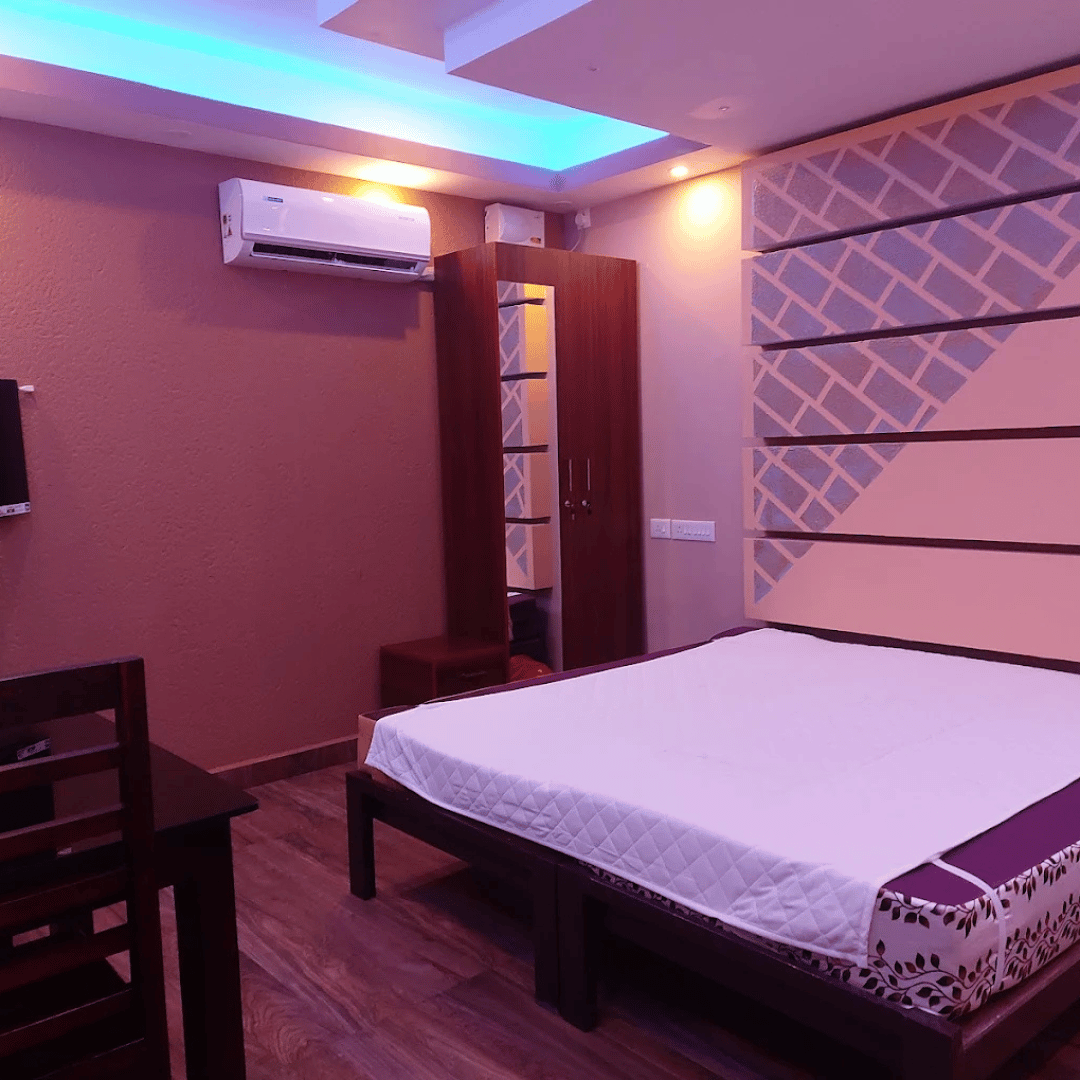
The rooms are simple. They’re not luxury resorts. But the windows are big, and they open directly to the garden. You wake up, and the first thing you see is a coconut frond moving in the breeze. Not a wall. Not a TV screen. A tree.
I’ve had guests tell me they spent an entire morning just watching a chameleon crawl along a branch. That’s the kind of place this is.
Why Does the Island Location Matter?
The island changes everything.
We’re not on the main road. We’re not even on the canal that all the tourist houseboats use. Our island is quieter. Fewer boats pass by. The water is cleaner because there’s less traffic.
Getting here is part of the experience. You drive to a small jetty on the mainland — it’s near a place called Punnamada, about fifteen minutes from the Alappuzha town center. Then you get into our little boat. The boat ride takes exactly six minutes. I’ve timed it hundreds of times.
During those six minutes, the noise of the town fades. The honking stops. The air changes. You start smelling the water, the wet mud, the coconut oil from a nearby kitchen. By the time we reach our jetty, you’ve already decompressed.
That’s why I believe an alleppey homestay with garden view needs to be on an island. The garden is part of it, yes. But the isolation makes the garden feel deeper. More alive. You’re not looking at a garden that backs onto a road. You’re looking at a garden that fades into the backwaters.
Some guests tell me they feel nervous the first night. Too quiet. No city hum. But by the second day, they’re sitting in the garden at dawn, and they don’t want to leave.
I’ve seen grown men cry at the breakfast table. Not from sadness. From relief. Something about this place breaks through the noise they carry around.
What Home-Style Food Can You Expect Here?
Let’s talk about the food. Because honestly, this is what most guests remember longest.
We serve traditional Kerala meals. Home-style. Nothing fancy in presentation, but everything made fresh from ingredients that came from the local market that morning.
The kitchen at our homestay prepares dishes the way they’ve been made here for generations. Karimeen Pollichathu is a favorite — pearl spot fish marinated in a paste of turmeric, red chilies, and coconut, then wrapped in a banana leaf and cooked until the flesh is flaky and fragrant. You eat it with your hands. That’s the only way.
For breakfast, we often make Appam with vegetable stew. The appams are soft and lacy, with a thick center that soaks up the stew. The stew itself is light — coconut milk, carrots, beans, and a hint of ginger and green chili. Not spicy. Comforting.
Puttu and Kadala curry is another staple. The puttu is steamed rice flour and coconut, pressed into a cylinder. The kadala curry is black chickpeas cooked with coconut, mustard seeds, and curry leaves. You crumble the puttu with your fingers and mix it with the curry. Simple. Perfect.
If you’re here on a special occasion, we might prepare a Kerala Sadhya. That’s a full vegetarian feast served on a banana leaf. Twelve to fourteen dishes — sambar, avial, thoran, olan, papadam, pickles, and payasam for dessert. The rice goes in the middle. Each dish goes in a specific spot on the leaf. Eating it is a ritual.
I should mention that the meals here are not spicy unless you want them to be. We can adjust. Just tell us in the morning. The kitchen is flexible.
When people book an alleppey homestay with garden view, they often don’t realize how much the food becomes part of the experience. You eat on the veranda, looking at the garden. The sounds of cooking drift out from the kitchen. The smell of mustard seeds crackling in coconut oil. The steam rising from the rice.
That’s a meal you don’t forget.
Jackson’s Practical Tips for Visitors
I’ve been hosting guests for over a decade now. Here’s what I’ve learned.
- Bring mosquito repellent. I know this sounds obvious, but you’d be surprised how many people forget. We have nets over the beds. We burn neem incense in the evenings. But the garden is lush, and mosquitoes love lush. A good repellent makes your stay ten times more comfortable.
- Don’t plan too much. I see guests arrive with itineraries printed out. Day one: houseboat. Day two: backwater tour. Day three: temple visit. Day four: market. I get it. But this is an island. The best moments here are unplanned. Sit in the garden. Watch the water. Read a book. Talk to us. The itinerary can wait.
- Learn to eat with your hands. Most Kerala food tastes better when you eat it with your right hand. The rice, the curry, the textures — your fingers know how to mix it better than a spoon ever could. We’ll show you how if you’re unsure. Don’t be shy about it.
- Visit the Punnamada market early. If you want to see real local life, wake up at 5 AM and take the boat to the mainland. Walk to the fish market near Punnamada bridge. The boats come in with the night’s catch. The auction is loud, chaotic, and fascinating. Buy some fresh prawns if you want — the kitchen can cook them for your dinner.
- Bring a small flashlight. The island has electricity, but we keep the lighting low at night. The garden paths are dark after 8 PM. A flashlight helps you walk to your room without stepping on a frog or a sleeping cat. Small thing, big difference.
What Is the Best Time to Visit Alappuzha for an Alleppey Homestay with Garden View?
This depends on what you want.
Monsoon — June to September. The garden is at its greenest. Everything is wet and lush. The rain pounds on the tin roof and you hear it all night. I love monsoon. The backwaters swell. The canals rise. The air smells like washed earth. But it’s humid. Really humid. And you might get stuck inside for a few hours if the rain is heavy. If you don’t mind that, monsoon is magical.
Winter — November to February. This is peak season for a reason. The weather is pleasant. Mornings are cool. The garden is still green but not overgrown. You can sit outside from dawn until dusk without sweating. Boat rides are comfortable. Everything is easy. But it’s crowded. The canals have more traffic. Our homestay is quiet because we’re on an island, but the main backwaters are busy. If you want peace, avoid Christmas and New Year week.
Summer — March to May. Hot. Very hot. The garden struggles a bit. The grass dries. But the mangoes are ripe, and the jackfruit is in season. The water in the canals is warm enough to swim in — though I don’t recommend it because of the currents. Most tourists avoid summer, which means you might have the island to yourself. If you can handle the heat, summer has a raw beauty.
Honestly, I think every season has its own character. The garden looks different each time. That’s why I’ve stayed here my whole life. The same place, but never the same twice.
Frequently Asked Questions About Alleppey Homestay with Garden View
How far is the homestay from Alappuzha town?
From the Alappuzha KSRTC bus stand, it’s about twenty minutes by auto to our jetty. Then six minutes by boat. Total journey from town to our door is around thirty to forty minutes, depending on traffic. It’s not far, but it feels like another world.
Is it safe to stay on the island alone?
Very safe. I’ve been on this island my entire life. Everyone knows each other. Crime is essentially nonexistent. We lock the gates at night, but honestly, nobody would think to bother anyone here. Solo travelers — women especially — have stayed with us and felt completely secure. The only danger is falling asleep in the hammock and waking up sunburned.
What should I bring for the garden experience?
Loose cotton clothes. A hat if you burn easily. A book you’ve been meaning to read for months. A camera that isn’t your phone — or at least a phone with a good camera. The garden light changes throughout the day, and the early morning light through the coconut palms is something you’ll want to capture. Oh, and flip-flops. The garden paths are dirt and stone.
Is WiFi available at the homestay?
Yes, we have WiFi. It works reasonably well — good enough for emails, browsing, and video calls. But it’s not fiber optic. If you need to stream 4K movies or run a Zoom conference all day, you might struggle. Honestly, I’d rather you didn’t. The garden is right there. The water is right there. The WiFi is a convenience, not the main attraction.
Can I bring children to the homestay?
Yes, but with some caveats. The garden has a pond, and the canal is unfenced. Younger children need supervision near the water. We’ve had families with kids who loved it — they ran around the garden, fed the fish, tried to catch butterflies. Older children might get bored if they’re used to constant screen time. There’s no pool, no game room, no scheduled activities. Just the island.
—
Look, I’ve been writing for a while now. Longer than I planned. But that’s how it is when I talk about this place.
Our homestay isn’t for everyone. If you want room service, a swimming pool, and air conditioning that freezes the room, you should book a hotel in town. But if you want an alleppey homestay with garden view — a real garden, on a real island, with real home-style food and the quietest nights you’ve ever slept through — then this might be your place.
I don’t say that to sell you. I say it because I’ve seen what happens when guests arrive. They come tense, tired, carrying invisible weight. And then they sit in the garden for an hour. They eat a meal cooked with coconut and curry leaves. They fall asleep to the sound of water.
And something shifts.
That’s what I wanted to create when I started Evaan’s Casa. Not a hotel. Not a resort. A place where the garden is the main attraction, and the rest of the world can wait.
If you ever find yourself in Alappuzha, looking for an alleppey homestay with garden view, you know where to find me. The boat leaves from the Punnamada jetty. I’ll be waiting at the garden gate.
Come see it for yourself.
— Jackson Louis, Evaan’s Casa, Alappuzha
Evaan’s Casa — island homestay in Alleppey