- By :
- Comments: 0
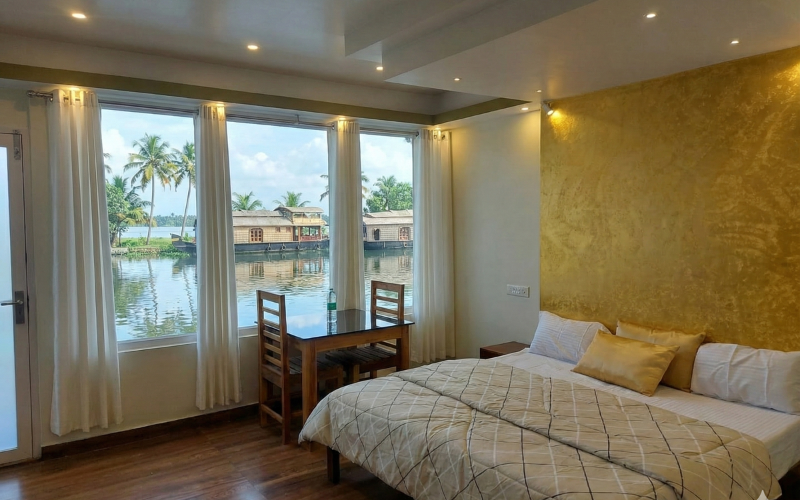
Alleppey district homestay
Last Updated: March 02, 2026
Quick Answer: Alleppey district homestay
- A homestay here is a room in a family’s home on the backwaters, offering a real taste of local life, not just a hotel room.
- Local insider tip from Jackson: The best homestays are on the smaller islands, away from the main canal traffic. You’ll hear more kingfishers than boat horns.
- Why Evaan’s Casa is the right place for this: Our family has lived on this island for generations. We welcome you into our daily rhythm, from morning tea on the verandah to helping pull in the fishing nets.
The first light here is a soft grey, not gold. It seeps through the mist hanging over the water, turning the world into a quiet, monochrome photograph. I sit on our old wooden jetty, my feet almost touching the cool surface. The only sound is the gentle slap of water against the coconut tree roots and the distant, rhythmic knock of a fisherman’s oar against his canoe. This is the Alappuzha I know, the one that exists long before the houseboats stir.
My name is Jackson Louis. My family and I run Evaan’s Casa from the island where I learned to swim. This isn’t a business we built; it’s our home that we share. Every morning, the woodsmoke from our kitchen fire mixes with this mist, a scent that means home more than any other.
What Is an Alleppey District Homestay?
To many, a homestay is just a cheaper hotel. Here, it is something entirely different. It is a key to the backdoor of our lives. You don’t just get a bed. You get a place at our table, stories over evening tea, and the freedom to wander our private paths through the banana groves.
It is the opposite of a packaged tour. There is no reception desk, just our front door. Your wake-up call might be the sound of my mother grinding fresh coconut chutney on the stone. The rhythm is slow, dictated by the sun on the water and the arrival of the vegetable boat from the mainland.
You live within the working heartbeat of the backwaters. You see the nets being mended, the toddy being tapped from the palms, the rice being harvested in the small paddy fields behind the houses. You are not looking at a culture through a window. You are briefly living inside it.
Why Does the Island Location Matter?
Evaan’s Casa is a six-minute boat ride from the nearest jetty. There is no road, no bridge, no scooter noise. That short journey across the water is a threshold. It physically separates you from the rush of the town and the main tourist routes.
The isolation is gentle, not harsh. You are not stranded. We make regular trips for supplies and you can always go across. But the choice to return to the quiet is powerful. At night, the darkness is profound, broken only by lantern light and a sky dense with stars you can’t see from the town.
This island life creates a different pace. Plans become fluid. A sudden rain shower isn’t an inconvenience; it’s a reason to sit on the verandah and watch the lake surface dance. A visit depends on the boat’s availability, not a taxi meter. You learn to move with the elements.
The soundscape changes completely. The dominant hum is not traffic, but life. The buzz of dragonflies, the quarrel of pond herons, the rustle of palm fronds in the afternoon breeze. The putter of a passing vallam boat becomes an event, not background noise.
What Food Can You Expect Here?
You will eat what we eat. Every meal is cooked in our kitchen, with flames licking the bottom of well-used clay pots. The smell of mustard seeds crackling in coconut oil is the signature scent of our afternoons. We don’t have a menu; we have a harvest and a catch.
Breakfast might be soft, steamed puttu with kadala curry, the chickpeas simmered with roasted coconut. Or perhaps fluffy appams with a sweet, creamy stew. The coconut milk is squeezed fresh that morning. You can taste the difference.
Lunch is often the star. If the catch is good, you might have Karimeen Pollichathu. A pearl spot fish marinated in spices, wrapped in a banana leaf, and cooked over coals. The leaf infuses the flesh with a smoky, earthy fragrance that no foil packet can ever match.
On special days, my mother prepares a Sadhya on a fresh banana leaf. Dozens of small dishes, from tart mango pickle to creamy avial, each with its own balance. You eat with your fingers, feeling the textures, mixing the flavors as you go. It is a feast for the senses.
Evening tea is a ritual. Strong, milky chai served with something small and sweet—maybe a crispy banana fritter or a piece of coconut cake. We sit and watch the water change colour as the day ends. This is when the best conversations happen.
Jackson’s Practical Tips for Visitors
Coming to an island homestay requires a slight shift in thinking. Pack light, but pack smart. Here is what I tell every guest who asks.
- Your bag should be a soft bag or backpack, not a hard suitcase. It is much easier to handle in a narrow country boat when you’re crossing the water.
- Bring sturdy, slip-on shoes. You’ll take them off constantly at our door. Also, sandals you don’t mind getting wet and muddy for walks along the bunds.
- Mosquito repellent is a must, but so is a light long-sleeve shirt for the evenings. The natural barrier is often as good as the chemical one.
- Carry cash. While we can sometimes manage digital payments, network on the island is fickle. Small bills are best for buying honey or bananas from neighboring homes.
- Leave your formal itinerary behind. Be open to what the day offers—a chance to go crab catching, or simply to do nothing at all in a hammock.
What Is the Best Time to Visit Alappuzha for a Homestay?
Every season paints the backwaters a different colour. Your preference depends on what you want to feel.
The monsoon (June to August) is for the bold. The rain is not a drizzle; it is a roaring, vertical cascade that turns the lake into a bubbling, living thing. The air smells of wet earth and blooming jackfruit. Everything is a shocking, saturated green. It is wildly beautiful, deeply quiet, and wonderfully introspective.
Winter (September to February) is what most postcards capture. The sky is a clear, brilliant blue. The water is calm, perfect for long canoe trips through narrow canals. The nights are cool, ideal for sleeping with the windows open to the sound of water. This is the peak season, full of vibrant energy and perfect weather.
Summer (March to May) is strong and bright. The days are hot, but the breeze off the water and the shade of our trees offer relief. This is when the local life is most visible—fishing, coir-making, the rhythm of village work. The light is harsh but beautiful, glittering off the water in the late afternoons.
My personal favourite is the very end of the monsoon, or the very start of winter. You get the lushness of the rains, but with more breaks of sunshine. The crowds haven’t yet arrived. It feels like the backwaters are taking a deep, green breath.
Frequently Asked Questions About Alleppey Homestays
How do we get to your island homestay?
We coordinate it all. You come to the main boat jetty in Alappuzha town and message me. I will come to pick you up in our family boat. The ride is six minutes. Look for the man with a big smile waving from a blue and white boat.
Is it safe for families with young children?
Yes, absolutely. Our island is a safe, contained space with no traffic. Children love the freedom. But the water is everywhere, so constant supervision near the edges is essential. We have life jackets for everyone for boat trips.
What should we pack that we might not think of?
A small flashlight or headlamp for walking the paths at night. A refillable water bottle. And a power bank for your phone—while we have electricity, charging points in your room might be across from where you want to sit and read.
What is a realistic daily budget for food and activities?
At Evaan’s Casa, your room and all home-cooked meals are included. Budget separately for activities like a private sunset canoe trip (around 1500 INR) or a visit to the local coir workshop. Daily extras per person can be as low as 500 INR if you keep it simple.
So, that is a glimpse of life here on our little piece of the world. It is not luxurious in the marble-and-chrome sense. It is luxurious in the way the morning silence feels, or in the taste of a fish that was swimming hours before. It is the luxury of belonging, just for a little while. We are here, on our island, with the kettle always on. We hope to welcome you home.