- By :
- Comments: 0
green homestay Alappuzha
green homestay Alappuzha
Last Updated: August 15, 2026
Quick Answer: green homestay Alappuzha
- A green homestay in Alappuzha means staying on a car-free island, where your day follows the lake’s rhythm, not a clock.
- Take the 8:15 AM public ferry from the Alappuzha jetty if you want to see how we actually commute — it costs ₹8 and drops you at our island’s landing.
- Evaan’s Casa fits this because we run on solar power, compost our kitchen waste, and grow a chunk of our own vegetables beside the paddy fields.
The first thing guests say isn’t about the view. It’s about the silence. Not a heavy silence, but a light one, filled with the lap of water against the stilts and the odd call of a kingfisher. You wake up here and realise there’s no traffic, no horns, no city hum. Just birds and the gentle creak of coconut palms.
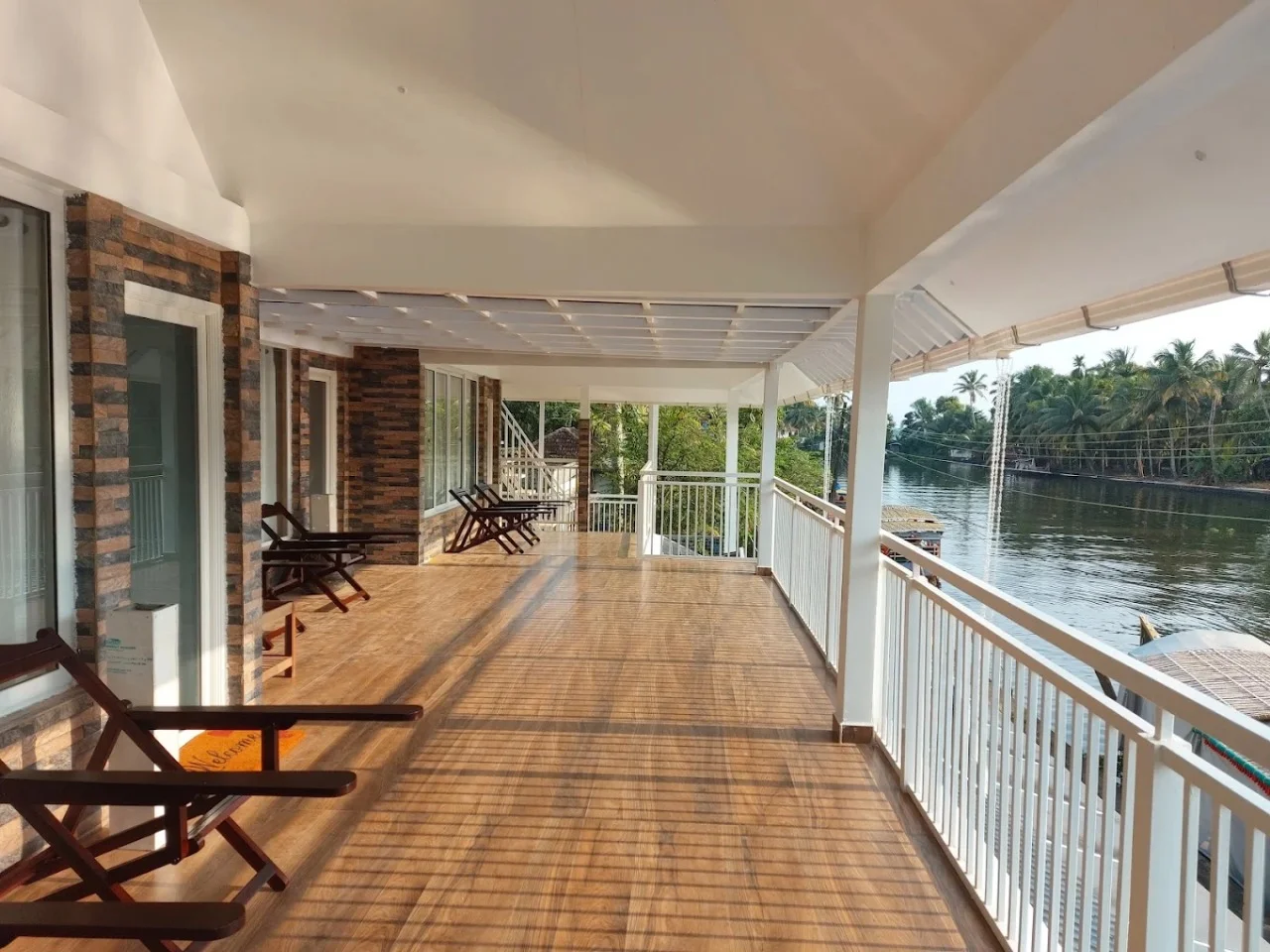
I’m Jackson. I grew up on these backwaters, on this very island, and I’ve watched the seasons change the water’s colour a thousand times. Our place, Evaan’s Casa, sits at the edge of a paddy field, with the veranda hanging right over the lake. You reach us by a six-minute boat ride. There’s no road, no bridge. That’s the whole point.
What is a typical day at green homestay Alappuzha like?
Honestly, a typical day here doesn’t start with a plan. It starts with sound. The first boat engine hums across the water around 5:30 AM, a low diesel drone from a fisherman heading out to check his nets. It’s not annoying. It’s like a pulse, a reminder that life here moves with the water, not against it.
By six, the light turns gold, then honey, then clear. The paddy fields on the opposite bank catch the sun first. You’ll hear the coppersmith bird before you see it — a metallic, rhythmic *tonk-tonk-tonk* that sounds like a tiny blacksmith. I’ve heard it every morning for forty years, and it still feels like the day’s first blessing.
Breakfast is served on the veranda, usually around eight. We do a proper Kerala spread — soft idli, sambar with fresh coconut chutney, and a strong cup of local filter coffee that’s dark as the lake bed. Most people skip the tourist buffet and just eat here, watching the water taxis slide past. Some guests bring a book and stay for an hour. That’s fine. There’s nowhere to rush to.
The morning settles into its own shape. There’s no schedule, but the island has a rhythm. Around 10 AM, the women from the neighbouring village paddle their small canoes to the mainland, their sarees bright against the green water. You might see a monitor lizard sunning itself on a fallen palm trunk. Most people miss that. They’re too busy looking for the “perfect shot” to notice the little things.
What are the mornings like on the island?
Mornings here are wet, in the best way. The dew doesn’t just settle on the leaves; it soaks the entire island. By 7 AM, the air is thick with the smell of wet earth and crushed grass. The paddy fields, still young and bright green, stretch out like a living carpet. If you walk the bund (the narrow path between fields), your slippers will come back mud-caked. That’s a good thing.
The kitchen starts working around 9 AM. You’ll smell mustard seeds popping in coconut oil, a sound and scent that carries across the water. It’s not a fancy aroma, but it’s honest. It tells you lunch is coming, and lunch is always worth the wait. We do home-style Kerala food — fish curry with kadumanga (the sour little mango pickle), thoran made from the greens we grow behind the house, and rice that’s steamed fresh.
Around 11, the heat builds. The lake goes glassy, and even the birds go quiet. This is the time for a hammock, a ceiling fan, and maybe a nap. Some guests read. Others just watch the clouds pile up over the mainland. The mongoose that lives in the coconut grove makes his rounds. He’s shy, but he’s punctual.
Most people skip this part, but I’ll tell you: the best time to swim is late morning. The water hasn’t warmed up yet, and it’s clear enough to see your toes. We have a little ladder off the back veranda, and honest to god, nothing resets the brain like floating in black water with nothing but green all around you.
How do the evenings wind down here?
Evenings here are slow, then they’re loud, then they’re slow again. Around 4 PM, the shadows stretch long across the paddy, and the air cools just enough to make the veranda the best seat in the house. The herons come back from their day posts. The cormorants dry their wings on the bamboo poles. You’ll hear the faint thump of a boat motor in the distance, but it’s like a lullaby, not an interruption.
Sunset is the main event. Not because it’s dramatic — it rarely is — but because the whole island seems to pause. The water turns silver, then pink, then a deep bruised purple. The fishermen in their wooden vallams row past, their silhouettes sharp against the fading light. If you’re lucky, an otter family will surface near the stilts, chattering among themselves like gossiping aunties.
Dinner is served around 7:30 PM, when the fireflies start their own quiet show. We light a few oil lamps on the veranda, and the mosquitoes stay away just enough. The food is simpler at night — maybe a light curry, some rice, a vegetable stir-fry from the garden. It’s not a performance. It’s just a meal, eaten slowly, with the sound of water licking the wood beneath your feet.
By 9 PM, the island goes dark. Not city-dark, but deep, honest dark, where the stars actually show up. The last boat leaves the jetty around 8:45, and after that, you’re here, truly here. Some guests sit on the veranda with a glass of chai and just listen. The frogs start their chorus. The water laps. A distant dog barks. Then it’s quiet.
One thing I’ll say, and some guests disagree, and that’s fair — the nights here are the real gift. Not the photos, not the sunsets, not even the food. It’s the moment you step outside at midnight and the Milky Way is right there, because there’s no light pollution for miles. You can’t buy that. You can only be here for it.
If you’re looking for a green homestay in Alappuzha that’s actually green — not just a buzzword — that’s us. We run on solar, we compost, we grow our own vegetables, and we don’t have a single car on the island. It’s not a luxury resort. It’s a real place, with real rhythms, and we’re proud of that. You can read more about how we live over at Evaan’s Casa, but honestly, the best way to understand is to just sit on the veranda for an hour and watch the water move.
Frequently Asked Questions About green homestay Alappuzha
How far is the homestay from the Alappuzha town centre?
The town jetty is about 25 minutes by boat from our island. It’s a direct ride, no transfers. You’ll take a shared boat or a private canoe, and we’ll send someone to guide you from the landing point. It’s close enough for a day trip to the town, but far enough that you’ll forget it exists.
Is it safe for solo travellers and families with kids?
Yes, very. The water is calm, the island is small, and everyone here knows each other. Kids love the boats and the otters, but we do ask that you keep an eye on little ones near the veranda edge. Solo travellers often stay longer than planned because the quiet gets addictive.
What should I bring for a stay on the island?
Light cotton clothes, a hat, sunscreen, and mosquito repellent for the evenings. Flip-flops for the muddy paths, and one proper pair of shoes if you want to walk the bund. A torch is handy for night walks. And a book. You’ll actually finish it here.
Is WiFi available at the homestay?
We have a decent connection in the main area, but it’s not fibre-optic fast, and it doesn’t reach every corner of the property. Some guests love that. A few have to work, and they manage fine. But if you’re coming to disconnect, you’ll have no trouble doing that either. The signal is just enough to upload a photo, not enough to scroll for hours.
Look, I’m probably biased, but I don’t think there’s anywhere else quite like this. It’s not about what we’ve built — it’s about what we’ve left alone. The paddy fields, the palms, the water that turns every colour in a day. You don’t come here to do things. You come here to be somewhere.
If you ever find yourself in Kerala, and you’re tired of the noise, come see us. Take the boat, step onto the island, and let the silence do the rest. You’ll know our place — it’s the one with the green roof, the friendly dog, and a veranda that’s always open. We’ll keep the chai warm. Check our Evaan’s Casa page for the latest, or just write to me. I’m usually on the veranda anyway.
Plan your stay at Evaan’s Casa
- Lake view homestay in Alleppey (Alappuzha)
- Where to stay in Alleppey: the complete guide
- Alleppey room booking: rooms and prices from ₹1,900
- Budget homestay in Alleppey under ₹2,000
- Backwater homestay on Vembanad Lake
- Punnamada homestay, Alappuzha
- Family homestay in Alleppey
- Honeymoon package and couple stay
Book direct on WhatsApp +91 88484 96667