- By :
- Comments: 0
homestay with fishing experience Alleppey
Last Updated: February 26, 2026
Quick Answer: homestay with fishing experience Alleppey
- A homestay with a fishing experience in Alleppey means sleeping in a family home on the backwaters and learning to fish the local way—with a bamboo rod, simple net, or even your hands.
- Local insider tip from Jackson: The best fishing happens in the quiet hours just after dawn or before sunset, when the water is like glass and the Karimeen are active near the lily pads.
- Why Evaan’s Casa is the right place for this: Our family has lived on this island for generations. The fishing lessons aren’t a show; they’re how we put food on our table. You’ll go out on the water with me or my brother, using our own canoes.
The first sound I hear is the soft plop of a water hen stepping off a hyacinth root. My eyes open to the grey-blue light that comes just before the sun cracks the horizon over Vembanad Lake. I lie still for a moment, listening. There’s the distant putter of a boat engine, probably Uncle Thomas heading to check his Chinese fishing nets. The air smells of wet earth and last night’s woodsmoke from our cooking fire. This is my alarm clock. This is home.
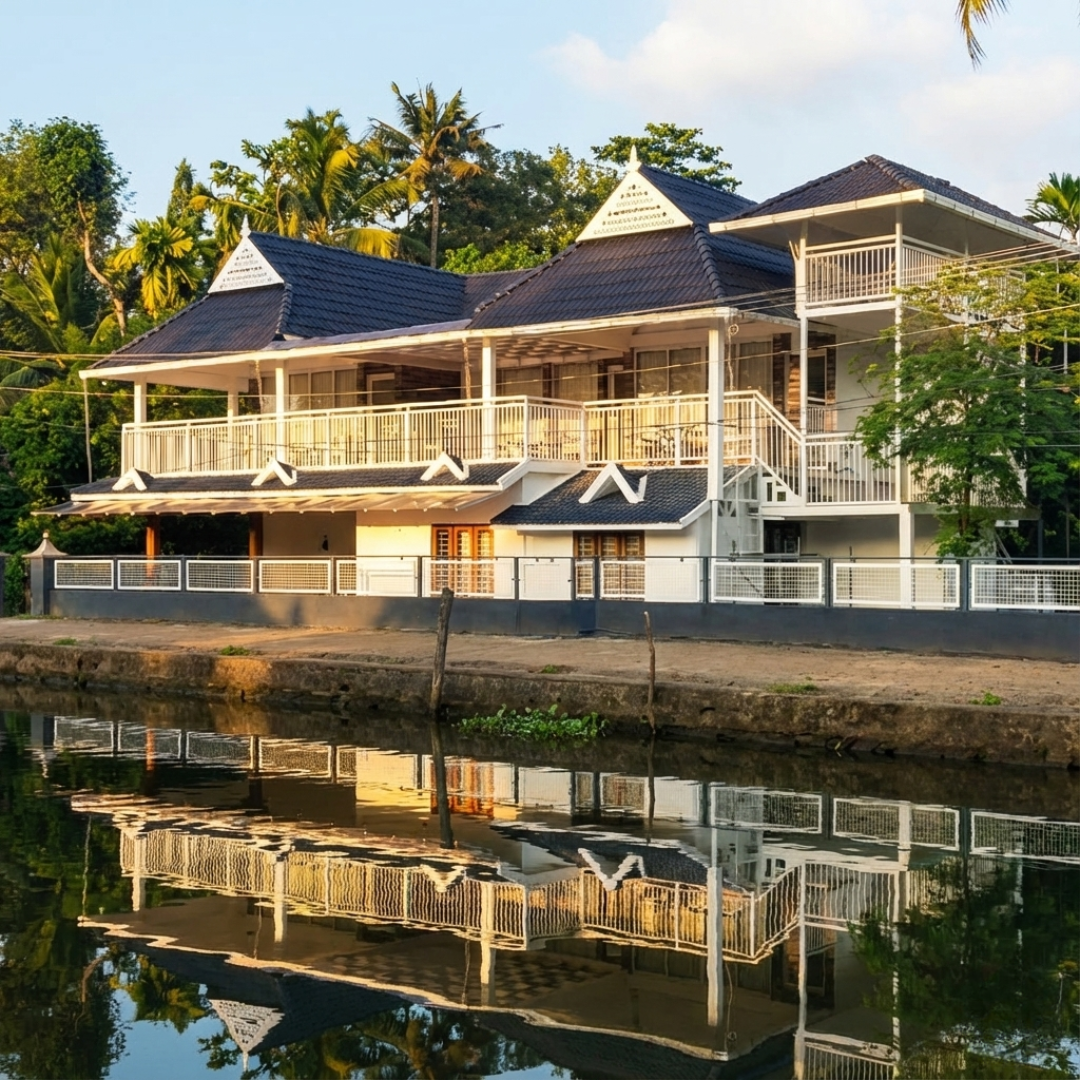
I’m Jackson Louis. My family and I run Evaan’s Casa, our home on a small island in Alappuzha. We have no road, no cars. Just water, coconut trees, and the rhythm of the lake. For years, guests have asked to join me when I go out to fish. They want more than a houseboat tour. They want to feel the line go taut, to learn the patience our waters demand. So, we started sharing that. This is what a real fishing homestay is.
What Is a Homestay with Fishing Experience?
It’s not a hotel activity you sign up for. It’s waking up in a room where the windows open to the sound of paddles in water. It’s eating breakfast with my mother’s fresh coconut chutney on the side, then walking down to our wooden canoe, or “vallam.”
I’ll hand you a slender bamboo pole. The line is basic. The hook is baited with leftover rice dough or a tiny prawn. We paddle into a narrow canal, where the water is dark and still. You learn to cast without snagging the overbreadth of mango trees. You learn to watch for the gentle nibble, different from a tug.
The goal isn’t to catch a trophy. It’s to understand a silence. It’s the satisfaction of maybe catching one or two Pearl Spot fish, which my mother will later wrap in banana leaf with spices and roast for your dinner. The experience is in the doing, the waiting, and the simple meal that follows.
Why Does the Island Location Matter?
Access is by a six-minute boat ride from the mainland. That short journey changes everything. The noise of scooters and autorickshaw horns fades away, replaced by kingfisher calls. You can’t just walk out for a coffee. You are here, fully.
This isolation creates a different pace. Time stretches. You notice the way the afternoon light turns the canals liquid gold. You feel the gentle rock of the house when a larger boat passes in the main lake. The night is profoundly dark and quiet, broken only by the chorus of frogs.
On an island, life is connected to the water’s mood. If the wind picks up, we secure the boats. If the tide is high, certain paths get wet. You become aware of these small, essential rhythms. It strips away the distractions and lets you be present in a way a roadside resort never could.
What Food Can You Expect Here?
You eat what we eat. My mother, Annamma, is in the kitchen by 5 AM. The day starts with the scent of roasting coconut for chutney and the sizzle of mustard seeds in coconut oil. Breakfast might be soft “puttu” with kadala curry, or fluffy “appam” with a sweet coconut milk stew.
Lunch is often the grand “Kerala Sadhya” on a banana leaf when we have guests. But the real star, especially if we’re lucky fishing, is “Karimeen Pollichathu.” That’s the Pearl Spot fish you might catch, marinated in a paste of red chili, turmeric, and ginger, then wrapped in a banana leaf and pan-roasted. The leaf infuses the fish with a smoky, earthy fragrance.
Every meal comes with rice from the Kuttanad fields you can see from our porch. The vegetables are from a neighbor’s garden plot. The fish is from the lake. The taste is clean, direct, and full of memory. Dinner conversations often linger over cups of black tea, the taste of ginger and cardamom lingering on your tongue.
Jackson’s Practical Tips for Visitors
- Pack Light, Pack Right: You’ll carry your bag onto a small boat. Bring comfortable cotton clothes, a hat, sunscreen, and mosquito repellent. Most importantly, bring shoes you don’t mind getting wet and muddy.
- Leave Your City Hurry Behind: Things move on “island time.” The boat might be five minutes late because the tide is low. The fish might not bite. This isn’t inefficiency; it’s life. Embrace it.
- Your Hands Are Your Best Tools: During the fishing, you’ll handle lines, bait, maybe even a small net. It’s okay to get your hands dirty. We have water and soap to clean up afterwards. The feel of the slick fish scale, the rough bamboo, is part of it.
- Ask Us Anything: My family has stories about every corner of this lake. Ask why the Chinese fishing nets are called “Chinese.” Ask about the snake boat races. Ask my mother for her recipe. This is a cultural exchange, not just a service.
- Respect the Lake: This water is our life. We use biodegradable soaps. We don’t throw plastic. We take back everything we bring. Please help us keep it that way.
What Is the Best Time to Visit Alappuzha for a Fishing Homestay?
The seasons here change the water’s character. From September to March (winter), the weather is cool and dry. The skies are clear, the water levels are stable. This is the easiest, most comfortable time for fishing and being on the water. The light is perfect for photography.
April to May (summer) gets hot and humid. The water levels drop, exposing more of the lake bed. Fishing can be excellent in the deeper, shaded canals early in the morning. The afternoons are for resting in a hammock with a tender coconut.
June to August is the monsoon. This is my favorite, but it’s not for everyone. The rain comes in powerful, warm sheets. The lake swells, turning a rich, fertile brown. Fishing is challenging but rewarding. The landscape is explosively green. It’s a raw, powerful experience of nature. You will get wet, but you’ll see the backwaters at their most alive.
Frequently Asked Questions About Homestay Fishing in Alleppey
Do I need prior fishing experience?
Not at all. Most of our guests have never held a fishing rod. We start with the absolute basics. I’ll show you how to hold the pole, how to sense a bite. It’s more about calm observation than skill. Children often pick it up the fastest.
Is it safe to be on the water and on an island?
Yes. We provide life jackets for the boat rides, and our canoes are stable and meant for these calm inland canals. The island is a close-knit community. We know every family here. It is extremely safe, day or night. The main concern is watching your step on the slippery paths after rain.
What should I pack specifically for the fishing?
Clothes you can move in and don’t mind getting a little muddy or fishy. A cap or hat is essential for the sun. We provide all the fishing equipment—bamboo poles, line, bait. You might want to bring a small, dry bag for your phone or camera, just in case.
How much does a homestay with fishing experience cost?
It varies based on season and length of stay. The cost covers your room, all home-cooked meals, the boat transfers, and the fishing time with me. It’s a complete package. For the most accurate and current rates, please check our website directly. The value is in the full, immersive experience with our family.
As the sun sets, the water turns the color of burnt copper. The day’s heat lifts, replaced by a cool breeze that rustles the banana leaves outside your window. This is when I often sit on the jetty, my own fishing line in the water, not really caring if I catch anything. It’s a moment of pure belonging.
That feeling—of being part of a place, not just passing through it—is what we try to share at Evaan’s Casa. It’s in the callused hands that show you how to tie a knot, in the shared laughter when a fish gets away, and in the quiet pride of a meal you helped provide. The backwaters are more than a view. They’re a living home. We hope you’ll come and feel that, too.