- By :
- Comments: 0
Alleppey homestay with speed boat
Last Updated: February 27, 2026
Quick Answer: Alleppey homestay with speed boat
- An Alleppey homestay with a speed boat is a family-run stay on the backwaters that includes private, fast boat transfers and tours, letting you skip the crowded public jetties and go deeper into the canals.
- Local insider tip from Jackson: The real magic isn’t just the speed, but the freedom it gives you. We can stop for fresh toddy from a riverside hut or chase a kingfisher down a narrow canal most big boats can’t enter.
- Why Evaan’s Casa is the right place for this: Our family home is on a private island, only reachable by our 6-minute speed boat ride. The boat and captain are part of your stay, ready when you are for sunrise coffee rides or sunset explorations.
I remember the sound of our speed boat cutting through the still, pre-dawn water. The air was cool and carried the damp, green smell of water hyacinth. My father was at the helm, taking me to the mainland for school, the engine’s purr the only sound for miles.
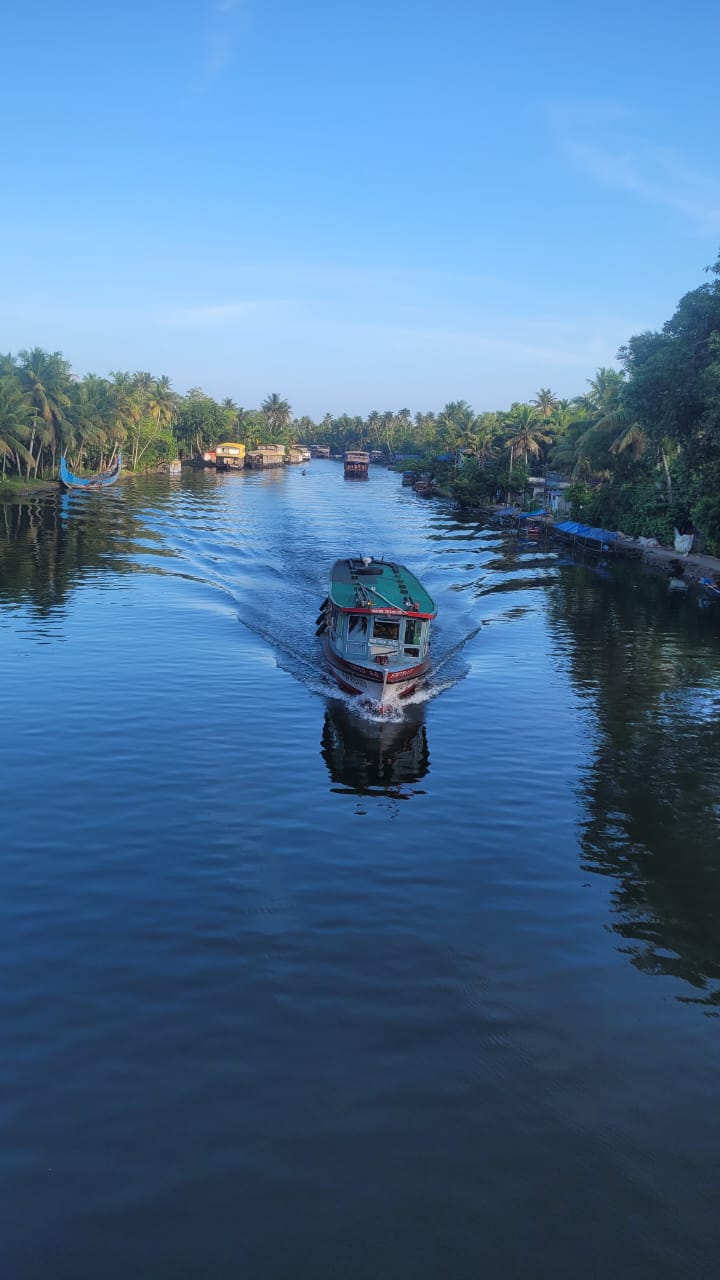
That same boat, now piloted by my cousin Anoop, meets every guest who chooses our home. It’s the first taste of the freedom you get here. The mainland noise fades behind you in minutes, replaced by the splash of the bow wave and the call of a pond heron.
What Is an Alleppey Homestay with Speed Boat?
Let me explain it as we do here, without fancy words. It’s a home, not a hotel, where a family lives with you. The speed boat is your personal key to the backwaters. It’s how you arrive, depart, and explore on your own terms.
This is different from a houseboat package. You sleep in a solid, quiet house on land, with a proper bed and a ceiling fan. Your days are spent on the water in a nimble fiberglass boat. You feel the spray on your face as you move.
The boat is included, not an extra charge. It waits at our small jetty, ready for a morning ride to see the lotus flowers open or an evening trip to find otters. The schedule is yours. You tell us when you want to go, and we’ll take you.
Why Does the Island Location Matter?
Our home is on a small island, a *thuruthu* as we say. There are no roads, no cars, not even the constant buzz of a scooter. The only way in or out is by water. That changes everything.
The six-minute boat ride from the pickup point isn’t just transport. It’s a decompression chamber. You physically leave the busy world behind. Your phone might still have signal, but your mind already starts to slow down.
You wake up to the sound of water lapping at the laterite stone wall, not honking. The isolation feels peaceful, not lonely. You are surrounded by the life of the lake—fishermen casting nets at dawn, coir ropes drying in the sun, the gentle putter of a distant canoe.
This island is my childhood playground. Every mango tree and narrow footpath has a story. That sense of place, of being in a real family home rooted in this specific patch of earth and water, is what we share.
What Food Can You Expect Here?
The food comes from my mother’s kitchen. The day starts with the sizzle of mustard seeds in coconut oil for the *sambar*. You’ll smell it from your room, mixed with the woodsmoke from the hearth.
Breakfast might be fluffy *appam* with a creamy coconut milk stew, or *puttu* with kadala curry. Lunch is often the star. We might grill a Pearl Spot fish—*Karimeen Pollichathu*—wrapped in a banana leaf with spices. The leaf blackens, sealing in the steam and flavour.
If you’re with us on a festival day or we have a reason to celebrate, you might experience a proper Kerala Sadhya. Dozens of small dishes served on a banana leaf: tangy mango pickle, crisp pappadam, creamy avial, and sweet payasam. You eat with your fingers, the way it’s meant to be tasted.
Every meal is served with a view of the water. You’ll taste the freshness of the coconut we crack open that morning and the curry leaves plucked from the garden. It’s simple, hearty, and cooked with the care you’d give to your own family.
Jackson’s Practical Tips for Visitors
- Pack light, soft bags. Our speed boat has space, but a hard-shell suitcase is difficult to manage on the jetty and in the boat.
- Bring a light cotton shawl or long sleeves for the evening. The boat ride back after sunset can get cool, and it keeps mosquitoes away.
- Carry cash. While we can arrange most things, the small village shops and toddy huts we might stop at on a ride only take rupees.
- Please, leave your formal shoes. Barefoot or sandals is the way here. The floors are cool tile, the paths are soft earth.
- Tell us your curiosities. Want to see how coir is made? Curious about local fishing? We can weave it into your boat ride. The experience at Evaan’s Casa is shaped by your questions.
What Is the Best Time to Visit Alappuzha for a Speed Boat Homestay?
The seasons paint the backwaters in different colours. From June to August, the monsoon arrives. The rain is heavy and warm, turning everything a brilliant green. The water levels rise, and we can take the speed boat down lanes usually reserved for canoes.
This is a powerful, lush time. The air smells of wet earth and blooming jackfruit. It’s not for everyone, as the rain can be persistent, but for those who love a dramatic, quiet landscape, it’s profound.
September to March is our golden period. The skies clear to a deep blue. The humidity drops. The water is calm, perfect for long, meandering rides to watch the migratory birds. This is the most popular time, with vibrant, sunny days and cool nights.
April and May are hot and still. The sun is strong, but the mornings and evenings on the water are beautiful. Life moves slowly. It’s a good time to simply be, to sit on the veranda with a book and a tender coconut, watching the dragonflies.
Frequently Asked Questions About Alleppey Homestays with Speed Boat
How far in advance should I book?
We are a small family home with only a couple of rooms. For the winter months (November to February), try to book at least two to three months ahead. For other times, a few weeks is usually fine, but it’s always best to check soon.
Is the speed boat ride safe for young children and older people?
Yes, we carry life jackets for all ages. The boat is stable, and our captains are experienced. We help everyone on and off at the jetty. For the very young or elderly, we simply go a bit slower and choose calmer routes.
What should we absolutely not forget to pack?
Sunscreen, a hat, and a power bank. The sun on the water is fierce, even on cloudy days. While we have electricity, a power bank is handy for your phone during long boat explorations. And binoculars, if you have them, for the birds.
What is included in the cost, and what is extra?
Your room, all meals from lunch on arrival to breakfast on departure, and unlimited use of our speed boat for transfers and sightseeing are included. Extra costs would be things like alcoholic beverages, specific long-distance trips, or ayurvedic treatments we can arrange.
So, that’s a glimpse of life here from my perspective. It’s the simplicity of a shared meal, the thrill of the wind in your hair on an open-water stretch, the deep quiet of an island night. It’s not a packaged tour, but a few days living at the pace of the water.
If this sounds like your kind of travel—slow, personal, and connected to the rhythm of a place—then you might find your peace here with us. We’d be honoured to share our corner of the backwaters with you. You can see more of our story and our home at Evaan’s Casa.