- By :
- Comments: 0
kerala backwater destinations homestay
Last Updated: May 19, 2026
Quick Answer: kerala backwater destinations homestay
- A kerala backwater destinations homestay is a locally-run accommodation on or near the canals, lagoons, and lakes that form the backwater network — not a hotel or resort. You live with the rhythms of water life, eat traditional home-style food, and get direct access to places like Alleppey, Kumarakom, and Kollam.
- Local insider tip from Jackson: Most visitors book houseboats for a night and miss the real backwater experience. Stay on an island homestay for at least two nights. You’ll wake to the sound of water lapping against the bund, watch fishermen cast their nets at dawn, and eat meals cooked with ingredients grown within a kilometer of your room. That’s the Kerala I grew up in.
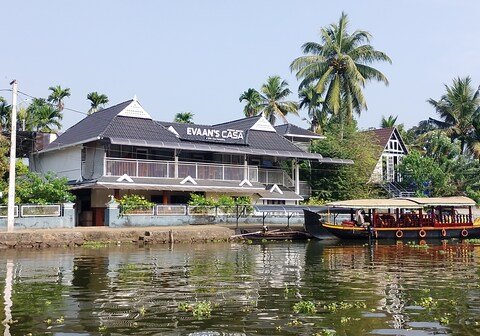
- Why Evaan’s Casa fits this search intent: We’re on a real island in the middle of Vembanad Lake, reachable only by a six-minute boat ride. No road noise. No crowds. Just coconut palms, water birds, and home-style Kerala food prepared in our kitchen. It’s exactly what a kerala backwater destinations homestay should feel like — quiet, personal, and deeply connected to the water.
The first light comes gray and soft over Vembanad Lake. I’m standing on the narrow veranda of our homestay, watching a cormorant dry its wings on a floating branch. The air smells of wet earth and the faint woodsmoke from a neighbor’s morning fire. A canoe drifts past, silent except for the dip of a wooden paddle. This is how I’ve started my days since I was a boy, long before I ever thought I’d be hosting guests from halfway across the world.
I’m Jackson Louis. I run Evaan’s Casa, a small island homestay in Alappuzha — what most people still call Alleppey. And if you’ve been searching for an authentic kerala backwater destinations homestay, I want to tell you what that actually means. Not from a travel brochure. From here, on the water, where the only way to arrive is by boat.
What Is a kerala backwater destinations homestay?
Look, here’s the thing. A kerala backwater destinations homestay isn’t a hotel that happens to be near water. It’s not a resort with a pool shaped like a lagoon. It’s a home — someone’s actual home — where you stay as a guest, eat food prepared the same way it’s been made for generations, and live inside the landscape rather than just looking at it from a balcony.
The backwaters of Kerala are a network of canals, rivers, lakes, and inlets that run parallel to the Arabian Sea. They stretch from Kochi down to Kollam, with Alappuzha sitting right in the middle of it all. A homestay here means you’re not just visiting the backwaters. You’re living on them. You wake up and the water is right there. You step outside and the air is cooler, the sounds are different, and time moves at the pace of a rowboat, not a car engine.
I’m probably biased, but I believe the best kerala backwater destinations homestay experiences happen on the small islands. The ones with no road access. The ones where your luggage comes by boat and so do you. That’s what we offer at Evaan’s Casa, and it’s what I’d recommend to anyone who wants to feel the backwaters rather than just see them.
Why Does the Island Location Matter?
Most people who visit Alleppey book a houseboat for one night. They float down the canal, eat a meal, sleep in an air-conditioned cabin, and wake up back at the dock. That’s fine. It’s popular for a reason. But it’s not the same as staying on an island.
Our island is a six-minute boat ride from the mainland. There’s no bridge. No road. When you arrive at the jetty in Alappuzha town, you call me, and I come get you in our small boat. The ride is short but it changes everything. The noise of town fades. The air clears. By the time you step onto our island, you’ve already left the world behind.
That isolation is the point. A true kerala backwater destinations homestay should feel like you’ve arrived somewhere real, not just another stop on a tour. On our island, you’ll hear birds calling across the water in the morning. You’ll see kingfishers dive for their breakfast. At night, the only light comes from the homestay and the stars. There are no street lamps out here.
Some guests tell me they felt nervous the first night. Too quiet. Too dark. But by the second morning, they’re sitting on the veranda with a cup of chai, watching the water change color as the sun rises, and they understand. This is why people come to Kerala. This is what a kerala backwater destinations homestay is supposed to be.
What Home-Style Food Can You Expect Here?
Alright. Let’s talk about food, because honestly, this is what most of my guests remember best. At Evaan’s Casa, we serve home-style Kerala food prepared in our kitchen using ingredients that come from our own garden or from the local market in Alappuzha town. I’m not going to tell you who does the cooking — that’s not my style. What I will tell you is what you’ll eat and how it tastes.
Breakfast is usually Puttu and Kadala curry. Puttu is steamed cylinders of rice flour and grated coconut, light and fluffy, with a slight sweetness from the coconut. The Kadala curry is black chickpeas cooked in a thick, spiced coconut gravy. You eat it with your hands, mixing the soft puttu with the rich curry. There’s also fresh banana from our garden on the side. Simple. Perfect.
For lunch, you might get a proper Kerala Sadhya. This is a traditional meal served on a banana leaf. There’s rice in the center, and around it come small servings of sambar, rasam, avial (mixed vegetables in coconut and yogurt), thoran (stir-fried vegetables with grated coconut), pachadi (a yogurt-based side), and at least two or three different types of pickles. The banana leaf amplifies the flavors. You eat with your right hand, folding the rice and curry together with your fingers. It’s messy and it’s wonderful.
Dinner often features Karimeen Pollichathu. Karimeen is pearl spot fish, a local favorite from these backwaters. It’s marinated in a paste of chili, turmeric, ginger, garlic, and coconut, then wrapped in a banana leaf and pan-fried. The banana leaf steams the fish while the outside gets slightly charred. When you unwrap it, the aroma hits you first — smoky, spicy, earthy. The flesh is flaky and tender, soaked in the marinade. We serve it with steamed rice and a simple salad of cucumber and coconut.
Appam with vegetable stew is another regular. Appam are lacy, bowl-shaped rice pancakes with a soft, spongy center and a crispy edge. The stew is mild — coconut milk base, carrots, potatoes, beans, and whole spices like cinnamon and cardamom. You tear a piece of appam, dip it in the stew, and let it soak up the liquid. It’s comfort food, Kerala-style.
And always, always there’s fresh coconut chutney. Grated coconut ground with green chilies, ginger, and a squeeze of lime. Sometimes tempered with mustard seeds and curry leaves in coconut oil. That sound — mustard seeds crackling in hot oil — is the sound of our kitchen. Every meal has it.
This is what I mean when I say home-style food. It’s not restaurant cooking. It’s not fancy plating. It’s food made with care, using what’s fresh and local, served the way it’s been eaten in these parts for centuries. If you stay at a kerala backwater destinations homestay like ours, this is what you’ll get. And I promise you, you’ll miss it when you leave.
Jackson’s Practical Tips for Visitors
I’ve been hosting guests for years now, and I’ve seen the same questions come up again and again. Here are some honest tips from someone who lives here.
- Stay at least two nights. Most people book one night and regret it. The first day you’re still adjusting. The second day you relax. The third day you start to really feel the place. If you can manage three nights, even better. A proper kerala backwater destinations homestay experience needs time to unfold.
- Bring mosquito repellent. I’m not trying to scare you, but we’re on an island surrounded by water. Mosquitoes exist. We provide nets and coils at the homestay, but having your own repellent gives you peace of mind, especially in the evenings when you’re sitting outside.
- Don’t plan too much. The worst thing you can do is arrive with a detailed itinerary. The backwaters don’t work that way. Leave room for sitting on the veranda, watching the boats go by, taking an unscheduled canoe ride with a local fisherman, or just napping in the afternoon heat. Some of my best memories with guests are the days we did nothing at all.
- Try the toddy shop. Most travel blogs won’t tell you this, but there’s a small toddy shop on the mainland near our jetty. Toddy is a fermented drink made from coconut palm sap. It’s mildly alcoholic, slightly sour, and very local. Go in the afternoon, sit on a plastic chair, and order some fried fish to go with it. It’s not fancy. It’s real. And it’s a piece of backwater culture you won’t find in any hotel.
- Pack light and bring a small bag. Remember, you’re arriving by boat. Your big suitcase will get wet if the water is choppy. Pack a small duffel or backpack for your stay on the island. Leave the wheeled luggage at home or in a locker in town. Trust me on this one.
What Is the Best Time to Visit Alappuzha for a kerala backwater destinations homestay?
This depends on what you want. Let me break it down by season.
Winter — November to February. This is the most popular time. The weather is pleasant — warm during the day, cool in the evenings. The skies are clear. The backwaters are calm. You can sit outside comfortably at any hour. This is also when the houseboats are busiest and prices are highest. If you want a quiet kerala backwater destinations homestay experience, winter is great, but book well ahead. December and January are packed.
Summer — March to May. It gets hot. I won’t lie. Temperatures can hit 35°C (95°F) or more. The afternoons are intense. But here’s the thing — the mornings and evenings are still beautiful. And there are fewer tourists. You’ll have the canals and the island mostly to yourself. If you don’t mind the heat and you want solitude, summer works. Just plan your activities for early morning and late afternoon. Nap through the middle of the day like the locals do.
Monsoon — June to September. This is my personal favorite, but I’m biased. The rain transforms the backwaters. The water level rises. The canals fill. The coconut palms get drenched and turn a deep, dark green. The sound of rain on a tin roof is one of the most calming things I know. There’s a coolness in the air that makes you want to curl up with a book and a cup of ginger tea. The downside? Some boat services get canceled if the weather is rough. And it rains a lot — sometimes all day. But if you’re looking for a moody, atmospheric kerala backwater destinations homestay experience, monsoon is magical. Just bring a good raincoat and a sense of adventure.
Post-monsoon — October. This is a sweet spot. The rains have stopped. The landscape is lush and green. The water is high. The crowds haven’t arrived yet. October is underrated. I’d recommend it if you can manage.
Frequently Asked Questions About kerala backwater destinations homestay
How far is Evaan’s Casa from the Alleppey boat jetty?
The boat ride from the mainland jetty to our island takes about six minutes. The jetty itself is a short auto-rickshaw ride from Alleppey town center, maybe ten minutes depending on traffic. I’ll coordinate your pickup when you arrive. Just call or message me.
Is it safe to stay on an island homestay with kids?
Absolutely. We’ve hosted families with children as young as three years old. The island is small and safe. Kids love the boat ride, the open space, and the chance to see birds and fish up close. Just keep an eye on them near the water’s edge — common sense stuff. We have life jackets available if you want them.
What should I bring for a stay at a kerala backwater destinations homestay?
Light cotton clothes for daytime, a light jacket or shawl for evening breezes. Mosquito repellent. Sunscreen. A hat. Your own toiletries — we provide basic soap and shampoo but preferences vary. A good book. A sense of patience. Leave your formal wear at home. You won’t need it here.
Is WiFi available on the island?
Yes, we have WiFi at the homestay. The connection is decent for browsing, emails, and video calls. But I’ll be honest — it’s not fiber optic speed. If you need to download large files or stream high-definition video, you might struggle. Most guests find they don’t mind. The view from the veranda is more interesting than anything on a screen anyway.
How much does a stay at a kerala backwater destinations homestay typically cost?
Prices vary by season and room type. At Evaan’s Casa, we keep our rates reasonable — you’re paying for the experience, not for marble floors and room service. Expect to pay somewhere between ₹2500 to ₹5000 per night for a double room, depending on the season. Meals are usually included or available at an additional cost. Contact me directly for current rates and availability.
Final Thoughts from the Island
I’ve been living on this island for most of my life. I’ve watched the backwaters change with the seasons, the birds come and go, the water rise and fall. I’ve seen guests arrive nervous and leave reluctant to go. I’ve shared meals with people from Japan, Germany, Australia, and Brazil — all of them sitting on the same veranda, eating the same food, watching the same water.
A kerala backwater destinations homestay isn’t just a place to sleep. It’s a way of being here. It’s slow mornings and long afternoons. It’s the taste of fresh coconut and the smell of rain on dry earth. It’s the sound of a boat engine in the distance, growing closer, then fading away.
If you’re thinking about visiting the backwaters, I hope you’ll consider staying on an island. Not in a hotel. Not on a houseboat that returns to the dock every morning. On an island, where the water surrounds you and the only way in or out is by boat.
I’ll be here. The water will be here. And if you come, I’ll be happy to welcome you to our home.
Come visit Evaan’s Casa sometime. The boat ride is short. The experience stays with you long after you leave.