- By :
- Comments: 0
digital nomad stay alleppey kerala
Last Updated: May 04, 2026
Quick Answer: digital nomad stay alleppey kerala
- A digital nomad stay in Alleppey, Kerala means living and working from a homestay on the backwaters — think WiFi in a thatched-roof cottage, boat rides as your commute, and a workspace that overlooks coconut groves and canals. It’s slow, quiet, and nothing like a city coworking space.
- Local insider tip from Jackson: Most nomads book in town, but the real experience is on the islands. You want a place reachable only by boat — that’s where the silence is thick enough to hear fish jumping. Our island at Evaan’s Casa is a 6-minute boat ride from the mainland, and that distance changes everything.
- Why Evaan’s Casa fits this search intent: We offer stable fiber-optic WiFi, traditional home-style Kerala meals, and a private room or cottage with a desk and chair. You get the isolation of island life without missing a single Zoom call. Plus, I’m here to help with logistics — boat timings, local SIM cards, and which monsoon months bring the best rain.
Look, I’ll be honest with you. Most mornings I wake up to the sound of a Vallam boat engine sputtering across the canal. Not an alarm clock. Not a traffic jam. Just the low hum of a wooden boat cutting through dark green water, carrying vegetables and newspapers to the island. I pour myself a glass of chai — strong, sweet, with ginger crushed into the pot — and I sit on our veranda watching the herons stand still as statues in the shallows.
This is my life. And it’s the life I offer to people who need to work from somewhere that doesn’t feel like a cage.
You searched for a “digital nomad stay alleppey kerala.” Maybe you’re tired of coworking spaces in Bali that all look the same. Maybe you want something slower, wetter, greener. Or maybe you just need a place where the only notification that matters is the call of a kingfisher diving for breakfast. I get it. I built Evaan’s Casa for exactly that reason.
What Is a Digital Nomad Stay in Alleppey?
Let me tell you what it’s not. It’s not a resort with a pool and a cocktail menu. It’s not a hostel with bunk beds and a party playlist. A digital nomad stay in Alleppey, Kerala, is simpler and stranger than that.
You live on an island. A real one. No roads connect us to the mainland. To get here, you take a canoe or a small motorboat from the town jetty. That boat ride takes about six minutes. In those six minutes, you watch the town noise dissolve into palm fronds and paddy fields. The water turns from muddy brown to deep green. You pass a temple that sits on its own tiny island, a single lamp burning inside even at midday.
When you step off the boat onto our island, you’re not in tourist Alleppey anymore. You’re in the version of Kerala that most visitors rush past in a houseboat, snapping photos from the deck. Here, you live in it.
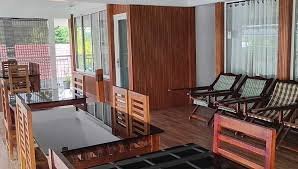
The workspace is simple. We have a desk in your room. Good chair. A fan that hums overhead. The WiFi is fiber-optic — stable enough for video calls, file uploads, and streaming. I’ve had guests run entire marketing agencies from that desk. One woman edited a documentary here. A developer from Berlin rewrote his entire backend system while watching the rain fall on the canal.
Most people skip this part, but the internet is the first thing I ask about when guests arrive. I check the speed myself. I’ve installed a backup connection too, because the monsoon can be unpredictable. Not gonna lie, there are days when the rain pounds so hard you can’t hear yourself think. But the WiFi stays on. That’s the deal.
Why Does the Island Location Matter?
I’m probably biased, but I think the island is everything.
Here’s the thing about a digital nomad stay in Alleppey, Kerala: most of the places you’ll find online are in town. They’re near the main canal, close to the houseboat dock, surrounded by shops and restaurants. That’s fine if you want convenience. But if you want to actually feel Kerala — the real Kerala, the one that exists between the canals — you need to get off the mainland.
Our island is small. You can walk across it in fifteen minutes. There are maybe forty families living here. Some fish. Some farm tapioca and bananas. There’s a tiny temple at the center, dedicated to a local deity I still don’t fully understand. The path between the houses is narrow, just wide enough for a bicycle. The air smells like woodsmoke in the morning and fried coconut in the evening.
When you arrive, the first thing you notice is the quiet. I mean real quiet. Not the “quiet” of a suburban neighborhood where you can still hear cars. I’m talking about silence so complete that the splash of a fish sounds loud. You hear your own footsteps on the dirt path. You hear the wind moving through the palm fronds like a long exhale.
Some guests find it disorienting at first. They’re used to background noise — traffic, sirens, the hum of a city that never stops. The first night, they lie in bed and listen to the nothing. By the third day, they start to relax. Their shoulders drop. They sleep deeper.
That isolation is also practical. No one knocks on your door selling things. No tuk-tuks honking. No tour guides offering “special rates.” You get on with your work because there’s literally nothing else to do. The island doesn’t demand your attention. It just sits there, green and patient, waiting for you to finish your spreadsheet.
What Home-Style Food Can You Expect Here?
Alright, let’s talk about food. Because honestly, this is the part most guests remember longest.
At Evaan’s Casa, we serve traditional home cooking. This isn’t restaurant food. It’s not “Kerala cuisine” designed for tourists with mild palates. This is what people on these islands eat every day, cooked with ingredients that came from the canal or the market that morning.
Breakfast is usually Puttu and Kadala curry. Puttu is steamed rice flour cylinders, soft and crumbly, with a texture like fresh snow. Kadala curry is black chickpeas cooked in coconut milk, tempered with mustard seeds and curry leaves that crackle in hot coconut oil. The smell alone will wake you up faster than coffee.
Lunch is the main event. We serve a Kerala Sadhya on a banana leaf. That means rice in the center, surrounded by small mounds of different curries and chutneys. There’s Parippu (lentil curry), Sambar (vegetable stew with tamarind), Avial (mixed vegetables in coconut and yogurt), Thoran (finely chopped cabbage or beans with grated coconut), and at least two types of pickles. The banana leaf itself is part of the experience. You eat with your right hand, folding the rice and curry together with your fingertips. The leaf releases a subtle earthy fragrance that changes the taste of everything.
Dinner is lighter. Maybe Appam with vegetable stew — the appams are lacy, crispy on the edges, soft in the center. Or Kerala parotta with a simple egg curry. Some nights, if the catch was good, we make Karimeen Pollichathu. That’s pearl spot fish, marinated in a paste of red chilies, turmeric, ginger, and garlic, wrapped in a banana leaf, and cooked until the flesh flakes apart. The banana leaf chars slightly, smoking the fish with a sweetness you can’t replicate in a pan.
Everything uses fresh coconut. Grated, ground, milked, or toasted. Coconut shows up in every meal. Mustard seeds and curry leaves are in almost every dish. The chili heat is present but not aggressive — it builds slowly, warming you from the inside.
I don’t talk about who cooks the food. That’s not the point. The point is that the food is prepared here, on the island, with ingredients that traveled by boat to reach us. You taste the canal in the fish. You taste the red soil in the vegetables. You taste the monsoon in every spoonful of stew.
Jackson’s Practical Tips for Visitors
I’ve hosted enough digital nomads to know what trips people up. Here’s what I’d tell you before you book your digital nomad stay in Alleppey, Kerala:
- Bring a power bank. The electricity on the island is stable, but during monsoon storms, it can flicker. A power bank keeps your laptop charged through the worst of it. Also bring a universal adapter — Indian sockets are different from European or American ones.
- Download offline maps before you arrive. Google Maps works on the island, but the boat routes and footpaths don’t always show correctly. I’ll meet you at the jetty and guide you here, but for exploring nearby villages, offline maps help a lot.
- Pack light clothes and a rain jacket. Kerala is humid year-round. Cotton or linen. Nothing synthetic. And even in December, a sudden shower can appear from nowhere. The rain jacket is non-negotiable if you’re visiting between June and September.
- Don’t plan too much. Most people arrive with a list of tourist attractions — houseboat rides, backwater tours, snake boat races. Those are fine, but the real value of a digital nomad stay in Alleppey, Kerala is the rhythm of daily life here. Let some days be empty. Sit on the veranda. Watch the water. You’ll get more done if you don’t try to do everything.
- Visit the Kalloorkad market at least once. It’s a tiny morning market on the mainland, about 20 minutes by boat and auto-rickshaw. They sell fresh fish, vegetables, and spices. Most tourists never find it. Go at 7 AM, buy a kilo of prawns, and bring them back to the homestay for the kitchen to cook. That’s a meal you’ll remember.
What Is the Best Time to Visit Alappuzha for a Digital Nomad Stay?
Every season in Alleppey has a different personality. Here’s my honest breakdown:
Winter (November to February): This is the most comfortable time. The humidity drops. The sky is clear. Temperatures hover around 28°C during the day and 22°C at night. The backwaters are calm, and the houseboats glide through the canals without struggle. This is also peak tourist season, so the mainland is busier. But on our island, you won’t feel the crowds. The WiFi is stable. The food is warm. This is the easiest time for a digital nomad stay in Alleppey, Kerala.
Monsoon (June to September): This is my personal favorite. The rain is relentless. It pounds the roof, fills the canals to the brim, and turns the paddy fields into mirrors. Everything is lush and dripping. The air smells like wet earth and jasmine. The downside? Some days the rain is so loud you can’t take calls outside. The boat rides are wetter. And a few low-lying paths flood temporarily. But if you love storms and don’t mind a little water in your life, this is the most beautiful time. Plus, rates are lower, and you’ll often have the island to yourself.
Summer (March to May): Hot and humid. Temperatures can hit 35°C, and the humidity makes it feel hotter. The afternoons are slow. Most people nap or sit in the shade. The mornings and evenings are still pleasant, and the canals are perfect for a swim if you’re brave. This is the cheapest time to visit, but you’ll need a fan running constantly. The WiFi works fine, but you’ll sweat through your shirt before lunch. I’d only recommend summer if you’re on a tight budget and don’t mind the heat.
Post-monsoon (October to November): A transitional period. The rain has stopped, but the landscape is still green and swollen. The weather is unpredictable — one day sunny, the next day drizzly. It’s quieter than winter, and the rates are reasonable. Good middle ground if you can’t decide.
Frequently Asked Questions About a Digital Nomad Stay in Alleppey, Kerala
How far is Evaan’s Casa from the main town?
We’re on an island in the backwaters, about a 6-minute boat ride from the mainland jetty in Alappuzha town. Once you arrive at the jetty, I’ll arrange a boat to bring you across. The whole journey from the town center to our door takes about 20 minutes — 10 minutes by auto to the jetty, then the boat ride.
Is the WiFi reliable enough for video calls?
Yes. We have fiber-optic broadband with a backup 4G connection. I test the speed regularly. Most guests report no issues with Zoom, Google Meet, or Slack video calls. The only exception is during extreme monsoon storms, when the power might flicker for a few seconds. Your power bank will bridge that gap.
Can I bring kids or is it adults only?
Kids are welcome. The island is safe — no cars, no traffic, just dirt paths and canals. My own children grew up here. That said, there’s no dedicated playground or entertainment. Kids need to be comfortable with quiet and nature. If your child loves catching frogs and watching crabs, they’ll love it here.
What should I bring that I might forget?
Insect repellent — the mosquitoes come out at dusk, especially near the water. A reusable water bottle — we have filtered drinking water. A small flashlight or headlamp — the island has streetlights, but the paths are dark after 9 PM. And a good book. The kind you’ve been meaning to read for years.
How much does a stay cost per night?
Rates vary by season and room type. Generally, a private room with a desk, WiFi, and three home-style meals per day ranges from INR 1,500 to INR 3,000 per night (roughly $18 to $36 USD). That includes breakfast, lunch, and dinner. No hidden fees. No taxes added later. What you see is what you pay.
Final Thoughts from the Island
I’ve been running Evaan’s Casa for years now. I’ve watched digital nomads arrive stressed, glued to their phones, answering emails at midnight. I’ve watched them leave with a different look in their eyes. Slower. Calmer. Like they remembered something they’d forgotten.
I’m not promising a magical transformation. You’ll still have deadlines. You’ll still have clients who demand things. The WiFi won’t fix your burnout. But the island will give you space. Space to think. Space to breathe. Space to eat a meal without looking at a screen.
If you decide to book a digital nomad stay in Alleppey, Kerala, I’ll be at the jetty to meet you. I’ll help you carry your bags to the boat. I’ll show you to your room, point out the desk and the fan, and ask if you want chai or coffee. Then I’ll leave you alone. Because that’s what this place is for.
The canal will flow past your window. The herons will stand in the shallows. The rain will come when it’s ready. And you’ll get your work done, one quiet hour at a time.
Come visit. The boat leaves every morning. Evaan’s Casa is waiting.