- By :
- Comments: 0
eco friendly homestay alleppey
Last Updated: April 30, 2026
Quick Answer: eco friendly homestay alleppey
- An eco friendly homestay in Alleppey means a place that uses solar power, rainwater harvesting, and locally sourced ingredients — and in our case, it’s a small island reachable only by boat, six minutes from the mainland.
- Local insider tip from Jackson: Most tourists rush straight to the houseboat dock. Skip that. Come to the island first. The real backwater rhythm happens away from the motorboat traffic, where you hear birds and the splash of oars instead of engines.
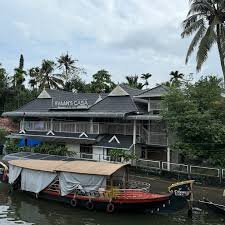
- Evaan’s Casa fits this search intent because we run entirely on solar electricity, grow some of our own vegetables, and serve home-style Kerala meals prepared with ingredients from the local market and our small garden — no plastic bottles, no waste, just the island way of living.
I woke up this morning to the sound of rain on a tin roof. Not the hard monsoon drumming, just a soft tapping that started around five. I lay there for a minute, listening. The air smelled like wet earth and the faint smoke from a neighbour’s kitchen fire. On our island, that’s the alarm clock. No traffic, no horns, no city hum. Just the water lapping against the canoe dock and the occasional kingfisher screeching as it dives for breakfast.
I’ve lived on this island my whole life. My grandfather used to take me out in a wooden canoe before sunrise, showing me where the lotus flowers bloom and which channels lead to the bird sanctuary. Back then, I didn’t think much of it. It was just home. But now, when I watch guests step off the boat for the first time — their shoulders dropping, their breath slowing — I understand what we have here. It’s not a hotel. It’s a way of living that most people have forgotten exists.
Look, here’s the thing. When people search for an “eco friendly homestay alleppey,” they’re usually picturing something green and responsible. And that’s part of it. Solar panels, compost pits, avoiding plastic bottles — we do all that. But for me, being eco-friendly isn’t a checklist. It’s a mindset that comes from growing up on an island where every resource matters. You don’t waste water because the well is shared. You don’t throw food scraps in the trash because the chickens and the garden need them. You don’t run the generator all night because the solar batteries have to last. It’s not a marketing angle. It’s just how we live.
What Is an Eco Friendly Homestay Alleppey, Really?
I’m probably biased, but I think the term gets thrown around too loosely. Some places slap a “green” label on their website and call it a day. They put a sign about saving towels in the bathroom and consider themselves eco-friendly. That’s not how it works here.
An eco friendly homestay alleppey, in my books, means the entire operation is built around reducing harm to the environment while actually improving the place for the people who live here. We started with solar panels five years ago. Not the fancy kind — just enough to run the lights, fans, and the small refrigerator for storing fish and vegetables. We installed a rainwater harvesting system that collects from the roof and feeds into a tank we use for washing and gardening. Every drop counts when you’re on an island with no municipal water connection.
Then there’s the waste. I’m strict about this. No plastic water bottles on the property. We offer filtered drinking water in glass bottles that we wash and reuse. Guests sometimes look confused when I hand them a glass bottle — they’re used to disposable everything. But after a day or two, they get it. They start bringing the empty bottles back to the kitchen without me asking.
The food scraps go to the compost. The coconut shells become fuel for the fire. The old fishing nets get turned into doormats by a woman in the neighbouring village. None of this is revolutionary. It’s just what makes sense when you live on a small piece of land surrounded by water.
Why Does the Island Location Matter?
You can’t drive here. That’s the first thing people need to understand. There’s no bridge, no road, no parking lot. To reach our island, you take a boat from the mainland jetty. It’s a six-minute ride. Six minutes. That’s it. But in those six minutes, you cross from the chaos of Alleppey town — with its auto-rickshaws honking and houseboat touts shouting — into a world that moves at a different speed.
The boat we use is a small wooden vallam with an outboard motor. Sometimes, if the water is calm and the tide is right, I take guests in a canoe instead. No engine. Just the sound of the paddle dipping and the water dripping. That’s when I see their faces change. They stop checking their phones. They start looking at the water, at the coconut palms bending over the canal, at the heron standing perfectly still on a post.
Most people skip this part of Alleppey. They come for the houseboats, spend one night on the lake, and leave. They never set foot on an actual island where people live and work and cook and fish. They never see the paddy fields that flood during monsoon, or the small temple that’s been standing since before my great-grandfather was born. Not gonna lie, I feel bad for them. They’re missing the whole point.
Being on an island makes the eco friendly homestay alleppey experience authentic. You can’t cheat. You can’t run an extension cord from the grid or order takeout from a delivery app. The isolation forces you to slow down. And that’s exactly what most travellers need — whether they know it or not.
What Home-Style Food Can You Expect Here?
Alright, let’s talk about food. Because honestly, this is what most guests remember longest. The meals here are traditional Kerala food, prepared in the homestay kitchen using ingredients sourced from the local market and whatever we grow ourselves. We don’t have a menu. We cook based on what’s fresh that day.
Breakfast is usually Puttu and Kadala curry. Puttu is steamed rice flour cylinders, light and fluffy, served with a spicy chickpea curry that has coconut and curry leaves and a hint of cinnamon. Or Appam with vegetable stew — those lacy rice flour pancakes with a bowl of vegetables cooked in thin coconut milk, flavoured with ginger and green chilies. The appam has to be eaten fresh, straight off the pan. It’s not something you can order from a room service kitchen and have delivered twenty minutes later.
Lunch is where things get serious. If you’re here on a Sunday, you might get a full Kerala Sadhya served on a banana leaf. This is not a small meal. There are eight to twelve dishes arranged around the leaf: Parippu (lentil curry), Sambar, Avial (mixed vegetables in coconut and yogurt), Thoran (stir-fried cabbage or beans with coconut), Puli Injee (a sweet-sour ginger chutney), Papadum, Pickle, and at least two types of Payasam for dessert. You eat with your right hand. No spoons. The banana leaf gets folded after the meal — the direction you fold it tells the cook whether you liked the food or not. Fold towards you means it was delicious. Fold away means you’re full but happy.
For dinner, Karimeen Pollichathu is the star. Pearl spot fish, marinated in a paste of chili, turmeric, ginger, garlic, and coconut, wrapped in a banana leaf, and cooked on a griddle until the flesh is flaky and the aroma fills the entire house. We serve it with steaming rice, a simple dal, and a fresh coconut chutney that has a bit of shallot and green chili in it. Simple. Honest. Nothing fancy.
The kitchen at our homestay uses fresh coconut milk from coconuts we buy from the neighbouring island. The spices come from a shop in Alleppey town that my family has been buying from for decades. The fish is caught that morning by local fishermen. There’s no freezer full of frozen fillets. No shortcuts. That’s what home-style food means here.
Jackson’s Practical Tips for Visitors
I’ve been running this place for eight years now. I’ve seen guests do smart things and I’ve seen guests make mistakes. Here are a few things I’d tell anyone planning an eco friendly homestay alleppey trip:
- Pack light and bring a small bag. The boat ride is short, but if you bring a giant suitcase with wheels, you’ll struggle getting it on and off the vallam. A soft duffel bag or backpack is perfect. Leave the hard-shell luggage at home.
- Mosquito repellent is non-negotiable. We’re on an island surrounded by water. Mosquitoes exist. We have nets on the windows and coils at night, but you’ll want to bring your own repellent too. The good stuff with DEET works. Don’t rely on the natural ones alone.
- Download offline maps before you arrive. Mobile reception on the island is decent — better than you’d expect — but it can be patchy during rain. Have your maps, your ebooks, and your music downloaded. You won’t need them much, but it’s good to have backup.
- Wake up early at least once. I know you’re on holiday and want to sleep in. But the backwaters at dawn are a completely different world. The mist sits low over the water. The birds are active. The houseboats haven’t started their engines yet. If you’re here for three days, give me one morning. I’ll take you out in the canoe. You’ll thank me later.
- Bring a refillable water bottle and a cloth bag. We provide glass bottles, but having your own bottle means you can carry water when you go exploring. The cloth bag is for buying spices or snacks at the local market — we don’t give out plastic bags, and the shopkeepers appreciate it when tourists come prepared.
What Is the Best Time to Visit Alappuzha for an Eco Friendly Homestay Alleppey?
Every season has its own character here. I won’t pretend one is perfect because none of them are. But knowing what to expect helps you plan better.
Monsoon — June to September. This is my personal favourite. The rain turns everything green. The canals fill up, the paddy fields flood, and the backwaters look like a painting. It’s quiet — most tourists avoid the rain, so you’ll have the place almost to yourself. The downside? It rains. A lot. Sometimes for days straight. If you need sunshine and dry roads, this isn’t for you. But if you love the sound of rain on a tin roof and don’t mind getting wet, monsoon is magic.
Winter — November to February. This is peak season for a reason. The weather is pleasant — warm days, cool evenings, low humidity. The skies are clear. The houseboats are everywhere, and the town gets busy. For an eco friendly homestay alleppey experience, winter is comfortable and predictable. But book early. Rooms fill up fast.
Summer — March to May. Hot and humid. Temperatures can hit 35 degrees Celsius by midday. The afternoons are sluggish. But mornings and evenings are still beautiful, and the water remains cool for a swim. The upside is that this is the cheapest time to visit. Fewer crowds, lower rates, and you get the island almost to yourself. Just bring light cotton clothes and stay hydrated.
Most people come between November and February. That’s fine. But if you ask me personally — and some guests disagree with me on this, and that’s fair — the monsoon is when the backwaters are most alive. You just have to be okay with wet feet.
Frequently Asked Questions About Eco Friendly Homestay Alleppey
How far is the homestay from Alleppey town?
The boat ride from the mainland jetty to our island takes about six minutes. From the Alleppey bus stand or railway station, you’ll need an auto-rickshaw to reach the jetty — that’s another ten to fifteen minutes depending on traffic. Total travel time from town to our door is around thirty minutes.
Is it safe for solo female travellers?
Yes. Our island is very safe. The community is small — everyone knows everyone. We have families, children, and elderly people living here. The homestay itself has secure locks, and I or one of my staff are always on the property. Plenty of solo women have stayed with us and said they felt completely at ease. That said, always use common sense — let us know your plans if you’re going out alone.
What should I bring for the stay?
A refillable water bottle, mosquito repellent, a small torch or headlamp (useful for evening walks), comfortable clothes that dry quickly, and a waterproof phone pouch if you plan to go canoeing. We provide towels, bedsheets, and basic toiletries. You don’t need a hair dryer — the island lifestyle is low-maintenance.
Is WiFi available at the homestay?
Yes, we have WiFi. It’s not super fast — we’re on an island with a satellite connection — but it works for checking emails, browsing, and video calls. If you’re planning to stream movies or upload large files, you might struggle. Honestly, most guests end up using their phones less once they settle in. The WiFi is there if you need it, but I’ve seen people forget about it entirely after a day or two.
Can I bring children to the homestay?
Absolutely. We welcome families. The island is a wonderful place for kids — they can see crabs on the canal banks, watch the boatman fix his net, and play in the garden. Just keep an eye on younger children near the water. We have a small dock, and while it’s perfectly safe during the day, kids should be supervised around it at all times.
So that’s what an eco friendly homestay alleppey looks like from where I stand. It’s not about certificates or green badges. It’s about waking up to rain on a tin roof, eating a meal cooked with ingredients from the market and garden, and crossing the water in a wooden boat to get home. If that sounds like something you’d want to experience, you know where to find us. The boat leaves from the jetty every hour.
Come visit Evaan’s Casa when you’re ready to slow down. I’ll save you a seat in the canoe.