- By :
- Comments: 0
Alleppey budget trip
Last Updated: April 13, 2026
Quick Answer: Alleppey budget trip
- An Alleppey budget trip is absolutely possible if you focus on homestays over hotels, eat local food, and use public boats or bicycles for getting around.
- Local insider tip from Jackson: Skip the expensive private houseboats for a day. Instead, take the 10-rupee public ferry from Alleppey to Kottayam in the late afternoon. You’ll see the same backwaters, with the golden light, for less than the price of a chai.
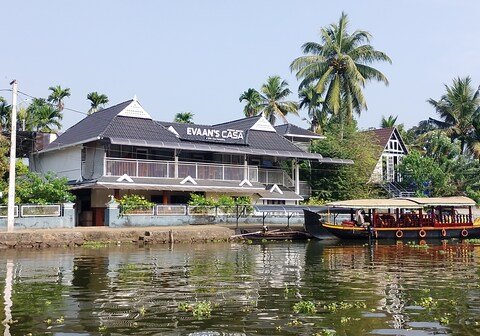
- Why Evaan’s Casa fits this search intent: We’re a simple, home-style island homestay. You get the real backwater life, home-cooked meals, and a quiet island vibe at a cost that makes a longer, more relaxed stay possible.
I woke up before the sun this morning, the way I always do. The first sound wasn’t an alarm, but the soft, wet slap of a fisherman’s oar against the canal water right behind our house. A single kingfisher, a flash of electric blue, was already perched on the post where we tie our boat. The air smelled like wet earth and the faint, clean scent of the water hyacinths that drift past. This is the ordinary magic of our island, and it costs nothing at all to experience it. If you’re thinking about an Alleppey budget trip, this is the heart of it—the slow, sensory moments that don’t need a price tag.
I’ve lived my whole life on these backwaters. I remember being a kid, balancing on the narrow ridges between paddy fields, chasing dragonflies. The idea of “tourists” coming here felt strange back then. Now, I run this homestay, Evaan’s Casa, from my family home. My goal is simple: to share this place without turning it into a resort. To show you that a rich experience doesn’t have to be expensive. That an authentic Alleppey budget trip is less about counting rupees and more about connecting with a rhythm of life that moves at the speed of a canoe.
What Is an Alleppey Budget Trip?
Let’s clear something up first. An Alleppey budget trip doesn’t mean a bad trip. It doesn’t mean staying in a dirty room or missing out on what makes this place special. Honestly, I’d say it often means the opposite. It’s about prioritizing experience over luxury. It’s choosing a homestay where you can hear the frogs at night over a sterile hotel. It’s eating a banana-leaf sadhya filled with local vegetables instead of hunting for pizza. It’s about moving slowly, watching the light change on the water, and letting the place sink in.
At its core, a successful Alleppey budget trip is a shift in mindset. You’re not here to be served in a palace. You’re here to step into a different world for a few days. The budget part simply means you’re smart with your main costs—accommodation, food, and transport—so you can stay longer, or simply travel without that constant worry. The real wealth here is in the coconut groves, the friendly nods from neighbors as you walk by, and the incredible quiet of an island evening. You can’t put a price on that, and luckily, you don’t have to.
I see a lot of guests arrive stressed, clutching their phones and itineraries. The ones planning an Alleppey budget trip often seem more relaxed from the start. They’ve already decided to opt out of the race for the most Instagrammable houseboat. They’re ready for something real. And look, here’s the thing: the backwaters don’t care how much you spent to get here. They offer the same herons, the same starry skies, the same gentle pace to everyone. Your job is just to be present for it.
Why Does the Island Location Matter?
Evaan’s Casa is on a small island. There are no roads here. To reach us, you take a six-minute boat ride from the mainland jetty. That short journey is the most important part of your arrival. As the boat putters away from the busy dock, the noise of autos and motorbikes just fades. It’s replaced by the diesel thrum of a distant vallam boat and the chatter of birds. You cross a wide canal, turn into a narrower one lined with coconut trees, and then you’re here. You step onto our little dock, and the outside world feels very far away.
This isolation is the entire point. On the mainland in Alleppey town, you’re in a busy, charming Keralan town. On an island like ours, you’re in the backwaters. You live inside the postcard. The absence of road access means no traffic noise, no honking, no dust. The only vehicles are boats. Your morning walk is along palm-shaded paths where you might have to step aside for a stray chicken or a local walking to his canoe with a net. This quiet seclusion is what people travel across the world to find, and it’s built into the very geography of our place.
For an Alleppey budget trip, this setup is a secret advantage. The experience of profound peace and connection to nature is included in your stay, not added as an extra tour. Your balcony overlooks water. Your soundtrack is the rain on our tin roof. You fall asleep to the hum of insects, not air conditioners. That six-minute boat ride creates a natural barrier that makes every moment here feel more focused, more still. You can’t just hop in a rickshaw to go buy souvenirs, and that’s a good thing. It forces you to slow down and appreciate where you are.
What Home-Style Food Can You Expect Here?
The food is a central part of staying here. We serve traditional Kerala meals, prepared in the kitchen at our homestay. This is not restaurant food. It’s home-style Kerala food, which means it’s tied to the day, the market, and what’s growing around us. The flavors are clean, direct, and deeply satisfying. The smell of mustard seeds and curry leaves crackling in coconut oil is the smell of our home, and it will probably be the smell that welcomes you back from a morning walk.
Breakfast might be soft, lacy appam with a mild, fragrant vegetable stew, or puttu—steamed cylinders of rice flour and coconut—with kadala curry, a spiced black chickpea dish. Lunch is often the star. We might serve a whole Karimeen (pearl spot fish) marinated in spices, wrapped in a banana leaf, and pan-roasted—that’s Pollichathu. It comes with rice, a tart mango curry, and perhaps some thoran, which is finely chopped vegetables stir-fried with grated coconut. Every flavor has a purpose, a balance of spice, sour, and savory.
On request, we can serve a proper Kerala Sadhya. This is the traditional feast served on a banana leaf. It’s an array of vegetarian dishes—maybe six, maybe twelve—each in its own little mound on the leaf. There will be sambar, avial (a mix of vegetables in a coconut-yogurt gravy), different pickles, pachadi (a yogurt-based side), and more. You eat with your right hand, mixing a bit of rice with each curry. It’s a complete experience, a meal that engages all your senses. The food is fresh, local, and incredibly filling. For anyone on an Alleppey budget trip, eating these locally prepared meals at the homestay is both a cultural immersion and the most economical choice.
Jackson’s Practical Tips for Visitors
After hosting so many people, I’ve picked up a few things. Here are some practical tips to make your Alleppey budget trip smoother and richer.
- Pack for the water: A lightweight, quick-dry towel is gold here. So are shoes you don’t mind getting wet (like sandals or water shoes). You’ll be getting in and out of boats, and the dock can be slippery. Leave your fancy leather shoes behind.
- Use public transport on water: The State Water Transport Department ferries are your best friend. For a few rupees, you can travel like a local between Alleppey, Kottayam, and villages. The 3:15 PM ferry from Alleppey to Kottayam is perfect for a two-hour backwater cruise. Bring water, sit on the roof if allowed, and watch life unfold along the banks.
- Visit the local market early: The main market in Alleppey town is a sensory explosion. Go around 7 AM. You’ll see the day’s catch coming in—silvery fish flipping in baskets—and mountains of fresh produce. It’s free entertainment and you’ll understand where your food comes from. Try a hot, crisp parippu vada (lentil fritter) from a stall for breakfast.
- Embrace the monsoon (with caution): If you come between June and September, you’ll see Kerala at its most powerful. The rain is intense and beautiful. Bring a good raincoat, not just an umbrella. The backwaters turn a deep green, and the air is cool. Some days, boat services might be delayed, but the trade-off is having the waterways almost to yourself. I’m probably biased, but the monsoon is my favorite season.
- Walk the village paths: Most people just take boat rides. But on our island, just walking is a revelation. Take the path north from our house after 4 PM. You’ll pass toddy shops, small family farms, and maybe see coir (coconut fiber) being made. Smile and say hello. People are friendly but not intrusive. It’s the best free tour you’ll get.
What Is the Best Time to Visit Alappuzha for an Alleppey Budget Trip?
Every season has its own character, and your choice depends on what you want. Let’s break it down by the feel of the place, not just the weather.
Monsoon (June to September): The landscape is unbelievably lush. Everything is a saturated green. The rain comes in powerful, drumming showers, then clears to a washed-clean sky. It’s cooler. This is the low season for tourism, so you’ll find the best rates for an Alleppey budget trip. The downside? Heavy rain can occasionally disrupt boat plans. You need to be flexible and enjoy the cozy, indoor moments—reading a book with a chai as the rain hammers the roof is a classic monsoon pleasure here.
Winter (November to February): This is the classic, postcard-perfect time. The weather is sunny, dry, and warm with cool evenings. The skies are clear. It’s the peak season for a reason. The backwaters are calm and ideal for canoeing. The famous Nehru Trophy Snake Boat races are over, but the spirit is still around. The trade-off? It’s busy. Prices are at their highest, and you’ll need to book accommodation well in advance. Your budget will stretch further if you book early for this period.
Summer (March to May): It gets hot. Honestly, it does. The sun is strong from late morning to mid-afternoon. But the mornings and evenings are still lovely. This is a good shoulder season. It’s less crowded than winter, and you can find decent rates. The key is to plan your activities for the early morning and late afternoon. Spend the hottest part of the day relaxing in the shade, maybe with a fresh coconut from our tree. Some guests disagree with me on visiting in summer, and that’s fair—the heat isn’t for everyone. But if you don’t mind it, you’ll find a quiet, slow version of Alleppey.
Frequently Asked Questions About an Alleppey Budget Trip
How do I get to your island homestay?
You’ll take an auto or taxi to the Finishing Point Jetty in Alleppey. From there, you call me or the boatman. We send a small, private boat to pick you up. The ride is six minutes and costs a small fee, which we can arrange. It’s part of the adventure and your first glimpse of the backwaters.
Is it safe for solo travelers or families with kids?
Yes, absolutely. Our island is a close-knit, safe community. Kids love the freedom to run on the paths and watch the boats. For solo travelers, the environment is peaceful and secure. The paths are safe to walk, even in the evening. Just use common sense like you would anywhere.
What should I pack that I might not think of?
Mosquito repellent is a must, especially at dusk. A small flashlight or headlamp for walking the village paths at night is very useful. Also, a power bank for your phone. While we have electricity, being on an island means power cuts can happen occasionally, though they’re usually brief.
Is WiFi available? How is the mobile network?
We have WiFi at the homestay, but I’ll be honest—it’s not super-fast fiber optic. It’s good enough for messaging, emails, and basic browsing. The mobile network (Jio and Airtel usually work best) is generally okay for calls. Think of it as a chance to disconnect a little. You can stream movies back home.
Planning your stay with us at Evaan’s Casa means you’ve already made the best choice for an authentic, value-focused visit. The details, like boat pick-ups and meal times, we can sort out easily once you’re booked.
Can I drink the tap water?
No. We provide filtered drinking water for you at the homestay. Please use that for drinking and brushing your teeth. It’s the same water we drink, and it’s perfectly safe. We refill the bottles daily.
How much does a typical day on a budget cost here?
Excluding your homestay cost, you can have a fantastic day for very little. A public ferry ride is 10-50 rupees. A simple local lunch at a thattu kada (street stall) might be 80 rupees. A bicycle rental for the day could be 150 rupees. A guided village walk or canoe trip with a local will cost more, maybe 1000-1500 rupees for a few hours, but it’s a splurge that’s worth it. A well-planned Alleppey budget trip lets you mix these free and low-cost experiences with a couple of meaningful paid ones.
So, that’s the real picture. An Alleppey budget trip is less about a spreadsheet and more about a state of mind. It’s choosing the rustle of coconut leaves over minibar beeps. It’s about the taste of a mango pickle made in the village, not imported from a factory. It’s the feeling of the sun on your back as you paddle a canoe through a narrow canal, seeing a water snake slide off a branch. This life is here, waiting. It’s patient. It doesn’t need a big budget, just an open heart and a willingness to step off the well-trodden path for a few days. I hope you’ll come and see it for yourself. We’ll be here, on the island, with the boat ready to bring you across.
If this sounds like the kind of travel you’re looking for, you can find more about our simple rooms and the rhythm of island life at Evaan’s Casa. Send me a message if you have any other questions. No rush. The backwaters aren’t going anywhere.