- By :
- Comments: 0
houseboat or homestay Alleppey
houseboat or homestay Alleppey
Last Updated: April 12, 2026
Quick Answer: houseboat or homestay Alleppey
- Choosing between a houseboat or homestay in Alleppey depends on your travel style. Houseboats offer a moving view of the backwaters, while a homestay gives you a rooted, local experience on land.
- Local insider tip from Jackson: For a genuine feel of our life here, stay on an island. The 6 PM ferry back from the mainland is a daily ritual that shows you how we live.
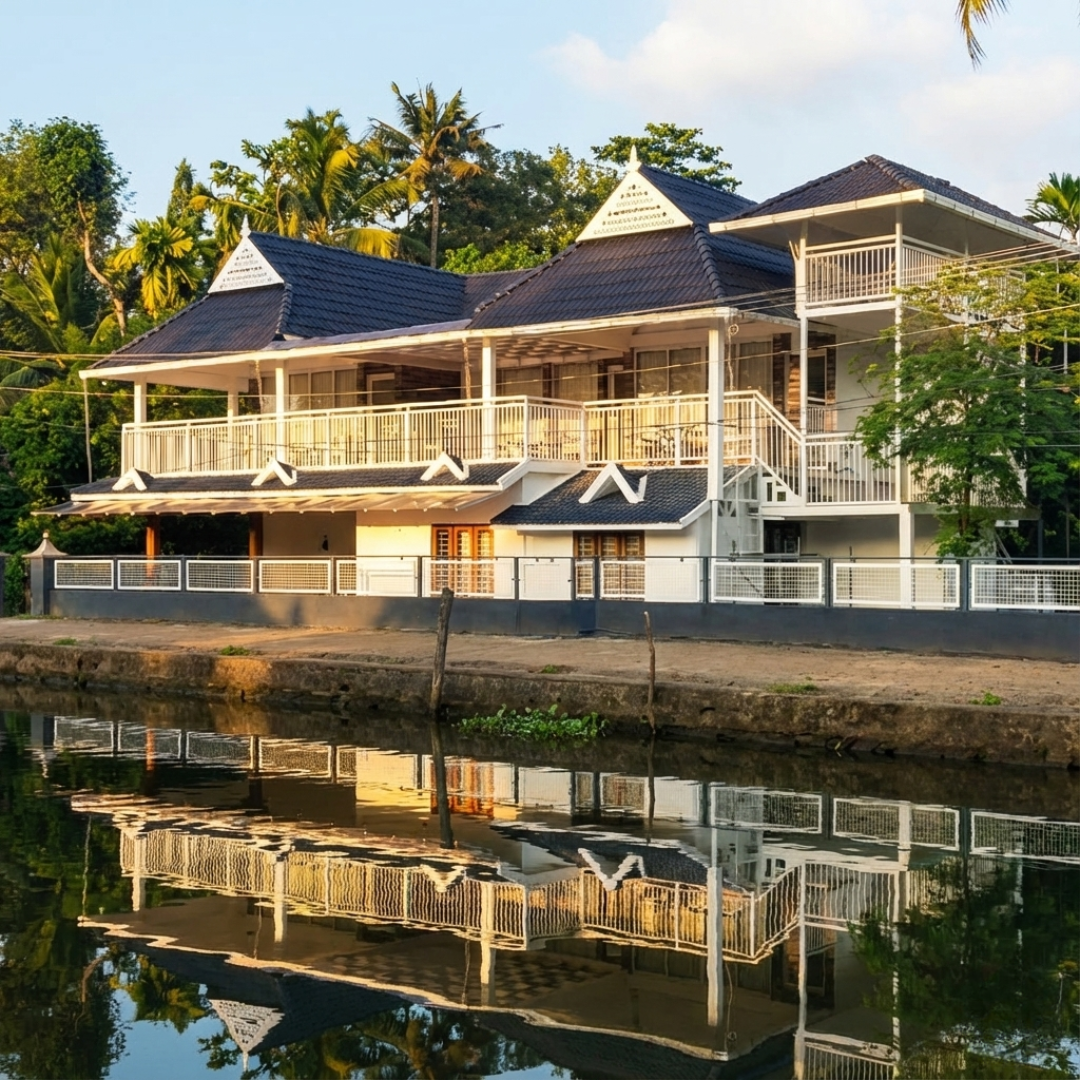
- Why Evaan’s Casa fits this search intent: We’re an island homestay, offering the stillness of land with constant water views. You get the community feel of a village and the peace the backwaters are famous for, all from a fixed address.
I woke up before the sun this morning, like I usually do. The first sound wasn’t an alarm but the soft, wet slap of a fisherman’s oar against the canal water behind our house. A thin mist was still clinging to the coconut palms, and the air smelled of damp earth and last night’s woodsmoke from a neighbor’s hearth. This quiet hour, before the kingfishers start diving and the toddy tappers begin their climb, is the real heartbeat of our island. It’s a rhythm you can’t hear from a houseboat deck.
I’ve spent my whole life on these backwaters. I’ve watched the houseboat industry grow from a few converted kettuvallam cargo boats to a fleet of floating hotels. And I’ve welcomed travelers into my home, Evaan’s Casa, for years now. The question I get asked most, by far, is some version of the classic dilemma: houseboat or homestay Alleppey? It’s a good question. Let’s talk about it.
What Is the Houseboat or Homestay Alleppey Choice Really About?
At its core, this choice is about how you want to experience time. A houseboat compresses the scenery into a day or two of gentle drifting. You are a spectator, gliding past villages, paddy fields, and canals. It’s a beautiful, curated postcard.
A homestay, especially on one of the many small islands like ours, stretches time out. You wake up in the same room. You drink tea on the same veranda. You start to notice the small things. The old man who poles his canoe past at 10 AM every day, selling fresh karimeen. The way the light changes on the same stretch of water from morning gold to afternoon silver. You don’t just see the backwaters; for a little while, you live inside them.
When you’re weighing a houseboat or homestay in Alleppey, you’re choosing between a moving postcard and a lived-in story. I’m probably biased, but I think the story stays with you longer.
Why Does the Island Location Matter?
Evaan’s Casa isn’t just near the water. It’s surrounded by it. To get here, you park your car in Alleppey town and take a six-minute public ferry. That short ride is a mental airlock. It seals off the noise and hurry of the mainland.
There are no roads here. No cars. The main paths are just wide enough for two scooters to pass, and the soundtrack is dominated by birds, water, and human voices. This isolation isn’t lonely. It’s intimate. You arrive, and the world instantly becomes smaller, quieter, and more detailed. You can’t just hop in a taxi to go somewhere. You plan your day around the ferry schedule, like we all do.
Honestly, I’d say that last ferry back to the island at 6 PM is a tiny daily adventure. If you miss it, your only option is to hire a private canoe. That island rhythm forces you to slow down in the best way possible. It’s the biggest practical difference between a standard homestay and an island one, and it completely reshapes your visit.
What Home-Style Food Can You Expect Here?
Food here is about freshness and tradition. The kitchen at our homestay prepares meals the way Keralites have eaten for generations. The coconut oil is local. The fish was likely swimming in our canals this morning. The rice is from the Kuttanad paddies you can see from the porch.
Breakfast might be soft, lacy appam with a subtly sweet coconut milk stew, or puttu—steamed cylinders of rice flour and coconut—with rich kadala curry. Lunch is often the star: a proper Kerala sadhya served on a banana leaf. You’ll get a dozen different dishes, from tart mango pickle and crisp pappadam to creamy avial and sour pulissery, each placed in a specific spot on the leaf. It’s a meal you experience with your hands and your eyes as much as your taste buds.
For dinner, maybe it’s Karimeen Pollichathu. A pearl spot fish is marinated in a paste of spices, wrapped in a banana leaf, and pan-roasted until the leaf blackens and the most incredible smoky, tangy aroma fills the air. The smell of mustard seeds and curry leaves crackling in coconut oil is the signature scent of our evenings. It’s not fancy restaurant plating. It’s home-style Kerala food, hearty and full of flavor.
Jackson’s Practical Tips for Visitors
Look, here’s the thing: most guides give you the same list. Here are a few specifics from someone who lives here.
- Pack a small flashlight or use your phone’s light. Our island paths are not brightly lit at night, and it’s essential for walking back from the ferry jetty after dark.
- If you visit between June and September, embrace the rain. Bring quick-dry clothes and sandals. The monsoon is when the backwaters are truly alive, green, and powerful. The sound of heavy rain on a tin roof is better than any sleep soundtrack.
- Skip the crowded main boat jetty for a quieter backwater experience. Ask me, and I can arrange a small, non-motorized canoe trip through narrower canals where the big boats can’t go. You’ll see more birds and hear more of the water.
- Visit the local “chayakada” (tea shop) near the ferry point. For ten rupees, you can get a strong, sweet glass of chai and watch island life happen. It’s where the boatmen, farmers, and shopkeepers gather.
- Most people skip this, but try the “kallu” (toddy) if you’re curious. It’s the local palm wine, tapped fresh daily. It’s mildly fizzy and sweet-sour. Best enjoyed with spicy seafood at a local thattukada (eatery).
What Is the Best Time to Visit Alappuzha for a Houseboat or Homestay?
Seasons change everything here. Your experience of a houseboat or homestay in Alleppey will be deeply shaped by when you come.
Monsoon (June to September): This is my favorite time, but I know it’s not for everyone. The rains are heavy and constant. The backwaters swell, turning our island even greener. The air is cool. It’s dramatic and deeply peaceful. The downside? Some activities are limited, and you need to be okay with staying indoors, reading, and watching the rain.
Winter (November to February): This is the classic tourist season for a reason. The weather is perfect—sunny, dry, and cool in the evenings. It’s ideal for everything: canoeing, walking, and just sitting outside. The flip side is that it’s the busiest time. The main canals can get crowded with houseboats, and you need to book any homestay or houseboat or homestay in Alleppey well in advance.
Summer (March to May): It gets hot and humid. The sun is intense by midday. The advantage is that it’s the low season. You’ll find better rates and fewer visitors. Mornings and evenings are still lovely. Just plan to be in the shade or on the water during the peak afternoon heat.
Frequently Asked Questions About Houseboat or Homestay Alleppey
How do I get to your island homestay?
You drive to the boat jetty in Alleppey town (we’ll send a pin). Park your car safely there. Then, take the public ferry to our island—it runs every 20 minutes and takes six minutes. I’ll meet you at our island jetty with a scooter to bring you and your bags the last short distance to Evaan’s Casa. It’s easier than it sounds!
Is it safe for solo travelers or families with kids?
Yes, absolutely. Our island is a close-knit, residential community. Crime is virtually nonexistent. For families, kids love the freedom of car-free paths and the adventure of boat rides. The water is everywhere, so supervision with young children is necessary, just like anywhere near water.
What should I pack?
Light, cotton clothing is best year-round. A light rain jacket is useful even outside monsoon. Solid sandals or water shoes are perfect. Don’t forget sunscreen, a hat, mosquito repellent, and any personal medications. Oh, and a power bank for your phone—because you’ll be taking a lot of photos.
Is WiFi available?
We have WiFi, but I’ll be straight with you: the connection on the island can be slow and unreliable, especially during heavy rain. It’s enough for messaging and emails, but don’t plan on streaming movies. Some guests disagree with me on this, and that’s fair, but I see it as a gentle nudge to disconnect a little and look at the water instead of a screen.
So, that’s my take on the whole houseboat or homestay Alleppey question. It comes down to what you’re looking for. If you want the iconic glide through the canals, a houseboat is a wonderful experience. But if you want to feel the texture of daily life here, to wake up with the oar-slap and fall asleep to the frogs, then a homestay on land is your answer.
The backwaters aren’t just a sight to see. They’re a place to be. The choice between a houseboat or homestay in Alleppey is really about how deeply you want to step into that place. We’ve tried to build a home here that lets you step in all the way. The veranda is always open, the tea is always hot, and the view of the water never changes, but it’s never the same twice. I hope you’ll come and see for yourself what this side of the backwaters feels like.
Plan your stay at Evaan’s Casa
- Lake view homestay in Alleppey (Alappuzha)
- Where to stay in Alleppey: the complete guide
- Alleppey room booking: rooms and prices from ₹1,900
- Budget homestay in Alleppey under ₹2,000
- Backwater homestay on Vembanad Lake
- Punnamada homestay, Alappuzha
- Family homestay in Alleppey
- Honeymoon package and couple stay
Book direct on WhatsApp +91 88484 96667