- By :
- Comments: 0
Alleppey to Kovalam
Alleppey to Kovalam
Last Updated: April 11, 2026
Quick Answer: Alleppey to Kovalam
- The trip from Alleppey to Kovalam is roughly 170 kilometers and takes about 3.5 to 4.5 hours by road, depending on traffic. It connects the serene backwaters to the famous beach coast.
- Local insider tip from Jackson: Skip the highway food stops. Instead, ask your driver to pull over at a small ‘thatukada’ near Kayamkulam for the best mutton curry and parotta you’ll ever have on the road.
- Why Evaan’s Casa fits this search intent: Starting your journey from our island homestay means you begin your trip to Kovalam from a place of deep calm, already immersed in authentic Kerala life, making the coastal shift even more special.
The first sound I hear most mornings isn’t an alarm. It’s the low, rhythmic thump of a wooden paddle against the side of a canoe. The fisherman is early, his silhouette just a darker patch in the pre-dawn grey. From my veranda, I watch the mist cling to the water like a second skin, and I can smell woodsmike from a kitchen fire on the next island over. This quiet, this specific kind of stillness, is what seeps into you when you stay here. It’s the exact opposite of the energy you’ll find later on the sands of Kovalam, and that’s the point. To travel from Alleppey to Kovalam isn’t just a change of location on a map. It’s a shift in the very rhythm of your breath.
What Is Alleppey to Kovalam?
Let’s keep it simple. Alleppey to Kovalam is one of the classic south Kerala routes. It’s the movement from water to land, from labyrinthine canals to the open sweep of the Arabian Sea. You begin in Alappuzha district, the heart of our backwaters, and you travel south-west down the coast to Thiruvananthapuram, ending at those famous crescent beaches.
Most people see it as a necessary transfer. I see it as a slow change in the air. The humid, earthy scent of paddy fields and freshwater gradually gets replaced by the salty, iodine tang of the sea. The soundscape shifts from the putter of boat engines and kingfisher calls to the crash of waves and the chatter of a busy beach promenade. Planning your trip from Alleppey to Kovalam is about embracing both these worlds. Honestly, I’d say don’t rush it. That road holds a lot of Kerala in between.
Why Does the Island Location Matter?
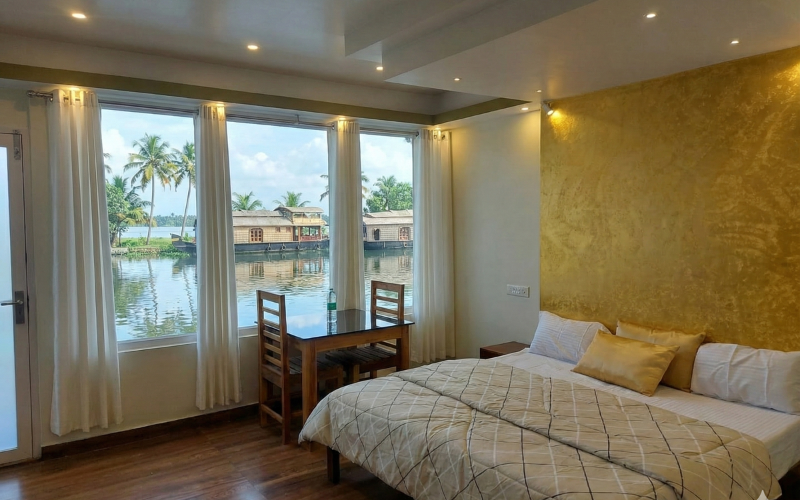
Our place isn’t on the mainland. You reach Evaan’s Casa by a six-minute country boat from a small jetty. There’s no bridge. No road access. This isn’t a gimmick.
That short boat ride acts as a reset button. The moment the boatman pushes off from the dock, the noise of scooters and autorickshaws just falls away. It’s replaced by the slosh of water against the hull. You arrive on the island with a different mindset. You’ve already left the usual tourist track behind. The isolation isn’t about being cut off—we have everything you need right here. It’s about being properly placed. You’re in the middle of the backwater life, not just observing it from the edge.
When you wake up here, your view is of water and coconut palms. Your soundtrack is the rain on a broad jackfruit leaf or the diesel chug of a passing ‘Vallam’ cargo boat. Starting your journey from Alleppey to Kovalam from an island means you begin from a point of deep quiet. It makes the energy of Kovalam feel like a celebration you’re heading toward, not an escape you need from a noisy town.
What Home-Style Food Can You Expect Here?
Food here is about what’s fresh, local, and made with care. It’s the kind of traditional home cooking that uses coconut oil, curry leaves, and mustard seeds as its foundation. The kitchen at our homestay prepares meals that are tied to the land and water around us.
For breakfast, you might have soft, lacy appam with a mild, fragrant vegetable stew. Or puttu—steamed cylinders of ground rice—with kadala curry, a spiced black chickpea dish. The coconut is grated that morning. The taste is clean and direct.
Lunch is often the main event. A piece of Karimeen (pearl spot fish) marinated in a paste of spices, wrapped in a banana leaf, and pan-roasted until the leaf chars. That’s Pollichathu. The flesh is firm and flaky, infused with every note of ginger, garlic, and green chili. It’s served with rice and a sharp, fresh mango curry or a thoran made from finely chopped beans and coconut.
On special request, we can serve a full Kerala Sadhya on a banana leaf. It’s an array of vegetarian dishes—sambhar, avial, olan, different pickles and pachadis—each with its own balance of sour, salty, and sweet. You eat with your hand, and the coolness of the leaf under the warm food is part of the experience. Not gonna lie, the best part is the final payasam, a sweet, cardamom-scented pudding. It’s the perfect finish.
Jackson’s Practical Tips for Visitors
These are things I tell guests over a cup of chai. Some are obvious, some you won’t find easily online.
- Book your Alleppey to Kovalam transport in advance, but be flexible. A private taxi is easiest. You can book one from the mainland, and the driver will meet you at our jetty. Shared cabs or buses are cheaper but involve more hassle with timing and your luggage.
- If you drive, fill your tank in Alappuzha town. The petrol stations on the route south can be spaced out, and the ones right off the highway are often more expensive.
- Pack a light shawl or sweater for the car. This sounds odd for Kerala, but Indian AC in taxis and buses is famously arctic. After a warm morning on the island, the blast of cold air can be a shock.
- Most people skip this, but stop at the Sasthamcotta Lake. It’s about an hour into your drive from Alleppey to Kovalam. It’s a freshwater lake, incredibly peaceful, and has a small temple. It’s a perfect 20-minute leg-stretch that’s more interesting than a highway restaurant.
- Carry cash for small stops. The best roadside snacks—like crispy banana fritters or tender coconut water—are from stalls that don’t have card machines. A few hundred rupees in small notes is very useful.
What Is the Best Time to Visit Alappuzha for Alleppey to Kovalam?
Seasons change everything here. The view from my veranda is never the same two months in a row.
Winter (November to February): This is peak season for a reason. The air is cooler, the skies are clear blue, and the humidity drops. It’s perfect for backwater cruises and beach time in Kovalam. The downside? Everyone else thinks so too. Prices are higher, and you need to book everything—including your trip from Alleppey to Kovalam—well in advance.
Summer (March to May): It gets hot. Really hot. The afternoons are still and heavy. But the mornings on the island are beautiful, and the water is warm. It’s a good time for travelers who don’t mind the heat and want fewer crowds. The advantage for the drive? The roads are less congested. Just travel early in the morning.
Monsoon (June to September): I’m probably biased, but this is my favorite time. The rains transform the backwaters. Everything is a shocking, saturated green. The sound of rain on a tin roof is the best lullaby. The air smells of wet earth and blooming flowers. Yes, some boat trips might get canceled during heavy downpours, and the sea at Kovalam can be rough. But if you don’t mind the rain, the landscape is at its most powerful and alive. The drive from Alleppey to Kovalam during a light monsoon drizzle is incredibly scenic, with mist clinging to the hills.
Frequently Asked Questions About Alleppey to Kovalam
How far is Alleppey to Kovalam, and how long does it take?
The distance is about 170 kilometers. By private taxi, it usually takes between 3.5 to 4.5 hours. It really depends on traffic through Thiruvananthapuram city. If you take a state bus or a shared van, add at least an extra hour for stops and potential delays.
Is it safe to travel from Alleppey to Kovalam by road?
Yes, the roads are generally safe and well-maintained. The main route is National Highway 66. The biggest factor is traffic, especially near towns. Night driving is less common for long distances, so I recommend making the trip during daylight hours. It’s more scenic that way, too.
What should I pack for staying at a backwater homestay?
Light, breathable cotton clothes are best. A hat and sunscreen are essential. Mosquito repellent is a good idea for the evenings. Most importantly, pack a pair of sandals you can slip on and off easily—you’ll be leaving shoes at the door a lot. If you’re visiting between stays at Evaan’s Casa and a beach resort in Kovalam, a quick-dry towel and a separate bag for wet clothes can be lifesavers.
Is WiFi available on the island?
We have WiFi, yes. It works well for emails and messaging. But I’ll be honest, the connection can be slow for streaming videos or large downloads. Some guests disagree with me on this, and that’s fair, but I see it as a gentle nudge to look up from the screen. Listen to the water instead. You can always use your mobile data, which is decently strong here.
That road from the backwaters to the beach holds so much of what makes this state special. You’ll see rubber plantations, laterite brick houses painted in bright blues and pinks, roadside shrines, and sudden glimpses of endless water. It’s a trip that gives you time to process the quiet you gathered on the island before you step onto the warm, busy sand. The journey from Alleppey to Kovalam is a thread connecting two different hearts of Kerala. I hope you get to travel it slowly, with the windows down, letting the air change around you. And if you start that journey from our little island, well, we’ll have a pot of black tea ready for you before you go.
Plan your stay at Evaan’s Casa
- Lake view homestay in Alleppey (Alappuzha)
- Where to stay in Alleppey: the complete guide
- Alleppey room booking: rooms and prices from ₹1,900
- Budget homestay in Alleppey under ₹2,000
- Backwater homestay on Vembanad Lake
- Punnamada homestay, Alappuzha
- Family homestay in Alleppey
- Honeymoon package and couple stay
Book direct on WhatsApp +91 88484 96667