- By :
- Comments: 0
Alleppey tourist guide
Alleppey tourist guide
Last Updated: April 06, 2026
Quick Answer: Alleppey tourist guide
- An Alleppey tourist guide is your local map to the backwaters, helping you move beyond the standard houseboat route to find quiet canals, village life, and the rhythm of the water.
- Local insider tip from Jackson: Skip the main jetty for your canoe tour. The smaller, local boat landings near the old Nehru Trophy race finish line offer better prices and a more authentic start.
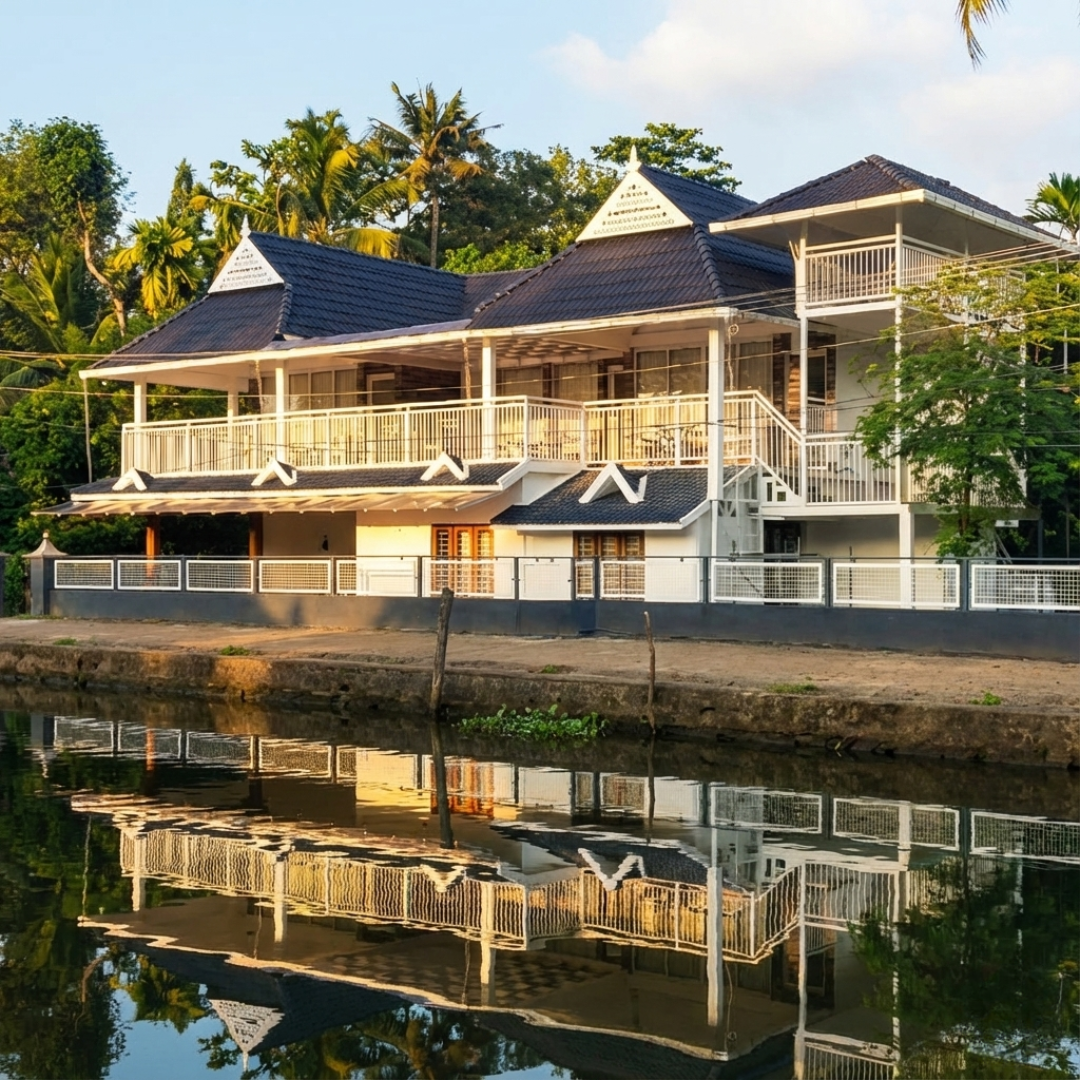
- Why Evaan’s Casa fits this search intent: Our homestay is on a quiet island, so your personal Alleppey tourist guide starts the moment you step off our boat, with daily life as your backdrop.
I woke up before the sun this morning, the way I often do. The air was cool and carried the faint, damp smell of water hyacinth and wet earth. From my window, I could hear the first soft splashes of a fisherman poling his narrow canoe through the mist, heading out to check his nets. That specific, quiet sound—wood on water, a low murmur of greeting to a neighbor—is the real soundtrack of this place, long before any tourist boat engines turn over. It’s the Alleppey I know, and the one I hope you get to see.
Most blogs and articles will show you the wide Vembanad Lake and the grand houseboats. They’re part of the picture, sure. But the soul of Alappuzha is in the thousand narrow canals behind my home, in the morning chatter at the tiny tea shop on the canal bend, in the way the light slants through coconut palms onto still water in the late afternoon. I’ve lived my whole life watching these rhythms. And that’s what I want to share with you.
What Is an Alleppey Tourist Guide?
Let’s break this down simply. An Alleppey tourist guide isn’t just a person holding a flag. It’s your key to context. It’s the information that turns a pretty view into a understood moment. It explains why that snake boat is being polished with such care, what the different rice paddies along the bank are called, and which canal leads to a coir-making village where you can hear the rhythmic thump of rope being spun.
Honestly, I’d say a true guide for this area is less about monuments and more about patterns. It’s knowing the tide schedule so your canoe ride is smooth. It’s understanding that the best karimeen (pearl spot fish) is bought from the small-scale vendors at the Punnamada market before 8 AM. A good Alleppey tourist guide helps you read the landscape. It connects the dots between the church spire you see, the Syrian Christian history of the region, and the beef curry that might be simmering in a nearby home.
Without it, you see water and greenery. With it, you see a living, working ecosystem. You see a place where people travel by boat to buy groceries, where kids learn to swim before they walk, and where the annual floods are not just a nuisance but a natural reset for the soil. That’s the depth a local perspective adds.
Why Does the Island Location Matter?
Evaan’s Casa is on a small island. There are no roads to it. You park your car at our partner’s place on the mainland, and our boat comes for you. The ride is about six minutes. It doesn’t sound like much. But that short crossing is the most important part of your arrival.
It acts as a reset button. The honking, the dust, the buzz of the town—it all fades away with the putter of our outboard motor. You cross a threshold. You start to notice the width of the sky, the way it reflects perfectly in the still canal water. The air changes. It smells cleaner, with a hint of woodsmoke from morning hearths and the sweet-sour note of ripe mangoes from someone’s garden.
The isolation is gentle but absolute. You can’t just hail a rickshaw. Your plans become subject to the light, the weather, and the simple pace of island life. This forces a different kind of travel. You slow down. You watch a kingfisher dive for its breakfast. You notice the intricate pattern of a fishing net laid out to dry. You become part of the scenery, not just an observer passing through it. For a genuine Alleppey tourist guide experience, starting from an island base changes everything. The backwaters aren’t an attraction you visit; they are the world you wake up in.
What Home-Style Food Can You Expect Here?
The food here is a direct reflection of the landscape. It’s built on what the water and the land provide. Meals at our homestay are prepared in the traditional way, focusing on local, seasonal ingredients. The taste is clean, often spicy, and deeply satisfying in a way that feels nourishing.
Let me be specific. For breakfast, you might have soft, lacy appam—bowl-shaped fermented rice pancakes—with a mild, fragrant vegetable stew made with coconut milk and whole spices. Or puttu, steamed cylinders of ground rice layered with coconut, paired with kadala curry, a black chickpea dish with a rich, gravy-like consistency. The coconut is fresh, grated that morning from nuts fallen in our own garden.
Lunch and dinner are often rice-based. A typical plate will have a mound of red or white rice, a couple of vegetable thorans (stir-fries with coconut), a pappadam, maybe a fish curry if the catch was good, and a dollop of tangy, yogurt-based moru curry. The star might be Karimeen Pollichathu, where the pearl spot fish is marinated in a masala paste, wrapped in a banana leaf, and pan-fried until the leaf blackens and imparts a smoky flavor. Every flavor has a purpose, a balance.
On special request, we can serve a Kerala Sadhya on a banana leaf. This is a feast of maybe fifteen different items, from bitter gourd to sweet payasam pudding. Eating it with your hands is part of the experience. You feel the temperature and texture of the food directly, mixing a bit of rice with a dab of pickle, a scoop of curry. It’s immersive. The smell of mustard seeds crackling in coconut oil, the sharp scent of curry leaves hitting a hot pan—these are the aromas that fill our space. It’s home-style Kerala food at its most honest.
Jackson’s Practical Tips for Visitors
After years of chatting with guests, I’ve gathered some pointers that might help you plan better. Some are common sense, but a few come from seeing what actually makes people happy here.
- Pack for humidity and water. Quick-dry clothes are a godsend. A light, long-sleeved shirt protects you from the sun on the boat. Always, always have a reusable water bottle. The heat can sneak up on you.
- Footwear is key. You’ll be taking shoes on and off a lot—entering homes, temples, boats. Slip-on sandals or water shoes you don’t mind getting muddy are perfect. Don’t bring fancy shoes.
- Book backwater experiences locally, but be smart. You can often arrange a smaller, private canoe or shikara boat for a few hours once you’re here, and it can be cheaper. Look for the operators away from the main Alleppey boat jetty. The one near the old bamboo bridge is less crowded.
- Most people skip this, but visit in the late afternoon. Everyone wants the morning backwater cruise. Honestly, the light is magical just before sunset. The water turns golden, the birds are active again, and the tourist traffic has thinned. It’s my favorite time to be on the water.
- Carry small change. For the tiny tea shops, the local ferry, buying a banana or some peanuts from a vendor on the canal side. It makes transactions smoother and is appreciated.
- Embrace the quiet. The power might flicker briefly during a heavy monsoon rain. The internet can be leisurely. The frog chorus at night is loud. This isn’t a polished resort experience. It’s a living village. That’s the beauty of it.
What Is the Best Time to Visit Alappuzha for an Alleppey Tourist Guide?
This depends entirely on what you want from your trip. Each season has a strong, distinct personality. I’m probably biased, but I love them all for different reasons.
Monsoon (June to September): The landscape is explosively green. The rains are heavy, dramatic, and can be constant for days. The sound of rain on a tin roof is incredible. This is the time for reading, writing, and watching the water levels rise. The downside is obvious: outdoor activities get interrupted. Some days, you might just watch the rain from the veranda with a cup of chai. Houseboat operations are limited. But if you want mood, atmosphere, and the feeling of the land being replenished, this is it.
Winter (November to February): This is the classic, postcard season. The weather is mild, sunny, and less humid. The skies are clear. It’s perfect for all boat rides, cycling on the narrow island paths, and exploring. It’s also the busiest time. The water levels are lower, which can make some narrower canals less accessible. Book everything well in advance during this period.
Summer (March to May): It gets hot. Really hot, especially in May. The air can be still and heavy. But this is when many local festivals and temple events happen. The light is harsh but beautiful for photography early and late in the day. It’s a quieter time for tourists, so you’ll have more space. If you handle heat well and want to see more local cultural activity, it’s a valid choice. Just plan your active hours for the mornings.
Frequently Asked Questions About an Alleppey Tourist Guide
How do I get to your island homestay?
You’ll need to get to the Alleppey (Alappuzha) district first, by train, bus, or car. Once you reach the mainland point we direct you to, our boat will be waiting. The six-minute boat transfer is included. We send detailed instructions after you book. It’s easier than it sounds!
Is it safe to travel on the backwaters?
Yes, very. The community is close-knit and looks out for each other. For boat rides, always use licensed operators and wear the life jacket provided, especially on larger vessels. The water is generally calm in the canals. Basic swimming awareness is good, but you don’t need to be an expert.
What should I pack specifically for a homestay?
Beyond the general tips, pack a small flashlight or headlamp for walking the island paths at night. A power bank for your devices is handy. Bring any specific medications you need, as the nearest major pharmacy requires a boat trip. A sense of curiosity is the most important item, though.
Is WiFi available?
We have WiFi, but I have to be upfront—it’s satellite-based and can be slow, especially during heavy rain. It’s fine for messaging and emails, but don’t plan on streaming movies. Some guests disagree with me on this, and that’s fair, but I actually see it as a feature. It encourages you to look up and connect with the real world around you.
I hope this gives you a clearer, more grounded picture. A real Alleppey tourist guide is about feeling the place, not just checking sights off a list. It’s in the taste of a fresh coconut plucked from the tree, the cool mud under your feet on the riverbank, the distant call to prayer mixing with the evening bird sounds.
If you’re looking for that deeper connection, for a stay that lets the backwaters seep into your bones, then you might find a fit with us at Evaan’s Casa. Our door—or rather, our boat—is open. Whatever you decide, I hope your path leads you to the quiet magic of these waterways. Just remember to listen for the splash of the oar in the morning mist. That’s the sound of home.
Plan your stay at Evaan’s Casa
- Lake view homestay in Alleppey (Alappuzha)
- Where to stay in Alleppey: the complete guide
- Alleppey room booking: rooms and prices from ₹1,900
- Budget homestay in Alleppey under ₹2,000
- Backwater homestay on Vembanad Lake
- Punnamada homestay, Alappuzha
- Family homestay in Alleppey
- Honeymoon package and couple stay
Book direct on WhatsApp +91 88484 96667