- By :
- Comments: 0
Alleppey train station
Last Updated: April 04, 2026
Quick Answer: Alleppey train station
- Alleppey train station is the main railway hub for Alappuzha district, connecting you directly to the backwaters. It’s a small, functional station about 4km from the main boat jetty.
- Local insider tip from Jackson: Skip the auto-rickshaw queue out front. Walk 200 meters left from the main exit to the main road for better rates and less hassle.
- Why Evaan’s Casa fits this search intent: We arrange a direct pick-up from the station. You’ll be on our island, away from the town bustle, in under 30 minutes via a short, scenic boat ride.
I remember the sound of the 5:45 AM Jan Shatabdi Express whistle cutting through the thick, pre-dawn air. I was waiting on our jetty, a thermos of black tea beside me. The train was still a few kilometers away, pulling into the Alleppey train station, but sound carries far over the water in that quiet hour. It’s a sound of arrival, of journeys beginning and ending. I was waiting for a guest, a solo traveler from Delhi who’d taken the overnight train. That specific diesel horn, followed by the distant clatter of wheels on tracks, is the real soundtrack to mornings here. It’s not a disruptive sound. It’s a reminder that the world is connected, even to our little island.
Most people experience the station first as a blur of noise and motion. I get it. You step off the coach, your legs stiff from sitting, into a wave of humid air that smells of diesel, dust, and a faint hint of salt from the nearby canals. Porters in red shirts call out. Auto-rickshaw drivers gesture. It’s a small station, but it feels intensely alive. This is the gateway. The threshold. Everything you came for—the silence of the backwaters, the slow glide of a canoe, the canopy of coconut palms—starts just beyond those platform gates. The trick is knowing how to cross that threshold smoothly.
What Is Alleppey Train Station?
Let’s keep it simple. The Alleppey train station is the central railway point for the entire Alappuzha district. Its official code is ALLP. It’s not a grand, historic terminus. It’s a practical, white-and-blue building that does its job well. Trains from major cities like Kochi, Trivandrum, Bangalore, and Chennai all stop here. The station has two main platforms. Platform 1 handles most long-distance trains, while Platform 2 often sees the local passenger services.
The station itself is basic but has what you need: a reservation counter, a waiting hall, and a few small stalls selling chips, water, and bananas. There’s a prepaid auto-rickshaw booth just outside the main entrance. Honestly, I’d say its greatest feature is its location. It puts you within a 10-minute drive of the water. Your transition from the mainland rhythm to the backwater pace can be incredibly fast. One minute you’re hearing platform announcements, the next you’re listening to the dip of an oar.
For us on the islands, the Alleppey train station is our lifeline to the wider state. It’s how we get supplies that don’t come by boat. It’s how my cousins from Kottayam visit. The station has a particular, familiar feel in the late afternoon, when the sun slants across the platform and the crows gather near the tea stall. It’s a piece of infrastructure that feels completely woven into daily life here.
Why Does the Island Location Matter?
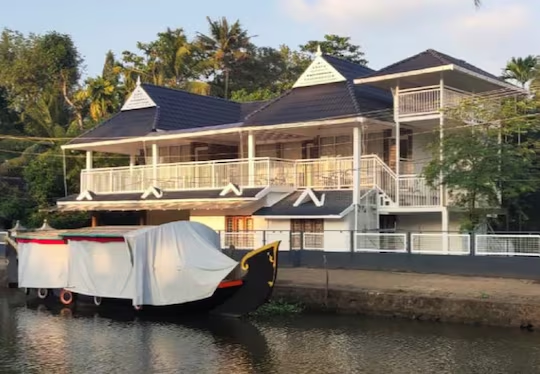
This is the heart of it. Evaan’s Casa is on a small island in the backwaters. There is no road bridge. There is no car access. The final leg of your journey to us is always by boat. This changes everything about arrival. When you get picked up from the Alleppey train station, you’re not heading to another hotel-lined street. You’re heading to a small, private jetty.
The boat ride is six minutes. Maybe seven if the current is strong. But in that short trip, the world rewires itself. The rumble of the auto-rickshaw engine fades, replaced by the putter of our boat’s motor. The crowded streets give way to narrow canals fringed with lush green. You’ll pass women washing clothes at water’s edge, children waving from footbridges, and the occasional Vallam snake boat resting under a tree. The air cools by a few degrees and carries the scent of wet earth and blooming water hyacinth.
This isolation isn’t about being cut off. It’s about being placed within something. You arrive at our jetty, and you are immediately in the life of the island. There are no day-trippers here after sunset. The night sounds belong to frogs and owls. The only light pollution comes from the stars. That six-minute buffer from the mainland, initiated the moment you leave the Alleppey train station, is what makes the experience. It creates a gentle, necessary separation. It allows you to slow down to the speed of the water.
What Home-Style Food Can You Expect Here?
The food at our homestay is traditional home cooking. It’s the kind of meal you’d be served in a Kerala household, prepared with local ingredients, many from our own garden or the nearby markets. We don’t have a restaurant menu. Meals are served fresh from the kitchen at our homestay.
Breakfast might be soft, lacy Appam with a mild, fragrant vegetable stew, the coconut milk base simmered with cinnamon and curry leaves. Or it could be Puttu—steamed cylinders of rice flour and coconut—paired with Kadala curry, a spiced black chickpea dish that has real depth. The coconut chutney on the side is always fresh, ground that morning with green chilies and a touch of tamarind.
Lunch is often the star. A typical Kerala Sadhya served on a fresh banana leaf is an experience. It’s a sequence of flavors: tangy Mango pickle, crisp Pappadam, smooth Avial (a mix of vegetables in a coconut-yogurt gravy), sour Pulissery, and the earthy comfort of Sambar with rice. The banana leaf itself adds a subtle, grassy aroma to the meal. For dinner, you might have Karimeen Pollichathu, a pearl spot fish marinated in a masala of shallots, ginger, and chili, wrapped in a banana leaf, and pan-grilled until the leaf blackens and the flavors steam into the flesh. The smell of mustard seeds crackling in coconut oil is the signature scent of our kitchen in the evening.
Everything is balanced. The heat from the chilies is present but not overwhelming. The coconut provides richness. The curry leaves offer their distinct, citrusy perfume. It’s filling, flavorful, and meant to be eaten with your hands. I’m probably biased, but I think food tastes better when you feel the texture and temperature directly. It connects you to the meal in a different way.
Jackson’s Practical Tips for Visitors
Navigating the arrival is straightforward if you know a few things. Here’s what I tell friends when they’re planning their trip.
- Book a Lower Berth if you’re on an overnight train. The upper berths get all the fan air and can be surprisingly cold. The lower berth lets you watch the Kerala landscape change as you approach the station in the morning.
- Pack light, and use a backpack if you can. You’ll be getting into a boat. A suitcase is fine, but a backpack is much easier to handle on the narrow jetty planks and in the shallow country boat we use for transfers.
- Change a small amount of cash at the station. There are a couple of ATMs just outside the Alleppey train station, but they can run out of notes on weekends. Having 1000-2000 rupees in smaller bills is useful for auto-rickshaws, water, or a quick snack.
- Most people skip this, but look for the ‘Thattukada’ stall. Just outside the station, to the right, there’s a small stall that makes fresh ‘Kappa and Meen’ (tapioca and fish curry) in the evenings. It’s a local favorite. The tapioca is soft and buttery, a perfect comfort food after a long journey.
- Communicate your train number. When we arrange your pickup, your train name and number are more important than your arrival time. Trains can be late. The station code ALLP and the train number help our driver track your exact arrival.
What Is the Best Time to Visit Alappuzha for Alleppey Train Station?
Every season has its own character. Your choice depends on what you want to feel.
Monsoon (June to September): The backwaters are at their most dramatic. The rain is intense, often falling in great, roaring sheets that drum on our tin roofs. The canals swell, turning a deeper shade of green. The air is cool and smells incredible—like wet soil and blooming plants. The downside? Boat trips can be interrupted by sudden downpours. Some guests disagree with me on this, and that’s fair, but I love the monsoon’s raw energy. The Alleppey train station looks different in the rain, too, with everyone huddled under the platform awnings.
Winter (November to February): This is the classic, postcard season. The weather is perfect—sunny, with low humidity and cool evenings. The water is calm, ideal for long canoe rides. This is also the peak of tourist activity, so the main canals near town can get busy with houseboats. Out on our island, it’s still quiet, but you’ll feel the buzz in the town markets. It’s the most reliable time for uninterrupted exploration.
Summer (March to May): It gets hot. The sun is strong, and the air can feel heavy by midday. The advantage? You’ll have places almost to yourself. The light is harsh but beautiful, casting sharp shadows through the palm fronds. Mornings and late afternoons are lovely. This is when the local village life is most visible—fishing, coir-making, the daily rhythms. It’s a more authentic, unfiltered view. Just pack a hat and expect to move slowly in the heat.
Frequently Asked Questions About Alleppey Train Station
How far is the station from the backwaters?
The main boat jetty for public transport and houseboat departures is about 4 kilometers from the Alleppey train station. It’s a 10-15 minute drive by auto-rickshaw or taxi, depending on traffic. For our homestay, we meet you at the station and take you to our private jetty, which is a bit closer.
Is the station area safe for solo travelers?
Yes, it’s generally safe. Like any transport hub, just be aware of your surroundings. Stick to the prepaid auto counter or have your pickup pre-arranged. The station is busy and well-lit until the last trains arrive around 10 PM. I’ve had many solo guests, both men and women, arrive without issue.
What should I pack for the island homestay?
Comfort is key. Light, cotton clothing is best. A light sweater for boat rides in the winter or monsoon evenings. Mosquito repellent is a good idea. Most importantly, bring shoes you can slip on and off easily—you’ll be leaving them at the door a lot. And a power bank; while we have electricity, the charm is in unplugging.
Is WiFi available on the island?
We have a WiFi connection at the main house. Look, here’s the thing: it’s reliable for messages and emails, but it’s not high-speed streaming quality. The signal is a guest from the mainland, just like you. It works, but we encourage you to disconnect a little. The 4G mobile network from the jetty is often faster if you really need it.
Sitting here now, I can just hear the faint echo of another train whistle. It’s the Mangala Express heading north. Someone is arriving, someone is leaving. The cycle continues. The Alleppey train station is that constant pivot point. For you, the visitor, it’s the start of something quieter. I hope this gives you a real sense of what to expect from the moment you step onto that platform. It’s not just a station; it’s the door to a different pace of life. If you’re looking for that shift, for the simplicity of an island morning after the journey, you can learn more about Evaan’s Casa and how we welcome people home. The tea is always ready, and the boat is waiting.