- By :
- Comments: 0
how to reach Alleppey from Trivandrum
how to reach Alleppey from Trivandrum
Last Updated: April 04, 2026
Quick Answer: how to reach Alleppey from Trivandrum
- The most straightforward way is a 3-4 hour drive by taxi or private car via NH66. For a local experience, take a train to Alappuzha station (3-3.5 hours) and then a short auto-rickshaw to the public boat jetty.
- Local insider tip from Jackson: Skip the main Alleppey town jetty crowds. Ask your driver for “Finishing Point” jetty near the bus stand. It’s less chaotic and the public ferry to our island leaves from there more regularly.
- Why Evaan’s Casa fits this search intent: Once you figure out how to reach Alleppey from Trivandrum, the final leg to our island homestay is a peaceful 6-minute public ferry ride. You leave the mainland bustle behind instantly.
The first sound I hear most mornings isn’t an alarm. It’s the low, wet slap of a fisherman’s oar against the backwater, maybe fifty meters from my window. Then the scent of woodsmoke from a neighbor’s hearth, mixing with the damp, green smell of the banana leaves after a night rain. This is the quiet heart of the place you’re traveling to. Before you even start planning how to reach Alleppey from Trivandrum, it’s good to know what you’re coming to. It’s not just a town on a map. It’s a rhythm, slower and tied to the water.
What Is How to Reach Alleppey from Trivandrum?
At its simplest, it’s a travel query about covering roughly 150 kilometers between Kerala’s capital city and the backwater capital. But anyone who’s lived here knows it’s really a question about transition. You’re moving from the administrative buzz of Trivandrum, with its government buildings and traffic, into a landscape where roads become secondary. You’re switching your reference point from solid ground to liquid channels.
When people ask me how to reach Alleppey from Trivandrum, I hear the subtext. They’re asking for the smoothest shift into this different world. The goal isn’t just to arrive in Alappuzha town. It’s to arrive well, without the stress that can sometimes cling to travel like dust on shoes. You want to step off your transport and already feel the pace changing. That’s the real journey.
Figuring out how to reach Alleppey from Trivandrum is the first practical step of your backwater trip. It sets the tone. A hectic, confusing arrival can take hours to shake off. A smooth one lets you sink into the island calm right away.
Why Does the Island Location Matter?
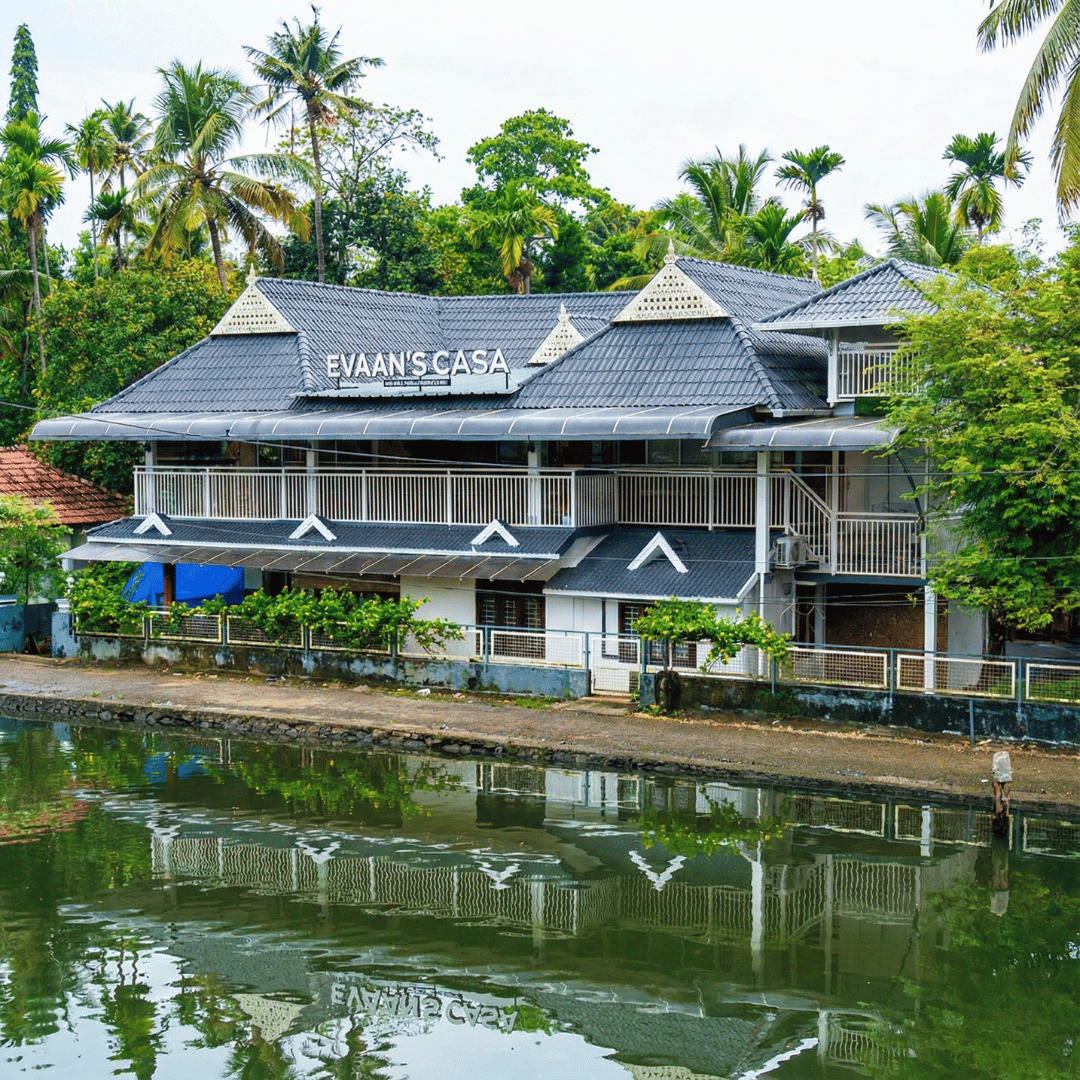
Evaan’s Casa isn’t in Alleppey town. We’re on a small island in the backwaters, a six-minute public ferry ride from the mainland jetty. This matters immensely. That short boat trip is a filter. It separates the day-trippers from the stayers. The noise of autos and scooters fades into the hum of the ferry’s diesel engine, a sound as familiar to me as my own breath.
The isolation isn’t about being cut off. We have phones, and yes, there’s WiFi. It’s about intentionality. You don’t accidentally wander onto our island. You choose to come. You buy a 5-rupee ticket from the little counter, you step onto the broad, wooden ferry, and you cross. The water in between acts as a reset. By the time you walk up our path, your shoulders have usually dropped an inch or two.
Honestly, I’d say this is the core reason people come to us after they manage how to reach Alleppey from Trivandrum. They’ve done the road or rail journey. They’ve seen the town. Then they take that final, brief ferry. That’s when the holiday truly begins. The view from your room isn’t a street. It’s a canal, with canoes gliding past carrying schoolkids, groceries, or a couple of roped-together goats. The soundtrack is kingfishers diving and the distant call of a vegetable vendor in his canoe.
What Home-Style Food Can You Expect Here?
The kitchen at our homestay wakes up early. The first fragrance is usually coconut oil warming, soon followed by the sharp, crackling pop of mustard seeds and curry leaves. This is the base note of so much home-style Kerala food. It’s a smell that promises something real is being prepared, not just assembled.
Breakfast might be soft, lacy appam with a subtly sweet coconut milk stew, maybe with potatoes or chicken. Or it could be puttu – steamed cylinders of ground rice and coconut – with kadala curry, a spiced black chickpea dish that’s heartier than it sounds. Lunch is often the star. If we’re doing a traditional Sadhya, you’ll have a banana leaf laid before you. An array of dishes will follow: different avials and thorans made from local vegetables, sambar, rasam, a couple of pachadis, pickles, and papadum. The rice is central. Eating with your hands is encouraged; it connects you to the temperature and texture of the food in a way cutlery never can.
For dinner, perhaps you’ll have Karimeen Pollichathu. Pearl spot fish is marinated in a masala paste, wrapped in a banana leaf, and pan-grilled until the leaf blackens and imparts a smoky flavor. The fish steams in its own juices and the spices. You unwrap it at the table, and the scent that rushes out is incredible. It’s all about local ingredients. The coconut comes from trees you can see. The fish was likely swimming in these waters yesterday. The meals are generous, grounded, and deeply satisfying in a way that goes beyond taste. It’s about being nourished.
Jackson’s Practical Tips for Visitors
Once you’ve sorted how to reach Alleppey from Trivandrum, a few local pointers can make everything smoother. Here’s what I tell our guests.
- Book the train in advance. The Trivandrum Central to Alappuzha route is popular. The trains are comfortable and offer great views, but general class can get very crowded. Go for 2S or Sleeper class and book online early.
- The taxi tipping point. If you’re in a group of three or more, a private taxi from Trivandrum can cost nearly the same per person as the train. It’s door-to-door and you can stop along the way. Look, here’s the thing: the drive along NH66 is nice, but ask the driver to take the Aymanam route as you near Alleppey. It’s a slightly longer but beautiful drive through smaller villages right by the backwaters.
- Jetty confusion solved. Alappuzha has multiple jetties. For the public ferry to our island, you want the one near the KSRTC bus stand, often called “Finishing Point.” Auto-rickshaws know it. Most tourists head to the main boat jetty, which is for the larger houseboats and tourist shikaras. That’s not us.
- Pack a separate overnight bag. This is a big one most blogs miss. The public ferry ride is short, but you’ll be carrying your luggage on and off a sometimes-wobbly gangplank. Pack a small bag with what you need for your stay. You can leave your main suitcase locked in your taxi or at a cloakroom on the mainland. Travel light onto the island.
- Carry cash for the ferry. The ferry ticket is just a few rupees. The ticket booth is a small window. They don’t take cards or UPI. Have some change ready.
What Is the Best Time to Visit Alappuzha for How to Reach Alleppey from Trivandrum?
The journey itself doesn’t change much with the seasons, but what you’re coming to does, dramatically. Your choice affects the experience waiting for you after you figure out how to reach Alleppey from Trivandrum.
Monsoon (June to September): The backwaters are fullest, lush and overflowing. The rain on our tin roofs is a constant, soothing percussion. The air is cool and smells of wet earth and blooming jackfruit. Downsides? Heavy rain can occasionally delay ferries for an hour or two. Some activities, like cycling on the island paths, become a muddier adventure. But if you love the drama of green and grey, it’s powerful. I’m probably biased, but the monsoon is when the islands feel most alive and private.
Winter (November to February): This is the classic, postcard season. The weather is perfect – sunny but not too hot, with cool evenings. The skies are clear. It’s the ideal time for sitting on the veranda and watching the world float by. The obvious downside is that everyone else knows this too. It’s peak season. The mainland jetties are busier, and you’ll need to book transport and accommodation much further in advance.
Summer (March to May): It gets hot. The sun is strong. The water levels in the smaller canals drop. But, life goes on. Mornings and evenings are still pleasant. This is when you’ll find the best deals and the fewest crowds. The pace is slow, languid. The afternoons are for a long nap under a ceiling fan, or reading in a shaded hammock. It’s a trade-off. Some guests disagree with me on this, and that’s fair – the heat isn’t for everyone. But for those who don’t mind it, there’s a raw, quiet authenticity to the summer months.
Frequently Asked Questions About How to Reach Alleppey from Trivandrum
How far is Alleppey from Trivandrum, really?
The distance is about 150-160 kilometers depending on the exact route. By road, with normal traffic, it takes between 3 and 4 hours. The train takes a similar amount of time, sometimes a bit less. It’s not a grueling journey, but it’s long enough to feel you’ve traveled to a different part of Kerala.
Is it safe to travel between the cities?
Yes, very. Both the road and rail routes are well-traveled and safe, even for solo travelers. The trains are busy but secure. On the road, NH66 is a good national highway. Standard travel precautions apply, of course, but this is a routine domestic trip for thousands of people every day.
What should I pack specifically for the island homestay?
Beyond your usual stuff, pack mosquito repellent (though we provide nets), a torch or use your phone light for the short walk from the ferry at night, and comfortable shoes you can slip on and off easily. You’ll be leaving shoes at the door a lot. A light rain jacket is wise most of the year. And leave your formal wear behind. The dress code here is firmly casual, comfortable cotton.
Is WiFi available on the island?
Yes, we have WiFi at Evaan’s Casa. It’s reliable for messaging, emails, and browsing. But I’ll be honest, the bandwidth isn’t meant for streaming 4K movies or large video calls. It’s there to keep you connected if you need to be, but the hope is you’ll be distracted by the herons and the canoe traffic instead.
So, you see, the question of how to reach Alleppey from Trivandrum is more than a logistics puzzle. It’s the first chapter of your shift into backwater time. It’s about trading the certainty of asphalt for the gentle sway of a ferry. The journey ends with the sound of water against a laterite stone step, and the quiet of an island evening settling around you like a soft cloth. We’ve had guests who spent the entire first hour just sitting on the bench by the water, watching the light change, letting the travel tension melt away. That’s the moment we’re here for. That’s what happens after you solve the travel riddle. If this sounds like your kind of reset, you can learn more about Evaan’s Casa and what a few days here feel like. No rush. The ferry will make another trip.
Plan your stay at Evaan’s Casa
- Lake view homestay in Alleppey (Alappuzha)
- Where to stay in Alleppey: the complete guide
- Alleppey room booking: rooms and prices from ₹1,900
- Budget homestay in Alleppey under ₹2,000
- Backwater homestay on Vembanad Lake
- Punnamada homestay, Alappuzha
- Family homestay in Alleppey
- Honeymoon package and couple stay
Book direct on WhatsApp +91 88484 96667