- By :
- Comments: 0
private homestay vs hotel
private homestay vs hotel
Last Updated: March 26, 2026
Quick Answer: private homestay vs hotel
- Choosing between a private homestay vs hotel comes down to whether you want a standard room or a lived-in experience with local people, food, and rhythms.
- My local tip: On the backwaters, a homestay on a small island like ours gives you a quiet that hotels on the mainland canals simply can’t match.
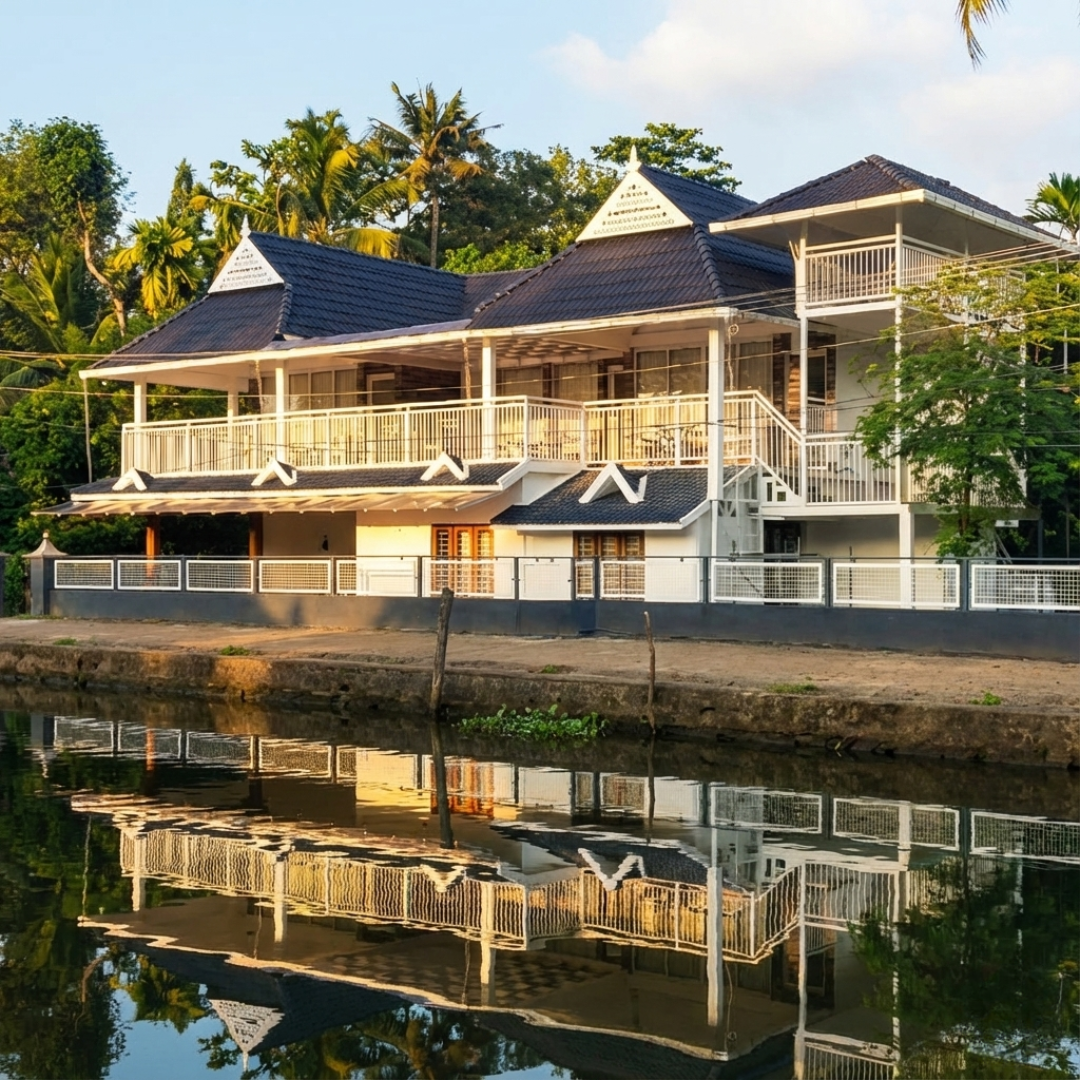
- At Evaan’s Casa, you’re choosing a home, not just a bed. You’ll share our space, eat home-style Kerala food, and see the island life that happens after the tourist boats leave.
I was up before the sun this morning, which happens often here. The air was cool and thick, carrying the damp-earth smell of the night. From the kitchen came the soft, familiar clatter of a steel vessel, and the first scent of woodsmoke from the hearth. It’s a quiet that has texture—the distant putter of a fishing boat’s engine, a kingfisher’s sharp call from a coconut palm. This is the ordinary magic you wake up to on our island. It’s the backdrop to everything I want to talk about today.
Over years of running our place and talking to travelers, one question keeps coming up. People are trying to decide where to stay, and they’re weighing their options. The choice between a private homestay vs hotel isn’t just about price or a list of amenities. It’s about what kind of memory you want to take home with you. Do you want a perfectly serviced room, or do you want to step into the rhythm of a place? I’m probably biased, but I think the answer becomes clear when you’re sitting on a verandah, watching the water change color with the sunset, with a cup of chai that wasn’t ordered from a menu, but simply offered.
What Is Private Homestay vs Hotel?
Let’s break it down simply. A hotel is a business built for accommodation. Its primary goal is to provide a consistent, standardized service to a high volume of guests. You get a room, a reception desk, maybe a restaurant and a pool. The interaction is transactional, and that’s not a bad thing. It’s efficient. You’re a customer.
A private homestay is different. You are a guest in someone’s home. You’re stepping into an existing life. The walls have stories, the furniture has history, and the food comes from the same kitchen that feeds the people who live there. The interaction is personal. You might get advice on a village temple that’s not in the guidebooks, or help bargaining at the local fish market. The whole debate of private homestay vs hotel hinges on this distinction between service and sharing.
Here, you won’t find a minibar or room service. You’ll find a shared living space, books you can pick up, and conversations that might start over breakfast and continue later. The structure is looser, more adaptive. If you want a printed itinerary and a concierge, a hotel is your spot. If you want to feel the pulse of a place, a homestay lets you listen.
Why Does the Island Location Matter?
Location always matters, but here it defines everything. Evaan’s Casa is on a small island in the Alappuzha backwaters. There are no roads to it. The only way in or out is by a six-minute boat ride from the mainland jetty. That short journey across the water is a soft reset button for your trip.
When you arrive, the noise of autorickshaws and scooter horns just… stops. It’s replaced by the sound of oars dipping in water and the wind in the banana trees. This isolation isn’t lonely. It’s peaceful. It creates a natural container for your stay. You can’t just hail a cab to go somewhere. You plan a boat, or you decide to stay put. Most people, after an hour here, choose to stay put.
This is where the private homestay vs hotel comparison gets interesting for backwaters travel. Many hotels are on the mainland, right by the main canals. You’ll see the big tourist houseboats chug past all day. Here, on the inner waterways, you see daily life. Women washing clothes at the water’s edge, children paddling to school in small canoes, men setting fishing nets. The island itself becomes part of your experience, not just a view from your window.
One specific detail? The last shared ferry back to the island from the main bazaar leaves at 6:45 PM. If you miss it, you’ll need to charter a private boat. It’s a gentle reminder that you’re on island time now, where the day ends with the light.
What Home-Style Food Can You Expect Here?
The food is, without a doubt, where a homestay shines. It’s not a buffet with a hundred international options. It’s what’s being cooked that day, with what was fresh at the market or pulled from the garden. The kitchen at our homestay prepares traditional Kerala meals. The aromas are part of the morning—mustard seeds crackling in coconut oil, the earthy steam of rice, the sweet smell of ripe jackfruit.
Breakfast might be soft, lacy appam with a mild vegetable stew, or puttu—steamed cylinders of rice flour and coconut—with kadala curry, a spiced black chickpea dish. Lunch is often the full experience: a Kerala Sadhya served on a banana leaf. This is a feast of textures and tastes—different vegetables like thoran and avial, tangy rasam, sour mango pickle, creamy pachadi, and papadum, all eaten with your hand. It’s a sensory way to eat.
For dinner, you might have Karimeen Pollichathu, a pearl spot fish marinated in spices, wrapped in a banana leaf, and pan-grilled. The leaf infuses the fish with a smoky, earthy flavor you simply can’t replicate in foil or parchment. The ingredients are local. The coconut comes from the trees you see. The fish was likely swimming that morning. It’s hearty, flavorful, and honest food. Honestly, I’d say the meals alone can settle the private homestay vs hotel question for many people. It’s the difference between eating Kerala food and tasting a home.
Jackson’s Practical Tips for Visitors
If you’re leaning towards a homestay, especially here, a few tips will make your stay smoother and richer. Here’s what I tell my guests.
- Pack Light, Pack Practical: You’re taking a boat to the island, and luggage space can be tight. A soft duffel is better than a hard suitcase. Bring comfortable clothes that dry quickly, a sun hat, and good mosquito repellent for the evenings.
- Embrace the Slow Pace: Don’t try to cram in three backwater tours a day. The beauty is in the stillness. Read a book in the hammock. Watch the water snakes glide by. Chat with the boatman who brings your supplies. Let the day unfold.
- Visit the Alappuzha Main Market Early: If you go to the mainland, hit the main market by 8 AM. That’s when the fish auction happens, and the vegetable stalls are piled high with the day’s best. It’s chaotic, colorful, and real. Most tourists sleep through it.
- Carry Cash: While we and some bigger shops accept cards, many small village stalls, boat operators, and local eateries operate on cash. It’s just simpler.
- One most people skip: Walk to the southern tip of the island around sunset. There’s a small, unnamed shrine there under a huge banyan tree. Nobody visits it as a tourist spot, but the view of the wider backwaters opening up is stunning, and the light is perfect. You’ll likely have it all to yourself.
What Is the Best Time to Visit Alappuzha for Private Homestay vs Hotel?
The season you choose dramatically shapes your experience, and it affects a private homestay vs hotel stay differently. Here’s the honest breakdown.
Monsoon (June to September): The rains are heavy and green. The backwaters swell, and everything feels lush and alive. The sound of rain on a tin roof is incredible. It’s the coolest time of year. The downside? Boat trips can get canceled during intense downpours, and you’ll need good rain gear. For a homestay, it’s a cozy, introspective time—perfect for reading, writing, and watching the storms roll across the water. A hotel might feel more confined.
Winter (November to February): This is the classic tourist season for a reason. The weather is glorious—sunny days, cool nights, low humidity. It’s ideal for all activities. The flip side is that everywhere is more crowded, and prices peak. In a homestay, you still get a pocket of calm. The island buffers you from the mainland crowds. Some guests disagree with me on this, and that’s fair, but I think the winter charm is best enjoyed from the quiet of an island verandah, not a bustling hotel lobby.
Summer (March to May): It gets hot and humid. The air is still. The advantage? You’ll have places nearly to yourself, and you see the true, slow rhythm of village life. Mangoes are in season, which is a huge plus. The water in the showers is warm from the sun. It’s a time for long, lazy afternoons in the shade. If you dislike heat, this isn’t your window. But if you seek solitude and don’t mind the climate, a homestay in summer offers a raw, authentic stillness you won’t find any other time.
Frequently Asked Questions About Private Homestay vs Hotel
Is a homestay safe, especially on an island?
Absolutely. Our island community is close-knit and looks out for each other. The homestay itself is a family home. We’ve had solo travelers, couples, and families all feel completely secure here. It’s as safe as any village in Kerala, which is to say, very safe. Just use common sense like you would anywhere.
How much does it cost compared to a hotel?
It varies widely, but generally, a homestay like ours offers better value for the experience. You’re not paying for a gym or a spa you might not use. You’re paying for a room, incredible food, and genuine local access. Sometimes it’s less than a hotel, sometimes comparable. The cost question in the private homestay vs hotel debate isn’t just about the nightly rate—it’s about what’s included in your daily life here.
What should I definitely bring?
Beyond the basics, bring a sense of curiosity and flexibility. A power bank is useful, as is a small flashlight for walking the island paths at night. Most importantly, bring an appetite for food and experiences that might be outside your usual routine. Leave the formal wear behind.
Is WiFi available?
Yes, we have WiFi. Look, here’s the thing—it’s reliable for checking emails and messages, but the connection can be slower than in the city. We encourage you to disconnect a little. Stream a movie? Maybe not. Share a photo of the sunset? That usually works just fine. It’s part of that gentle nudge towards being present.
I hope this gives you a clearer picture. The choice between a private homestay vs hotel is deeply personal. It depends on what you’re looking for. If you want predictable comfort and a full suite of services, a hotel is your answer. If you want to trade a little predictability for connection, for the smell of woodsmoke in the morning and the taste of fish cooked in a banana leaf, then a homestay is calling.
At the end of the day, we’re not just offering a place to sleep. We’re offering a window into a way of life that’s calm, connected, and rooted in this beautiful, watery landscape. If that sounds like your kind of travel, we’d love to welcome you to Evaan’s Casa. Think about what you really want from your time here. Then choose accordingly. Whatever you decide, I hope your time in Alappuzha is filled with good water, good food, and good memories.
Plan your stay at Evaan’s Casa
- Lake view homestay in Alleppey (Alappuzha)
- Where to stay in Alleppey: the complete guide
- Alleppey room booking: rooms and prices from ₹1,900
- Budget homestay in Alleppey under ₹2,000
- Backwater homestay on Vembanad Lake
- Punnamada homestay, Alappuzha
- Family homestay in Alleppey
- Honeymoon package and couple stay
Book direct on WhatsApp +91 88484 96667