- By :
- Comments: 0
Kerala or Goa backwaters
Kerala or Goa backwaters
Last Updated: March 26, 2026
Quick Answer: Kerala or Goa backwaters
- For a deep, immersive experience in a vast, living network of canals, lakes, and villages, choose Kerala. Goa’s backwaters are a smaller, saltwater-influenced river system better suited for a quick, scenic add-on to a beach holiday.
- Local insider tip from Jackson: The real magic is in staying overnight on an island. Skip the crowded day boats. The water changes completely at dusk, filled with the sounds of water birds and village life settling in.
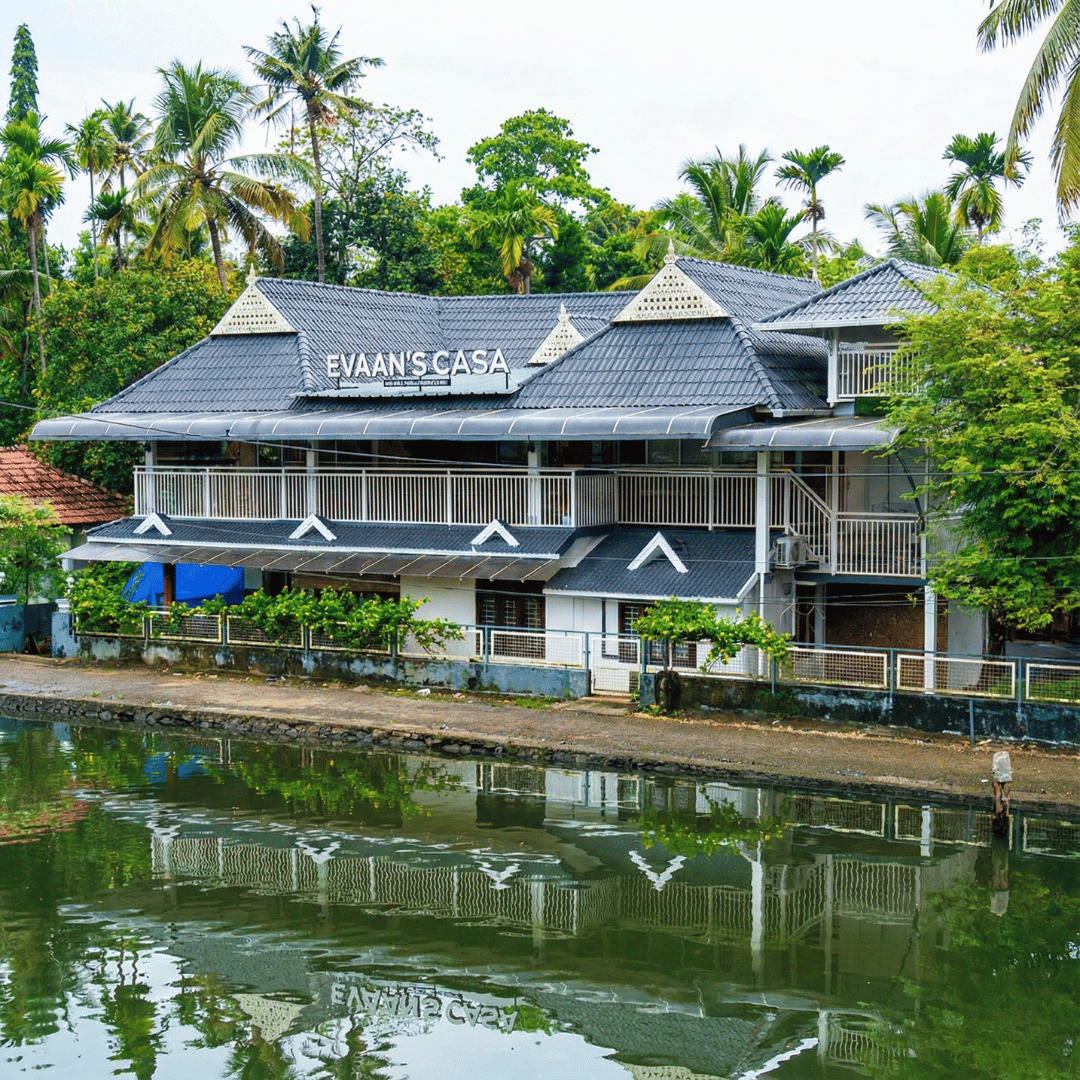
- Why Evaan’s Casa fits this search intent: Our homestay is on a quiet island in the heart of the Alappuzha backwaters. You live the slow pace, wake to fishermen’s calls, and experience the genuine rhythm of this place, far from the tourist conveyor belt.
The first sound I hear most mornings isn’t an alarm. It’s the soft, rhythmic knock of a wooden canoe against our small jetty, followed by the low murmur of Thomas, our milkman, exchanging a few words with my neighbor. A thin mist hangs just above the water, smelling of wet earth and blooming water hyacinth. This is my normal. It’s the quiet pulse of the backwaters I grew up on, a world away from deciding between Kerala or Goa backwaters for a holiday. That decision, honestly, comes down to what you want your days to feel like.
What Is Kerala or Goa Backwaters?
Let’s break this down without the fancy terms. The Kerala backwaters are a massive, slow-moving labyrinth. They’re freshwater canals, lakes, and rivers woven through countless villages and rice paddies. It’s a working landscape. You’ll see kids bathing, women washing clothes, men fishing for karimeen, and farmers poling boats loaded with coconuts. Life happens on the water here.
Goa’s backwaters are different. They’re primarily the estuaries of rivers meeting the Arabian Sea. The water is brackish, influenced by tides. You’ll see mangroves, fishing boats, and some lovely riverside homes, but it’s not the same intricate, village-saturated web. Comparing Kerala or Goa backwaters is like comparing a vast, living tapestry to a beautiful, scenic river cruise. One is a culture, the other is a view.
I’m probably biased, but the scale here defines everything. In Alappuzha, you can travel for hours by boat and barely scratch the surface. You get lost in a good way. The debate of Kerala or Goa backwaters often misses that core point: immersion versus sightseeing.
Why Does the Island Location Matter?
Access is everything. Evaan’s Casa is on a small island. To reach us, you take a six-minute shared country boat from the mainland jetty. There’s no bridge. No road. No cars.
That short ride is a reset button. The diesel rumble of the auto-rickshaw fades, replaced by the putter of the boat’s engine. You leave the chatter of the market behind. When you step onto our island path, the noise is gone. You notice the weight of the air, the coolness of the shade under the coconut trees. Your pace slows within minutes because it has to. There’s nowhere to rush to.
This isolation isn’t lonely. It’s connected. You’re part of the island’s rhythm. You hear the afternoon call from the temple loudspeaker a few islands over. You smell woodsmoke in the evening as kitchens fire up. The question of Kerala or Goa backwaters becomes irrelevant when you’re on an island. You’re not just looking at the scenery; you’re living inside its quiet heartbeat.
What Home-Style Food Can You Expect Here?
Food here is tied to the water and the land around us. It’s fresh, local, and uncomplicated. The kitchen at our homestay prepares meals the way people here eat every day. That means you might start your morning with soft, lacy appam and a subtly sweet coconut milk-based stew, maybe with some local potatoes or chicken.
Lunch could be a simple but powerful meal of rice, a dry curry like cheera thoran made with red spinach from the garden, and a tangy rasam. The star, often, is the fish. Karimeen Pollichathu is a must-try—pearl spot fish marinated in a paste of spices, wrapped in a banana leaf, and pan-grilled. The banana leaf infuses the fish with a smoky, earthy aroma you can’t replicate any other way.
If your stay coincides with a festival or we have a group, you might experience a Sadhya. This is a traditional feast served on a banana leaf. It’s a symphony of flavors and textures—from the sourness of the pickle to the sweetness of the payasam dessert, with over a dozen different items in between. It’s not just a meal; it’s an event. Every bite tells you where you are.
Jackson’s Practical Tips for Visitors
Look, here’s the thing: most people follow the same script. To get a feel for the real backwaters, you have to step off it. Here are a few ways to do that.
- Skip the big houseboat for a day. Book a small, non-mechanized canoe with a local oarsman for a couple of hours. They can slip into the narrowest canals, where the big boats can’t go. You’ll see kingfishers, otters, and the quiet backwater life up close.
- Visit the Champakulam market on a Saturday morning. It’s a floating market, but not the touristy one. Farmers and vendors bring their goods—produce, pottery, livestock—by boat. It’s chaotic, loud, and completely authentic. Be there by 7 AM.
- Pack a light shawl or sweater for evening boat rides. Even on warm days, the breeze on the water after sunset can get surprisingly cool. It’s a detail most people forget until they’re shivering a little.
- Don’t just stare at the horizon. Look down into the water by the banks. You’ll see hundreds of tiny, neon-blue fiddler crabs scuttling in the mud. It’s a hidden world most people zoom right past.
- Learn three words: “Nanni” (Thank you), “Sukhamano?” (Are you well?), and “Vendi” (Coconut). Using them changes every interaction.
What Is the Best Time to Visit Alappuzha for Kerala or Goa Backwaters?
Each season paints the backwaters a different color. Your preference decides the “best” time.
Monsoon (June to September): The landscape is explosively green. Water levels are high, allowing boats to go everywhere. The rain is a constant, soothing presence on our tin roofs. Not gonna lie, the downpours can be heavy and might delay plans. But the air is clean, the light is dramatic, and you’ll have the waterways largely to yourself. It’s my favorite time, but it’s not for everyone.
Winter (November to February): This is peak season for a reason. The weather is perfect—sunny, with low humidity and cool nights. It’s ideal for all activities. The flip side is that the popular routes can get busy. Book everything well in advance, including your stay at Evaan’s Casa.
Summer (March to May): It’s hot. The sun is intense, especially from 11 AM to 3 PM. The smart move is to be active early in the morning and late in the afternoon. The water levels are lower, but the upside is incredible stillness in the midday heat and fantastic, clear evenings. It’s a quiet, slow time on the islands.
Frequently Asked Questions About Kerala or Goa Backwaters
How far in advance should I book a homestay?
For the winter months (Dec-Jan), try to book at least two to three months ahead. For monsoon or summer, a few weeks is usually fine. Last-minute trips are possible, but your options will be limited.
Is it safe to stay on an island with no road access?
Absolutely. The community is tight-knit and looks out for each other. We have a reliable boat service until 9 PM, and for any urgent needs, a boat can be arranged in minutes. It feels remote, but you’re not cut off.
What should I pack for a backwaters stay?
Light, breathable cotton clothes are your best friend. Sturdy sandals you don’t mind getting wet. A good hat, sunscreen, and mosquito repellent. A power bank for your devices is useful, and a small flashlight can be handy for the island paths at night.
Is WiFi available on the island?
Yes, we have WiFi at the homestay. It works well for emails and messaging. But I’ll be honest, the connection can be slow for streaming or large downloads. Some guests disagree with me on this, and that’s fair, but I see it as a gentle nudge to disconnect a little. The sound of the water is a better soundtrack anyway.
So, that’s my view from the jetty. The choice between Kerala or Goa backwaters isn’t about which is better. It’s about what kind of slow you’re looking for. One is a deep, village-centered immersion. The other is a beautiful coastal complement. For me, the magic has always been in the details you only get by staying put—the way the light hits the canal at 4 PM, the specific taste of a coconut just cracked open after a boat ride, the profound quiet of an island night.
If that rhythm calls to you, we’d love to share our slice of this world with you. There’s always a kettle on, and the view from the veranda never gets old. Feel free to reach out if you have any more questions about life here. You can find more about our island home at Evaan’s Casa.
Plan your stay at Evaan’s Casa
- Lake view homestay in Alleppey (Alappuzha)
- Where to stay in Alleppey: the complete guide
- Alleppey room booking: rooms and prices from ₹1,900
- Budget homestay in Alleppey under ₹2,000
- Backwater homestay on Vembanad Lake
- Punnamada homestay, Alappuzha
- Family homestay in Alleppey
- Honeymoon package and couple stay
Book direct on WhatsApp +91 88484 96667