- By :
- Comments: 0
Alleppey or Munnar homestay
Last Updated: March 26, 2026
Quick Answer: Alleppey or Munnar homestay
- Choosing between an Alleppey or Munnar homestay depends on whether you want water or mountains. Alleppey is for the slow, liquid rhythm of backwater life. Munnar is for cool air, tea slopes, and misty hikes.
- Local insider tip from Jackson: If you’re short on time, pick one. Trying to do both in a couple of days means you’ll spend more time on winding roads than actually experiencing either place. Honestly, I’d say give yourself at least two full nights in whichever you choose.
- Why Evaan’s Casa fits this search intent: If the idea of an Alleppey or Munnar homestay leans you towards water, we’re a true island homestay. You arrive by a six-minute country boat, leaving the mainland bustle behind. It’s the quiet, home-style version of backwater living.
I woke up before the sun this morning, a habit from a lifetime here. The first sound wasn’t a bird, but the soft, wet slap of a fisherman’s oar against the canal water. He was moving silently, a dark shape against the grey pre-dawn light, heading out to check his nets. The air smelled of wet earth and the faint, clean scent of water hyacinth. It’s in these quiet hours, before the kitchen fires start and the boats begin to ferry people, that the island feels most itself. This is the rhythm I know. And it’s this specific rhythm that shapes what a real homestay here is all about.
What Is an Alleppey or Munnar Homestay?
Let’s break it down simply. An Alleppey or Munnar homestay is a choice between two completely different versions of Kerala. It’s not just picking a bed. You’re picking an element.
An Alleppey homestay is about water. You live within the network of canals, lakes, and rivers we call the backwaters. Your day is measured by boat schedules, the tide, and the light dancing on the surface. Life is horizontal, spread out across the palms and paddy fields.
A Munnar homestay is about air. You’re up in the Western Ghats, breathing cool, thin air scented with tea and eucalyptus. Your view is vertical—endless green slopes rolling up into mist. Life here feels perched, looking out over valleys.
Both offer a home-style stay, not a hotel. You eat local food. You get local advice. The difference is the world outside your window. When you search for an Alleppey or Munnar homestay, you’re really asking: do I want to float or climb? Do I want to listen to water or wind?
Why Does the Island Location Matter?
Our place is on a small island in the backwaters. This isn’t a metaphor. There are no bridges. No roads lead here.
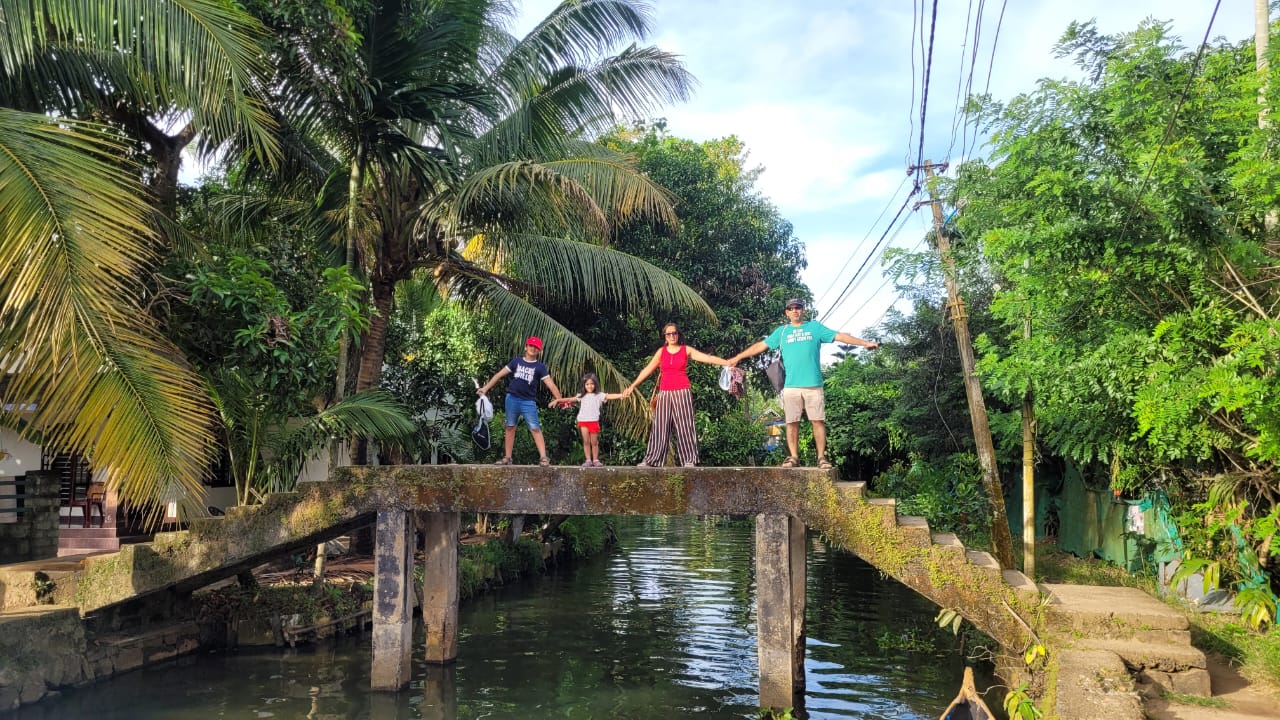
You park your car in Nedumudy and wave to Babu, our boatman. The ride to the island takes six minutes in his wide, wooden country boat. You pass women washing saris at the steps, ducks paddling in formation, and men waist-deep in water, harvesting mussels. The diesel engine putters a steady, familiar rhythm. That six-minute journey is a reset button. It physically separates you from the rush of the mainland.
The isolation is gentle, not harsh. You can see the other side. You can hear the occasional scooter. But you can’t just step out for a bottle of water. You need to plan, or you learn to ask. This changes your pace immediately. You settle in. You watch the sky. You notice the kingfisher that sits on the same post every afternoon.
Most homestays for an Alleppey or Munnar homestay search are on the mainland, along a road. You hear traffic. You can walk to a shop. That’s fine, it’s convenient. But here, the water itself becomes part of your stay. It’s your front yard, your soundtrack, your barrier to the ordinary. The evening doesn’t just get quiet. It gets profoundly still, broken only by the plop of a fish or the distant call for prayer from the village across the water.
What Home-Style Food Can You Expect Here?
Food here is tied to the land and the water. It’s simple, flavorful, and made with what’s fresh. The kitchen at our homestay prepares meals that are typical of what you’d eat in any Kerala home, just with a bit more care for our guests.
Breakfast might be soft, lacy appam with a mild, coconut-based vegetable stew. Or puttu—steamed cylinders of rice flour and coconut—with kadala curry, a spiced black chickpea dish. The smell of roasting coconut for the chutney is a morning signal, like an alarm clock made of aroma.
Lunch is often the main event. A typical meal is rice served with a few different curries, a pappadam, and maybe some fried karimeen (pearl spot fish) if the catch was good. The fish is from these waters. The curry leaves are from the tree by the kitchen. The coconut is grated fresh. You’ll taste the difference.
One dish we’re known for is Karimeen Pollichathu. A whole pearl spot fish is marinated in a paste of spices, wrapped in a banana leaf, and pan-roasted. The leaf infuses the fish with a smoky, earthy flavor. You unwrap it at the table, and the steam carries the scent of ginger, garlic, and curry leaves right to you. It’s a backwater classic.
If your stay coincides with a festival or you request it, we can serve a simple Sadhya on a banana leaf. It’s a feast of many small dishes, from bitter gourd thoran to sweet payasam. Eating with your fingers from the leaf isn’t a gimmick. It connects you to the food. You feel the temperature, the texture. It slows you down. Honestly, I think the food is half the reason people remember their stay. It’s not fancy. It’s just true.
Jackson’s Practical Tips for Visitors
Here are a few things I tell guests when they arrive, the kind of stuff that makes a trip smoother.
- Pack a small torch or use your phone light. The island paths are dark at night. It’s safe, but you’ll avoid stepping in a puddle or surprising a frog.
- Bring cash from the mainland. There are no ATMs on the island. The nearest one is a boat ride and a short auto-rickshaw trip away. It’s a hassle you can avoid.
- Forget fancy clothes. Light cotton or linen is your friend. Quick-dry fabrics are even better. You’ll be on boats, maybe walking in light rain. Comfort is key.
- Most people skip this, but talk to Babu the boatman. He knows where the otters play in the early morning and which small canal has the most water lilies. He’s not just a driver; he’s a lifetime of local knowledge.
- If you want to see village life, walk to the northern side of the island around 4 PM. That’s when the local “kadakka” shellfish harvest comes in. You’ll see the catch being sorted and sold right on the canal bank. It’s a real, daily event most tourists never see.
What Is the Best Time to Visit Alappuzha for an Alleppey or Munnar Homestay?
Seasons change everything here. They change the light, the water level, and what you can do.
Monsoon (June to September): The backwaters fill up. The rice paddies turn a brilliant, impossible green. The rain is heavy, warm, and rhythmic on our tin roofs. It’s beautiful and deeply peaceful. The downside? Some boat trips might get canceled if the weather is rough. You need to be okay with staying put, reading a book, and watching the rain. I’m probably biased, but this is my favorite time. The air is so clean.
Winter (November to February): This is the classic tourist season for a reason. The weather is perfect—sunny, with a cool breeze. The skies are clear. It’s ideal for houseboat watching, cycling, and long walks. The downside is that everyone else knows this too. The main canals can get busy. Booking an Alleppey or Munnar homestay in this period needs to be done well in advance.
Summer (March to May): It gets hot and humid. The sun is intense from late morning to mid-afternoon. The advantage? Fewer crowds. You’ll have the canals almost to yourself. Mornings and evenings are still lovely. The key is to plan activities for the early hours, retreat to the shade or the water during the peak heat, and emerge again later. It’s a slower, lazier pace.
Some guests disagree with me on this, and that’s fair, but I think the shoulder months of October and late May are secret winners. You often get the best of both worlds—good weather without the peak crowds.
Frequently Asked Questions About an Alleppey or Munnar Homestay
How far is Evaan’s Casa from the Alleppey town center?
We’re about 14 kilometers north of the main Alleppey boat jetty. It feels worlds away, though. The town is busy and built-up. Out here, it’s all villages and waterways. The transfer involves a short car or auto-rickshaw ride from your arrival point to our boat jetty, then the six-minute boat to the island.
Is it safe, especially for solo travelers or families with kids?
Yes, absolutely. The island is a close-knit community. Crime is virtually nonexistent. For kids, the main thing is water safety—the canals have no barriers. Parents need to keep a close eye on young children, just as they would near any body of water. The paths are safe for walking day or night.
What should I definitely pack?
Beyond the usual, pack sunscreen, a hat, mosquito repellent (though we provide nets and coils), and sturdy sandals you don’t mind getting wet. A power bank is useful if you’re a heavy device user. And a sense of patience—island time is real, and it’s a good thing.
Is WiFi available?
We have WiFi, but I have to be honest. It’s reliable for messages and emails, but it’s not super high-speed. Streaming can be patchy. Look, here’s the thing: you come to an island homestay to disconnect a little. The connection is good enough to check in with home, but maybe let this be your excuse to put the phone down and watch the water instead.
I hope this gives you a clearer picture of what an Alleppey or Munnar homestay choice involves, and specifically, what life is like out here on our little piece of the backwaters. It’s not for everyone. If you need constant activity, a minibar, and instant access to a city street, you might find it too quiet. But if the sound of an oar dipping into still water at dawn sounds like a good start to the day, then you might just find what you’re looking for. The debate between an Alleppey or Munnar homestay is a great one to have, because both are wonderful. But if the water calls you, we’re here. The kettle is always on, the hammock is free, and the view from the veranda doesn’t change, but it never gets old either. Feel free to reach out if you have more questions. Just know my replies might come between boat arrivals and the search for that kingfisher.