- By :
- Comments: 0
island stay vs mainland Alleppey
island stay vs mainland Alleppey
Last Updated: March 25, 2026
Quick Answer: island stay vs mainland Alleppey
- An island stay means sleeping on a small, quiet backwater island accessible only by boat, while a mainland Alleppey stay is in the busy town with roads, shops, and constant activity.
- Local insider tip from Jackson: The real magic happens after the last tourist boat leaves at 5 PM. That’s when the water settles, the kingfishers come out, and you get the backwaters to yourself.
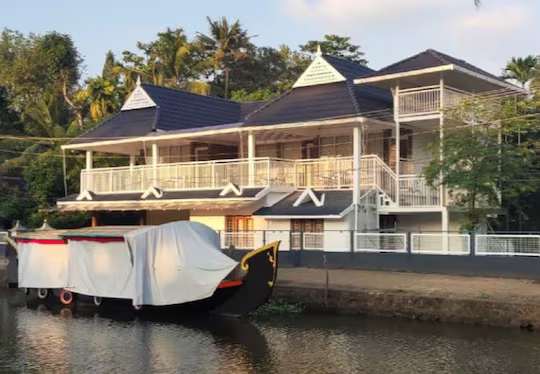
- Why Evaan’s Casa fits this search intent: We’re a genuine island homestay, a six-minute boat ride from the mainland jetty. You get the quiet, immersive island life with the comfort of home-style food and a local host.
The first sound I hear most mornings isn’t an alarm. It’s the soft, hollow knock of a wooden canoe against our small jetty, followed by the low murmur of the fisherman and the gentle splash of his pole. The air is cool and carries the damp, green smell of water hyacinth and wet earth. I step outside and see a thin mist clinging to the canal, the world reduced to shades of grey and green. This quiet, this specific kind of morning, is only possible because we are on an island. It’s the core of the whole island stay vs mainland Alleppey question, really. It’s about what you wake up to.
What Is Island Stay vs Mainland Alleppey?
Let’s break it down simply. Mainland Alleppey is the town. It’s where the bus station is, where the houseboats cluster at the big jetties, and where you’ll find hotels, restaurants, and auto-rickshaws buzzing down streets. It’s lively, convenient, and firmly on the map. An island stay is the opposite. You are on one of hundreds of small land masses in the backwaters, cut off from the road network. Your connection to the world is a boat. Your soundtrack is water and wind, not horns. The debate of island stay vs mainland Alleppey isn’t about which is better. It’s about which experience you’re looking for. Do you want to be in the middle of the action, or do you want the action to be the water itself? I’m probably biased, but I think the choice defines your entire trip.
When people search for island stay vs mainland Alleppey, they’re often picturing a thatched hut in the middle of nowhere. It’s not quite that. Our island has a small community, paths between coconut trees, and a rhythm of life that’s been the same for generations. But you are removed. The mainland feels like a different country, just a short boat ride away. That separation is everything.
Why Does the Island Location Matter?
The six-minute boat ride from the mainland jetty to our island is a decompression chamber. You leave the dust and noise on the shore. The diesel chug of the public ferry, the Vallam, replaces the sound of scooters. Your bags sit on the wooden bench, and you watch the water widen behind you. You arrive. There are no cars. No delivery bikes. The path from our jetty to the homestay is narrow, lined with betel nut trees. This isolation isn’t loneliness. It’s a gentle enclosure. The world becomes smaller, simpler, and more detailed. You notice the dragonflies. You hear the coconut leaves rustle with a specific dry papery sound.
At night, the darkness is profound. If the sky is clear, the stars are shockingly bright because there’s no light pollution from town. The only artificial lights are the warm yellow glows from neighboring houses. You might hear a television faintly or the chatter of a family after dinner. The sound of rain on a corrugated tin roof is a proper event here, a loud, comforting drumming that makes you want to stay in bed. This is the practical reality of an island stay vs mainland Alleppey. On the mainland, you could decide to go for a late-night snack. Here, you are where you are. You settle in. You slow down. Most people skip this feeling, but it’s the whole point.
Look, here’s the thing. This isolation means planning. If you forget your charger, you can’t just pop to a shop. We help with that, of course. But it creates a different mindset. You become aware of the tide because it affects how the boat sits at the jetty. You learn that the best bananas come from the vendor who poles his canoe past every Tuesday morning. It’s a connectedness to place, not to services. That’s the trade-off, and for many, it’s the entire reward.
What Home-Style Food Can You Expect Here?
Food here is tied to the day and the land. Breakfast might be soft, lacy appam with a subtly sweet coconut milk-based vegetable stew, the steam rising off the bowl in the cool morning air. The appam is fermented overnight, giving it a slight tang that cuts through the richness of the stew. Or it could be puttu, those cylindrical steamed cakes of rice flour and coconut, served with kadala curry—black chickpeas cooked in a thick, spiced gravy with a hint of roasted coconut. You eat with your hands. It feels right.
Lunch is often the main meal. You might have a piece of Karimeen Pollichathu, a pearl spot fish marinated in a paste of spices, wrapped in a banana leaf, and pan-fried until the leaf blackens and imparts a smoky, earthy flavor to the flesh. It’s served with rice, a sharp mango pickle, and perhaps a thoran—finely chopped beans or cabbage stir-fried with grated coconut and turmeric. The mustard seeds crackle in the coconut oil before they’re tossed in, and that sound, that aroma, is the signature scent of a Kerala kitchen. Everything is prepared in the kitchen at our homestay, focusing on traditional home cooking. The ingredients are local. The coconut comes from the trees you see. The fish was likely swimming that morning.
On request, we can serve a proper Kerala Sadhya on a banana leaf. It’s not an everyday meal—it’s a festival on a plate. An array of different dishes, from the sour and spicy pulissery to the sweet and creamy payasam, each in its own spot on the leaf. You start from the top left and work your way in. It’s an experience of balance, texture, and flavor that is deeply satisfying. Honestly, I’d say the food alone can tip the scales in the island stay vs mainland Alleppey decision. In a town hotel, you get a menu. Here, you get what the day provides, cooked with care.
Jackson’s Practical Tips for Visitors
If you’re weighing an island stay vs mainland Alleppey, a few practical notes can help.
- Pack a small overnight bag for the island. Leave your big suitcase in your car or at a mainland hotel if you’re touring. The boats are small, and the walk from the jetty is easier with less luggage.
- Bring a power bank. We have electricity, but if you’re a heavy device user, it’s good to have a backup. Our Wi-Fi is reliable but meant for checking in, not streaming movies.
- Mosquito repellent is non-negotiable. The good, strong kind. The backwaters are beautiful, but the mosquitoes are enthusiastic residents.
- Most people don’t know this: The public ferry system (the State Water Transport) is incredibly cheap and a fantastic way to see daily life. The route from Alleppey to Kottayam takes a couple of hours and costs almost nothing. You’ll share the boat with schoolchildren, people with groceries, and the occasional chicken in a basket.
- Don’t just do a day cruise. The whole point of the island stay vs mainland Alleppey choice is to experience the night. The water changes color at sunset, and the night noises are completely different.
- If you want to see a local market that tourists rarely find, ask about the Champakulam market on specific mornings. It’s a hub for the island communities, and the energy is pure, unfiltered Alappuzha.
What Is the Best Time to Visit Alappuzha for Island Stay vs Mainland Alleppey?
This depends entirely on what you want from the weather. Each season paints the backwaters a different color.
Winter, from November to February, is what most people aim for. The skies are clear, the sun is warm but not harsh, and the nights are pleasantly cool. It’s perfect for sitting outside after dinner. This is the peak season, so everything is operational and busy. The water levels are lower, though. Some smaller canals might be less navigable.
Monsoon, from June to September, is my secret favorite. I know, some guests disagree with me on this, and that’s fair. The rain is heavy and constant. But the backwaters turn a lush, overflowing green. The sound of rain on the water is mesmerizing. The air is clean and smells of wet soil and blooming flowers. You need to be okay with being indoors, reading a book, and watching the downpour. Boat trips happen between showers, and the light is dramatic, with huge clouds. Not gonna lie, the humidity is high and you will get wet. But if you want to see the landscape at its most alive and powerful, this is it.
Summer, March to May, is hot. The sun is intense, and the air can feel still. The advantage is that it’s the quietest time. You’ll have the waterways largely to yourself. Mornings and late afternoons are still lovely for a boat ride. The midday is for a nap in the shade, maybe with a fresh lime soda. It’s a time for deep relaxation, not vigorous exploration.
Your choice in the island stay vs mainland Alleppey debate might shift with the season. In monsoon, the isolation of an island feels more pronounced, more elemental. In winter, the ease of a mainland hotel might appeal if you want to explore the town each evening. For us, the island is compelling year-round, but you should pack for the mood of the sky.
Frequently Asked Questions About Island Stay vs Mainland Alleppey
How do we get to the island, and is it safe?
We arrange a pickup from the mainland jetty in Alleppey town. It’s a six-minute ride in a covered, stable motorboat. Life jackets are on board. The water in these canals is generally calm. It’s very safe, and our boatman has been navigating these lanes since he was a boy.
What should we pack for an island homestay?
Light, cotton clothing is best. A hat, sunglasses, strong sunscreen, and insect repellent are essentials. Bring comfortable sandals you don’t mind getting wet. A light sweater or shawl for cooler evenings is smart. And a sense of adventure for the quiet.
Is WiFi available on the island?
Yes, we have WiFi at the homestay. It’s good for sending emails, messaging, and browsing. It’s not designed for heavy streaming or video calls, as we’re on a remote connection. Part of the charm is disconnecting a little, anyway.
Can we bring young children?
Absolutely. Kids love the boat rides and seeing the water life. The island is safe to wander. You do need to supervise them near the water edges at all times, as there are no fences. We can arrange gentle, shorter boat trips suitable for little ones.
I hope this gives you a clearer picture. The island stay vs mainland Alleppey decision shapes your memory of this place. One isn’t better. They are different worlds, separated by a few minutes of water. One offers the convenience and buzz of a historic town. The other offers the slow, deep rhythm of the backwaters themselves, where you live inside the postcard. If you’re leaning towards the latter, where the evening sky is reflected in still canals and your morning coffee comes with the sound of paddles, then you might want to learn more about Evaan’s Casa. We’d be happy to be your quiet corner of this water world.
Whatever you choose, come with an open mind. Sit on a jetty for a while. Watch the boats go by. The backwaters have a way of settling something in you, whether you’re on the mainland or out here with us on the island. The water is the same. The light is the same. You just get more of it out here, for longer. Feel free to reach out if you have more questions. I’m usually around, probably fixing something on the boat or watching the herons.
Plan your stay at Evaan’s Casa
- Lake view homestay in Alleppey (Alappuzha)
- Where to stay in Alleppey: the complete guide
- Alleppey room booking: rooms and prices from ₹1,900
- Budget homestay in Alleppey under ₹2,000
- Backwater homestay on Vembanad Lake
- Punnamada homestay, Alappuzha
- Family homestay in Alleppey
- Honeymoon package and couple stay
Book direct on WhatsApp +91 88484 96667