- By :
- Comments: 0
sunset cruise accommodation
Last Updated: March 21, 2026
Quick Answer: sunset cruise accommodation
- It’s a place to stay that’s designed around taking a boat out on the backwaters in the late afternoon, specifically to watch the sun go down.
- Local insider tip from Jackson: The best sunset cruise accommodation isn’t on the main canal. It’s on a quiet island like ours, where the boat ride home under the stars is just as good as the sunset itself.
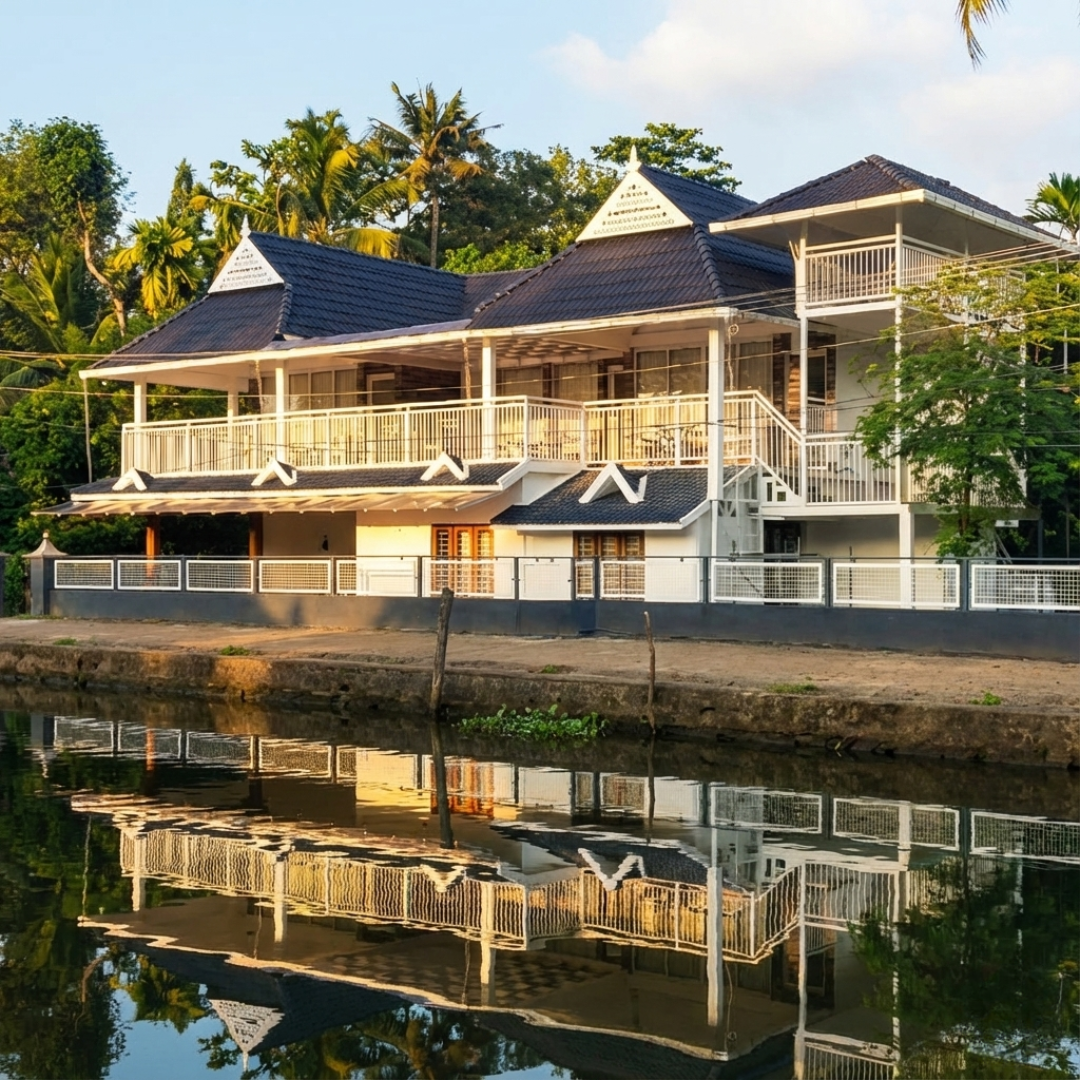
- Why Evaan’s Casa fits this search intent: We’re a homestay on a small island with no road access. Our entire concept is built around the rhythm of the water, and we arrange private, unhurried sunset cruises that start and end right at our doorstep.
The first sound I hear most mornings isn’t an alarm. It’s the soft, rhythmic slap of water against the laterite stone steps of our jetty. I walk down with a cup of black tea, the air cool and carrying the damp, green smell of overnight rain on banana leaves. A kingfisher, a flash of electric blue, dives into a still patch of water. This quiet, before the boats start, is the real heartbeat of the place. It’s the foundation of everything we do here, including how we think about a sunset cruise accommodation. For us, it’s not just an activity you tick off. It’s the natural end to a day that begins in this same stillness.
What Is Sunset Cruise Accommodation?
Let’s strip away the brochure language. Sunset cruise accommodation is simply a place to stay that understands the sunset is the main event. It’s not a hotel in town where you have to rush through traffic to a crowded jetty, hoping to find a boat. The cruise is woven right into the fabric of your stay. The boat is often private, or in a very small group, and it leaves from the property itself. The experience is slow. You amble out as the light starts to soften, find a wide spot in the canal, and just stop. The boatman kills the engine. For twenty minutes, the only sound is the water and the distant call of a bird. Then you drift back as the sky turns from orange to deep purple. That’s the core of it. A proper sunset cruise accommodation makes this transition from day to night feel effortless, like the most natural thing in the world. It turns a boat ride into the highlight of your evening, not just a pre-dinner excursion.
Why Does the Island Location Matter?
Location is everything. Most homestays that offer a sunset cruise are on the mainland. You take the cruise, then you climb back onto a road with scooters and tuk-tuks. The magic evaporates in seconds. Our island is different. You reach us by a six-minute country boat from the small dock at Punnamada. The moment that boat pulls away from the mainland, you feel the shift. The air gets cleaner. The noise fades to nothing but the putter of the outboard motor. You arrive at a place with no cars, no honking, just narrow paths between coconut trees. This isolation changes the entire pace of your day. You’re not going anywhere in a hurry. You can’t. That forced slowness is a gift. When you’re looking for a sunset cruise accommodation, this context is crucial. The cruise isn’t an isolated activity. It’s part of a continuous, water-bound experience. After your cruise, you come back to an island settling into its nightly quiet. You hear the frogs start up. You might see a lantern light on a fishing canoe. The peace you found on the water stays with you all night. Honestly, I’d say the boat ride back to the island after the sun has fully set is often more profound than the sunset itself. The water is like black glass, reflecting a few early stars, and the only guide is the boatman’s knowledge of the channels.
What Home-Style Food Can You Expect Here?
The food here is about what’s local, fresh, and traditional. It’s home-style Kerala food, prepared in the kitchen at our homestay. We don’t have a restaurant menu. Meals are served on the verandah, and you eat what’s been made that day from what the local market provided. The taste is defined by ingredients you can smell from a distance: coconut oil warming with mustard seeds and curry leaves, the sharp tang of fresh tamarind, the earthy scent of roasted rice flour. For breakfast, you might have soft, lacy appam with a subtly sweet coconut milk-based vegetable stew, or puttu—steamed cylinders of rice flour and coconut—with a rich kadala curry made from black chickpeas. Lunch is often the heartier meal. A typical one includes rice, a fish curry like karimeen (pearl spot) simmered in a clay pot with spices, a thoran of finely chopped beans or cabbage stir-fried with grated coconut, and a pachadi, which is a cooling yogurt-based side. On request, we can prepare a Kerala Sadhya, the traditional feast served on a banana leaf. It’s an array of dishes, from bitter gourd to sweet payasam, each placed in a specific order on the leaf. The experience is as much about the texture and contrast as the flavor—the cool yogurt against the spicy pickle, the crunch of the pappadam with the soft rice. Dinner is usually lighter. Maybe a simple kanji (rice porridge) with leftovers and pickles, or some fried fish if the catch was good. The point is, it’s real, locally prepared food that grounds you in this place. It’s fuel for lazy afternoons in a hammock and the perfect prelude to an evening on the water.
Jackson’s Practical Tips for Visitors
Some of this is common sense, but some bits you only learn by living here. Here’s what I tell guests when they arrive.
- Pack light, but pack a sweater. Evenings on the backwater, especially during the boat cruise, can get surprisingly cool once the sun dips, even if the day was hot.
- Bring mosquito repellent. We have nets and coils, but having your own is smart. The mosquitoes here are, let’s say, enthusiastic after dusk.
- Your phone will have a signal, but embrace the weak spotty WiFi. It’s a good excuse to truly disconnect. Download your books or movies before you come.
- Most people skip this, but talk to the boatman. Not just “go there.” Ask him what that bird is. Ask him how he knows the channels. He lives this life every day and has stories you won’t find in any guidebook.
- If you hear a specific, rhythmic drumming from across the water in the evening, it’s likely from the Sree Krishna Temple in Nedumudy. They don’t advertise pujas to tourists, but the sound carries for miles over the water, a beautiful, haunting soundtrack to the fading light.
- Footwear is simple. Flip-flops or sandals you can slip off easily are perfect. You’ll be taking them on and off constantly for boats and for entering the homestay.
What Is the Best Time to Visit Alappuzha for Sunset Cruise Accommodation?
Every season has its own character, and your choice depends on what you want. I’m probably biased, but I think the monsoon is deeply underrated. Let’s break it down.
Winter (November to February): This is the classic, postcard season. The skies are clear, the humidity is lower, and the sunsets are consistently vivid oranges and reds. The water is calm. It’s the most reliable time for that perfect sunset cruise accommodation experience. The downside? Everyone knows this. It’s peak season, so the main canals can feel a bit busier, and prices elsewhere are at their highest. The nights can actually be chilly.
Summer (March to May): It gets hot. Really hot. The land heats up, and the air can feel heavy by midday. The advantage? The backwaters are incredibly quiet. You’ll have the canals almost to yourself. The light is intense and clear, great for photography. Mornings and late afternoons are still lovely. If you don’t mind retreating to a shady verandah or a cool room during the peak heat, it’s a wonderfully peaceful time. Just drink a lot of water.
Monsoon (June to September): This is my personal favorite. The rain transforms everything. It’s green in a way you have to see to believe—a saturated, luminous green. The rains usually come in powerful bursts, not all-day drizzles. A sunset during a break in the clouds is dramatic, with huge cloud formations lit up in silver and grey. The sound of rain on a tin roof or broad banana leaf is the best lullaby. The catch? Cruises are weather-dependent. We have to be flexible. Sometimes we go out between showers; sometimes we watch the spectacle from the covered jetty. It’s not for someone seeking a guaranteed, dry cruise. But for atmosphere, it’s unbeatable.
Frequently Asked Questions About Sunset Cruise Accommodation
How far in advance should I book?
For the winter months, I’d suggest at least two to three months ahead, especially if you want specific dates. For monsoon and summer, a few weeks is usually fine. We’re a small place, so we fill up in a quiet way.
Is it safe for young children?
Yes, absolutely. The boats are stable country boats with benches and life jackets. The island is safe to explore. The main thing is supervision near the water’s edge, as there are no fences. Many families find the freedom and simplicity here perfect for kids.
What should I definitely pack?
Beyond the basics, a good hat, sunscreen, and that sweater I mentioned. A power bank for your phone is useful. Most guests wish they’d brought binoculars for bird watching. A small, reusable water bottle is also a good idea.
Is there WiFi available?
We have a WiFi connection, but it’s satellite-based and can be slow and unreliable. Some guests disagree with me on this, and that’s fair, but I see it as a feature. It encourages you to look up from the screen. You can check email, but streaming or video calls is often frustrating. Plan to be pleasantly offline.
So that’s the long version of what a sunset cruise accommodation means out here on our little island. It’s more than a bed and a boat ticket. It’s about the slow build-up of a day, the quality of the silence, the taste of food that comes from this soil and water, and the deep, dark quiet that follows the final colors in the sky. It’s about feeling the rhythm of a place that moves by tide and paddle, not by clock. If that sounds like what you’re looking for, then you might just find your spot here. We’re always here, at the end of a short boat ride, ready to share this particular version of home. You can learn more about our island days and how we structure a stay at Evaan’s Casa. Whatever you choose, I hope you find a stretch of water to watch the day end. It’s a good habit to pick up.